目的 利用分子对接和SPRi技术,探究人参皂苷与MAPK信号通路相互作用的机制.方法 利用分子对接分析27种人参皂苷与MAPK信号通路相关蛋白的结合作用,运用Cytoscape软件构建"人参皂苷-蛋白靶点"网络,初步筛选关键人参皂苷化合物和蛋白;通过SPRi技术进一步对筛选结果进行验证;使用分子对接技术,对人参皂苷和关键蛋白的结合位点和结合作用进行分析.结果 分子对接结果表明,人参皂苷能够与MAPK通路上的ERK1、MEK、MNK2、MSK等蛋白有较好的结合,其中ERK1蛋白与人参皂苷结合能最低,相互结合能力最强;并通过SPRi验证得到7种人参皂苷与ERK1蛋白的结合活性;结合位点分析表明,Lys71、Glu88、Asp184为7种人参皂苷与ERK1蛋白的主要结合位点.结论 人参皂苷可能与ERK1蛋白结合,通过MAPK通路发挥作用.
Background: Stroke survivors are at significantly increased risk of cognitive impairment, which affects patients’ independence of activities of daily living (ADLs), social engagement, and neurological function deficit. Many studies have been done to evaluate the efficacy and safety of post-stroke cognitive impairment (PSCI) treatment, and due to the largely inconsistent clinical data, there is a need to summarize and analyze the published clinical research data in this area.Objective: An umbrella review was performed to evaluate the efficacy and safety of PSCI therapies.Methods: Three independent authors searched for meta-analyses and systematic reviews on PubMed, the Cochrane Library, and the Web of Science to address this issue. We examined ADL and Barthel index (BI), Montreal Cognitive Assessment (MoCA), neurological function deficit as efficacy endpoints, and the incidence of adverse events as safety profiles.Results: In all, 312 studies from 19 eligible publications were included in the umbrella review. The results showed that angiotensin-converting enzyme inhibitors (ACEI) and N-methyl-D-aspartate (NMDA) antagonists, cell therapies, acupuncture, and EGB76 can improve the MoCA and ADL, and the adverse effects were mild for the treatment of PSCI. Moreover, Vinpocetine, Oxiracetam, Citicoline, thrombolytic therapy, Actovegin, DL-3-n-Butylphthalide, and Nimodipine showed adverse events or low article quality in patients with PSCI. However, the research evidence is not exact and further research is needed.Conclusion: Our study demonstrated that ACEI inhibitors (Donepezil) and NMDA antagonists (Memantine), EGB761, and acupuncture are the ADL and BI, MoCA, and neurological function deficit medication/therapy, respectively, for patients with PSCI.Clinical Trial Registration:https://inplasy.com/inplasy-2022-11-0139/; Identifier: INPLASY2022110139.
Background: Ischemic stroke is a leading cause of morbidity and mortality in neurological diseases. Numerous studies have evaluated the efficacy and safety of ischemic stroke therapies, but clinical data were largely inconsistent. Therefore, it is necessary to summarize and analyze the published clinical research data in the field. Objective: We aimed to perform an umbrella review to evaluate the efficacy and safety of ischemic stroke therapies. Methods: We conducted a search for meta-analyses and systematic reviews on PubMed, the Cochrane Library, and the Web of Science to address this issue. We examined neurological function deficit and cognitive function scores, quality of life, and activities of daily living as efficacy endpoints and the incidence of adverse events as safety profiles. Results: Forty-three eligible studies including 377 studies were included in the umbrella review. The results showed that thrombolytic therapy (tPA; alteplase, tenecteplase, and desmoteplase), mechanical thrombectomy (MTE), edaravone with tPA, stem cell-based therapies, stent retrievers, acupuncture with Western medicines, autologous bone marrow stromal cells, antiplatelet agents (aspirin, clopidogrel, and tirofiban), statins, and Western medicines with blood-activating and stasis-dispelling herbs (NaoShuanTong capsule, Ginkgo biloba, Tongqiao Huoxue Decoction, Xuesaitong injection) can improve the neurological deficits and activities of daily living, and the adverse effects were mild for the treatment of ischemic stroke. Moreover, ligustrazine, safflower yellow, statins, albumin, colchicine, MLC601, salvianolic acids, and DL-3-n-butylphthalide showed serious adverse events, intracranial hemorrhage, or mortality in ischemic stroke patients. Conclusion: Our study demonstrated that tPA, edaravone and tPA, tPA and MTE, acupuncture and Western medicines, and blood-activating and stasis-dispelling herbs with Western medicines are the optimum neurological function and activities of daily living medication for patients with ischemic stroke. Systematic Review Registration: https://inplasy.com/, identifier [INPLASY202250145].
目的:利用代谢组学技术分析慢性温和不可预知应激(CUMS)抑郁模型小鼠脑组织样本,寻找与抑郁相关的差异代谢物,探讨蜘蛛香环烯醚萜部位(IEFV)可能的抗抑郁作用机制.方法:42只昆明小鼠随机分为6组,包括正常组,模型组,氟西汀组(2.5 mg· kg-1),IEFV低、中、高剂量组(给药剂量分别为5.73,11.47,22.94 mg·kg-1).采用CUMS对小鼠造模,以IEFV及阳性药(氟西汀)为干预药物,用行为指标和生化指标进行药效学评价.采用核磁共振氢谱(1H-NMR)代谢组学技术分析IEFV对CUMS抑郁模型小鼠脑组织中内源性物质的影响,结合多变量统计分析方法来确认差异代谢物,并对差异代谢物参与的代谢通路进行富集.结果:造模后,小鼠的不动时间大幅度提高、蔗糖偏好率明显下降,兴奋性神经递质5-羟色胺和去甲肾上腺素显著下降,表明造模成功.给予IEFV和氟西汀后,小鼠不动时间、蔗糖偏好率和兴奋性神经递质向正常水平回调,提示给药后抑郁状态得到了一定程度的缓解.脑组织中内源性代谢物主成分分析(PCA)结果显示,模型组可与正常组明显分开,同时IEFV低、中、高剂量组和氟西汀组均显示有偏离模型组向正常组靠拢的趋势,与行为学结果一致.模型组与正常组进行正交偏最小二乘法-判别分析(OPLS-DA)得到了16个变化显著的差异代谢物,包括12个水溶性差异代谢物和4个脂溶性差异代谢物.通过MetPA数据库分析得到7条潜在靶标代谢通路,包括三羧酸循环(TCA),牛磺酸和亚牛磺酸的代谢,丙氨酸、天冬氨酸和谷氨酸代谢等.IEFV高剂量组可显著回调11种差异代谢物.结论:IEFV可能主要通过影响能量代谢,氨基酸代谢和神经递质水平发挥抗抑郁作用,可为IEFV抗抑郁作用机制的深入研究提供参考依据.
目的 预测人参治疗心衰可能的质量标志物.方法 利用中医药整合药理学研究平台V2.0 (TCMIP V2.0),将人参化学信息进行靶标预测,与心衰相关疾病靶标信息进行蛋白-蛋白相互作用(PPI)网络构建,富集分析药物干预疾病关键靶标,并构建出人参化学成分、关键作用靶标和疾病相关通路的相互作用网络,绘制“中药-化学成分-关键靶标-通路”网络图,分析得到作用于这些关键靶标的主要成分,即与药物有效性相关的化学成分,并根据质量标志物“五原则”结合文献报道对人参治疗心衰质量标志物进行预测.结果 针对人参治疗心衰方面共得到63条关键核心靶标信息,其中包含药物靶标63条以及疾病靶标2条,药物与疾病共有靶标2条,分别为ATP1A1和ADCY2.药物与疾病共有靶标可能是药物干预疾病的关键靶标,针对共有靶标ATP1A1和ADCY2筛选出人参作用于这些靶标的主要成分,并结合质量标志物成分可测性、特征性和传递性预测人参治疗心衰可能质量标志物.结论 在TCMIP V2.0现有基础上,分析得到了人参治疗心衰可能的质量标志物为人参皂苷类化合物包括人参皂苷Rg1、Re、Rf、Rb2等,为人参干预心衰后续研究提供依据.
Shengmaiyin is widely used in the treatment of arrhythmia and has achieved a good effect. Due to the complexity of traditional Chinese medical formula, the pharmacological mechanism of Shengmaiyin in the treatment of arrhythmia is unclear. In this study, we used the internet-based Computation Platform (www.tcmip.cn) to explore the molecular mechanism. Shengmaiyin was found to treat the arrhythmia by modulating the pathway related to energy metabolism such as carbon metabolism, purine metabolism, carbohydrate metabolism, or by regulating the level of ATP. In this study, we find that the main active drug component in Shengmaiyin may be ginseng.
Integrative pharmacology (IP) is a discipline that studies the interaction, integration and principle of action of multiple components with the body, emphasizing the integrations of multi-level and multi-link, such as "whole and part", "in vivo and in vitro", "in vivo process and activity evaluation". After four years of development and practice, the theory and method of IP has received extensive attention and application.In order to better promote the development of IP, this paper systematically reviews the concepts, research contents, research methods and application fields about IP.
Recently, integrative pharmacology(IP) has become a pivotal paradigm for the modernization of traditional Chinese medicines(TCM) and combinatorial drugs discovery, which is an interdisciplinary science for establishing the in vitro and in vivo correlation between absorption, distribution, metabolism, and excretion/pharmacokinetic(ADME/PK) profiles of TCM and the molecular networks of disease by the integration of the knowledge of multi-disciplinary and multi-stages. In the present study, an internet-based Computation Platform for IP of TCM(TCM-IP, www.tcmip.cn) is established to promote the development of the emerging discipline. Among them, a big data of TCM is an important resource for TCM-IP including Chinese Medicine Formula Database, Chinese Medical Herbs Database, Chemical Database of Chinese Medicine, Target Database for Disease and Symptoms, et al. Meanwhile, some data mining and bioinformatics approaches are critical technology for TCM-IP including the identification of the TCM constituents, ADME prediction, target prediction for the TCM constituents, network construction and analysis, et al. Furthermore, network beautification and individuation design are employed to meet the consumer's requirement. We firmly believe that TCM-IP is a very useful tool for the identification of active constituents of TCM and their involving potential molecular mechanism for therapeutics, which would wildly applied in quality evaluation, clinical repositioning, scientific discovery based on original thinking, prescription compatibility and new drug of TCM, et al.
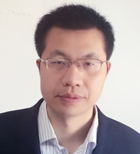 Haiyu Xu (许海玉)合作论文数Institute of Chinese Materia Medica, China Academy of Chinese Medical Sciences5
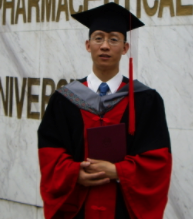 Qingshan Liu (刘庆山)合作论文数School of Pharmacy, Minzu University of China3
 Yong Cheng (程勇)合作论文数College of Life and Environmental Sciences, Minzu University of China3
 Fang-Cheng Fan合作论文数2Yang Du合作论文数2Shao-Bo Liu合作论文数2Jin Su合作论文数2
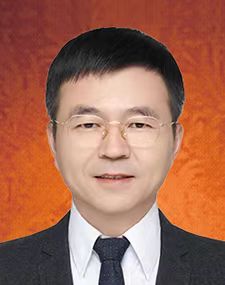 Hongjun Yang (杨洪军)合作论文数China Academy of Chinese Medical Sciences2
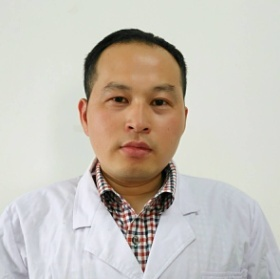 Shihuan Tang (唐仕欢)合作论文数Institute of Chinese Materia Medica, China Academy of Chinese Medical Sciences2Yangwen Ai合作论文数1Chuan-Yu Lv合作论文数1Yongbiao Li合作论文数1Yangyang Lu合作论文数1Zhiping Qin合作论文数1Lanlan Wu合作论文数1Wenjing Sun合作论文数1Jiaqi Zhang合作论文数1Hua Liu合作论文数1Luoqi Zhang合作论文数1Yuqing Fan合作论文数1Xinyi Wang合作论文数1Rongrong Zhou合作论文数1Ping Wang合作论文数1FeiFei Guo (郭非非)合作论文数Institute of Chinese Materia Medica, China Academy of Chinese Medical Sciences1Xia Du (杜霞)合作论文数1DongMei Lv (吕冬梅)合作论文数1
 Yan Fu (付岩)合作论文数University of Chinese Academy of Sciences;Institute of Applied Mathematics, Academy of Mathematics and Systems Science, Chinese Academy of Sciences1
 Jianjun Yu (于建军)合作论文数Computer Network Information Center, Chinese Academy of Sciences1
 Yanqiong Zhang (张彦琼)合作论文数Graduate School of Chinese Academy of Chinese Medical Sciences1
 Zhenming Liu (刘振明)合作论文数Department of Medicinal Chemistry, School of Pharmaceutical Sciences, Peking University1
 Zhongfeng Li (李中峰)合作论文数Department of Chemistry, Capital Normal University1Jian Gao (高健)合作论文数Beijing University of Chinese Medicine1
 An Liu (刘安)合作论文数Graduate School, China Academy of Chinese Medical Sciences;National Engineering Laboratory for quality control technology of Chinese herbal Medicines1
 Zhiyong Yan (闫智勇)合作论文数School of Life Science and Engineering, Southwest Jiaotong University1




