Learning formal concepts in Theory of Computation (ToC) can be challenging for students, and visualization tools can assist in comprehension of ToC concepts. We present a literature review of visualization tools developed for teaching ToC topics, including automata theory, computability theory, and complexity theory. Using a comprehensive search strategy across major libraries, we identified 47 primary studies from 1988-2025 that met our inclusion criteria. We found that the majority of tools target automata (especially finite automata), while relatively fewer tools address proof techniques and complexity topics, though interest in these areas has recently grown. We observed two periods of heightened development of ToC visualization tools: an initial wave around the late 1990s to mid-2000s, and a resurgence in the early 2020s with more interactive and web-based tools.
Theory of Computation (ToC) is fundamental but notoriously challenging for undergraduates, often resulting in high dropout rates and low engagement. In this paper, we argue that incorporating gamification and carefully chosen analogies can significantly improve student comprehension and motivation in ToC and related theoretical computer science topics. Drawing on constructivist and experiential learning theories, we present a position that game-based activities and concrete analogical models help students actively construct understanding of abstract concepts. Building on prior literature and classroom experience, we propose a reusable curricular framework that organizes revised games and analogies across major ToC topics-regular and context-free languages, Turing machines, and decidability. For each topic, we outline an in-class gamified activity or analogy and summarize these methods and their pedagogical usage in a structured table. Our position is that these approaches are pedagogically effective and adaptable for enhancing instruction across upper-level theoretical computer science courses.
Generative AI has infiltrated every stage of the research lifecycle: how scholarship is conducted, written, published, and reviewed. Recent policy responses, such as ACM's authorship policy, address an immediate concern about responsible and transparent disclosure of AI use. We argue that a focus on authorship and disclosure, although necessary, risks obscuring and ballooning a set of entrenched problems and strains within publication systems. The central question is not about how papers and other research artifacts should incorporate AI, but how scientific communication itself should evolve when all relevant parties (authors, reviewers, readers) may rely on AI assistance. We draw on our experience within these and other roles to illustrate two contrasting but feasible visions of 2036 with four entwined questions, namely about the purpose of papers as artifacts, reviews, human reviewers, and the incentives that bind all of them. We argue for a shift from policing GenAI and other disruptive technologies to building the infrastructure of provenance, calibration, and accountability that would make trustworthy scholarship the default. We conclude with three grand challenges and invite the community to a broader conversation and research pathways.
The rapid expansion of Generative AI (GenAI) presents both opportunities and challenges for higher education, particularly in Computer Science. This study investigates the learning and assessment effects of GenAI assistance within an undergraduate Theory of Computing (ToC) course. We used a semester-long project where students documented their GenAI usage for extra credit, and provided the GenAI model choice used, output modifications, self-efficacy, and GenAI usage recommendations. We also collected data on pre- and post-course knowledge tests and project grades. We found that while students predominantly chose OpenAI models and used them for direct output utilization and scaffolding, the overall level of GenAI usage did not significantly correlate with changes in self-efficacy or knowledge gain.
Theoretical Computer Science educators often need to generate solutions to problems in a variety of forms, requiring diagrams and detailed explanations for every step. Currently, solution generation is largely a manual and time-consuming process on the part of the educator. We introduce AUTO-X, an automatic solution generator and explainer, designed for a variety of standard theory problems and conversions. AUTO-X distinguishes itself by producing not only the visual and formal components of a CS theory solution but also by providing step-by-step explanations of the underlying process. Additionally, it is an easily extensible tool for educators when either adding a new CS theory conversion or algorithm, or adapting our existing templates for institutional-specific terminology/standards.
Automating the grading of theoretical computer science (TCS) problems has the potential to save instructors significant time while providing students with consistent feedback. This poster explores the efficacy of a large language model (LLM) in automatically grading undergraduate-level TCS problems. We focus on common topics such as creating context-free grammars and pushdown automata, converting grammars to Chomsky Normal Form, designing Turing machines, and proving languages undecidable via reductions. For each problem type, we developed a rubric and generated a dataset of student-like solutions, some correct and others with typical student errors. The LLM was tasked with scoring these solutions according to the rubric, and its grades were compared to human instructor grades. Our results show that the LLM can often mimic human grading trends with moderate accuracy, but notable discrepancies arise in specific rubric categories. In particular, the LLM tends to over-penalize formatting and notation issues and sometimes overlooks deeper logical errors.
How do we help undergraduates master the rigorous material of Theory of Computing and Algorithms courses while keeping them engaged and confident, especially in the era of Generative AI? Additionally, what goals do educators of these courses believe are important? This panel ' s goal is to further the discussion of these questions. The panel consists of four educators from distinct institution types who will share evidence-based, classroom-tested strategies for these courses. After the panel gives their position statements, the moderator will guide a structured discussion on motivating abstract topics, assessment and feedback at scale, integrating contemporary tools, and aligning theory/algorithms courses with varied curricula. Specifically, the panel will discuss Generative AI and Large Language Models ' place within these courses, the pedagogical implications of autograder usage in these courses, and broader learning goals educators should strive for in these courses.
Large Language Models (LLMs) promise explanations at a scale that traditional office-hours or even intelligent tutoring systems struggle to match. However, their suitability for Computer Science subjects such as Theory of Computing (ToC) remains unanswered due to how LLMs can frequently hallucinate information; the goal of ToC courses is proving precise statements rigorously. In this poster we evaluate OpenAI's GPT-4 model across 18 ToC sub-topics involving regular languages, context-free languages, Turing machines, and (un)decidability. We generated realistic "average-student" questions and follow-up ones and then scored each answer with a five-criterion rubric: accuracy, completeness, clarity, pedagogical scaffolding, and quality of follow-up questions. Our overall results show that GPT-4 is marginal at performing as a ToC tutor, and our analysis identifies strengths in conceptual explanation and weak spots for proof-oriented questions, e.g., reductions.
Collaborative learning has been promoted for decades as a way to increase engagement, equity, and learning gains in computer-science (CS) classrooms. The evidence for where and how these practices are studied across the CS curriculum has not yet been assessed. This poster gives an initial literature review of peer-reviewed CS-education publications that explicitly investigate collaborative learning strategies. Using a ACM Digital Library query, we identified 218 relevant publications about collaborative learning and CS education. Over two-thirds of the literature targets introductory programming and algorithms courses; more "advanced" topics such as operating systems, computer architecture, and theoretical CS collectively account for under 10%.
Traditional assessment methods often fall short in promoting the critical thinking and argumentative skills necessary for understanding and mastering abstract topics. This paper addresses the challenge of conceptual understanding and communication skills in upper division Computer Science (CS) courses, specifically theory of computing (ToC). We describe a three-year implementation of a formal writing and peer reviewing project within our ToC course. The project iteratively evolved over this time based on incentives involving student workload and feedback opportunities to allow student groups to iteratively improve their writing and to collaborate more. We performed quantitative analysis of formative and summative grades and qualitative thematic analysis of reviewer comments. We found that increasing the number of peer review opportunities correlates with a shift in feedback focus from fundamental proof correctness to clarity and presentation.
We summarize the results of a 2024 survey of theory of computing (ToC) courses that received responses from 166 institutions of higher education in the United States [8]. Although our survey is far from comprehensive, it provides new information on many aspects of ToC in U.S. bachelor's degree programs in computer science. We report on the most frequently covered topics in ToC courses as well as structural features such as typical prerequisites, section sizes, teaching modalities, and course staff. In addition to summarizing survey results, we briefly discuss observed trends, suggest opportunities for future teaching and research, and conclude with a call for increased collaboration between American and European theoretical computer science educators.
Theory of Computing (ToC) courses are essential because of their connections to other CS courses, serving as a foundation. Traditional ToC courses are structured to be heavily weighted with in-class examinations and the rest for proof-type assignments. Recent published research created a new type of assignment for a ToC course: a "mock conference" project. Here, students approach and present ToC problems as if they were submitting to a "real" CS conference, and separately anonymously referee other student projects. This prior research noted a disadvantage in that curation of different project topics for groups is prohibitively time-consuming. In this paper we outline a framework about adding scaffolding this assignment and provide our experiences in running such a conference in a small-scale ToC course. We anecdotally found that students were more engaged and can see the connections with other CS courses, both directly and indirectly. On the other hand, we found no statistically significant difference between our scaffolded project and the non-scaffolded version in prior work. We conclude with an extended version of our framework that could be applied to large-scale ToC courses.
Theory of Computing (ToC) courses have important connections to other CS courses as ToC is a foundation for them. ToC course grading schemes often involve mostly exams, and sometimes a small weight for traditional assignments. Recent work experimented with a "mock conference'' project where students write up solutions to ToC problems as if they were submitting them to a "real'' CS conference. In this poster we give our experiences in scaffolding this existing project idea.
GenAI is playing an increasingly important role in computing courses at all levels, offering new opportunities to support teaching and learning. However, using GenAI effectively raises important concerns regarding trust, academic integrity, and broader social and ethical dimensions. This Working Group was formed to report on the current state of the art in using GenAI in upper-level computing courses to aid educators. The working group will undertake a methodological review of published work and solicit input from the computing educational community as part of the report.
Theory of Computing (ToC) is an important course in CS curricula because of its connections to other CS courses as a foundation for them. Traditional ToC course grading schemes are mostly exam-based, and sometimes a small weight for traditional proof-type assignments. Recent work experimented with a new type of assignment, namely a “mock conference” project wherein students approach and present ToC problems as if they were submitting to a “real” CS conference. In this paper we massively scaffold this existing project and provide our experiences in running such a conference in our own ToC course.
Theory courses are required within CS curricula because of their far-reaching impacts on what makes the CS field special, namely what limits there are for computers. Students nearly universally find this course frustrating and challenging as it often requires formal proofs and reasoning. We in the CER community have long had issue with determining where the underlying cognitive barriers are with students in these courses, and how to address them. Various strategies–such as in-class examples, lecture techniques, course structure adjustments, and visual aids–have been explored. However, none have led to substantial progress in identifying the core issues. In this opinion article I give my hypothesis as to what I believe the central fundamental issue is, and that it has not yet been explored within a CER setting. If we as a community want to bridge the gaps students have within formal courses like theory, we need to face it head-on.
Large Language Models (LLMs) have had considerable difficulty when prompted with mathematical and formal questions, especially those within theory of computing (ToC) courses. In this paper, we detail two experiments regarding our own ToC course and the ChatGPT LLM. For the first, we evaluated ChatGPT's ability to pass our own ToC course's exams. For the second, we created a database of sample ToC questions and responses to accommodate other ToC offerings' choices for topics and structure. We scored each of ChatGPT's outputs on these questions. Overall, we determined that ChatGPT can pass our ToC course, and is adequate at understanding common formal definitions and answering "simple''-style questions, e.g., true/false and multiple choice. However, ChatGPT often makes nonsensical claims in open-ended responses, such as proofs.
There is a substantial and growing body of malware samples that evade automated analysis and detection tools. Malware may measure fingerprints (“artifacts”) of the underlying analysis tool or environment, and change their behavior when such artifacts are detected. While analysis tools can mitigate artifacts to reduce exposure, such concealment is expensive and limits scalable automated malware analysis. However, not every sample checks for every type of artifact—analysis efficiency can be improved by mitigating only those artifacts most likely to be used by a sample. Using that insight, we propose Mimosa , a system that identifies a small set of “covering” configurations that collectively and efficiently defeat most malware samples in a corpus. Mimosa identifies a set of configurations that maximize analysis throughput and detection accuracy while minimizing manual effort, enabling scalable automation for analyzing stealthy malware. We evaluate our approach against a benchmark of 1535 meticulously labeled stealthy malware samples. We further test our approach on an additional set of 1221 stealthy malware samples and successfully analyze nearly 99% of them using only 2 VM backends. Mimosa provides a practical, tunable method for efficiently deploying malware analysis resources.
Theory of Computing (ToC) is an important aspect of nearly every undergraduate CS curriculum, as it concerns what computation fundamentally means. However, there has been little research into ToC pedagogy, both within the classroom and how it fits within its institutional context. We propose in this working group to create a survey of current ToC pedagogy. Our goals are to create a standard for teaching ToC, find trends, determine under-researched areas, and to build a community among ToC educators.
Software testing is a key component of the software engineering process, but modern software is highly complex. Software configurations involve many interacting components and interactions among them can strongly affect the software's behavior in hard-to-predict ways. Combinatorial interaction testing (CIT) concerns the creation of test suites that either detect or locate the most important interactions in a large scale software system. Locating Arrays (LAs) are a data structure that guarantees a unique location for every such set of interactions. In this paper we present LocAG, an algorithm that generates LAs. Our approach uses a simple but powerful "partitioning" method of interactions to greatly reduce the computational cost of verifying a candidate LA. Further, we use evolutionary computation to quickly determine any additional tests after the partitioning method is complete. We are able to generate LAs for larger systems faster, with any desired separation, and greater interaction size than any existing approach.
 Charlie Colbourn合作论文数School of Computing and Augmented Intelligence, Arizona State University5
 Stephanie Forrest合作论文数Biodesign Institute, Arizona State University4
 Jeff Erickson合作论文数Department of Computer Science, Siebel School of Computing and Data Science, The Grainger College of Engineering, University of Illinois at Urbana-Champaign3
 Thomas Zeume合作论文数3
 Dennis Komm合作论文数Department of Computer Science, ETH Zurich3Michael Shindler合作论文数University of California, Los Angeles3
 Matthew Ferland合作论文数Comp Sci Dept, Univ Southern Calif2
 Kevin Joseph Leach合作论文数Vanderbilt University2
 Westley Weimer合作论文数University of Michigan2Edward Talmage合作论文数1
 Dimitris E. Simos合作论文数1Jonathan Liu合作论文数1
 Michael Sandborn合作论文数Vanderbilt University Dept. of Computer Science1
 Seth Poulsen合作论文数Dept Comp Sci, Univ Illinois1Thomas Finn Lidbetter合作论文数Present address: RideCo1Xi Jiang合作论文数1Rachel Dedinsky合作论文数1
 Erin Lanus合作论文数The MITRE Corporation1Michael Wagner合作论文数MATRIS, SBA Res1Kristoffer Kleine合作论文数SBA Res, A-1040 Vienna, Austria1
 Timothy Ng合作论文数Department of Computer Science, The University of Chicago1
 Daniel Horsley合作论文数School of Mathematics, Faculty of Science, Monash University1
 Aviral Shrivastava合作论文数Make Programming Simple Lab, School of Computing and Augmented Intelligence, Arizona State University;Biodesign Center for Fundamental & Applied Microbiomics, Arizona State University1
 Orit Hazzan合作论文数Faculty of Education in Science and Technology, Technion - Israel Institute of Technology1
 Tzu-Yi Chen合作论文数Computer Science Department
Pomona College1
Tzu-Yi Chen合作论文数Computer Science Department
Pomona College1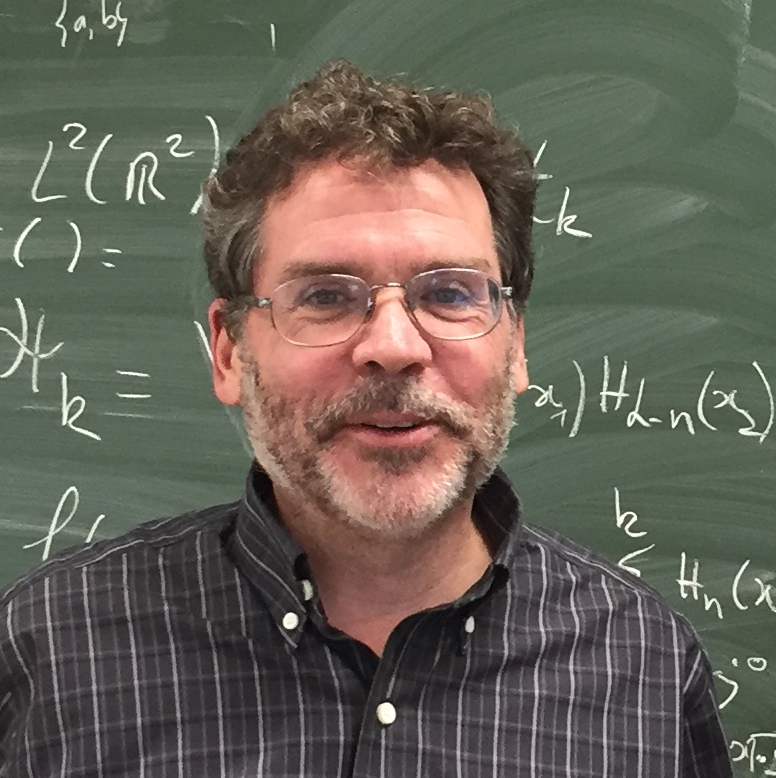 Jeffrey O. Shallit合作论文数School of Computer Science, University of Waterloo1
 Chad Spensky合作论文数Department of Computer Science;University of North Carolina;Department of Computer Science, University of North Carolina1
 Dennis J. Bouvier合作论文数Saint Louis University1Jules White合作论文数Bradley Department of Electrical and Computer Engineering
Virginia Tech1
Dennis J. Bouvier合作论文数Saint Louis University1Jules White合作论文数Bradley Department of Electrical and Computer Engineering
Virginia Tech1




