Many organizations are shifting to a data management paradigm called the "Lakehouse," which implements the functionality of structured data warehouses on top of unstructured data lakes. This presents new challenges for query execution engines. The engine needs to provide good performance on the raw uncurated datasets that are ubiquitous in data lakes, and excellent performance on structured data stored in popular columnar file formats like Apache Parquet. Toward these goals, we present Photon, a vectorized query engine for Lakehouse environments that we developed at Databricks. Photon can outperform existing warehouses on SQL workloads and also supports the Apache Spark API. We discuss the design choices we made in Photon (e.g., vectorization vs. code generation) and describe its integration with our existing SQL and Apache Spark runtimes, its task model, and its memory manager. Photon has accelerated some customer workloads by over 10x and has recently allowed Databricks to set a new audited performance record for the official 100TB TPC-DS benchmark.
In this paper, we study the problem of incremental maintenance of Datalog programs and model it as a scheduling problem on DAGs. We design provably good time- and memory-efficient scheduling algorithms for (re)executing a Datalog program where some (but not necessarily all) of the inputs have changed. We prove that our schedulers, called LevelBased and LevelBased with lookahead, have asymptotically improved running time and space efficiency when compared with benchmark algorithms used in production at LogicBlox.The main result of the paper is a hybrid scheduler, which combines LevelBased with the production LogicBlox scheduler (or any other heuristic scheduler). The hybrid scheduler achieves strong worst-case guarantees and robustness without losing out on the best-case behavior of the production LogicBlox scheduler. Our experiments show that the hybrid scheduler results in similar or improved total execution times compared to LogicBlox scheduler, while consistently reducing the scheduling overhead—by as much as 50% on some datasets. This hybrid scheme requires little to no overhead but provides predictability and reliability, which are crucial in a commercial application such as LogicBlox.
Concurrency control (CC) algorithms must trade off strictness for performance. In particular, serializable CC schemes generally pay higher cost to prevent anomalies, both in runtime overhead such as the maintenance of lock tables and in efforts wasted by aborting transactions. We propose the serial safety net (SSN), a serializability-enforcing certifier which can be applied on top of various CC schemes that offer higher performance but admit anomalies, such as snapshot isolation and read committed. The underlying CC mechanism retains control of scheduling and transactional accesses, while SSN tracks the resulting dependencies. At commit time, SSN performs a validation test by examining only direct dependencies of the committing transaction to determine whether it can commit safely or must abort to avoid a potential dependency cycle. SSN performs robustly for a variety of workloads. It maintains the characteristics of the underlying CC without biasing toward a certain type of transactions, though the underlying CC scheme might. Besides traditional OLTP workloads, SSN also efficiently handles heterogeneous workloads which include a significant portion of long, read-mostly transactions. SSN can avoid tracking the vast majority of reads (thus reducing the overhead of serializability certification) and still produce serializable executions with little overhead. The dependency tracking and validation tests can be done efficiently, fully parallel and latch-free, for multi-version systems on modern hardware with substantial core count and large main memory. We demonstrate the efficiency, accuracy and robustness of SSN using extensive simulations and an implementation that overlays snapshot isolation in ERMIA, a memory-optimized OLTP engine that supports multiple CC schemes. Evaluation results confirm that SSN is a promising approach to serializability with robust performance and low overhead for various workloads.
Hot standby systems often have to trade safety (i.e., not losing committed work) and freshness (i.e., having access to recent updates) for performance. Guaranteeing safety requires synchronous log shipping that blocks the primary until the log records are durably replicated in one or multiple backups; maintaining freshness necessitates fast log replay on backups, but is often defeated by the dual-copy architecture and serial replay: a backup must generate the real data from the log to make recent updates accessible to read-only queries.This paper proposes Query Fresh, a hot standby system that provides both safety and freshness while maintaining high performance on the primary. The crux is an append-only storage architecture used in conjunction with fast networks (e.g., InfiniBand) and byte-addressable, non-volatile memory (NVRAM). Query Fresh avoids the dual-copy design and treats the log as the database, enabling lightweight, parallel log replay that does not block the primary.Experimental results using the TPC-C benchmark show that under Query Fresh, backup servers can replay log records faster than they are generated by the primary server, using one quarter of the available compute resources. With a 56Gbps network, Query Fresh can support up to 4--5 synchronous replicas, each of which receives and replays ∼1.4GB of log records per second, with up to 4--6% overhead on the primary compared to a standalone server that achieves 620kTPS without replication.
Hot standby systems often have to trade safety (i.e., not losing committed work) and freshness (i.e., having access to recent updates) for performance. Guaranteeing safety requires synchronous log shipping that blocks the primary until the log records are durably replicated in one or multiple backups; maintaining freshness necessitates fast log replay on backups, but is often defeated by the dual-copy architecture and serial replay: a backup must generate the "real" data from the log to make recent updates accessible to read-only queries. This paper proposes Query Fresh , a hot standby system that provides both safety and freshness while maintaining high performance on the primary. The crux is an append-only storage architecture used in conjunction with fast networks (e.g., InfiniBand) and byte-addressable, non-volatile memory (NVRAM). Query Fresh avoids the dual-copy design and treats the log as the database, enabling lightweight, parallel log replay that does not block the primary. Experimental results using the TPC-C benchmark show that under Query Fresh, backup servers can replay log records faster than they are generated by the primary server, using one quarter of the available compute resources. With a 56Gbps network, Query Fresh can support up to 4--5 synchronous replicas, each of which receives and replays ∼1.4GB of log records per second, with up to 4--6% overhead on the primary compared to a standalone server that achieves 620kTPS without replication.
Large main memories and massively parallel processors have triggered not only a resurgence of high-performance transaction processing systems optimized for large main-memory and massively parallel processors, but also an increasing demand for processing heterogeneous workloads that include read-mostly transactions. Many modern transaction processing systems adopt a lightweight optimistic concurrency control (OCC) scheme to leverage its low overhead in low contention workloads. However, we observe that the lightweight OCC is not suitable for heterogeneous workloads, causing significant starvation of read-mostly transactions and overall performance degradation.In this paper, we present ERMIA, a memory-optimized database system built from scratch to cater the need of handling heterogeneous workloads. ERMIA adopts snapshot isolation concurrency control to coordinate heterogeneous transactions and provides serializability when desired. Its physical layer supports the concurrency control schemes in a scalable way. Experimental results show that ERMIA delivers comparable or superior performance and near linear scalability in a variety of workloads, compared to a recent lightweight OCC-based system. At the same time, ERMIA maintains high throughput on read-mostly transactions when the performance of the OCC-based system drops by orders of magnitude.
Concurrency control (CC) algorithms must trade off strictness for performance, with serializable schemes generally paying high cost---both in runtime overhead such as contention on lock tables, and in wasted efforts by aborting transactions---to prevent anomalies. We propose the serial safety net (SSN), a serializability-enforcing certifier for modern hardware with substantial core count and large main memory. SSN can be applied with minimal overhead on top of various CC schemes that offer higher performance but admit anomalies, e.g., snapshot isolation and read committed. We demonstrate the efficiency, accuracy and robustness of SSN using a memory-optimized OLTP engine with different CC schemes. We find that SSN is a promising approach to serializability with low abort rates and robust performance for various workloads.
Most single node database systems such as PostgreSQL use centralized write-ahead logging [4]: log records are first buffered in DRAM and then flushed to stable storage upon commit to ensure durability and consistency. On today’s massively parallel hardware, however, this single log buffer design has become a bottleneck: as shown in Figure 1, on a 4-socket, 24-core server with hyperthreading (the OS sees 48 “CPUs”) logging gradually became the worst bottleneck with increasing parallelism: ∼45% of the CPU cycles are spent on contending for the log buffer (in green color). In this paper, we advocate using byte-addressable, non-volatile memory (NVRAM) as log buffers. The non-volatility and byteaddressability of NVRAM resurrect distributed logging—a once prohibitive technique for single node systems—to scale databases on modern hardware. We discuss the challenges and solutions brought by NVRAM and distributed logging. All of our techniques have been implemented based on the Shore-MT [1] storage manager. Since NVRAMs built with new materials (e.g., PCM) are not yet widely available, we consider flash-backed DRAM in our evaluation. We run a write-intensive telecommunications transaction (TATP Update Location) and the TPC-C benchmark. Evaluation results show that our approach can significantly ease the logging bottleneck and achieve ∼3x speedup over Aether [2], a state-ofthe-art centralized logging scheme.
Traditional relational database engines have been losing ground to specialized data processing engines in virtually every market segment, from data warehousing, OLTP, and stream processing, to scientific applications. Although relational database engines are evolving to leverage new technologies and more efficient processing paradigms, the generality of a large monolithic engine often makes this a significant effort. Our aim is to delimit and decouple database engine components to design a more lightweight and flexible data processing engine that can support any application domain efficiently and without the effort of a complete redesign. We introduce Slingshot, a new data processing engine, where modularity and implementation flexibility are the top priority. Its core database engine is minimal and mainly handles inter-operation of the database components. Each component, abstracted by an interface, can be externally implemented and plugged into the framework as a module that handles the component's functionality. As a result, this allows designers the liberty to choose suitable features for their target applications, to drop excess functionality, and to optimize code independent of the rest of the engine. We compare Slingshot to a traditional RDBMS and to custom solutions on queries that are representative of three application types (spatial, OLAP, and OLTP). We show that Slingshot outperforms the RDBMS in most cases, while performing comparably in others. Furthermore, Slingshot performs better or comparable to custom solutions on most tests. Finally, Slingshot's flexibility allows us to efficiently leverage computer architectures such as GPUs for speeding up complex computational tasks.
Analysis of large data collections using popular machine learning and statistical algorithms has been a topic of increasing research interest. A typical analysis workload consists of applying an algorithm to build a model on a data collection and subsequently refining it based on the results. In this paper we introduce model materialization and incremental model reuse as first class citizens in the execution of analysis workloads. We materialize built models instead of discarding them in a way that can be reused in subsequent computations. At the same time we consider manipulating an existing model (adding or deleting data from it) in order to build a new one. We discuss our approach in the context of popular machine learning models. We specify the details of how to incrementally maintain models as well as outline the suitable optimizations required to optimally use models and their incremental adjustments to build new ones. We detail our techniques for linear regression, naive bayes and logistic regression and present the suitable algorithms and optimizations to handle these models in our framework. We present the results of a detailed performance evaluation, using real and synthetic data sets. Our experiments analyze the various trade offs inherent in our approach and demonstrate vast performance benefits.
Most single node database systems such as PostgreSQL use centralized write-ahead logging [4]: log records are first buffered in DRAM and then flushed to stable storage upon commit to ensure durability and consistency. On today’s massively parallel hardware, however, this single log buffer design has become a bottleneck: as shown in Figure 1, on a 4-socket, 24-core server with hyperthreading (the OS sees 48 “CPUs”) logging gradually became the worst bottleneck with increasing parallelism: ∼45% of the CPU cycles are spent on contending for the log buffer (in green color). In this paper, we advocate using byte-addressable, non-volatile memory (NVRAM) as log buffers. The non-volatility and byteaddressability of NVRAM resurrect distributed logging—a once prohibitive technique for single node systems—to scale databases on modern hardware. We discuss the challenges and solutions brought by NVRAM and distributed logging. All of our techniques have been implemented based on the Shore-MT [1] storage manager. Since NVRAMs built with new materials (e.g., PCM) are not yet widely available, we consider flash-backed DRAM in our evaluation. We run a write-intensive telecommunications transaction (TATP Update Location) and the TPC-C benchmark. Evaluation results show that our approach can significantly ease the logging bottleneck and achieve ∼3x speedup over Aether [2], a state-ofthe-art centralized logging scheme.
Multicore hardware demands software parallelism. Transaction processing workloads typically exhibit high concurrency, and, thus, provide ample opportunities for parallel execution. Unfortunately, because of the characteristics of the application, transaction processing systems must moderate and coordinate communication between independent agents; since it is notoriously difficult to implement high performing transaction processing systems that incur no communication whatsoever. As a result, transaction processing systems cannot always convert abundant, even embarrassing, request-level parallelism into execution parallelism due to communication bottlenecks. Transaction processing system designers must therefore find ways to achieve scalability while still allowing communication to occur. To this end, we identify three forms of communication in the system-unbounded, fixed, and cooperative-and argue that only the first type poses a fundamental threat to scalability. The other two types tend not impose obstacles to scalability, though they may reduce single-thread performance. We argue that proper analysis of communication patterns in any software system is a powerful tool for improving the system's scalability. Then, we present and evaluate under a common framework techniques that attack significant sources of unbounded communication during transaction processing and sketch a solution for those that remain. The solutions we present affect fundamental services of any transaction processing engine, such as locking, logging, physical page accesses, and buffer pool frame accesses. They either reduce such communication through caching, downgrade it to a less-threatening type, or eliminate it completely through system design. We find that the later technique, revisiting the transaction processing architecture, is the most effective. The final design cuts unbounded communication by roughly an order of magnitude compared with the baseline, while exhibiting better scalability on multicore machines.
Spatial join is a crucial operation in many spatial analysis applications in scientific and geographical information systems. Due to the compute-intensive nature of spatial predicate evaluation, spatial join queries can be slow even with a moderate sized dataset. Efficient parallelization of spatial join is therefore essential to achieve acceptable performance for many spatial applications. Technological trends, including the rising core count and increasingly large main memory, hold great promise in this regard. Previous parallel spatial join approaches tried to partition the dataset so that the number of spatial objects in each partition was as equal as possible. They also focused only on the filter step. However, when the more compute-intensive refinement step is included, significant processing skew may arise due to the uneven size of the objects. This processing skew significantly limits the achievable parallel performance of the spatial join queries, as the longest-running spatial partition determines the overall query execution time. Our solution is SPINOJA, a skew-resistant parallel in-memory spatial join infrastructure. SPINOJA introduces MOD-Quadtree declustering, which partitions the spatial dataset such that the amount of computation demanded by each partition is equalized and the processing skew is minimized. We compare three work metrics used to create the partitions and three load-balancing strategies to assign the partitions to multiple cores. SPINOJA uses an in-memory column-store to store the spatial tables. Our evaluation shows that SPINOJA outperforms in-memory implementations of previous spatial join approaches by a significant margin and a recently proposed in-memory spatial join algorithm by an order of magnitude.
Modern systems with large main memories and massively parallel processors have inspired many new high-performance OLTP systems [2–4,6], often referred to as main memory DBMS (MMDBMS). These systems leverage spacious main memory to fit the whole working set in DRAM with streamlined, memory-friendly data structures; further, optimizations for multicore and multi-socket hardware allow a much higher level of parallelism compared to conventional database systems. With disk overheads and delays removed, transaction latencies drop precipitously and worker threads can usually execute transactions to completion without interruption. The result is a welcome reduction in contention and less pressure on whatever concurrency control (CC) scheme might be in place.
Effigies and Exorcisms: Rituals to Purify Patients and Expel Hostile Spirits in Greece and the Near East A thesis presented to the Graduate Program in Ancient Greek and Roman Studies Graduate School of Arts and Sciences Brandeis University Waltham, Massachusetts By Ryan Johnson My objective in this work is to examine magic rituals of exorcism and purification in Greece and the Near East, particularly those that involve the manipulation of wax effigies, and to demonstrate transmission of this particular sort of ritual practice from the latter civilization to the former. In doing so, I examine primary texts detailing rituals of purification and exorcism, primarily from Mesopotamia and the Greek world, but from Syria and Anatolia as well. On the one hand, the Near Eastern documents come primarily from cuneiform tablets upon which ritual prescriptions were written, although I utilize data from an inscription in Syria as well. The Greek documents, on the other hand, come from a wide array of sources, which also include inscriptions, along with sources such as historical works and poetic compositions. When analyzing these sources, I look for specific parallels between Greek and Near Eastern rituals, whether in terms of how to appease a hostile spirit, specific types of sacrifices for purification, or similarities between incantation formulae. Lastly, I give a brief summary of material evidence for contact between Greece and the Near East. This includes an overview of Near Eastern sites where
Emerging byte-addressable, non-volatile memory (NVM) is fundamentally changing the design principle of transaction logging. It potentially invalidates the need for flush-before-commit as log records are persistent immediately upon write. Distributed logging---a once prohibitive technique for single node systems in the DRAM era---becomes a promising solution to easing the logging bottleneck because of the non-volatility and high performance of NVM. In this paper, we advocate NVM and distributed logging on multicore and multi-socket hardware. We identify the challenges brought by distributed logging and discuss solutions. To protect committed work in NVM-based systems, we propose passive group commit, a lightweight, practical approach that leverages existing hardware and group commit. We expect that durable processor cache is the ultimate solution to protecting committed work and building reliable, scalable NVM-based systems in general. We evaluate distributed logging with logging-intensive workloads and show that distributed logging can achieve as much as ~3x speedup over centralized logging in a modern DBMS and that passive group commit only induces minuscule overhead.
Efficient indexing can significantly speed up the processing of large volumes of spatial data in many BigData applications. Many new emerging spatial applications (e.g., biomedical imaging, genome analysis, etc.) have varying indexing requirements, thus, a unified indexing infrastructure for implementing new indexing schemes without requiring knowledge of database internals is beneficial. However, designing a generic indexing framework is a challenging task. We study the issues with general indexing schemes, such as the GiST (used in PostGIS) and expose the tradeoff between generality and performance, showing that generality can be severely detrimental to performance if the abstractions are not carefully designed. Our experiments indicate that the GiST framework, as implemented in PostgreSQL/PostGIS, performs 4.5-6x slower for filtering records through the index, compared to a custom R-tree implementation. We also isolate the GiST-specific overhead by implementing the framework outside the DBMS, showing that the GiST-based R-tree is up to 2x slower than the raw R-tree algorithm that it uses internally. We conclude that although a generic framework for a wide range of spatial BigData application domains is desirable, implementers of new frameworks need to be careful in designing the abstractions to avoid paying a hefty performance penalty.
 Ippokratis Pandis合作论文数Amazon Web Services23
 Anastasia Ailamaki合作论文数RAW Labs SA;School of Computer and Communication Sciences, Ecole Polytechnique Federale de Lausanne21
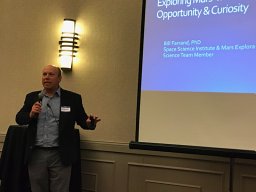 William Farrand合作论文数Space Science Institute14
 Jim Bell合作论文数School Of Earth and Space Exploration, Arizona State University;MILO Space Science Institute;Department of Astronomy, Cornell University12
 Raymond E. Arvidson合作论文数Department of Earth, Environmental, and Planetary Sciences, College of Arts & Sciences, Washington University in St. Louis;NASA9
 Steven W Squyres合作论文数Blue Origin9
 Tianzheng Wang合作论文数School of Computing Science, Faculty of Applied Sciences, Simon Fraser University;Data-Intensive Systems Lab, Simon Fraser University8
 jeffrey f bell合作论文数8
 Philip Christensen合作论文数School of Earth and Space Exploration, Arizona State University7
 Kenneth E. Herkenhoff合作论文数7
 Radu Stoica合作论文数IBM7
 Richard V. Morris合作论文数NASA Johnson Space Center6J Behrens合作论文数6
 Manos Athanassoulis合作论文数Department of Computer Science, College of Arts and Sciences, Boston University6
 Nikos Hardavellas合作论文数Department of Electrical and Computer Engineering, McCormick School of Engineering and Applied Science, Northwestern University;Department of Computer Science, McCormick School of Engineering and Applied Science, Northwestern University6
 Wendy M Calvin合作论文数Department of Geological Sciences and Engineering, College of Science, University of Nevada, Reno6
 John Grotzinger合作论文数Division of Geological and Planetary Sciences, California Institute of Technology5
 Kathryn Blackmond Laskey合作论文数Department of Systems Engineering and Operations Research, George Mason University5Walter A. Powell合作论文数5
 Roald Schrack合作论文数Center for Radiation Research, National Bureau of Standards5Andrew Goldstein合作论文数5
 Scott Murchie合作论文数Applied Physics Laboratory, The Johns Hopkins University5Cd Bowman合作论文数4J Sullivan合作论文数4
 Andrew Knoll合作论文数Department of Earth and Planetary Sciences, Faculty of Arts and Sciences, Harvard University4Kenneth E Herkenhoff合作论文数4
 Scott M. McLennan合作论文数Department of Geosciences, College of Arts and Sciences, Stony Brook University4
 Joy Crisp合作论文数Jet Propulsion Laboratory4Jeffrey Edward Moersch合作论文数Department of Earth and Planetary Sciences;University of Tennessee;Department of Earth and Planetary Sciences, University of Tennessee4
 Angela Demke Brown合作论文数The Edward S. Rogers Sr. Department of Electrical and Computer Engineering, University of Toronto4
 Garret Swart合作论文数Oracle4
 Bogdan Simion合作论文数University of Toronto4Leonard Adelman合作论文数4
 Mark Lemmon合作论文数Space Science Institute4Uwe Fink合作论文数4Michael Altenau合作论文数4
 Bradley L. Jolliff合作论文数Electron Microprobe Laboratory, Department of Earth, Environmental, and Planetary Sciences, College of Arts & Sciences, Washington University in St. Louis;McDonnell Center for the Space Sciences, College of Arts & Sciences, Washington University in St. Louis4
 Steven Ruff合作论文数School of Earth and Space Exploration, Arizona State University4
 Vijayshankar Raman合作论文数Almaden Research Center4Tl Turk合作论文数3anupam ghosh合作论文数3
 Peter Smith合作论文数Space Explorat Instruments3Joshua L. Bandfield合作论文数Space Science Institute;Department of Earth and Space Sciences, University of Washington3Streckfus Charles F合作论文数3Francis G Willwerth合作论文数3
 H. Aumann合作论文数3Kangnyeon Kim合作论文数3
 Harry Y. McSween合作论文数Department of Earth, Environmental, and Planetary Sciences, College of Arts and Sciences, The University of Tennessee, Knoxville3
 Babak Falsafi合作论文数Parallel Systems Architecture Laboratory, Institute of Computer and Communication Sciences, School of Computer and Communication Sciences, EPFL;SDEA3




