The current monkeypox outbreaks during the COVID-19 pandemic have reignited interest in orthopoxvirus antivirals. Monkeypox belongs to the Orthopoxvirus genus of the Poxviridae family, which also includes the variola virus, vaccinia virus, and cowpox virus. Two orally bioavailable drugs, tecovirimat and brincidofovir, have been approved for treating smallpox infections. Given their human safety profiles and in vivo antiviral efficacy in animal models, both drugs have also been recommended to treat monkeypox infection. To facilitate the development of additional orthopoxvirus antivirals, we summarize the antiviral activity, mechanism of action, and mechanism of resistance of orthopoxvirus antivirals. This perspective covers both direct-acting and host-targeting antivirals with an emphasis on drug candidates showing in vivo antiviral efficacy in animal models. We hope to speed the orthopoxvirus antiviral drug discovery by providing medicinal chemists with insights into prioritizing proper drug targets and hits for further development.
Estrogen contributes to the development of breast cancer through estrogen receptor (ER) signaling and by generating genotoxic metabolites that cause oxidative DNA damage. To protect against oxidative stress, cells activate nuclear factor erythroid 2-related factor 2 (Nrf2) and its downstream cytoprotective genes that initiate antioxidant responses and detoxify xenobiotics. Nrf2 activation occurs by inhibiting the protein-protein interaction (PPI) between Nrf2 and its inhibitor Keap1, which otherwise targets Nrf2 for ubiquitination and destruction. In this study, we examined a series of novel direct inhibitors of Keap1-Nrf2 PPI in their role in promoting the availability of Nrf2 for antioxidant activity and attenuating estrogen-mediated responses in breast cancer. ER-positive human breast cancer cells MCF-7 were treated with 17β-estradiol (E2) in the presence or absence of selected Keap1-Nrf2 PPI inhibitors. Keap1-Nrf2 PPI inhibitors suppressed the mRNA and protein levels of estrogen responsive genes induced by E2 exposure, such as PGR. Keap1-Nrf2 PPI inhibitors caused significant activation of Nrf2 target genes. E2 decreased the mRNA and protein level of the Nrf2 target gene NQO1, and the Keap1-Nrf2 PPI inhibitors reversed this effect. The reversal of E2 action by these compounds was not due to binding to ER as ER antagonists. Further, a selected compound attenuated oxidative stress induced by E2, determined by the level of a biomarker 8-oxo-deoxyguanosine. These findings suggest that the Keap1-Nrf2 PPI inhibitors have potent antioxidant activity by activating Nrf2 pathways and inhibit E2-induced gene and protein expression. These compounds may serve as potential chemopreventive agents in estrogen-stimulated breast cancer.
SARS-CoV-2 main protease (Mpro) is a validated antiviral drug target of nirmatrelvir, the active ingredient in Pfizer's oral drug Paxlovid. Drug-drug interactions limit the use of Paxlovid. In addition, drug-resistant Mpro mutants against nirmatrelvir have been identified from cell culture viral passage and naturally occurring variants. As such, there is a need for a second generation of Mpro inhibitors. In this study, we explored several reactive warheads in the design of Mpro inhibitors. We identified Jun11119R (vinyl sulfonamide warhead), Jun10221R (propiolamide warhead), Jun1112R (4-chlorobut-2-ynamide warhead), Jun10541R (nitrile warhead), and Jun10963R (dually activated nitrile warhead) as potent Mpro inhibitors. Jun10541R and Jun10963R also had potent antiviral activity against SARS-CoV-2 in Calu-3 cells with EC50 values of 2.92 and 6.47 μM, respectively. X-ray crystal structures of Mpro with Jun10541R and Jun10221 revealed covalent modification of Cys145. These Mpro inhibitors with diverse reactive warheads collectively represent promising candidates for further development.
The rapid development of effective vaccines to combat the SARS-CoV-2 virus has been an effective counter measure to decrease hospitalization and the mortality rate in many countries. However, with the risk of mutated strains decreasing the efficacy of the vaccine, there has been an increasing demand for antivirals to treat COVID-19. While antivirals, such as remdesivir, have had some success treating COVID-19 patients in hospital settings, there is a need for orally bioavailable, cost-effective antivirals that can be administered in outpatient settings to minimize COVID-19-related hospitalizations and death. Nirmatrelvir (PF-07321332) is an orally bioavailable Mpro (also called 3CLpro) inhibitor developed by Pfizer. It is administered in combination with ritonavir, a potent CYP3A4 inhibitor that decreases the metabolism of nirmatrelvir. This review seeks to outline the history of the rational design, the target selectivity, synthesis, drug resistance, and future perspectives of nirmatrelvir.
ConspectusSARS-CoV-2 is the etiological pathogen of the COVID-19 pandemic, which led to more than 6.5 million deaths since the beginning of the outbreak in December 2019. The unprecedented disruption of social life and public health caused by COVID-19 calls for fast-track development of diagnostic kits, vaccines, and antiviral drugs. Small molecule antivirals are essential complements of vaccines and can be used for the treatment of SARS-CoV-2 infections. Currently, there are three FDA-approved antiviral drugs, remdesivir, molnupiravir, and paxlovid. Given the moderate clinical efficacy of remdesivir and molnupiravir, the drug–drug interaction of paxlovid, and the emergence of SARS-CoV-2 variants with potential drug-resistant mutations, there is a pressing need for additional antivirals to combat current and future coronavirus outbreaks.In this Account, we describe our efforts in developing covalent and noncovalent main protease (Mpro) inhibitors and the identification of nirmatrelvir-resistant mutants. We initially discovered GC376, calpain inhibitors II and XII, and boceprevir as dual inhibitors of Mpro and host cathepsin L from a screening of a protease inhibitor library. Given the controversy of targeting cathepsin L, we subsequently shifted the focus to designing Mpro-specific inhibitors. Specifically, guided by the X-ray crystal structures of these initial hits, we designed noncovalent Mpro inhibitors such as Jun8-76-3R that are highly selective toward Mpro over host cathepsin L. Using the same scaffold, we also designed covalent Mpro inhibitors with novel cysteine reactive warheads containing di- and trihaloacetamides, which similarly had high target specificity. In parallel to our drug discovery efforts, we developed the cell-based FlipGFP Mpro assay to characterize the cellular target engagement of our rationally designed Mpro inhibitors. The FlipGFP assay was also applied to validate the structurally disparate Mpro inhibitors reported in the literature. Lastly, we introduce recent progress in identifying naturally occurring Mpro mutants that are resistant to nirmatrelvir from genome mining of the nsp5 sequences deposited in the GISAID database. Collectively, the covalent and noncovalent Mpro inhibitors and the nirmatrelvir-resistant hot spot residues from our studies provide insightful guidance for future work aimed at developing orally bioavailable Mpro inhibitors that do not have overlapping resistance profile with nirmatrelvir.
L-Ascorbate (vitamin C) is ubiquitous in both our diet and the environment. Ralstonia eutropha H16 (Cupriavidus necator ATCC 17699) uses L-ascorbate as sole carbon source but lacks the genes encoding the known catabolic pathways. RNAseq identified eight candidate catabolic genes. Sequence similarity networks and genome neighborhood networks guided predictions for function of the encoded proteins; the predictions were confirmed by in vitro assays and in vivo growth phenotypes of gene deletion mutants. L-Ascorbate, a lactone, is oxidized and ring-opened by enzymes in the cytochrome b561 and gluconolactonase families, respectively, to form 2,3-diketo-L-gulonate. A protein predicted to have a WD40-like fold catalyzes an unprecedented benzilic acid rearrangement involving migration of a carboxylate group to form 2-carboxy-L-lyxonolactone; the lactone is hydrolyzed by a member of the amidohydrolase superfamily to yield 2-carboxy-L-lyxonate. A member of the PdxA family of oxidative decarboxylases catalyzes a novel decarboxylation that uses NAD+ catalytically. The product, L-lyxonate, is catabolized to alpha-ketoglutarate by a previously characterized pathway.
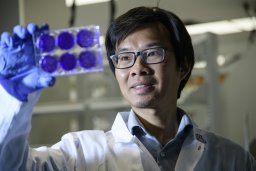 Wang Jun合作论文数4
 Haozhou Tan合作论文数3
 Kan Li合作论文数2Bin Tan合作论文数Ernest Mario School of Pharmacy, the State University of New Jersey2Ahmed R. Ali合作论文数1Khadija Bhatti合作论文数1Madison Jermain合作论文数1Thomas Dettmer合作论文数1Katelyn Morrison合作论文数1Chan Kim合作论文数1Angelo Chen合作论文数1Md Shahed-Ai-Mahmud合作论文数1Yadanar T Naing合作论文数1Brendan Wille合作论文数1Ge Yang合作论文数1Michael D Sacco合作论文数Morsani Coll Med, Univ S Florida1Cassandra Winz合作论文数1Tyler M M Stack合作论文数1Xiujun Zhang合作论文数1Yanmei Hu合作论文数1
 Michael Carter合作论文数School of Life Course Sciences, Faculty of Life Sciences & Medicine, King’s College London1Chen Yu合作论文数1
 Brian San Francisco合作论文数1Hu Longqin合作论文数1
 John A. Gerlt合作论文数School of Molecular & Cellular Biology, College of Liberal Arts and Sciences, University of Illinois at Urbana-Champaign1
 Philip Furmanski合作论文数Environmental and Occupational Health Sciences Institute, Ernest Mario School of Pharmacy, Rutgers, The State University of New Jersey1N.P. Suh合作论文数1
 Renping Zhou合作论文数Department of Chemical Biology, Ernest Mario School of Pharmacy, Rutgers University1




