Can rest offer individuals the reserves necessary to be resilient? The present study surveyed working adults (N = 381) about their own weekly rest practices, communicative resilience, and advice they would give others about rest. Content and statistical analyses revealed that both the (a) number and (b) multimodality of rest practices spontaneously reported by participants were significantly associated with communicative resilience. Furthermore, results indicated modality of rest practices reported were differentially related to resilience, such that some modes of rest were associated with resilience, while others were not. Inductive qualitative analysis of participants' rest advice provided insights into what differentiates advice about rest between employees who score high and low in communicative resilience. Implications for expanding the communicative theory of resilience (CTR) beyond its social constructionist assumptions are discussed.
This forum joins communication researchers who explore high reliability organizations (HROs) and teams to discuss the communicative foundations of HRO. We argue that organizational communication researchers can make meaningful contributions to present challenges in HRO research. These challenges include (1) HRO’s focus on organizations versus processes of organizing, (2) tensions in defining success and failure to create reliability, and (3) the privileging of rational thought patterns and communication over emotional and care-centered communication. The authors in this forum push boundaries around organization types, consider overlooked and obscured knowledge, and question the role of power and materiality in HROs. Together, the forum advocates for the unique contributions organizational communication scholars can make to the study of HRO and, just as significantly, what HRO theorizing can contribute to organizational communication.
Imagined interactions (IIs) are conversational daydreams communicators can use to envision how interactions might unfold prospectively or how they might have unfolded differently in retrospect. In this study, imagined interactions with the boss (IIB) were investigated alongside employees' upward dissent and silence. Analyses of survey responses from U.S. working adults (N = 322) revealed that three functions (rehearsal, relationship management, and compensation) and three characteristics (frequency, proactivity, and specificity) of IIB were associated with various upward dissent or defensive silence strategies. The general pattern of findings indicated that when employees reported rehearsal or relationship management IIB, they tended to select communicatively-competent dissent strategies (e.g., prosocial dissent). The study is the first of its kind to associate IIB with upward dissent selection. Implications for theory and practice conclude the paper.
This paper reports on the development and validation of a communication measure designed to assess how military veterans feel toward civilian communication. Specifically, we theorize that some veterans experience a mild negative moral emotion (i.e., contempt) toward civilians' communication habits. The emotion is likely a consequence of intense professional socialization and membership in a totalistic organization. Veterans who served in the military since September 11, 2001 (N = 215) responded to items, which were factor analyzed. Then, in a second study, the scale was validated using another sample of post-9/11 veterans (N = 466). Together, these studies contribute an original communication measure that could help identify whether a veteran will have difficulty reintegrating into civilian work life. The scale could be useful in developing interventions to aid veterans in successful reintegration. Ultimately, the measure holds the potential to promote workplace diversity through the successful inclusion of more veterans in the workforce.
 Joann Keyton合作论文数North Carolina State University11
 Amber S. Messersmith合作论文数9
 Alaina C. Zanin合作论文数Arizona State Univ7
 Elissa Arterburn Adame合作论文数6
 Deanna L Bisel合作论文数6
 Nicole A. Ploeger-Lyons合作论文数6
 William T. Howe合作论文数Dept Commun, Univ Kentucky5katherine m kelley合作论文数4
 Katherine Ann Rush合作论文数Univ Oklahoma4
 Arden C. Roeder合作论文数Communication Studies, Texas Christian University4
 Michael W Kramer合作论文数Klinik für Urologie und Urologische Onkologie, Medizinische Hochschule Hannover3
 Sarah J Tracy合作论文数The Hugh Downs School of Human Communication, College of Liberal Arts and Sciences, Arizona State University3Debra J. Ford合作论文数2
 Pavitra Kavya合作论文数Dept Commun, Calif State Polytech Univ Pomona2
 Jacqueline S. Bruscella合作论文数Department of Communication & Media, SUNY Oneonta2
 Jasmine T. Austin合作论文数Texas State Univ2
 Dennis Schoeneborn合作论文数Copenhagen Business School2
 Isabel C. Botero合作论文数2
 Stacey Wieland合作论文数2
 James O. Olufowote合作论文数2
 Elizabeth Minei合作论文数2Stephenson Beck合作论文数2
 Matthew A. Koschmann合作论文数2Canchu Lin合作论文数2
 John Banas合作论文数Tufts-New England Medical Center Boston2
 Linda Perriton合作论文数2J. Kevin Barge合作论文数2
 Jake G Messersmith合作论文数2Nan (Tina) Wang合作论文数1Marisa L. Flores合作论文数1elissa arterburn合作论文数1
 Da Bi合作论文数1Britney Gilmore合作论文数1Chandler T. Marr合作论文数1
 Rebecca Rice合作论文数Dept Commun Studies, Univ Nevada1
 Zachary Massey合作论文数Sch Journalism, Univ Missouri1
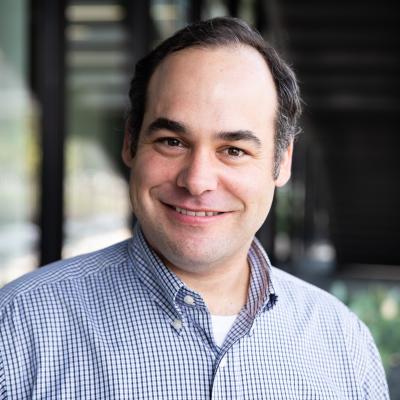 Jeffrey Treem合作论文数Department of Communication Studies, Moody College of Communication, University of Texas at Austin1
 Brittney S. Morrissey合作论文数1
 Amber Lynn Scott合作论文数Annenberg Sch Commun & Journalism, Univ Southern Calif1
 Timothy Huffman合作论文数1
 Jessica L. Ford合作论文数1Elizabeth A. Williams合作论文数1
 Thomas Kelemen合作论文数Dept Management, Kansas State Univ1
 Stephanie Fox合作论文数1
 Kirstie McAllum合作论文数Department of Communication, Université de Montréal1Bobby Rozzell合作论文数1
 Cameron W. Piercy合作论文数1Raymond Ozley合作论文数1Jill A. Edy合作论文数1




