Onset detection is the process of identifying the start points of musical note events within an audio recording. While the detection of percussive onsets is often considered a solved problem, soft onsets-as found in string instrument recordings-still pose a significant challenge for state-of-the-art algorithms. The problem is further exacerbated by a paucity of data containing expert annotations and research related to best practices for curating soft onset annotations for string instruments. To this end, we investigate inter-annotator agreement between 24 participants, extend an algorithm for determining the most consistent annotator, and compare the performance of human annotators and state-of-the-art onset detection algorithms. Experimental results reveal a positive trend between musical experience and both inter-annotator agreement and performance in comparison with automated systems. Additionally, onsets produced by changes in fingering as well as those from the cello were found to be particularly challenging for both human annotators and automatic approaches. To promote research in best practices for annotation of soft onsets, we have made all experimental data associated with this study publicly available. In addition, we publish the ARME Virtuoso Strings dataset, consisting of over 144 recordings of professional performances of an excerpt from Haydn's string quartet Op. 74 No. 1 Finale, each with corresponding individual instrumental onset annotations.
This meeting report gives an overview of the DAFx 2019 conference held in September 2019 at Birmingham City University, Birmingham, UK. The conference had the same theme as this special issue: digital audio effects. In total, 51 papers were presented at DAFx 2019 either in oral or in poster sessions. The conference had 157 delegates, almost half from industry and the rest from universities around the world. As the number of submissions and participants remains sufficiently high, it is planned that the DAFx conference series will be continued every autumn.
Intelligent Music Production presents the state of the art in approaches, methodologies and systems from the emerging field of automation in music mixing and mastering. This book collects the relevant works in the domain of innovation in music production, and orders them in a way that outlines the way forward: first, covering our knowledge of the music production processes; then by reviewing the methodologies in classification, data collection and perceptual evaluation; and finally by presenting recent advances on introducing intelligence in audio effects, sound engineering processes and music production interfaces. Intelligent Music Production is a comprehensive guide, providing an introductory read for beginners, as well as a crucial reference point for experienced researchers, producers, engineers and developers.
Accurate estimation of note onset timing is important for music ensemble performance analysis and synthesis. In this study, we present a method for the detection of onsets from polyphonic mixtures, using score information. First, a MIDI score is aligned to the audio signal using dynamic time warping, and pitches of performed notes are refined using a multi-pitch estimation technique. Notes in a signal are then isolated using a spectral masking method, based on the average harmonic structure learned from each source. Onset timing is finally estimated by maximizing the time derivative of the energy curve of the note within an observation window. We show that this method significantly improves the onset timing estimation accuracy, measured by both the align rate and onset time deviation, and outperforms a state-of-art reference method.
The majority of state-of-the-art methods for music infor-mation retrieval (MIR) tasks now utilise deep learningmethods reliant on minimisation of loss functions such ascross entropy. For tasks that include framewise binaryclassification (e.g., onset detection, music transcription)classes are derived from output activation functions byidentifying points of local maxima, or peaks. However, theoperating principles behind peak picking are different tothat of the cross entropy loss function, which minimises theabsolute difference between the output and target valuesfor a single frame. To generate activation functions moresuited to peak-picking, we propose two versions of a newloss function that incorporates information from multipletime-steps: 1)multi-individual, which uses multiple indi-vidual time-step cross entropies; and 2)multi-difference,which directly compares the difference between sequentialtime-step outputs. We evaluate the newly proposed lossfunctions alongside standard cross entropy in the popularMIR tasks of onset detection and automatic drum tran-scription. The results highlight the effectiveness of theseloss functions in the improvement of overall system ac-curacies for both MIR tasks. Additionally, directly com-paring the output from sequential time-steps in the multi-difference approach achieves the highest performance.
In this study we investigate ways in which data sonification can improve standard data analysis techniques currently employed in the analysis of stem-cells using Fourier Transform Infrared (FTIR) Spectroscopy. Four different sonification methods have been evaluated and their effectiveness has been evaluated through listening tests, designed to assess the discriminating capability of the auditory technique. We identify FM synthesis driven by feature extraction as the most perceptually relevant technique for the auditory classification of FTIR data. Whilst this technique is not commonly used in sonification research, it allows us to utilise the most salient characteristics of the absorption spectra, leading to an improved classification accuracy with a clear timbral differences between differentiated and non-differentiated cell-types.
 Joshua Reiss合作论文数21
 Brecht De Man合作论文数Ctr Digital Mus, Queen Mary Univ London17
 Nicholas Jillings合作论文数15
 Jason Hockman合作论文数McGill University12
 Carl Southall合作论文数Digital Media Technology Lab, Birmingham City University6Alan M. Wing合作论文数6Sean Enderby合作论文数5
 Cham Athwal合作论文数The School of Digital Media Technology, Birmingham City University5
 Yonghao Wang合作论文数Birmingham City Univ, DMT Lab, Birmingham, W Midlands, England4Clemens Graeme合作论文数4
 Jamie Bullock合作论文数Conservatoire Music Technology4
 Matthew James Baker合作论文数Hunter College and the Graduate Center, City University of New York4
 Dominic Ward合作论文数4Spyridon Stasis合作论文数Birmingham City University3Dawson Timothy合作论文数3Ashton Katherine M合作论文数3
 Michael Jenkinson合作论文数Department of Pharmacology and Therapeutics, Institute of Systems, Molecular and Integrative Biology, Faculty of Health and Life Sciences, University of Liverpool3
 Andrew Brodbelt合作论文数3Matthew Cheshire合作论文数2
 Charles K Davis合作论文数Department of Neurological Surgery (, University of Wisconsin, Madison2Bradbury Adrian合作论文数2
 Hands James R合作论文数Centre for Materials Science, University of Central Lancashire2Thomas Wilmering合作论文数Queen Mary University of London2Robert W. Lea合作论文数2
 Mark Elliott合作论文数Warwick Manufacturing Group, Faculty of Science, Engineering and Medicine, The University of Warwick2
 Diego Vicinanza合作论文数University and INFN, Salerno, I-84100 Salerno, Italy2
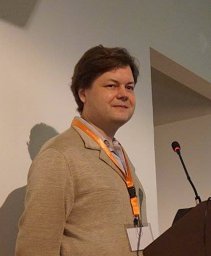 György Fazekas合作论文数Centre for Digital Music, Queen Mary University of London2
 Maria Witek合作论文数Department of Music, School of Languages, Cultures, Art History and Music, College of Arts and Law, University of Birmingham2rob cade合作论文数1Xueyang Wang合作论文数1Min Susan Li合作论文数1
 Dagmar S Fraser合作论文数School of Psychology and Centre for Human Brain Health, University of Birmingham1
 Diar Abdlkarim合作论文数Univ Birmingham1
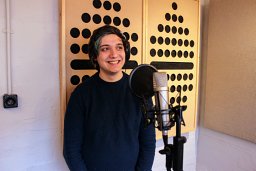 Tom Goodman合作论文数Sch Comp Sci, Univ Birmingham1
 Maciej Tomczak合作论文数Birmingham City University, Birmingham, United Kingdom1
 Federico Fontana合作论文数Circolo Hospital-ASST dei Sette Laghi, University of Insubria1
 Bochen Li合作论文数1
 David C. Moffat合作论文数School of Engineering Computing, Glasgow Caledonian University1
 Butler Holly J合作论文数Lancaster Environment Centre, Lancaster University1
 Fullwood Leanne M合作论文数Department of Pure and Applied Chemistry, University of Strathclyde1
 Vesa Välimäki合作论文数Department of Signal Processing and Acoustics, Aalto University;School of Electrical Engineering, Aalto University1
 Satoshi Endo合作论文数1
 Massimiliano Di Luca合作论文数School of Psychology, College of Life and Environmental Sciences, University of Birmingham1
 Ian Williams合作论文数Digital Media Technology Lab, Birmingham City University1Carol Walker合作论文数1
 Nori Jacoby合作论文数Max Planck Institute for Empirical Aesthetics, Frankfurt1
 Zhiyao Duan (段志尧)合作论文数Department of Electrical and Computer Engineering, Hajim School of Engineering & Applied Sciences, University of Rochester;Department of Computer Science, University of Rochester;Goergen Institute for Data Science, University of Rochester1




