This study was conducted to analyze and determine formation potentials for chlorination disinfection by-products (DBPs) from twenty amino acid compounds with or without . Two of twenty amino acid compound were tryptophan and tyrosine that were relatively shown high for formation of trihalomethanes (THMs)/dissolved organic carbon (DOC) whether or not presented. Other 18 compounds were shown low for formation of THMs/DOC whether or not presented. Five amino acid compounds that were tryptophan, tyrosine, asparagine, aspartic acid and histidine were shown high for formation of haloacetic acids (HAAs)/DOC whether or not presented. Although formation of dichloroacetic acid (DCAA) was dominated in asparagine, aspartic acid and histidine, trichloroacetic acid (TCAA) was dominated in tryptophan and tryptophan. The formation of haloacetnitriles (HANs)/DOC whether or not presented was high in Aspartic acid, histidine, asparagine, tyrosine and tryptophan. Specially, aspartic acid was detected 660.2 g/mg (HAN/DOC). Although the formation of chloralhydrate (CH)/DOC was shown high in asparagine, aspartic acid, histidine, methionine, tryptophan and tyrosine, the formation of Chloropicrin (CP)/DOC was low (1 g/mg) in twenty amino acid compounds. The formations of THM, HAA and HAN were also investigated in functional groups of amino acids. The highest formation of THM was shown in amino acids compounds (tryptophan and tyrosine) with an aromatic functional group. Highest, second-highest, third-highest and fourth-highest functional groups for formation of HAA were aromatic, neutral, acidic and basic respectively. In order of increasing functional groups for formation of HAN were acidic, basic, neutral and aromatic.
This study examined the special technique of photocatalytic degradation (RPODisk) for removal of taste and odor causing materials, algae, and algal toxin.The RPODisk was effective for removal of these troublesome contaminants.It outperformed the fixed media and the UV irradiation for geosmin removal.The RPODisk performance was comparable to the combination of the UV irradiation with TiO2.The RPODisk performance was affected by the rotating speed.The faster the speed was, the better the performance.The RPODisk was also effective for removal of algae and algal toxin.The algal activity reduced by 80% after 30 mins of the treatment.More toxic microcystin (MC)-LR was more difficult to remove than MC-RR.The times for 50% removal were 23.7 mins for MC-LR and 14.1 mins for MC-RR.Almost 100 mins of the contact time was required to completely remove MC-LR at the rotating speed of 260 rpm.
Membrane separation is extensively used for water/wastewater treatment because of its efficiency separation processes. However, particles in the feed water can deposit and accumulate on the membrane surface to created cake layer. As a consequence, the selectivity of the membrane and flux through the membrane are decreased, which is called fouling/blocking phenomenon. In order to solve fouling problem, we developed a novel membrane named Carbon Whisker Membrane (CWM) which contains vapor-grown carbon fibers/whiskers on the surface of the membrane and a layer of carbon film coated on the ceramic substrate. We firstly employed polymethyl methacrylate (PMMA) as a testing material to investigate the fouling mechanism. The results suggested that Carbon Whiskers on the surface of the membrane can prevent the directly contact between the membrane body and particles so that the fouling/blocking could not occurred easily compared to the membrane without carbon whiskers. We also researched the relationship with the diameter, density of carbon whisker on the membrane surface and total flux of solutions. Finally, we will be able to control the diameter and density of carbon whiskers on the membrane and existence of carbon whiskers on the membrane, it is important factor, might be prevent fouling/blocking in the water treatment.
Coal-, coconut- and wood-based activated carbons and anthracite were tested to evaluate adsorption and biodegradation performances of chloral hydrate. In the early stage of the operation, the adsorption was the main mechanism for the removal of chloral hydrate, however as increasing populations of attached bacteria, the bacteria played a major role in removing chloral hydrate in the activated carbon and anthracite biofilter. It was also investigated that chloral hydrate was readily subjected to biodegrade. The coal- and coconut-based activated carbons were found to be most effective adsorbents in adsorption of chloral hydrate. Highest populations and activity of attached bacteria were shown in the coal-based activated carbon. The populations and activity of attached bacteria decreased in the order: coconut-based activated carbon > wood-based activated carbon > anthracite. The attached bacteria was inhibited in the removal of chloral hydrate at temperatures below 10. It was more active at higher water temperatures(20 >). The removal efficiencies of chloral hydrate obtained by using four different adsorbents were directly related to the water temperatures. Water temperature was the most important factor for removal of chloral hydrate in the anthracite biofilter because the removal of chloral hydrate depended mainly on biodegradation. Therefore, the main removal mechanism of chloral hydrate by applying activated carbon was both adsorption and biodegradation by the attached bacteria. The observation suggests that the application of coalbased activated carbon to the water treatment should be the best for the removal of chloral hydrate.
A PCF(Pore Controllable Fiber Filter) process was applied as a pretreatment of water treatment for reduction of turbidity. The experimental results obtained from the PCF showed that the removal efficiency of turbidity without coagulation was around over 70 percent. However, the removal efficiency of turbidity by the coagulation-PCF process was high as much as over 95%. Thus, the coagulation pretreatment was required for the better operation of the PCF. The SEM (Scanning Electron Microscope) images of fiber before and after filtration showed that the filtration mechanism of PCF filter is both controlling attachment mechanism and Sieving mechanism through fiber pore. For the coagulation-PCF process, optimum dosage of coagulant was needed for the economical operation, and for this, determining the optimum dosage by using a filter column test. Also only 16mg/L of alum was used to obtain high algae removal efficiency over 90%. Therefore, it can be concluded that coagulation-PCF process is very effective pretreatment process for algae removal.
 Heejong Son合作论文数11
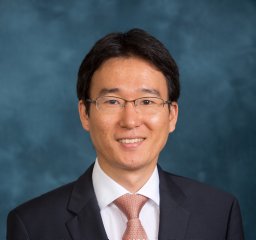 Chulwoo Jung合作论文数Columbia University8
 Akiyoshi Sakoda合作论文数5Youngik Choi合作论文数4
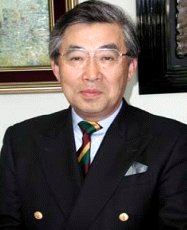 Motoyuki Suzuki合作论文数United Nations University2Yuan-Yao Li合作论文数2Lim-Seok Kang合作论文数2Masaki Sagehashi合作论文数2Takeshi Nomura合作论文数Tokai University2Jae-Soon Roh合作论文数1Sun-Jae You合作论文数1Hwa-Ja Lee合作论文数1Wook-Sung Ahn合作论文数1Kwonhoo Kim合作论文数1




