Next-generation electron photoinjector accelerators, such as the LCLS-II photoinjector, have increasingly tight requirements on the excitation lasers, often calling for tens of picosecond, temporally flat-top, ultraviolet (UV) pulse trains to be delivered at up to 1 MHz[1]. We present a numerical and experimental implementation of a non-colinear sum frequency generation scheme wherein the incident optical pulses have equal and opposite amounts of spectral dispersion resulting in a spectrally narrowband pulse with flat-top temporal profile[2]. In preliminary experiments we achieve upwards of 40% conversion efficiency with this process. We additionally demonstrate the ability for the narrowband pulses to be directly upconverted to the UV for driving a photocathode.
Active longitudinal beam optics can help FEL facilities achieve cutting edge performance by optimizing the beam to: produce multi-color pulses, suppress caustics, or support attosecond lasing. As the next generation of superconducting accelerators comes online, there is a need to find new elements which can both operate at high beam power and which offer multiplexing capabilities at Mhz repetition rate. Laser heater shaping promises to satisfy both criteria by imparting a programmable slice-energy spread on a shot-by-shot basis. We use a simple kinetic analysis to show how control of the slice energy spread translates into control of the bunch current profile, and then we present a collection of start-to-end simulations at LCLS-II in order to illustrate the technique.
Dark-adapted vision in mammals starts with the absorption of a photon and the activation of rhodopsin, a G protein-coupled receptor. The early stages of rhodopsin activation involve the cis-to-trans isomerization of the receptor's ligand (retinal) and a relaxation process that drives the receptor through several non-equilibrium intermediates. These ultra-fast phenomena have been previously characterized spectroscopically. However, the structural information available that describes the femtosecond-to-picosecond scale changes involved is limited. Time-resolved small- and wide-angle X-ray scattering with free electron lasers is an emerging technique that has been shown to provide insights into the functional protein dynamics that take place at these timescales. Still, extracting structural information from scattering data is challenging. All-atom molecular dynamics can aid the interpretation of these experimental signals. Starting from well-equilibrated dark-state simulations of bovine rhodopsin, we run and analyze thousands of 10 ps trajectories in two environments—bilayers and micelles—and two conditions—dark and light-excited—to model the process of energy dispersion across the receptor after light-excitation. We observe an increase in the radius of gyration of the receptor after light-excitation and a propagation of the light-induced perturbation across the protein that occurs roughly at the speed of sound.
 A. Batyuk合作论文数28
 Sebastien Boutet合作论文数Radiation Laboratory;Stanford Linear Accelerator Center26R.L. Shoeman合作论文数21C.M. Roome合作论文数21L. Foucar合作论文数21M. Seaberg合作论文数21J.-P. Colletier合作论文数21M. Hilpert合作论文数21
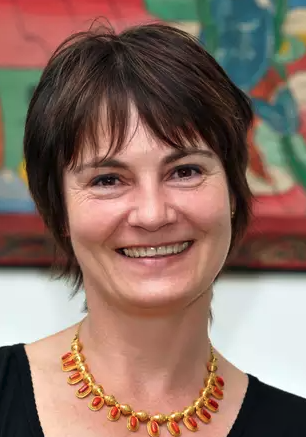 Ilme Schlichting合作论文数Department of Biosciences, Heidelberg University;Department of Physics and Astronomy, Heidelberg University;Department of Biomolecular Mechanisms, Max Planck Institute for Medical Research21R. Bruce Doak合作论文数21S. Haacke合作论文数18T. Domratcheva合作论文数18A. Gorel合作论文数18R. Gasper合作论文数18R. Schlesinger合作论文数18J. Reinstein合作论文数18T. Stensitzki合作论文数18M.L. Gruenbein合作论文数18G. Nass Kovacs合作论文数18M. Stricker合作论文数18J. Koglin合作论文数18M. Kloos合作论文数18D. Ehrenberg合作论文数18
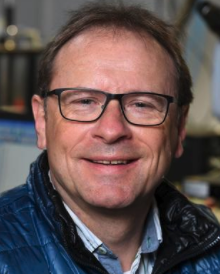 Joachim Heberle合作论文数Department of Physics, Freie Universität Berlin18A.S. Brewster合作论文数10H. Dobbek合作论文数10I.D. Young合作论文数10N.W. Moriarty合作论文数10J.M. Holton合作论文数10F.D. Fuller合作论文数10C. de Lichtenberg合作论文数10L. Lassalle合作论文数10M.H. Cheah合作论文数10A. Zouni合作论文数10N. Sauter合作论文数10S. Gul合作论文数10M. Ibrahim合作论文数10J. Kern合作论文数10R. Chatterjee合作论文数10R. Hussein合作论文数10
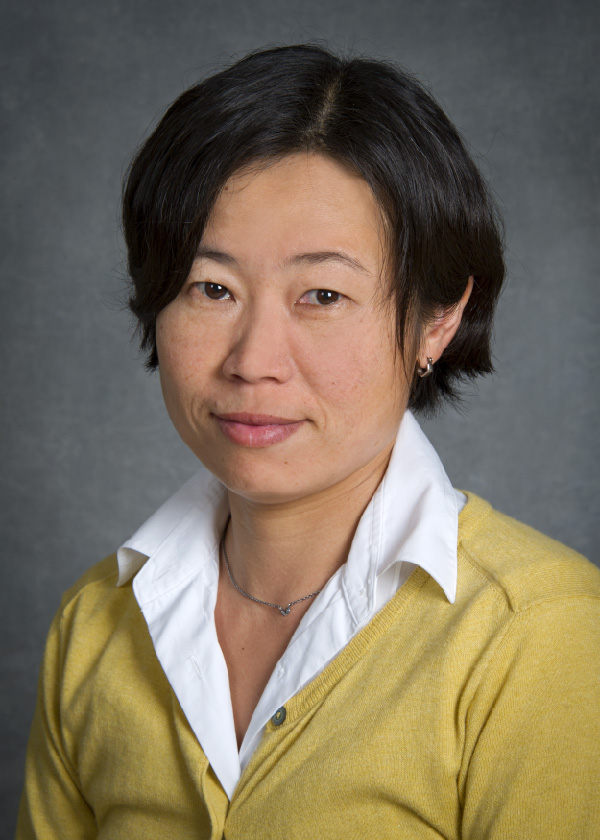 Junko Yano合作论文数Molecular Biophysics and Integrated Bioimaging Division, Lawrence Berkeley National Laboratory10
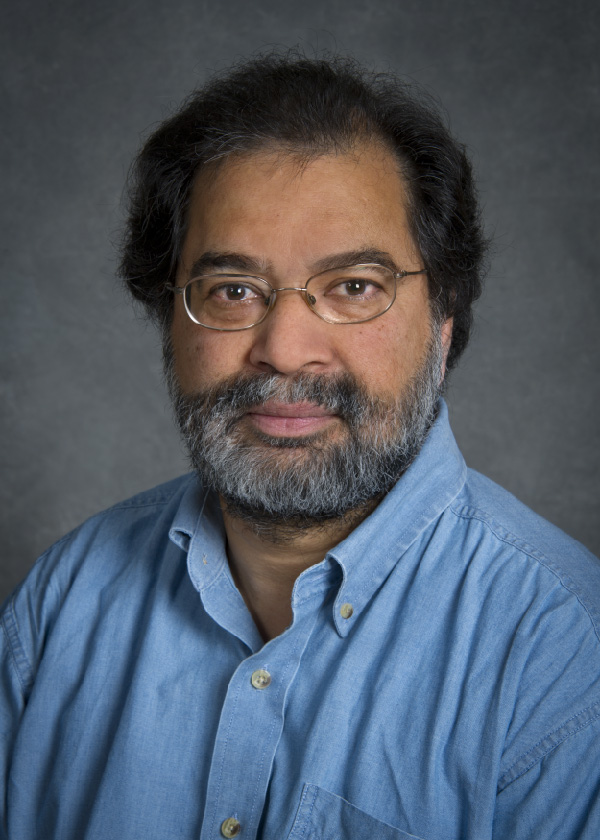 Vittal K. Yachandra合作论文数Lawrence Berkeley National Laboratory10
 Roberto Alonso-Mori合作论文数SLAC National Accelerator Laboratory, Stanford University;Biochemistry and Condensed Phase Chemistry Group, Chemical Sciences Department, Stanford University10
 Paul D. Adams合作论文数Department of Bioengineering, UC Berkeley;Lawrence Berkeley National Laboratory10U. Bergmann合作论文数8T.R.M. Barends合作论文数7M. Liang合作论文数7
 Johannes Messinger合作论文数Angstrom Laboratory, Department of Chemistry, Uppsala University6
 Jason E Koglin合作论文数Los Alamos National Laboratory6




