Predictive models of ectotherm responses to environmental change often rely on thermal performance data from the literature. For insects, the majority of these data focus on two traits, development rate and thermal tolerance limits. Data are also often limited to the adult stage. Consequently, predictions based on these data generally ignore other measures of thermal performance and do not account for the role of ontogenetic variation in thermal physiology across the complex insect life cycle. Theoretical syntheses for predicting metabolic rate also make similar assumptions despite the strong influence of body size as well as temperature on metabolic rate. The aim of this study was to understand the influence of ontogenetic variation on ectotherm physiology and its potential impact on predictive modeling. To do this, we examined metabolic rate-temperature (MR-T) relationships across the larval stage in a laboratory strain of the spongy moth (Lymantria dispar dispar). Routine metabolic rates (RMRs) of larvae were assayed at eight temperatures across the first five instars of the larval stage. After accounting for differences in body mass, larval instars showed significant variation in MR-T. Both the temperature sensitivity and allometry of RMR increased and peaked during the third instar, then declined in the fourth and fifth instar. Generally, these results show that insect thermal physiology does not remain static during larval ontogeny and suggest that ontogenetic variation should be an important consideration when modeling thermal performance.
Metabolic rate is a widely-studied physiological species trait related to energetics, climate, and geographic distributions. Hypotheses have been proposed to explain variation in metabolic rate, but evidence has been mixed due to the limited sampling scope of intraspecific studies. Successful biological invasions offer a unique opportunity to examine the development of intraspecific physiological variation and how it relates to climate, invasive spread, and species range limits. Here we conducted a macro-scale study of routine metabolic rate variation across the Spongy moth (Lymantria dispar) invasive range in North America. We found a positive latitudinal cline with population-specific metabolic rates increasing from the southern range to the north that was significantly related to climate. Our comprehensive macrophysiological analyses provide further evidence that local adaptation of physiological and life history traits to climate has played a significant role in the spread of L. dipsar across the landscape in the past 150 years.
Temperature and its impact on fitness are fundamental for understanding range shifts and population dynamics under climate change. Geographic climate heterogeneity, behavioral and physiological plasticity, and thermal adaptation to local climates make predicting the responses of species to climate change complex. Using larvae from seven geographically distinct wild populations in the eastern United States of the non-native forest pest Lymantria dispar dispar (L.), we conducted a simulated reciprocal transplant experiment in environmental chambers using six custom temperature regimes representing contemporary conditions near the southern and northern extremes of the US invasion front and projections under two climate change scenarios for the year 2050. Larval growth and development rates increased with climate warming compared with current thermal regimes and tended to be greater for individuals originally sourced from southern rather than northern populations. Although increases in growth and development rates with warming varied somewhat by region of the source population, there was not strong evidence of local adaptation, southern populations tended to outperform those from northern populations in all thermal regimes. Our study demonstrates the utility of simulating thermal regimes under climate change in environmental chambers and emphasizes how the impacts from future increases in temperature can vary based on geographic differences in climate-related performance among populations.
Temperature and its impact on fitness are fundamental for understanding range shifts and population dynamics under climate change. Geographic climate heterogeneity, behavioural and physiological plasticity, and thermal adaptation to local climates makes predicting the responses of species to climate change complex. Using larvae from seven geographically distinct wild populations in the eastern United States of the non-native forest pest Lymantria dispar dispar (L.), we conducted a simulated reciprocal transplant experiment in environmental chambers using six custom temperature regimes representing contemporary conditions near the southern and northern extremes of the US invasion front and projections under two climate change scenarios for the year 2050. Larval growth rates increased with climate warming compared to current thermal regimes and responses differed by population. A significant population-by-treatment interaction indicated that growth rates increased more when a source population experienced the warming scenarios for their region, especially for southern populations. Our study demonstrates the utility of simulating thermal regimes under climate change in environmental chambers and emphasizes how the impacts from future increases in temperature can be heterogeneous due to geographic differences in climate-related performance among populations.
Aim Invasive species are ideal system, for testing geographical differences in performance traits and measuring evolutionary responses as a species spreads across divergent climates and habitats. The European gypsy moth, Lymantria dispar dispar L. (Lepidoptera: Erebidae), is a generalist forest defoliator introduced to Medford, Massachusetts, USA in 1869. The invasion front extends from Minnesota to North Carolina and the ability of this species to adapt to local climate may contribute to its continuing spread. We evaluated the performance of populations along the climatic gradient of the invasion front to test for a relationship between climate and ecologically important performance traits. Location Eastern United States of America Taxon Lymantria dispar dispar L. (Lepidoptera: Erebidae) Methods Insects from 14 populations across the US invasion front and interior of the invasive range were reared from hatch to adult emergence in six constant temperature treatments. The responses of survival, pupal mass and larval development time were analysed as a function of source climate (annual mean normal temperature), rearing temperature and their interaction using multiple polynomial regression. Results With the exception of female development time, there were no significant interactions between source climate and rearing temperature, indicating little divergence in the shape of thermal reaction norms among populations. Source population and rearing temperature were significant predictors of survival and pupal mass. Independent of rearing temperature, populations from warmer climates had lower survival than those from colder climates, but attained larger body size despite similar development times. Larval development time was dependent on rearing temperature, but there were not consistent relationships with source climate. Main Conclusions Thermal adaptation can be an important factor shaping the spread of invasive species, particularly in the context of climate change. Our results suggest that L. d. dispar is highly plastic, but has undergone climate-related adaptation in thermal performance and life-history traits as it spread across North America.
Lizards at the northern, cool edge of their geographic range in the northern hemisphere should encounter environmental conditions that differ from those living near the core of their range. To better understand how modest climate differences affect lizard energetics, we compared daily feeding and metabolism rates of individual Sceloporus occidentalis in two populations during mid-summer. Chuckanut Beach (CB) was a cool, maritime climate in northern Washington State, and Sondino Ranch (SR) was a warmer, drier climate in southern, inland Washington. We found no difference between populations in daily energy expenditure (DEE), as calculated from doubly labeled water estimates. The CB population, however, had significantly higher prey availability and rate of daily energy intake (DEI) as estimated from fecal pellet masses. Consequently, CB lizards had higher size-adjusted body masses than lizards from SR. Within CB, during midsummer, DEE was similar to DEI. Within the SR population, DEE trended higher than DEI during mid-summer, but was not significantly different. We found no population differences in lizard activity, active body temperature, or preferred body temperature. Hence, we infer the longer activity season for the SR population may compensate for the low food availability and high daily energy cost of midsummer. Moreover, for the CB population, we infer that cooler temperatures and higher food availability allow the lizards to compensate for the shorter activity. We also suggest the CB population may benefit from the predicted warmer temperatures associated with climate change given the similar activity-period body temperatures and DEE between these lizard populations assuming food availability is sufficient.
Phylogenetic MCMCglmm model of the effects of ambient temperature on whole-body and HDA surface temperature.
At high temperature (greater than 40°C) endotherms experience reduced passive heat dissipation (radiation, conduction and convection) and increased reliance on evaporative heat loss. High temperatures challenge flying birds due to heat produced by wing muscles. Hummingbirds depend on flight for foraging, yet inhabit hot regions. We used infrared thermography to explore how lower passive heat dissipation during flight impacts body-heat management in broad-billed (Cynanthus latirostris, 3.0 g), black-chinned (Archilochus alexandri, 3.0 g), Rivoli's (Eugenes fulgens, 7.5 g) and blue-throated (Lampornis clemenciae, 8.0 g) hummingbirds in southeastern Arizona and calliope hummingbirds (Selasphorus calliope, 2.6 g) in Montana. Thermal gradients driving passive heat dissipation through eye, shoulder and feet dissipation areas are eliminated between 36 and 40°C. Thermal gradients persisted at higher temperatures in smaller species, possibly allowing them to inhabit warmer sites. All species experienced extended daytime periods lacking thermal gradients. Broad-billed hummingbirds lacking thermal gradients regulated the mean total-body surface temperature at approximately 38°C, suggesting behavioural thermoregulation. Blue-throated hummingbirds were inactive when lacking passive heat dissipation and hence might have the lowest temperature tolerance of the four species. Use of thermal refugia permitted hummingbirds to tolerate higher temperatures, but climate change could eliminate refugia, forcing distributional shifts in hummingbird populations.
Plasticity in the adult central nervous system has been described in all vertebrate classes as well as in some invertebrate groups. However, the limited taxonomic diversity represented in the current neurogenesis literature limits our ability to assess the functional significance of adult neurogenesis for natural behaviors as well as the evolution of its regulatory mechanisms. In the present study, we used free-ranging red-sided garter snakes (Thamnophis sirtalis parietalis) to test the hypothesis that seasonal shifts in physiology and behavior are associated with seasonal variation in postembryonic neurogenesis. Specifically, we used the thymidine analog 5-bromo-2′-deoxyuridine (BrdU) to determine if the rates of cell proliferation in the adult brain vary between male snakes collected during spring and fall at 1, 5, and 10 days post-BrdU treatment. To assess rates of cell migration within the brain, we further categorized BrdU-labeled cells according to their location within the ventricular zone or parenchymal region. BrdU-labeled cells were localized mainly within the lateral, dorsal, and medial cortex, septal nucleus, nucleus sphericus, preoptic area, and hypothalamus. In all regions, the number of BrdU-labeled cells in the ventricular zone was higher in the fall compared to spring. In the parenchymal region, a significantly higher number of labeled cells was also observed during the fall, but only within the nucleus sphericus and the combined preoptic area/hypothalamus. The immunoreactive cell number did not vary significantly with days post-BrdU treatment in either season or in any brain region. While it is possible that the higher rates of cell proliferation in the fall simply reflect increased growth of all body tissues, including the brain, our data show that seasonal changes in cell migration into the parenchyma are region specific. In red-sided garter snakes and other reptiles, the dorsal and medial cortex is important for spatial navigation and memory, whereas the nucleus sphericus, septal nucleus, and preoptic area/hypothalamus are central to reproductive regulation. Thus, our results provide support for the hypothesis that adult neurogenesis plays a role in mediating seasonal rhythms in migratory and reproductive behaviors.
 Donald R Powers合作论文数Biology Department;George Fox College;Biology Department, George Fox College12
 Salvatore J. Agosta合作论文数Ctr Environm Studies, Virginia Commonwealth Univ8
 Bret Tobalske合作论文数Division of Biological Sciences, University of Montana;Field Research Station, Fort Missoula7
 Lily M Thompson合作论文数Dept Biol, Univ Richmond6
 Susan M. Wethington合作论文数6
 Dylan Parry合作论文数College of Environmental Science & Forestry, State University of New York6
 Kristine L Grayson合作论文数Department of Biology;University of Virginia;Department of Biology, University of Virginia5
 Deborah I Lutterschmidt合作论文数4A. R. Maine合作论文数3Roger Anderson合作论文数Department of Biology, Western Washington University3S. M. Wethington合作论文数2
 M. R. Mcternan合作论文数2
 Eloy Martinez合作论文数2Getsinger Philip W合作论文数2
 Friesen Christopher R合作论文数School of Biological Sciences, University of Sydney;Department of Integrative Biology, Oregon State University;University of Sydney, Oregon State University2
 Jonathan Walter合作论文数Department of Environmental Sciences, University of Virginia;Blandy Experimental Farm, University of Virginia;University of Virginia, University of Virginia2
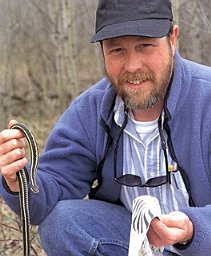 Robert T. Mason合作论文数Department of Zoology, Oregon State University2
 Catherine Graham合作论文数Swiss Federal Institute for Forest, Snow and Landscape Research2K. M. Langland合作论文数1Lelia Milner合作论文数1Ashley Appolon合作论文数1Petra Hafker合作论文数1K. Grayson合作论文数1Maine Ashley R合作论文数1
 Bo Cheng合作论文数Department of Mechanical Engineering, College of Engineering, Pennsylvania State University1E. Martínez合作论文数1Douglas R. Warrick合作论文数1




