Quantification of Margins and Uncertainties is a formalism for dealing with the reliability of complex technical systems, and the confidence which can be placed in estimates of that reliability. We are specifically concerned with its application to the performance and safety of the nuclear stockpile, because the test moratorium precludes direct experimental verification. We define performance “gates”, margins and uncertainties and discuss how QMU differs from conventional error propagation. Finally, we review the history of QMU and its meaning, and explore how it may evolve to meet future needs.
This study is a follow-on to the review made by JASON during its 1997 Summer Study of what is known about the aging of critical constituents, particularly the high explosives, metals (Pu, U), and polymers in the enduring stockpile. The JASON report (JSR-97-320) that summarized the findings was based on briefings by the three weapons labs (LANL, LLNL, SNL). They presented excellent technical analyses covering a broad range of scientific and engineering problems pertaining to determining signatures of aging. But the report also noted: `Missing, however, from the briefings and the written documents made available to us by the labs and DOE, was evidence of an adequately sharp focus and high priorities on a number of essential near-term needs of maintaining weapons in the stockpile.
The authors have examined the experimental and analytic bases for understanding the performance of each of the weapon types that are currently planned to remain in the US enduring nuclear stockpile. They have also examined whether continued underground tests at various nuclear yield thresholds would add significantly to the confidence in this stockpile in the years ahead. The starting point for this examination was a detailed review of past experience in developing and testing modern nuclear weapons, their certification and recertification processes, their performance margins, and evidence of aging or other trends over time for each weapon type in the enduring stockpile. The findings, as summarized in Conclusions 1 through 6, are consistent with US agreement to enter into a Comprehensive Test Ban Treaty (CTBT) of unending duration, that includes a standard ``supreme national interest`` clause. Recognizing that the challenge of maintaining an effective nuclear stockpile for an indefinite period without benefit of underground tests is an important and also a new one, the US should affirm its readiness to invoke the supreme national interest clause should the need arise as a result of unanticipated technical problems in the enduring stockpile.
We discuss the phenomenological implications of an approximate SU(6)\ifmmode\times\else\texttimes\fi{}SU(6)\ifmmode\times\else\texttimes\fi{}U(1) symmetry of hadron physics which remains after dynamical symmetry breaking in the strong-coupling lattice gauge theory. This symmetry is similar to but differs in an essential fashion from previous versions of SU(6) \ifmmode\times\else\texttimes\fi{} SU(6) \ifmmode\times\else\texttimes\fi{} or $\mathrm{SU}{(6)}_{W}$. The difference resolves some of the problems of the older schemes---for example, although we obtain the "good" result $\frac{{\ensuremath{\mu}}_{p}}{{\ensuremath{\mu}}_{n}}=\ensuremath{-}\frac{3}{2}$, we avoid the "bad" result $\frac{{g}_{A}}{{g}_{V}}=\ensuremath{-}\frac{5}{3}$. We find that mesons are better approximated as irreducible representations of an $\mathrm{SU}{(6)}_{W}$ than static SU(6). Vector mesons are pseudo-Goldstone bosons in our scheme, which explains why the sum rules for their masses should be written in terms of mass squared, like those of the pseudoscalars.
This paper (the second in a series) reports our recent progress in the study of strong-coupling quantum field theories on a lattice. In particular we study theories involving fermions and gauge fields and pay special attention to the peculiar problems encountered when one formulates theories of fermions on a lattice. It is unique to our approach that we preserve local chiral symmetry and at the same time correctly count the number of fermionic states. We demonstrate how our formalism works with the lattice Thirring and Schwinger models, whose continuum limits are solvable in one space and one time dimension. We show in the strong-coupling limit that these theories are equivalent to a Heisenberg antiferromagnetic chain. We also discuss briefly some general features of non-Abelian gauge theories of quarks and gluons in three space and one time dimension. The most interesting results we have to report at this stage are as follows: (i) The only "gauge-invariant states" which remain at low mass in the limit of very strong gauge coupling have the quantum numbers of physical hadrons. (ii) The resulting "effective strong-coupling" theory preserves the full chiral symmetry of the exact theory [SU(3) \ifmmode\times\else\texttimes\fi{} SU(3) if we introduce three flavors of quarks each with three colors] and describes a theory of "massless bare hadrons" interacting with one another through a quark interchange mechanism of finite strength.
We investigate in canonical field theory the possibility that quarks may exist in isolation as very heavy particles, ${M}_{\mathrm{quark}}>>1$ GeV, yet form strongly bound hadronic states, ${M}_{\mathrm{hadron}}\ensuremath{\sim}1$ GeV. In a model with spin-\textonehalf{} quarks coupled to scalar gluons we find that a mechanism exists for the formation of bound states which are much lighter than the free constituents. Following Nambu, we introduce a color interaction mediated by gauge vector mesons to quarantee that all states with nonvanishing triality have masses much larger than 1 GeV. The possibility of such a solution to a strongly coupled field theory is exhibited by a calculation employing the variational principle in tree approximation. This procedure reduces the field-theoretical problem to a set of coupled differential equations for classical fields which are just the free parameters of the variational state. A striking property of the solution is that the quark wave function is confined to a thin shell at the surface of the hadronic bound state. Though the quantum corrections to this procedure remain to be investigated systematically, we explore some of the phenomenological implications of the trial wave functions so obtained. In particular, we exhibit the low-lying meson and baryon multiplets of SU(6); their magnetic moments, charge radii, and radiative decays, and the axial charge of the baryons. States of nonvanishing momenta are constructed and the softness of the hadron shell to deformations in scattering processes is discussed qualitatively along with the implications for deep-inelastic electron scattering and dual resonance models.
${K}_{l3}$ decays are discussed in an explicit model of PCAC (partially conserved axial-vector current) involving the pion and a heavier particle, the ${\ensuremath{\pi}}^{\ensuremath{'}}$. This model has recently been shown to be capable of yielding the correct ${\ensuremath{\pi}}^{0}\ensuremath{\rightarrow}2\ensuremath{\gamma}$ decay rate from the Adler PCAC anomaly using one triplet of fractionally charged Gell-Mann-Zweig quarks, as well as reproducing all the "good" results of strong PCAC. In this paper we extend the model to treat ${K}_{l3}$ decays and compare it to the earlier Brandt-Preparata theory of weak PCAC.
A dynamical quark model of hadrons is constructed in terms of the usual triplet of fractionally charged spin-\textonehalf{} quarks ($q$). They have a light mass ($\ensuremath{\approx}300$ MeV) and obey Fermi-Dirac statistics. In approximate nonrelativistic terms, the quark interactions are assumed to be described by a long-range effective single-particle Hartree potential with infinitely rising walls and by a strong short-range Yukawa-type one between quark pairs. These combine to prevent single-quark emission from a hadron and to give the observed early scaling and the asymptotic electromagnetic form factors $\ensuremath{\sim}\frac{1}{{t}^{2}}$. The energy-momentum propagating in the field between the interacting quarks is idealized as a virtual particle (the "core" of the baryon) so that the center of mass of the three quarks in the baryon and of the $q\overline{q}$ in the meson is not constrained. Implications of this model are discussed---in particular, the baryon wave functions and energy spectrum, the form-factor behavior, the Adler anomaly for ${\ensuremath{\pi}}^{0}\ensuremath{\rightarrow}2\ensuremath{\gamma}$ decay, and the hadronic interactions.
The scaling property in deep-inelastic electron scattering is established by regarding the physical nucleon as a bound state of a bare nucleon and a bare meson (or a few bare mesons). This bound-state formulation provides a fully relativistic generalization of the "parton" model that is no longer restricted to infinite-momentum frames. It also connects the scaling property in inelastic processes with the rapid decrease of the electromagnetic form factors in elastic scattering. Rigorous statements are derived for specific bound-state solutions of the Bethe-Salpeter equation with the ladder approximation. An Adler sum rule is derived and crossing properties are discussed. A general phenomenological approach is developed which is relativistically covariant and gauge-invariant, and which allows one to correlate directly the observed structure functions and form factors with the appropriate bound-state wave function. If all constituents in the bound state are assumed to be of masses $\ensuremath{\lesssim}1$ GeV, the model gives a qualitative understanding as to why the scaling property is experimentally observed at relatively moderate energies.
Following a major shortage of 99Mo in the 2009–2010 period, concern grew that the aging reactor production facilities needed to be replaced. Most producers were using highly enriched 235U (HEU) as the target material. The Organisation for Economic Co-...Read More
Electron scattering from a hadron target has a singularly attractive feature relative to the various processes of hadrons scattering from hadron targets: the electromagnetic field generated during the electrons’s scattering is understood if indeed anything is in particle physics. Dirac’ tells us the transition current of the ,scattered electron and Maxwell tells us the rest. Therefore, in this process we are probing the structure of the hadron by means of a known operator - the electromagnetic current operator. There is an additional advantage in studying this process and that is its weakness. We can do our theoretical analyses to lowest order in the fine structure constant a! x1/137 which is a comfortable expansion parameter for quantitative results. The first detailed high energy experimental studies of electron scattering from hydrogen targets concentrated on the elastic process
We investigate the contribution of a pole at $\ensuremath{\alpha}=0$ to forward Compton scattering using finite-energy sum rules. We conclude that an experiment measuring the total photoabsorption cross section from \ensuremath{\sim}1 to 10-15 BeV with an accuracy of 5% will detect a contribution from such a pole whose magnitude is larger than 30% of the Thomson limit.
Received 21 December 1967DOI:https://doi.org/10.1103/PhysRevLett.20.280©1968 American Physical Society
The nucleon isovector Pauli radius $〈{{R}_{2V}}^{2}〉$ is calculated, using sidewise dispersion relations, to be significantly larger than the predictions of $\ensuremath{\rho}$ dominance, in accord with observation. It is also predicted that $〈{{R}_{2V}}^{2}〉$ is significantly larger than the pion charge radius $〈{{R}_{\ensuremath{\pi}}}^{2}〉$. Elastic scattering of pions from electrons at very high energies (viz. Serpukhov) will give a clear confrontation with this prediction.
 Fredrik Zachariasen合作论文数5
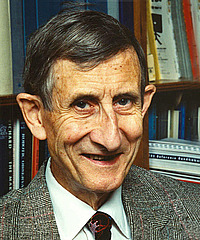 Freeman Dyson合作论文数School of Natural Sciences, Institute for Advanced Study4d eardley合作论文数3
 Marvin Weinstein合作论文数3
 Richard L. Garwin合作论文数IBM Thomas J. Watson Research Center3John M. Cornwall合作论文数Department of Physics and Astronomy;University of California , Los Angeles;Department of Physics and Astronomy, University of California , Los Angeles3R. Schwitters合作论文数2raymond jeanloz合作论文数2John Dirk Walecka合作论文数2J.D. Sullivan合作论文数2James D Bjorken合作论文数2S. Frautschi合作论文数2P. Weinberger合作论文数1R. LeLevier合作论文数1S. Fubini合作论文数1M CHANOWITZ合作论文数1s okubo合作论文数1toichiro kinoshita合作论文数1r e marshak合作论文数1t d li合作论文数1s m berman合作论文数1abraham pais合作论文数1s b treiman合作论文数1оппенгеймер роберт合作论文数1T. D. Lee合作论文数1Tung-Mow Yan合作论文数1
 Henry Abarbanel合作论文数Marine Physical Laboratory, Scripps Institution of Oceanography, University of California, San Diego;Department of Physics, Division of Physical Sciences, University of California, San Diego1
 Raymond Jeanloz合作论文数Department of Earth & Planetary Science, University of California, Berkeley;Hoover Institution, Stanford University1
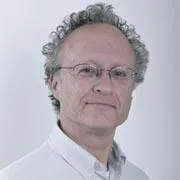 Benjamin Svetitsky合作论文数Department of Particle Physics, School of Physics and Astronomy, Tel Aviv University1Steven E. Koonin合作论文数1Hans a Bethe合作论文数1
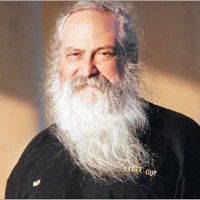 Michael Creutz合作论文数Physics Department, Brookhaven National Laboratory1
 Victor Weisskopf合作论文数Massachusetts Institute of Technology1R. H. Dalitz合作论文数1Steven Weinberg合作论文数1William a Bardeen合作论文数1Robert D Grober合作论文数1
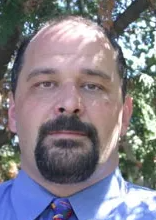 Darrell Long合作论文数Jack Baskin School of Engineering, University of California, Santa Cruz;Santa Clara University;CITRIS and the Banatao Institute1Shimon Yankielowicz合作论文数Stanford Linear Accelerator Center;Stanford University;Stanford Linear Accelerator Center, Stanford University1Wolfgang Panofsky合作论文数1
 Helen R. Quinn合作论文数Stanford University,SLAC National Accelerator Laboratory1J. L. Newmeyer合作论文数1Ernest M. Henley合作论文数1R. G. Parsons合作论文数1S. Dancoff合作论文数1Kichiro Hiida合作论文数1
 Daniel I. (Dan) Meiron合作论文数Department of Aerospace, California Institute of Technology/Department of Computing + Mathematical Sciences, Division of Engineering and Applied Science, California Institute of Technology1Gerald Feinberg合作论文数1A. Hearn合作论文数1




