T. Andrén, B.B. Jørgensen, C. Cotterill, S. Green, E. Andrén, J. Ash, T. Bauersachs, B. Cragg, A.-S. Fanget, A. Fehr, W. Granoszewski, J. Groeneveld, D. Hardisty, E. Herrero-Bervera, O. Hyttinen, J.B. Jensen, S. Johnson, M. Kenzler, A. Kotilainen, U. Kotthoff, I.P.G. Marshall, E. Martin, S. Obrochta, S. Passchier, N. Quintana Krupinski, N. Riedinger, C. Slomp, I. Snowball, A. Stepanova, S. Strano, A. Torti, J. Warnock, N. Xiao, and R. Zhang2
T. Andrén, B.B. Jørgensen, C. Cotterill, S. Green, E. Andrén, J. Ash, T. Bauersachs, B. Cragg, A.-S. Fanget, A. Fehr, W. Granoszewski, J. Groeneveld, D. Hardisty, E. Herrero-Bervera, O. Hyttinen, J.B. Jensen, S. Johnson, M. Kenzler, A. Kotilainen, U. Kotthoff, I.P.G. Marshall, E. Martin, S. Obrochta, S. Passchier, N. Quintana Krupinski, N. Riedinger, C. Slomp, I. Snowball, A. Stepanova, S. Strano, A. Torti, J. Warnock, N. Xiao, and R. Zhang2
Operations in Hole M0064A commenced at 1200 h on 20 October 2013 with a remotely operated vehicle survey conducted to assess the seabed for the presence of WWII munitions.The survey covered Holes M0064A, M0064B, and M0064C.No evidence of any dangerous materials on the seabed was identified.Following the survey, the vessel moved back to Hole M0064A and coring operations commenced (Table T1).The first four runs used the piston corer system (PCS) to recover clay.For Run 5, the nonrotating core barrel (NRCB) was used because of the presence of stiffer material indicative of the top of the diamicton unit.Run 6 used the push coring assembly (PCA) in an attempt to improve recovery.Following this, Runs 7-24 (16.05-34.5 meters below seafloor [mbsf]) used the NRCB, and Guar replaced seawater for pumping because of the increased sand content of the sediments.Run 25 was a PCA core, after a perceived failure to latch with the NRCB (no core recovered).Following the PCA, the string was flushed.The NRCB was lowered on the overshot, and latching was achieved.Coring with the NRCB continued for Runs 26-30.Runs 29 and 30 had no recovery, so a hammer sample (Run 31) was taken to prove the ground.The hammer sample recovered 0.08 m of gravel.The final NRCB (Run 32) core recovered 0.15 m of gravel with chalk beneath.
Integrated Ocean Drilling Program Expedition 347 aimed to retrieve sediments from different settings of the Baltic Sea, encompassing the last interglacial–glacial cycle to address scientific questions along four main research themes: 1. Climate and sea level dynamics of marine isotope Stage (MIS) 5, including onsets and terminations; 2. Complexities of the latest glacial, MIS 4–MIS 2; 3. Glacial and Holocene (MIS 2–MIS 1) climate forcing; and 4. Deep biosphere in Baltic Sea Basin (BSB) sediments.
Paleomagnetic analysis and radiocarbon dating of an expanded Holocene deep‐sea sediment sequence recovered by Integrated Ocean Drilling Program (IODP) Expedition 303 from Labrador Sea Site U1305 (Lat.: 57°28.5 N, Long.: 48°31.8 W, water depth 3459 m) provides insights into mechanisms that drive both paleomagnetic secular variation (PSV) and magnetization acquisition in deep‐sea sediments. Seventeen radiocarbon dates on planktonic foraminifera define postglacial (ca. 8 ka) sedimentation rates as ranging from 35 to > 90 cm/kyr. Alternating field (AF) demagnetization of u‐channel samples show that these homogeneous sediments preserve a strong, stable, and consistently well‐defined component magnetization. Normalized remanence records pass reliability criteria for relative paleointensity (RPI) estimates. Assuming that the age of magnetization is most accurately defined by well dated PSV records with the highest sedimentation rates, allows us to estimate and correct for temporal offsets at Site U1305 interpreted to result from postdepositional remanence acquisition at a depth of ∼20 cm. Comparisons indicate that the northern North Atlantic PSV and RPI records are more consistent with European than North American records, and the evolution of virtual geomagnetic poles (VGP) are temporally and longitudinally similar to global reconstructions, though with much larger latitudinal variation. The largest deviations from a geocentric axial dipole (GAD) are observed during times of the highest intensities, in contrast to the usual assumption. These observations are consistent with the idea that PSV in the North Atlantic and elsewhere during the Holocene results from temporal oscillations of high‐latitude flux concentrations at a few recurrent locations.
 B. Cragg合作论文数10T. Andrén合作论文数10I.P.G. Marshall合作论文数10O. Hyttinen合作论文数10A. Torti合作论文数10U. Kotthoff合作论文数10C. Cotterill合作论文数10M. Kenzler合作论文数10E. Andrén合作论文数10D Hardisty合作论文数10Anne-Sophie Fanget合作论文数UMR 5110, Univ Perpignan Via Domitia10Emilio Herrero-Bervera合作论文数10
 Nadine B. Quintana Krupinski合作论文数Dept Geol, Lund Univ10
 Bo Barker Jørgensen合作论文数Department of Biology, Aarhus University10
 Thorsten Bauersachs合作论文数Department of Marine Organic Biogeochemistry, NIOZ Royal Netherlands Institute for Sea Research10
 Natascha Riedinger合作论文数Max-Planck-Institute for Marine Microbiology, Celsiusstrasse 1, 28359 Bremen, Germany10
 Aarno Kotilainen合作论文数Coastal Research and Planning Institute10
 Stephen P Obrochta合作论文数College of Marine Science, University of South Florida10
 Sandra Passchier合作论文数Department of Earth and Environmental Studies, Montclair State University10
 Wojciech Granoszewski合作论文数10N. Xiao合作论文数9
 Annick Fehr合作论文数9S. Johnson合作论文数Sch Earth Sci, Univ Coll Dublin9
 Jeanine L. Ash合作论文数Department of Earth, Planetary, and Space Sciences, University of California9
 Ian Snowball合作论文数Department of Earth Sciences, Uppsala University9Jonathan Warnock合作论文数9
 Jørn Bo Jensen合作论文数Geological Survey of Denmark and Greenland (GEUS), Øster Voldgade 10, 1350 Copenhagen, Denmark9R. Zhang合作论文数8
 Ellen E. Martin合作论文数Department of Geological Sciences, University of Florida8
 Joseph Stoner合作论文数College of Oceanic and Atmospheric Sciences, Oregon State University8C. Slomp合作论文数7S. Green合作论文数5A. Stepanova合作论文数5J. Groeneveld合作论文数5
 Michael F. Rosenmeier合作论文数Department of Geological Sciences;Environmental Change Institute;University of Florida;Environmental Change Institute, University of Florida5S.L. Green合作论文数4
 Anna Stepanova合作论文数Department of Computer Science and Engineering, Texas A&M University4
 Jeroen Groeneveld合作论文数Center for Marine Environmental Sciences (MARUM),, University of Bremen4
 Soninkhishig Nergui合作论文数Biology Faculty, National University of Mongolia3
 Caroline P. Slomp (Caroline Slomp)合作论文数Department of Earth Sciences - Geochemistry, Faculty of Geosciences, Utrecht University3
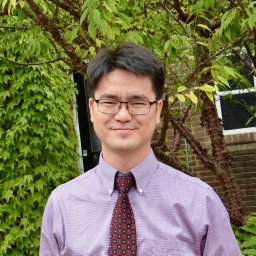 Chuang Xuan合作论文数Department of Geological Sciences, University of Florida2Peter Almasi合作论文数2
 James E.T. Channell (Channell J E T)合作论文数Department of Geological Sciences, University of Florida2Alain Mazaud合作论文数2
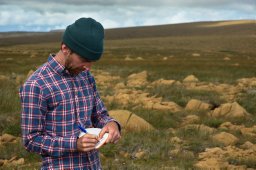 Matthew S Finkenbinder合作论文数Corresponding author.1
 Robert G. Hatfield合作论文数Centre for Environment, Fisheries and Aquaculture Science (Cefas), Barrack Road, The Nothe, Weymouth, Dorset DT4 8UB, UK1
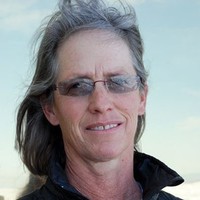 Anne Jennings合作论文数Institute of Arctic and Alpine Research, University of Colorado Boulder1
 Leah Ziegler合作论文数Biolinq1
 Saedís Ólafsdóttir合作论文数1




