Breast cancer stem cells (CSCs) are difficult to therapeutically target, but continued efforts are critical given their contribution to tumor heterogeneity and treatment resistance in triple-negative breast cancer. CSC properties are influenced by metabolic stress, but specific mechanisms are lacking for effective drug intervention. Our previous work on TFEB suggested a key function in CSC metabolism. Indeed, TFEB knockdown (KD) inhibited mammosphere formation in vitro and tumor initiation/growth in vivo. These phenotypic effects were accompanied by a decline in CD44high/CD24low cells. Glycolysis inhibitor 2-deoxy-D-glucose (2-DG) induced TFEB nuclear translocation, indicative of TFEB transcriptional activity. TFEB KD blunted, whereas TFEB (S142A) augmented 2-DG-driven unfolded protein response (UPR) mediators, notably BiP/HSPA5 and CHOP. Like TFEB KD, silencing BiP/HSPA5 inhibited CSC self-renewal, suggesting that TFEB augments UPR-related survival. Further studies showed that TFEB KD attenuated 2-DG-directed autophagy, suggesting a mechanism whereby TFEB protects CSCs against 2-DG-induced stress. Our data indicate that TFEB modulates CSC metabolic stress response via autophagy and UPR. These findings reveal the novel role of TFEB in regulating CSCs during metabolic stress in triple-negative breast cancer.
Supplementary Figure S6. Correlative peripheral blood immune cell characterization at baseline.
Supplementary Figure S4. Progression-free survival in patients with or without baseline liver metastases.
Single-cell technologies enable high-resolution studies of phenotype-defining molecular mechanisms. However, data sparsity and cellular heterogeneity make modeling biological variability across single-cell samples difficult. Here we present SCORPION, a tool that uses a message-passing algorithm to reconstruct comparable gene regulatory networks from single-cell/nuclei RNA-sequencing data that are suitable for population-level comparisons by leveraging the same baseline priors. Using synthetic data, we found that SCORPION outperformed 12 existing gene regulatory network reconstruction techniques. Using supervised experiments, we show that SCORPION can accurately identify differences in regulatory networks between wild-type and transcription factor-perturbed cells. We demonstrate SCORPION's scalability to population-level analyses using a single-cell RNA-sequencing atlas containing 200,436 cells from colorectal cancer and adjacent healthy tissues. The differences between tumor regions detected by SCORPION are consistent across multiple cohorts as well as with our understanding of disease progression, and elucidate phenotypic regulators that may impact patient survival.
Supplementary Figure S7. Correlation of baseline immune cell populations with response to treatment in Cohorts A and B.
Supplementary Data from The First-in-Human Study of the Hydrogen Sulfate (Hyd-Sulfate) Capsule of the MEK1/2 Inhibitor AZD6244 (ARRY-142886): A Phase I Open-Label Multicenter Trial in Patients with Advanced Cancer
Supplementary Figure Legends from Identification of Predictive Markers of Response to the MEK1/2 Inhibitor Selumetinib (AZD6244) in K-ras–Mutated Colorectal Cancer
Supplementary Figure 2. Quantification of total cell counts and average cellular size at Day 15 as depicted in Fig. 4A.
Supplementary Figure 1 from Identification of Predictive Markers of Response to the MEK1/2 Inhibitor Selumetinib (AZD6244) in K-ras–Mutated Colorectal Cancer
PDF file - 247K, Heatmap for the two most sensitive versus the two most resistant TNBC cell lines and Gene Set Enrichment Analysis (GSEA) of ENMD-2076 sensitivity
 Todd M Pitts合作论文数Anschutz Med Campus, Univ Colorado39
 John J Tentler合作论文数36
 Wells Messersmith合作论文数Department of Medicine-Medical Oncology, University of Colorado29
 Aik Choon Tan合作论文数Department of Oncologic Sciences, University of South Florida;Huntsman Cancer Institute, Department of Oncological Sciences, University of Utah28
 Stacey M Bagby合作论文数20
 Davis S Lindsey合作论文数Department of Medical Oncology, University of Colorado Cancer Center18
 Selby Heather合作论文数15Arcaroli John J合作论文数14
 Christopher Lieu合作论文数Division of Medical Oncology, Department of Medicine, School of Medicine, University of Colorado;University of Colorado Cancer Center;University of Colorado Hospital14Diamond Jennifer R合作论文数12
 Antonio Jimeno合作论文数The Sidney Kimmel Comprehensive Cancer Center, Johns Hopkins University School of Medicine12
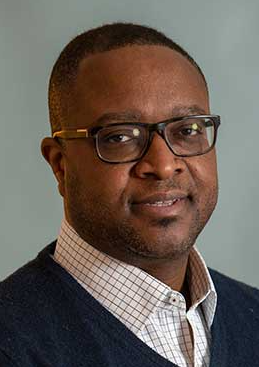 Colin Weekes合作论文数Mass General Research Institute, Massachusetts General Hospital;Harvard Medical School;University of Colorado Health Sciences Center11Brunkow Kelsey L合作论文数11Lia Gore合作论文数10Klauck Peter J合作论文数10
 Stephen Leong合作论文数Division of Medical Oncology, University of Colorado Cancer Center10Lindsey N Micel合作论文数9
 Daniel L Gustafson合作论文数9William A. Robinson合作论文数8Manuel Hidalgo Medina合作论文数Joan and Sanford I. Weill Department of Medicine, Weill Cornell Medicine, Cornell University8
 Natalie Serkova合作论文数Department of Radiology, School of Medicine, University of Colorado8Bradshaw-Pierce Erica L合作论文数8
 Esha A. Gangolli合作论文数Department of Cell Biology, Baylor College of Medicine8jacqueline carrico合作论文数7Shawn O'Connell合作论文数7Robyn Fabrey合作论文数7
 Douglas K Graham合作论文数7Rotem Kami合作论文数7Lenka Sinik合作论文数7
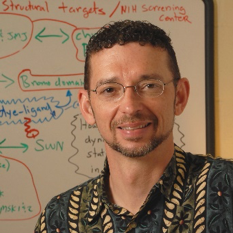 Stephen V. Frye合作论文数Lineberger Comprehensive Cancer Center, School of Medicine, The University of North Carolina at Chapel Hill;Center for Integrative Chemical Biology and Drug Discovery, University of North Carolina at Chapel Hill;Division of Chemical Biology and Medicinal Chemistry, University of North Carolina at Chapel Hill;Meryx Inc7
 Cindy L. O'Bryant合作论文数7Kulikowski Gillian N合作论文数7
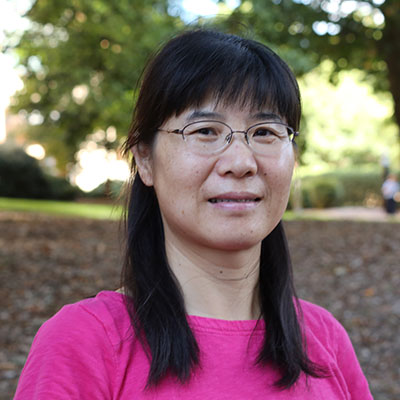 Xiaodong Wang合作论文数Division of Chemical Biology and Medicinal Chemistry, Eshelman School of Pharmacy, The University of North Carolina at Chapel Hil7
 Deborah DeRyckere合作论文数7Newton Timothy P合作论文数7Robertson Kelli M合作论文数7
 Katherine Minson合作论文数7Sujatha Nallapareddy合作论文数7
 Tal Burstyn-Cohen合作论文数Hadassah Medical School, The Hebrew University7
 Patrick W. Vincent合作论文数Division of Warner-Lambert Co., Parke-Davis Pharmaceutical Research;Fax: +1-734-6227158 US7Matthew R. Lee合作论文数6Anne Martin合作论文数6Sunnie Kim合作论文数6
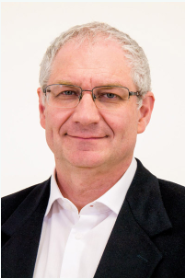 Fortunato Ciardiello合作论文数Dipartimento di Medicina di Precisione, Scuola di Medicina e Chirurgia, Universita degli Studi della Campania Luigi Vanvitelli;Department of Clinical and Experimental medicine, Universita degli Studi della Campania Luigi Vanvitelli6Blatchford Patrick合作论文数6
 Leal Alexis D合作论文数6Anna Capasso合作论文数6Sarah J. Hartman合作论文数5
 Anna Spreafico合作论文数University of Toronto;Division of Medical Oncology and Hematology, Princess Margaret Cancer Centre, University Health Network5




