Following the numerous and contradictory results reported in the literature about the origin of the different functionalities of MoS2 based catalysts, an approach using the 4,6-dimethyldibenzothiophene as a probe molecule is reported. That has been done by the study of the variations of selectivities during poisoning of 4,6-DMDBT HDS (using olefin, aromatics and nitrogen containing compounds), and by a careful study of the variations of selectivities during the transformation of 4,6-DMDBT over fresh and aged catalysts.The ratio of selectivities between the hydrogenation (HYD) and the direct desulfurization (DDS) routes are found to be the same whatever the inhibiting compound and the aging has the same effect on both routes of reaction. These results will be discussed assuming adsorptions on the same type of sites (uncoordinated molybdenum atom) and a general mechanism will be proposed. (c) 2005 Elsevier B.V. All rights reserved.
AbstractFor Abstract see ChemInform Abstract in Full Text.
The reaction of allylic carboxylates (allyl-OZ, OZ: acetate, chloroacetate, trifluoroacetate, substituted benzoates, carbonate) with Pd-0 complexes ligated by monodentate (PPh3) or bidentate (dppb, dppf) ligands is a reversible multistep reaction, which eventually gives in DMF a cationic (eta(3)-allyl) PdII (P P)(+) complex with ZO(-) as the counter anion ( free ions). The formation of an intermediate neutral complex (eta(2)-allyl-OZ)Pd-0 (P P) where the Pd-0 is ligated to the C=C bond of the allylic carboxylate (complexation step) has been evidenced kinetically in the case of moderate OZ leaving groups (acetate, benzoates) for monodentate and bidentate phosphine ligands. The overall equilibrium constants and the rate constants of the complexation and oxidative addition-ionization steps ( when not too fast) have been determined in DMF. With very good leaving groups ( carbonate, trifluoroacetate), the oxidative addition-ionization step is faster than the complexation step whereas the oxidative addition-ionization step is the slowest step for less good leaving groups ( acetate, benzoate). The forward rate constant of the equilibrium in which the active Pd-0 (PPh3)(2) is formed from Pd-0(dba)(PPh3)(2) has been determined.
The oxidative addition of the allylic acetate, CH2=CH-CH2-OAc, to the palladium(o) complex [Pd0(P,P)], generated from the reaction of [Pd(dba)2, with one equivalent of P,P (P,P = dppb = 1,4-bis(diphenylphosphanyl)butane, and P,P = dppf = 1,1'-bis(diphenylphosphanyl)ferrocene), gives a cationic (eta3-allyl)palladium(II) complex, [(eta3-C3H5)Pd(P,P)+]. with AcO as the counter anion. This reaction is reversible and proceeds through two successive equilibria. The overall equilibrium constants have been determined in DMF. Compared with PPh3, the overall equilibrium lies more in favor of the cationic (eta3-allyl)palladium(II) complex when bidentate P,P ligands are considered in the order: dppb > dppf > PPh3. The reaction proceeds via a neutral intermediate complex [(eta2-CH=CH-CHCH2-OAc)Pd0(P,P)], which has been kinetically detected. The rate constants of the successive steps have been determined in DMF by UV spectroscopy and conductivity measurements. The overall complexation step of the Pd0 by the allylic acetate C=C bond is faster than the oxidative addition/ionization step which gives the cationic (eta3-allyl)palladium(II) complex.
The oxidative addition of the allyl acetate CH2CHCH2OAc to the Pd0 complex generated from [Pd0(dba)2] and 2 equiv. PPh3 (monodentate ligand) or 1 equiv. dppb (bidentate ligand) gives a cationic (η3-allyl)palladium(II) complex with AcO− as the counter-anion. This reaction is reversible and proceeds from SPd0(PPh3)2 or from SPd0(dppb) through at least two successive equilibria. The overall equilibrium constants have been determined. The overall equilibrium lies more in favor of the cationic (η3-allyl)palladium(II) complex when dppp is considered, compared to PPh3. The reaction proceeds via a neutral intermediate complex Pd0(η2-CH2CHCH2OAc)(dppb)] whose formation has been kinetically established. The rate constants of the successive steps have been determined in DMF by UV spectroscopy and conductivity measurements, for the dppb ligand. The overall complexation step of the Pd0 by the allyl acetate CC bond is faster than the oxidative addition/ionization step which gives the cationic (η3-allyl)palladium(II) complex.
The oxidative addition of the allyl acetate to the palladium(0) complex generated from [Pd0(dba)2]+1 equivalent of diop gives a cationic (η3-allyl)palladium(II) complex. This reaction is reversible and proceeds from [Pd0(diop)] through at least three successive equilibria. The overall equilibrium constant and the rate constants of the successive steps have been determined in DMF by UV spectroscopy and conductivity measurements. The overall complexation step of the Pd0 by the allyl acetate is faster than the formation of the cationic complex [(η3-C3H5)Pd(η2-diop)]+(AcO)−, which unexpectedly proceeds in two steps, i.e. not from [(η2-CH2CHCH2OAc)Pd0(η2-diop)] in contrast to other ligands (dppf or dppb) but mainly from [(η2-CH2CHCH2OAc)2Pd0(η1-diop)].
The oxidative addition of a cyclic allylic carbonate to the palladium(0) complex generated from a [Pd(dba)2]+2 PPh3 mixture affords a cationic pi-allylpalladium(II) complex with the alkyl carbonate as the counter-anion. This reaction is reversible and proceeds with isomerization of the allylic carbonate at the allylic position. The equilibrium constant has been determined in DMF. The influence of the precursor of the palladium(0) is discussed.
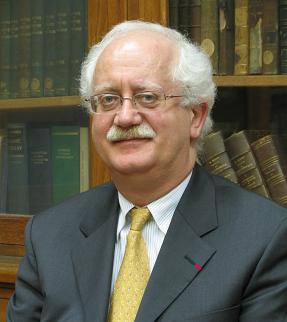 Christian A. Amatore (克里斯汀·阿芒托)合作论文数Xiamen University;Centre National de la Recherche Scientifique;École Normale Supérieure5
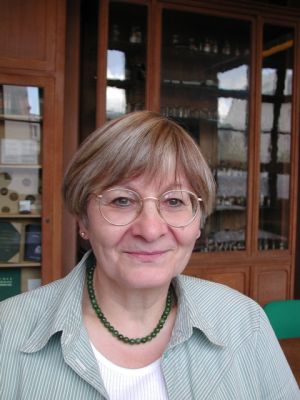 Anny Jutand合作论文数Ecole Normale Superieure5
 Gilbert Meyer合作论文数3Robert Bacaud合作论文数2Michel Vrinat合作论文数IRCELYON, CNRS, Universite Lyon 1, UMR 5256, 2 av A. Einstein, F-69626 Villeurbanne Cedex, France2
 Petitjean Anne合作论文数1
 Roser Pleixats合作论文数Department of Chemistry, Universitat Autònoma de Barcelona1
 Dorothee Laurenti合作论文数Centre National de la Recherche Scientifique;IRCELYON1Marcial Moreno-Mañas合作论文数Department of Chemistry, Universitat Autònoma de Barcelona, Cerdanyola, 08193 Barcelona, Spain1
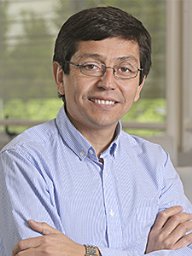 Néstor Escalona合作论文数Facultad de Ciencias Químicas, Universidad de Concepción1Lurdes Morral合作论文数1
 Nicolas Agenet合作论文数1Martine Cattenot合作论文数1




