As the population ages, there is a need to better understand the types of assistance people need and where they receive it, whether in their own homes, in nursing homes, or, increasingly, in community-based residential care settings (e.g., assisted living facilities) that offer access to long-term services and supports. We estimated the United States older adult population, their places of residence, and their demographic, health, and functional characteristics using multiple data sources: the Medicare Current Beneficiary Survey 2008 and 2013 Cost and Use Files; Health and Retirement Survey 2008 and 2014; National Health and Aging Trends Study 2011 and 2015; and the National Study of Long Term Care Providers 2010, 2012, and 2014. The number of people living in community-based residential care has increased over time, but estimates vary by survey. However, with a few key exceptions, the demographic characteristics of residents are similar across years and datasets. In all data sources, and at all points in time, people living in community-based residential care settings reported more impairments than did those living in traditional settings. People living in community-based residential settings were similar, in many ways, to those living in nursing homes. In all settings, the proportion of people with dementia increased over time. These patterns were consistent across data sets. The share of older adults living in community-based residential care settings is increasing, along with their health and functional needs. Whether these setting have the staffing or expertise to meet these care needs is an important policy consideration.
Due to long care hours and physically demanding caregiving, several family members often share caregiving responsibilities for community-dwelling persons with dementia (PwD). Yet, little is known about the types of informal care provided and impact of caregiving on informal caregivers by relationship to care recipients using a national sample in United States. We studied a nationally representative sample of 679 Medicare beneficiaries with dementia and their informal caregivers (n=1,467) using the 2015 National Health and Aging Trends Study (NHATS) and National Study on Caregiving (NSOC) survey. We examined total hours of care per month and the types of care provided. Impact of caregiving was measured as emotional or physical difficulties, and work productivity loss (WPL). Generalized linear and logistic regression models controlling for PwD’s age, gender, and impairment were used. With analytical weights, 5.7 million informal caregivers provided care to 4.0 million PwD. Despite spousal and children caregivers were equally likely to provide help in medical care, transportation, and mobility, spousal caregivers provided the most care hours per month, followed by daughters (96 and 59 more hours per month than sons, respectively). Compared to spousal caregivers, daughters were more likely to report emotional difficulty (aOR=3.8, p<0.01); whereas sons were less likely to report physical difficulty (aOR=0.1, p<0.01). Daughters had the greatest WPL (8.1%). Daughters provided the second most care hours and were more likely to have a negative impact from informal caregiving than spouses and sons. Policymakers need to allocate resource to alleviate negative caregiving impacts to daughters.
The PACE program has a long history of successfully serving people age 55 and older who need nursing home level of care in the community. The program provides integrated medical and social services, coordinated through highly-structured interdisciplinary teams and primarily provided through adult day health centers. The PACE Innovation Act of 2015 allows expansion of this model to other populations. We present findings from a recent study of how the PACE model might serve younger people with physical, intellectual, developmental, or mental health disabilities. Challenges identified include the structure and function of the interdisciplinary teams, acceptability of day center-based services, organizational capacity to support populations with unique needs, and adequacy of payment risk adjustment methodologies. We will discuss implications of these findings for the older populations currently served by PACE, and identify ways in which the PACE model might evolve to meet changing views of service provision and coordination.
Objectives: Arapid evolution has occurred in state policy and industry practices relative to assisted living and expanded use of residential care facilities for people with physical and cognitive frailty, yet relatively little is known about the interrelationship between this housing supply and nursing-home case mix. Methods:The association between residential care supply and the proportion of cognitively and physically impaired nursing facility residents was examined in more than 1,500 facilities in five states. Results:The proportion of nursing-home cases with only physical and cognitive impairment likely to be affected by emerging long-term care policy appears to be well under 10%. This effect is more persistent among admissions than continuing cases. Discussion:The findings raise caution about the optimistic assumptions of the interplay between residential care/assisted living policy and nursing-home use.
In today's information age, a critical challenge is to provide the right information in the appropriate form to the proper user at the right time. While enormous quantities of data are routinely being collected, stored and made available, "engineering" useful, usable and timely information offers specific difficult design issues for the Human-Computer Interaction field to address and resolve. The problem is even more complex when the same underlying data needs to be engineered in potentially different ways and provided to multiple users with different needs. In this paper, we present one such challenge: designing a global system to inform many different types of users over time about quality of care delivered in nursing facilities throughout the United States. Specifically, we describe the work currently under progress and derive important observations for the research and development community.
 K. Nolet合作论文数3B. Ryther合作论文数3
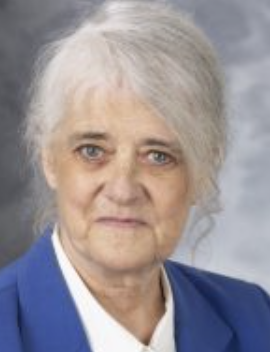 Barbara J. Bowers合作论文数School of Nursing, University of Wisconsin-Madison3
 Joan L. Robinson合作论文数Department of Pediatrics, University of Alberta3L. A. Cubbins合作论文数1D. Potter合作论文数1S. Lee合作论文数1Lawren E Bercaw合作论文数RTI Int, Waltham, MA 02452 USA1Harrington C合作论文数1D. Zimmerman合作论文数1Aiveen O'Malley合作论文数1François Sainfort合作论文数Professor of Industrial & Systems Engineering1Robert Newcomer合作论文数1
 Kathryn M. Mcdonald合作论文数Department of Medicine, Stanford University1Ruby E. Johnson合作论文数1Jeffrey J. Geppert合作论文数1James H. Swan合作论文数1




