Using an atomic-absorption spectral analysis technique, we determined the concentrations of helium atoms in states 2 1 S, 2 1 P, 2 3 S, and 2 3 P in an atmospheric-pressure glow discharge in helium (99.98%) and in a mixture of helium with nitrogen (99.5%He+0.5%N 2 ). It is shown that the population of the lower excited levels of helium atoms (n = 2) in its mixture with nitrogen is almost an order of magnitude smaller than in the case of a discharge in helium. The maximum of the concentration of excited atoms in a discharge both in helium and in its mixture with nitrogen is in the cathode region at a distance of about 0.1 mm from the cathode. The reaction of quenching of excited helium atoms by nitrogen molecules is responsible for the sharp decrease in the concentration of He(n = 2) on addition of nitrogen into helium.
The kinetics of formation of an oxide film on the surface of the cathode of an atmospheric-pressure glow discharge in helium has been investigated by the method of laser reflectometry. It has been established that the film is formed at a cathode temperature exceeding 550 K, and in 200 sec from the time of discharge initiation at a current of 1 A it becomes thicker than 1 μm. The film consists of several concentric zones. For each of these zones, a change in time of the directional hemispherical coefficient of reflection at a wavelength of 0.63 μm was determined. It is shown that the formation of an oxide film on the cathode surface leads to an increase in the cathode drop.
A light source with a thermoionic cathode has been investigated in helium at atmospheric pressure; the spectral radiance of the light source in the range 200–800 nm and the cathode temperature (3510 K) have been determined. Its employment as a light source in absorption spectroscopy for determination of the concentration of triplet and singlet metastable helium atoms in an atmospheric-pressure glow discharge has been demonstrated. The total concentration of metastable atoms was ∼3.5·1013 cm−3.
The influence of nitrogen additions to helium flow on the non-equilibrium plasma parameters and the discharge onset voltage of the self-sustained normal dc glow discharge at atmospheric pressure is studied. The concentrations of the low-excited helium atoms in states 21S, 21P, 23S and 23P are determined in glow discharge in helium (99.98%He) and in helium with a nitrogen admixture using the absorption spectroscopy technique. It is shown that the addition of a small amount of nitrogen into helium (less than 5%) leads to the increase of both interelectrode gap voltage and gas temperature. The drastic reduction of concentration of the low-excited helium atoms (n = 2) in the cathode region even at a nitrogen admixture of 0.5% occurs due to their quenching by the nitrogen excited species. At the same time, concentrations of higher excited helium atoms (n = 3) are essentially unchanged.
The profiles of Hβ-hydrogen and HeI 492.2-nm lines in the cathode-drop region of self-maintained glow discharge in helium at atmospheric pressure have been measured. A calculation method is proposed and calculations have been made of the line profiles of hydrogen and helium in a combined electric field having a constant and a fluctuating component. The strength values of the constant and variable components of the electric field, measured with the help of helium and hydrogen lines, are in good agreement.
The spatial distribution of the concentration of metastable helium atoms in the cathode region of an atmospheric-pressure glow discharge in helium is measured by the method of atomic-absorption spectroscopy.
The dimensions of the region of the cathode drop in potential in a helium glow discharge at atmospheric pressure (in Kiselevskii’s plasma source) are determined. Using Stark spectroscopy of the Balmer-series hydrogen line Hβ the spatial distribution of the constant and variable components of the electric-field strength is measured.
Self-maintained glow discharge at atmospheric pressure in a helium flow is used as an excitation source of spectra for analysis of the metals Na, Ca, Pb, Cd, and Zn in aqueous solutions of their salts. The intensities of the analytical lines of these metals are obtained as a function of the concentration, and the detection limits for each element are determined.
 V. I. Arkhipenko合作论文数12
 L. V. Simonchik合作论文数10D. A. Solov'yanchik合作论文数2Lv Simonchik合作论文数2
 A. A. Kirillov合作论文数2E. A. Smetanin合作论文数2
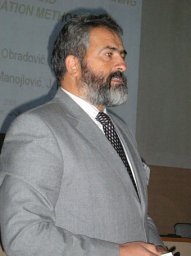 Milorad M. Kuraica合作论文数Center for Science and Technology Development2
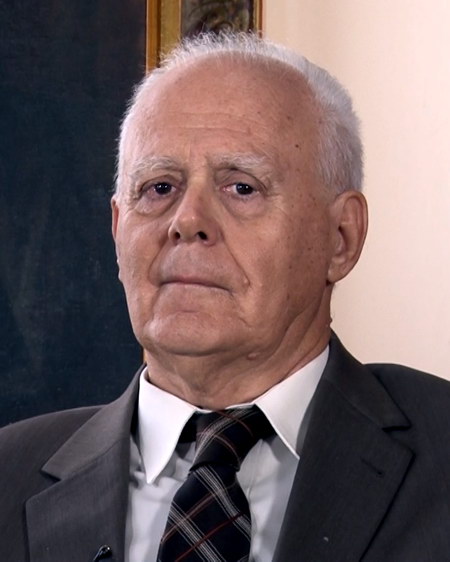 Nikola Konjević合作论文数Department of Mathematics, Physics and Geosciences, Faculty of Physics, University of Belgrade2v z greben合作论文数1A. K. Kapanik合作论文数1G. F. Stel'Makh合作论文数1V. A. Dlugunovich合作论文数1




