Radiotelemetry as a research tool has advanced our understanding of snake behavior and ecology. However, surgical transmitter implantation can lead to health complications for study animals, including expulsion, which may also interfere with research objectives. Two implantation methods include intramuscular and coelomic placements, and we evaluate expulsion rates of transmitters using these methods in Burmese pythons (Python bivittatus) in southern Florida. From 2005 to 2024, we implanted 305 transmitters in 142 adult Burmese pythons, primarily using intramuscular implantation (n = 221), then transitioning to include coelomic placement (n = 84). There were no observations of transmitter-related mortality. Overall, 98.7
To develop safe and effective management policies, it is important to understand the physiologic effects of fishing interactions and scientific research methods on endangered marine species. In the present study, validated assays for plasma corticosterone, free thyroxine (fT4), and aldosterone were used to assess the endocrine status of 61 presumed healthy, wild Kemp’s ridley sea turtles (Lepidochelys kempii) that were captured for separate ecological studies using two capture methods (trawl net n = 40; manual capture n = 21). Plasma hormone concentrations were also assessed in relation to eight clinical plasma biochemical analytes. Corticosterone and aldosterone concentrations were moderately high after capture, with significantly higher concentrations in turtles captured by trawl net vs. manual capture. Free thyroxine concentrations were within previously published ranges for healthy individuals of this species. Clinical biochemical data revealed moderately elevated potassium and lactate concentrations in many individuals, with significantly greater lactate concentrations in trawl-captured turtles. Aldosterone concentrations were positively correlated with corticosterone. The results of the present study indicate that Kemp’s ridley sea turtles have robust adrenocortical activity immediately after capture, resulting in high plasma concentrations of corticosterone and aldosterone. Researchers who use such methods to access sea turtles can consider these results in planning careful and efficient field studies.
Hydrologic alterations within the Everglades have degraded American alligator (Alligator mississippiensis) habitat, reduced prey base, and increased physiological stress. Alligator body condition declined across many management areas from 2000 through 2014, prompting us to investigate the relationship between their intraspecific isotopic niche dynamics and body condition. Alligators within the estuary had a larger niche driven by a wider range in stable carbon isotope ratios than those sampled in freshwater habitats. Spatially, model predictability was higher at the smaller scale, reflecting the variability in basal sources and biochemistry among capture sites. Male niches were often larger than those of females, driven by wider ranges of δ13C values, suggesting that they differ in their proportional use of habitats and or resources. However, the similar ranges of δ15N values indicated both sexes foraged within the same trophic level. Furthermore, while not significantly different, large alligators often had a larger niche with elevated δ15N values compared to medium-sized alligators. Although alligators utilize similar stable carbon and nitrogen isotope pools through time, there was considerable temporal variability. These temporal variations in alligators' isotopic niche were likely influenced by seasonal hydrologic fluctuations within each site, with their niches often being larger in the spring captures than the fall captures. Alligators' body condition estimates were correlated with intraspecific niche characteristics, including the mean centroid distance between sexes and the interaction between male and female niche size and overlap, within a site, capture period, and year. The variability in intraspecific niche dynamics, landscape heterogeneity, and dynamic hydrology are considerations for designing sustainable management strategies to conserve and enhance alligator populations within the Everglades landscape.
Quantifying sea turtle nesting behavior is essential for recovery planning and evaluating management actions. Traditional monitoring approaches, based on nest counts from beach surveys, can misclassify non-nesting emergences, obscure true fecundity, and underestimate clutch frequency, metrics that directly influence population models and regulatory decisions. Here, we demonstrate that high-resolution acceleration data loggers (ADLs) can reliably discriminate nesting from non-nesting emergences across four imperiled species of sea turtles at sites in the Gulf of America, southeast USA, and Caribbean. From 60 recovered ADL deployments on green (Chelonia mydas; N = 10), hawksbill (Eretmochelys imbricata; N = 7), Kemp’s ridley (Lepidochelys kempii; N = 21), and loggerhead sea turtles (Caretta caretta; N = 22) lasting on average 17.5 ± 8.7 days (range 2–43 days), we identified 54 nesting events and 76 non-nesting emergences, with >97% accuracy when compared to direct observations. These data provide the first observer-validated, species-specific behavioral signatures of nesting phases and reveal correlations between egg-laying duration and clutch size. All non-nesting emergences occurred within 72 hours of subsequent nesting, allowing managers to anticipate nest deposition windows. By refining inter-nesting intervals and fecundity estimates, ADLs offer a practical path to reduce error in clutch frequency estimates. The integration of ADL-derived algorithms with satellite-transmitting tags would enable the remote, real-time monitoring of nesting activity, creating a system for the remote monitoring of inter-nesting intervals and nest fecundity that are crucial to quantify the impacts of climate change and other threats to sea turtle nesting habitat.
Long-term ecological studies are critical for providing insight into population dynamics and detecting population declines, particularly for species of conservation concern. However, spatiotemporal variation and logistical challenges make the identification of sudden population declines difficult. We conducted an in-water capture-mark-recapture study of mangrove diamond-backed terrapins (Malaclemys terrapin rhizophorarum) within Big Sable Creek, in Everglades National Park, Florida. We used an 18-year dataset (2001 to 2019) incorporating year, sex, hurricane occurrence, and sampling effort to estimate survival using Cormack-Jolly-Seber (CJS) models in Program Mark. Annual survivorship estimates were high from 2001 to 2003 for both sexes (91%-96%) and variable from 2006 to 2014 (77%-92%). Beginning in 2015, survival estimates exhibited a steeper decline (females: 65%, males 75%), and dropped to below 36% by 2018. Because the driver of this apparent population decline is unknown, we created a population projection matrix and used model-estimated annual survival to simulate annual terrapin population size. We then generated competing scenarios of low survival at various age classes to attempt to reproduce a simulated decline mirroring what we observed from our capture data. A scenario of low adult survival (75%-85%) from 2012 to 2018, possibly in conjunction with no reproduction after 2010, provides estimates of abundance that appear to match simulated annual population size and may indicate that adult emigration/human removal or a drastic drop in recruitment could be responsible for the apparent decline in survival. We explore reasons for this apparent decline and highlight difficulties common to long-term studies that may influence how declines are interpreted.
Burmese pythons ( Python molurus bivittatus ) are native to southeastern Asia, however, there is an established invasive population inhabiting much of southern Florida throughout the Greater Everglades Ecosystem. Pythons have severely impacted native species and ecosystems in Florida and represent one of the most intractable invasive-species management issues across the globe. The difficulty stems from a unique combination of inaccessible habitat and the cryptic and resilient nature of pythons that thrive in the subtropical environment of southern Florida, rendering them extremely challenging to detect. Here we provide a comprehensive review and synthesis of the science relevant to managing invasive Burmese pythons. We describe existing control tools and review challenges to productive research, identifying key knowledge gaps that would improve future research and decision making for python control.
Although historical observations date back to the 1800's, there is little information on sea turtle occupancy within Biscayne National Park (BNP). The park is located along the Florida reef tract and is dominated by the Gulfstream, which acts as a corridor for many marine animals. Here we used satellite telemetry to determine areas of use in BNP for two species of imperiled sea turtles, loggerhead (Caretta caretta) and green (Chelonia mydas) turtles. We included data for turtles tagged between 2009-2021 at sites both within park waters and in five locations outside the park boundary; individuals were captured both in the water and on land. We tagged 60 individuals (female, n = 48; male, n = 3; immature, n = 9); loggerheads (n = 33) ranged in size from 66.2 to 109.9 cm CCL (curved carapace length) and green turtles (n = 27) ranged in size from 39.1 to 111.9 cm CCL. We used behavioral switching state-space modeling (SSM) to obtain daily predicted positions for each turtle, classified turtle behavior within the park as either foraging, migration, or both foraging and migration, and summarized high-use areas for each species across all months of the year. Turtles used park waters year-round, with concentrated use of deeper waters during seasonal migrations. Across all 60 turtles, 21 spent their tracking time foraging within BNP boundaries and 30 used the park as part of their migratory pathway; five turtles used the park for both foraging and migration, and the remaining four had SSM points very close to the park. Loggerhead migration occurred from February through November, whereas green turtle migration was concentrated in August. Both turtle species exhibited high overlap (i.e., usage) with seagrass habitat. These findings are relevant as managers consider strategies to minimize anthropogenic impacts to resident and migratory sea turtles using park waters. & COPY; 2023 Published by Elsevier B.V.
The design of successful invasive species control programs is often hindered by the absence of basic demographic data on the targeted population. Establishment of invasive Burmese pythons (Python molurus bivittatus) in the Greater Everglades Ecosystem, Florida USA has led to local precipitous declines (> 90%) of mesomammal populations and is also a major threat to native populations of reptiles and birds. Efforts to control this species are ongoing but are hampered by the lack of access to and information on the expected biological patterns of pythons in southern Florida. We present data from more than 4,000 wild Burmese pythons that were removed in southern Florida over 26 years (1995–2021), the most robust dataset representing this invasive population to date. We used these data to characterize Burmese python size distribution, size at maturity, clutch size, and seasonal demographic and reproductive trends. We broadened the previously described size ranges by sex and, based on our newly defined size-stage classes, showed that males are smaller than females at sexual maturity, confirmed a positive correlation between maternal body size and potential clutch size, and developed predictive equations to facilitate demographic predictions. We also refined the annual breeding season (approx.100 days December into March), oviposition timing (May), and hatchling emergence and dispersal period (July through October) using correlations of capture morphometrics with observations of seasonal gonadal recrudescence (resurgence) and regression. Determination of reproductive output and timing can inform population models and help managers arrest population growth by targeting key aspects of python life history. These results define characteristics of the species in Florida and provide an enhanced understanding of the ecology and reproductive biology of Burmese pythons in their invasive Everglades range.
of the invasive Burmese python ( Python molurus
Background The establishment of Burmese pythons ( Python bivittatus) in Everglades National Park, Florida, USA, has been connected to a > 90% decline in the mesomammal population in the park and is a major threat to native reptile and bird populations. Efforts to control this population are underway, but are hampered by a lack of information about fine-scale activity cycles and ecology of these cryptic animals in the wild. We aimed to establish a technique for monitoring the activity of Burmese pythons in the wild using acceleration data loggers (ADLs), while attempting to identify any behavioral patterns that could be used to help manage this invasive species in the Greater Everglades and South Florida. Results We obtained continuous acceleration and temperature data from four wild snakes over periods of 19 to 95 days (mean 54 ± 33 days). Snakes spent 86% of their time at rest and 14% of their time active, including transiting between locations. All snakes showed at least one period of continuous transiting lasting 10 h or more, with one animal transiting continuously for a period of 58.5 h. Acceleration data logger-derived transiting bout duration was significantly correlated with the distance snakes traveled per hour for two snakes that also carried GPS loggers. Snakes were most active in midday or early-night depending on individual and time of year, but all snakes were least likely to be active in the early mornings (0400–0700 h local time). Very little movement took place at temperatures below 14 °C or above 24 °C, with most movement taking place between 15° and 20 °C. One animal showed a highly unusual rolling event that may be indicative of a predation attempt, but this could not be confirmed. Conclusions Fine-scale activity and some behaviors were apparent from ADL data, making ADLs a potentially valuable, unbiased tool for monitoring large-bodied snakes in the wild. Snakes spent the majority of their time resting, but also moved continuously for several hours at a time during bouts of transiting. Results suggest that individuals may shift their diel activity pattern based on season. Understanding seasonal differences in activity levels can improve the accuracy of population estimates, help detect range expansion, and improve managers’ ability to find and capture individuals.
The federally threatened American crocodile ( Crocodylus acutus ) is a flagship species and ecological indicator of hydrologic restoration in the Florida Everglades. We conducted a long-term capture-recapture study on the South Florida population of American crocodiles from 1978 to 2015 to evaluate the effects of restoration efforts to more historic hydrologic conditions. The study produced 10,040 crocodile capture events of 9,865 individuals and more than 90% of captures were of hatchlings. Body condition and growth rates of crocodiles were highly age-structured with younger crocodiles presenting with the poorest body condition and highest growth rates. Mean crocodile body condition in this study was 2.14±0.35 SD across the South Florida population. Crocodiles exposed to hypersaline conditions (> 40 psu) during the dry season maintained lower body condition scores and reduced growth rate by 13% after one year, by 24% after five years, and by 29% after ten years. Estimated hatchling survival for the South Florida population was 25% increasing with ontogeny and reaching near 90% survival at year six. Hatchling survival was 34% in NE Florida Bay relative to a 69% hatchling survival at Crocodile Lake National Wildlife Refuge and 53% in Flamingo area of Everglades National Park. Hypersaline conditions negatively affected survival, growth and body condition and was most pronounced in NE Florida Bay, where the hydrologic conditions have been most disturbed. The American crocodile, a long-lived animal, with relatively slow growth rate provides an excellent model system to measure the effects of altered hydropatterns in the Everglades landscape. These results illustrate the need for continued long-term monitoring to assess system-wide restoration outcomes and inform resource managers.
Evaluating resource use patterns for imperiled species is critical for understanding what supports their populations. Here we established stable isotope (delta C-13, delta N-15) values for the endangered green sea turtle (Chelonia mydas) population found within the boundaries of Dry Tortugas National Park (DRTO), south Florida, USA. There is little gene flow between turtles sampled at DRTO and in other rookeries in Florida, underscoring the need to study this distinct population. Between 2008 and 2015 we collected multiple sample types (skin [homogenized epidermis/dermis], whole blood, red blood cells, plasma, carapace) from 151 unique green turtles, including 43 nesting females and 108 in-water captures; some individuals were resampled multiple times across years to evaluate consistency of isotope signatures. Isotopic ratios ranged from-27.3 to-5.4 for delta C-13 and 3.7 to 10.6 for delta N-15. Using linear mixed models, we evaluated covariates (sample type, turtle size and year) that best explained the isotope patterns observed in turtle tissues. Predictions from the top model for delta C-13 indicated a slight decrease over time and for delta N-15 a slight increase in the middle sampling years (2010-2012); results indicated that turtle size appeared to be the driver behind the range in delta C-13 and delta N-15 observed in turtle skin. We found a pattern in stable carbon isotope values that are indicative of an ontogenetic change from an omnivorous diet in smaller turtles to a seagrass-based diet in larger turtles. When we compared the stable carbon and nitrogen isotope values of the samples collected from turtles with that of seagrasses found in DRTO, we found that turtles > 65 cm SCL had similar stable carbon isotope values to the seagrass species present. Results of this study suggest stable isotope analysis coupled with data for available resources can be useful for tracking and detecting future changes in green turtle resource shifts in DRTO. (C) 2021 Published by Elsevier B.V.
Background A better understanding of sea turtle spatial ecology is critical for the continued conservation of imperiled sea turtles and their habitats. For resource managers to develop the most effective conservation strategies, it is especially important to examine how turtles use and select for habitats within their developmental foraging grounds. Here, we examine the space use and relative habitat selection of immature green turtles ( Chelonia mydas ) using acoustic telemetry within the marine protected area, Buck Island Reef National Monument (BIRNM), St. Croix, United States Virgin Islands. Results Space use by turtles was concentrated on the southern side of Buck Island, but also extended to the northeast and northwest areas of the island, as indicated by minimum convex polygons (MCPs) and 99%, 95%, and 50% kernel density estimations (KDEs). On average space use for all categories was < 3 km 2 with mean KDE area overlap ranging from 41.9 to 67.7%. Cumulative monthly MCPs and their proportions to full MCPs began to stabilize 3 to 6 detection months after release, respectively. Resource selection functions (RSFs) were implemented using a generalized linear mixed effects model with turtle ID as the random effect. After model selection, the accuracy of the top model was 77.3% and showed relative habitat selection values were highest at shallow depths, for areas in close proximity to seagrass, and in reef zones for both day and night, and within lagoon zones at night. The top model was also extended to predict across BIRNM at both day and night. Conclusion More traditional acoustic telemetry analyses in combination with RSFs provide novel insights into animal space use and relative resource selection. Here, we demonstrated immature green turtles within the BIRNM have small, specific home ranges and core use areas with temporally varying relative selection strengths across habitat types. We conclude the BIRNM marine protected area is providing sufficient protection for immature green turtles, however, habitat protection could be focused in both areas of high space use and in locations where high relative selection values were determined. Ultimately, the methodologies and results presented here may help to design strategies to expand habitat protection for immature green turtles across their greater distribution.
Globally temperature of marine environments is on the rise and temperature plays an important role in the life-history of reptiles. In this study, we examined the relationship between sea surface temperature and average date of hatching for American crocodiles (Crocodylus acutus) over a 37-year period at two nesting sites, Everglades National Park and Florida Power and Light Turkey Point Power Plant site in southern Florida. Our results indicate that hatch dates are shifting 1.5 days earlier every two years and at half that rate for the Turkey Point site, and with every 1 °C degree increase in temperature, hatching occurs about 10 days earlier in the Everglades and 6 days earlier at Turkey Point. Our results on shifting hatch dates for American crocodiles provide further details about the impacts of temperature change on crocodile life history and suggest that increased temperature may affect their phenology.
The status of the American crocodile (Crocodylus acutus) has long been a matter of concern in Everglades National Park (ENP) due to its classification as a federal and state listed species, its recognition as a flagship species, and its function as an ecosystem indicator. Survival and recovery of American crocodiles has been linked with regional hydrological conditions, especially freshwater flow to estuaries, which affect water levels and salinities. We hypothesize that efforts to restore natural function to Everglades ecosystems by improving water delivery into estuaries within ENP will change salinities and water levels which in turn will affect relative density of crocodiles. Monitoring ecological responses of indicator species, such as crocodiles, with respect to hydrologic change is necessary to evaluate ecosystem responses to restoration projects. Our objectives were to monitor trends in crocodile relative density within ENP and to determine influences of salinity on relative density of crocodiles. We examined count data from 12 years of crocodile spotlight surveys in ENP (2004-2015) and used a hierarchical model of relative density that estimated relative density with probability of detection. The mean predicted value for relative density (lambda) across all surveys was 2.9 individuals/km (95% CI: 2.0-4.2); relative density was estimated to decrease with increases in salinity. Routes in ENP's Flamingo/Cape Sable area had greater crocodile relative density than routes in the West Lake/Cuthbert Lake area and Northeast Florida Bay areas. These results are consistent with the hypothesis that restored flow and lower salinities will result in an increase in crocodile population size and provide support for the ecosystem management recommendations for crocodiles, which currently are to restore more natural patterns of freshwater flow to Florida Bay. Thus, monitoring relative density of American crocodiles will continue to be an effective indicator of ecological response to ecosystem restoration.
Biotelemetry has become a key tool for studying marine animals in the last decade, and a wide range of electronic tags are now available for answering a range of research questions. However, comparatively, less attention has been given to attachment methods for these tags and the implications of tag retention on study design, especially when designing a comparative study looking at multiple species. Here, we reported our findings on acoustic tag retention rates for juveniles of two species of marine turtle: the green sea turtle (Chelonia mydas) and the hawksbill sea turtle (Eretmochelys imbricata). We captured both species twice annually (spring and fall) from 2012 through 2017, as part of a capture–mark–recapture study at Buck Island Reef National Monument, St. Croix, U.S. Virgin Islands. We assessed tag retention rates using physical recaptures of turtles previously outfitted with an acoustic tag. We deployed 72 acoustic tags on 60 juvenile greens and 37 acoustic tags on 29 hawksbills. We estimated the half-life for tags on greens to be 150 days (95% CI 117–188 days), whereas the half-life for tags on hawksbills was 1077 days (95% CI 870–2118 days), a marked difference. We observed that tag attachment holes, drilled into the posterior marginal scutes, migrated laterally towards the outer edge of the marginals in both species. Green turtles tended to exhibit tear-outs, as their attachment holes wore and/or tags grew near the edge of their scutes, whereas hawksbills tended to maintain the structure of these holes and did not exhibit these tear-outs. We conclude that hawksbills can be tagged with long-battery-life acoustic tags for long-term studies of habitat use and movement patterns, whereas greens are likely to shed their tags in the 1st year, making long-term studies difficult. This study is the first clear evidence that tagging protocols should vary between species of hard-shelled turtles. Furthermore, shed tags on the seafloor continue to be detected by acoustic receivers, creating a challenge in data filtering before analysis. We encourage future research into an efficient method for filtering these data points prior to analysis.
Con pocas excepciones, los cocodrílidos deben ser contados y capturados para estudiar su ecología. La mayoría de los métodos utilizados hoy en día para encontrar y capturar cocodrílidos son modificaciones de los métodos utilizados para su caza (Chabreck 1963; Jones 1966). Estos métodos han sido modificados según la especie en estudio o según las condiciones de su hábitat específico, así como para minimizar el riesgo de daño que puede ser causado tanto a los cocodrilos como al investigador (Webb y Messel 1977; Hutton et al. 1987; Walsh 1987; McDaniel y Hord 1990). Cualquier situación con demandas especiales, requerirá de innovaciones en los métodos utilizados. Este documento es la Circular 1451S, una de la serie del Wildlife Ecology and Conservation Department, UF/IFAS Extension. Publicado por primera vez: diciembre, 2005.CIR1451S/UW238: Contando y Capturando Cocodrílidos (ufl.edu)
To conserve imperiled marine species, an understanding of high-density use zones is necessary prior to designing and evaluating management strategies that improve their survival. We satellite-tracked turtles captured after nesting at Buck Island Reef National Monument (BIRNM), St. Croix, US Virgin Islands to determine habitat-use patterns of endangered adult female hawksbills (Eretmochelys imbricata). For 31 turtles captured between 2011 and 2014, switching state-space modeling and home range analyses showed that inter-nesting (IN) core-use areas (i.e., 50% kernel density estimates [KDEs]) were 9.6 to 77.7 km(2) in area, occupied for 21 to 85 days, and in shallow water (21 of 26 centroids > - 10 m). The IN zones overlapped with areas both within the protected borders of BIRNM, and outside BIRNM (32% of turtle-tracking days outside during IN). Turtles migrated to their foraging grounds between July and October with path lengths ranging from 52 to 3524 km; foraging areas included 14 countries. Core-use foraging areas (50% KDEs) where turtles took up residence were 6.3 to 95.4 km(2), occupied for 22 to 490 days, with mean centroid depth - 66 m. Our results show previously unknown habitatuse patterns and highlight concentrated areas of use both within and adjacent to a US protected area during the breeding season. Further, our results clearly demonstrate the need for international conservation to protect hawksbills, as migrating turtles crossed between two and eight different jurisdictions. Our results provide critical spatial and temporal information for managers charged with designing strategies to minimize human impact to and maximize survival for this globally imperiled species.
The American crocodile Crocodylus acutus is a threatened species that uses relatively deep, open-water habitats with low salinity. Adult female American crocodiles nest on sandy coastal beaches, islands or human-made berms, assist in the hatching process, and can travel long distances to nesting habitat. We satellite-tracked 15 adult female American crocodiles in 2 hydrologically distinct areas in Everglades National Park, Florida, USA, to quantify the home range sizes, test for intraspecific differences in home range and core area size and structure, and identify important crocodile high-use areas. Overall home ranges (95% kernel density estimate; KDE) for adult female crocodiles in South Florida ranged from 30.0 to 141.9 km2 (mean ± SD, 84.4 ± 32.3 km2), and core areas (50% KDE) ranged from 4.7 to 27.4 km2 (17.8 ± 7.3 km2). We identified patterns in home range and core area overlap, seasonally shifting patterns in core area use, and the Fox Lake complex as an important crocodile high-use area. As the population of American crocodiles continues to grow and expand into new areas, it is important for conservation managers to understand individual crocodile habitat-use patterns and spatial resource requirements.
 Frank J. Mazzotti合作论文数Ft. Lauderdale Research and Education Center, University of Florida48
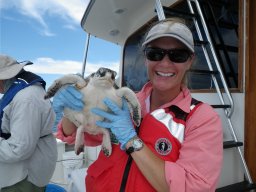 Kristen M. Hart合作论文数Davie Field Office, U.S. Geological Survey Florida Integrated Science Center38
 Brian J. Smith合作论文数Department of Wildlife Ecology and Conservation, University of Florida15Ikuko Fujisaki合作论文数14Ray W. Snow合作论文数14Laura A. Brandt合作论文数10Brian M. Jeffery合作论文数10Kenneth G. Rice合作论文数9
 Matthew Brien合作论文数8
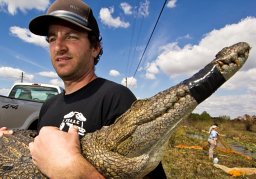 Michael R. Rochford合作论文数Ft. Lauderdale Research and Education Center, University of Florida8Zandy Hillis-Starr合作论文数7Jeffrey S. Beauchamp合作论文数6Clayton Pollock合作论文数Buck Isl Reef Natl Monument6
 Michael E. Dorcas合作论文数Department of Biology;Davidson College;Department of Biology, Davidson College6Christina M. Romagosa合作论文数Center for Forest Sustainability, School of Forestry and Wildlife Sciences, 602 Duncan Dr. Auburn University, Auburn, AL 36849, United States5
 Robert N. Reed合作论文数5Andrew G. Crowder合作论文数4
 jacquelyn c guzy合作论文数Wetland & Aquat Res Ctr, US Geol Survey4
 Lundgren Ian合作论文数4
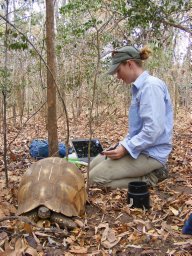 Andrea Currylow合作论文数Department of Forestry and Natural Resources, Purdue University4
 Amy A. Yackel Adams合作论文数Department of Fishery and Wildlife Biology;Colorado State University;Department of Fishery and Wildlife Biology, Colorado State University4Jeff Beauchamp合作论文数3Thomas H. Selby合作论文数3Mike Rochford合作论文数3David C. Roche合作论文数3Venetia Briggs-Gonzalez合作论文数Dept Wildlife Ecol & Conservat, Univ Florida3
 Jillian Josimovich合作论文数3Falk Bryan G合作论文数Division of Invertebrate Zoology and Sackler Institute for Comparative Genomics, American Museum of Natural History3Sartain Autumn R合作论文数3Benscoter Allison M合作论文数3
 Shannon E. Pittman合作论文数Department of Biology;Davidson College;Department of Biology, Davidson College3
 Melia Nafus合作论文数Department of Biomedical Sciences, Cornell University3Holly E. Fling合作论文数2Stephen Connett合作论文数2Quinton Phillips合作论文数2Ralf Boulon合作论文数2skip snow合作论文数2Joseph A. Wasilewski合作论文数2Janice M Blumenthal合作论文数2Mabel Nava合作论文数2amdeep sanghera合作论文数2Mark Parry合作论文数2Annette C. Broderick合作论文数2
 Cynthia Lagueux合作论文数2Melinda A. Lohmann合作论文数2
 Thomas Stringell合作论文数Nat Resources Wales2Andrew McGowan合作论文数2Autumn R Iverson合作论文数Dept Anim Sci, Univ Calif Davis2
 Michael Heithaus合作论文数Department of Biological Sciences, College of Arts, Sciences & Education, Florida International University2




