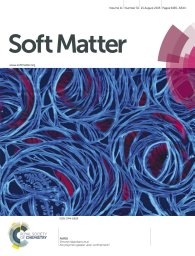
Herein we present a study on the formation of irreversibly adsorbed layer of polystyrene molecules on silicon oxide surfaces. Various scanning probe microscopy techniques have been employed to study both the morphology and the mechanical properties of these self-assembled thin polymeric layers. More in detail, standard contact mode, force versus distance spectroscopy and ultrasonic force microscopy have been employed to obtain spatially-resolved maps and, thus, observe the physisorption of polystyrene on native silicon oxide substrate in function of time. Thick films, spin coated from a toluene solution, have been annealed at a temperature above the glass transition for increasing time intervals, and finally thoroughly rinsed in toluene. We have found that isolated islands of adsorbed chains are already present after an annealing time of half an hour. Prolonged annealing determines a progressive increase of the covered areas, whereas the formation of a complete flat layer requires 24 h. The pattern observed is in line with expected evolution of an unstable system, corresponding to the phenomenon of spinodal dewetting. Adhesion measurements show that the films present a reduced snap-off and the formation of a meniscus between tip and surface for annealing time up to 8 h. On the other hand, elastic measurements allow us to observe a progressive increase of the elastic modulus, with a complete transition for annealing time above 20 h. This is indication that a dense packing of the polystyrene molecules occurs, in line with the predictions of current models on the kinetics of irreversible adsorption. LAY DESCRIPTION: Herein we present a study on the formation of irreversibly adsorbed layer of polystyrene molecules on silicon oxide surfaces. Various scanning probe microscopy techniques have been employed to study both the morphology and the mechanical properties of these self-assembled thin polymeric layers. Thick polystyrene films, spin coated from a toluene solution, have been thermally annealed at a temperature above the glass transition for increasing time intervals, and finally thoroughly rinsed in toluene. We have found that isolated islands of adsorbed chains are already present after an annealing time of half an hour. Prolonged annealing determines a progressive increase of the covered areas, whereas the formation of a complete flat layer requires twenty-four hours. The adsorption pattern observed is in line with expected evolution of an unstable system, corresponding to the phenomenon of spinodal dewetting. Adhesion and elastic measurements have allowed us to observe a progressive increase of the packing density of the polystyrene molecules, in agreement with the predictions of current models on the kinetics of irreversible adsorption.
The discussions on the nanoconfinement effect on the glass transition and glassy dynamics phenomena have yielded many open questions. Here, the thickness dependence of the thermal glass transition temperature Tgtherm of thin films of a PVME/PS blend is investigated by ellipsometry. Its thickness dependence was compared to that of the dynamic glass transition (measured by specific heat spectroscopy) and the deduced Vogel temperature (T0). While Tgtherm and T0 showed a monotonous increase, with decreasing film thickness, the dynamic glass transition temperature (Tgdyn) measured at a finite frequency showed a nonmonotonous dependence that peaks at 30 nm. This was discussed by assuming different cooperativity length scales at these temperatures, which have different sensitivities to composition and thickness. This nonmonotonous thickness dependence of Tgdyn disappears for frequencies characteristic for T0. Further analysis of the fragility parameter showed a change in the glassy dynamics from strong to fragile, with decreasing film thickness.
While physical vapour deposition of glass forming materials below their glass transition temperature, T-g, is an exciting route towards glasses with an extremely high packing density, strong kinetic and thermodynamic stability, vapour deposition of polymer systems is less evident and has so far not been investigated systematically. Here we have successfully prepared ultrathin films of low molecular mass polystyrene (800 g/mol) by thermal evaporation from the melt into a UHV chamber at a maximum deposition rate of 1 nm/h. Samples were studied in situ and in real-time by dielectric spectroscopy, chip-based ac-calorimetry and a quartz crystal microbalance, both during deposition and after reaching the final sample thickness of 5 nm.During film growth well below the bulk-T-g, an initially retarded deposition kinetics was observed along with an accelerated dielectric relaxation dynamics compared to the bulk glass transition. Subsequent temperature cycling above the bulk-T-g revealed continuous changes in the (dielectric) glass transition dynamics and finally lead to desorption of the material at elevated temperatures without restoring the "dielectric" bulk glass transition dynamics.In contrast, simultaneous specific heat spectroscopy revealed bulk dynamics, a striking discrepancy that was discussed in terms of a dominant and accelerated response of PS end-groups in the dielectric spectra in combination with terminal sub-chain dynamics and some degree of end-group segregation. (c) 2014 Elsevier B.V. All rights reserved.
Confined at the nanoscale level, polymers crystallize much slower than in bulk, and in some cases the formation of ordered structures results inhibited for extremely long experimental time scales. Here, we report on the thickness dependence of the cold crystallization of thin poly(l-lactide) (PLLA) films (<300 nm), capped between two aluminum (Al) layers. The crystallization kinetics was monitored by means of dielectric relaxation spectroscopy, following the reduction in dielectric strength during annealing in isothermal experiments. We exploited a recently developed analytical method assessing the impact of irreversible chain adsorption and permitting to disentangle finite size and interfacial effects. In line with previous literature, the conversion time increased upon reduction of the thickness and crystallization was inhibited in films thinner than 10 nm. Moreover, we analyzed the thickness dependence of the dielectric strength and obtained the gradient in segmental mobility inside our capped films. We conclude that irreversible adsorption of chains onto the Al electrodes ultimately leads to a reduction in molecular mobility compared to the bulk.
. Real-time dielectric relaxation spectroscopy for a molecular beam deposited glass forming liquids is proposed as a versatile approach for the study of the dynamic glass transition in geometric confinement. To achieve the highest sensitivity down to monomolecular organic layers in a wide frequency range (0.1–10 7 Hz) during simultaneous deposition and desorption, we have used μm spaced interdigitated electrodes under ultrahigh vacuum conditions. Experiments using glycerol deposited on fused silica at − 40 ∘ C revealed a dielectric glass transition process for a layer thickness as low as 0.7 nm. While its peak position hardly changes upon thickness reduction, a clear broadening is observed that implies an increasing heterogeneous mobility scenario for the thinnest films caused by molecules being part of a reduced (at the substrate) or enhanced (free surface) mobility layer. This finding is supported by desorption experiments that reveal a strong retardation of the desorption rate for films below 1 nm.
The molecular dynamics in nanometer thin films of glycerol was investigated upon thickness reduction by combining organic molecular deposition with in situ broadband dielectric spectroscopy. Changes in the cooperative dynamics with respect to bulk glycerol were observed for films of thicknesses down to 1.6 nm (corresponding to roughly three molecular layers). Systematic investigation revealed no pure size effects addressable merely to geometrical constraints. However, an increase in the glass transition temperature by 3.5 K was observed for the thinnest film, indicating the presence of a layer with reduced mobility in close proximity to the substrate. The impact of both the upper and lower interfaces has been disentangled by measurements performed during slow desorption. Moreover, proof is given for the existence of a layer with enhanced mobility in the vicinity of the free surface enslaved to the dynamics of the rest of the film.
The possibility to control the assembly of molecules on a given substrate is particularly important for polymeric systems. Self-assembly of polymer chains on a substrate can be controlled by modifying selectively the chemistry of the substrate surface and/or the polymer itself in order to create patterned polymer films with tailored length scales. A novel tool to change the polymer morphology in order to achieve the requested superficial structures and textures is the atomic force microscopy (AFM). In this paper, we shall demonstrate how to obtain ordered ripple structures induced by an AFM tip on a polymer thin film. It is well known that a polymer surface scanned by a probe tip can change its morphology assuming typical ripple structures. These structures however are expected to be formed for high applied loads (> 10 nN) and after many scanning cycles (> 10). On the contrary, we shall show how to obtain the ripple formation just by a single AFM scan and for relatively low applied loads. Such ripple structures can be modulated and modified by changing the applied load, scanning velocity and angle. In this way, it is possible to obtain sinusoidal structures with suitable amplitude, periodicity and orientation. Beyond the general contribution to the development of nanolithography, the patterns obtained by this method can find many applications in biomaterial polymer science (such as scaffolds for cell proliferation in tissue engineering). (c) 2006 Elsevier B.V. All rights reserved.
We studied dynamic properties of ultrathin films of poly(ethylene terephthalate) spincoated on different substrates, by means of dielectric spectroscopy and surface patterning experiments. We did not observe any variations of structural dielectric relaxation dynamics for films spincoated on aluminium substrate having thicknesses down to 40 nm. On the same substrate, 13 nm thick films are instead characterized by a reduction of the chains mobility. Surprisingly the chains dynamics as probed by a surface nanopatterning experiment evidenced a strong dependence on the substrate interaction even for 50 nm thick films, where dielectric relaxation dynamics is unaffected. It can be deduced that different length scales characterise dielectric relaxation dynamics and the processes related to the surface patterning, even if both are related to the chain mobility. Further experiments are wished to better understand this intriguing scenario.
The cold crystallization kinetics of ultrathin films of poly( 3-hydroxybutyrate) ( PHB) have been investigated by dielectric spectroscopy. Upon reduction of the film thickness, a lowering of the Avrami exponent accompanied by an increase of the crystallization time was observed. The experimental results are analysed in terms of reduction of the total number of nuclei involved in the crystallization process.
 Simona Capponi合作论文数Department of Physics and Astronomy, Katholieke Universiteit Leuven3
 Pasqualantonio Pingue合作论文数CNR-INFM National Research Center NEST and Scuola Normale Superiore3
 Michael Wübbenhorst合作论文数Laboratory for Acoustics and Thermal Physics, Katholieke Universiteit Leuven3
 G. Couderc合作论文数2
 Bram Vanroy合作论文数Lab Soft Matter & Biophys, Katholieke Univ Leuven2
 Jürg Hulliger合作论文数Department of Chemistry & Biochemistry, University of Bern2Norwid-Rasmus Behrnd合作论文数2
 Daniel E. Martínez-Tong合作论文数Universidad Simon Bolivar, Univ. Simón Bolívar1
 Giovanni Signore合作论文数Dipartimento di Chimica e Chimica Industriale, Università di Pisa1Mauro Lucchesi合作论文数PolyLab, INFM-CNR1Pierangelo Rolla合作论文数1
 Mario D' Acunto合作论文数Department of Chemical Engineering;University of Pisa;Department of Chemical Engineering, University of Pisa1
 Stanisław Andrzej Rozanski合作论文数1Daniele Prevosto合作论文数1Aurora Nogales合作论文数Instituto de Estructura de la Materia, CSIC1
 Simone Capaccioli合作论文数Department of Physics, University of Pisa1
 Franco Dinelli合作论文数Department of Chemical Engineering;University of Washington;Department of Chemical Engineering, University of Washington1




