Dendritic cells (DCs) loaded with tumor-associated antigens are a promising treatment to prevent disease relapse in patients with multiple myeloma (MM). Early-phase clinical trials have shown safety, efficacy, and immunologic responses in MM, but a key issue now is the isolation of a functional, clinically relevant DC preparation. The authors have described a unique blood DC (BDC) isolation platform based on positive immunoselection with the CMRF-56 antibody. To validate this as a feasible source of BDCs for immunotherapy, the authors undertook a quantitative and functional analysis of BDCs in MM patients and healthy donors. These data show that MM patients have similar numbers of CD11c+CD16+ and CD11c+CD16- BDCs but about half the number of CD11c-CD123+ BDCs in whole blood compared with healthy donors. BDCs could be isolated by CMRF-56+ immunoselection from all MM patients tested, with similar yields and purity to healthy donors. These BDCs could be activated ex vivo with poly I:C or LPS. Furthermore, CMRF-56+ preparations could induce potent CD4+ and CD8+ T-lymphocyte responses in both MM patients and healthy donors. These data suggest that BDCs with in vitro functional integrity can be isolated from MM patients in sufficient numbers to justify a clinical trial.
Background: Treatment with interferon and subcutaneous cytarabine produces superior cytogenetic responses in chronic myeloid leukaemia (CML) than treatment with interferon alone, but at the expense of greater toxicity. Cytarabine ocfosfate (YNK01) is an oral precursor of cytarabine that may overcome some of the inconvenience and toxicities associated with subcutaneous cytarabine administration.Patients and methods: We studied the efficacy and tolerability of combination therapy with interferon-alpha-2b and YNK01 in patients with newly diagnosed, untreated CML. Forty patients were treated with interferon-alpha-2b (5 MU/m(2)/day) plus monthly courses of YNK01 (600 mg/day for 10 days) for I year.Results: The 6-month complete haematological response rate was 63% and the 1-year major cytogenetic response rate was 30%, with 10% of cytogenetic responses being complete. With a median follow-up of 57 months, the estimated 5-year overall survival was 86% (95% confidence interval 70% to 94%). Treatment tolerability was poor, with toxicity leading to discontinuation of one or both drugs in 60% of cases. The median daily dose of interferon alpha-2b was 7.75 MU and the median dose of YNK01 was 600 mg/day for each 10-day treatment cycle.Conclusions: Interferon-alpha-2b and YNK01 produce cytogenetic responses comparable to those achieved with interferon-alpha-2b and parenteral cytarabine, although toxicity was excessive. Alternate dosing strategies may enhance the tolerability of YNK01.
Dendritic cells (DC) from distinct DC subsets are essential contributors to normal human immune responses. Despite this, reliable assays that enable DC to be counted precisely have been slow to evolve. We have now developed a new single-platform flow cytometric assay based on TruCOUNT beads and the whole blood "Lyse/No-Wash" protocol that allows precise counting of the CD14(-) blood DC subsets: CD11c(+)CD16(-) DC, CD11c(+)CD16(+) DC, CD123(hi) DC, CD1c(+) DC and BDCA-3(+) DC. This assay requires 50 microl of whole blood; does not rely on a hematology blood analyser for the absolute DC counts; allows DC counting in EDTA samples 24 h after collection; and is suitable for cord blood and peripheral blood. The data is highly reproducible with intra-assay and inter-assay coefficients of variation less than 3% and 11%, respectively. This assay does not produce the DC-T lymphocyte conjugates that result in DC counting abnormalities in conventional gradient-density separation procedures. Using the TruCOUNT assay, we established that absolute blood DC counts reduce with age in healthy individuals. In preliminary studies, we found a significantly lower absolute blood CD11c(+)CD16(+) DC count in stage III/IV versus stage I/II breast carcinoma patients and a lower absolute blood CD123(hi) DC count in multiple myeloma patients, compared to age-matched controls. These data indicate that scientific progress in DC counting technology will lead to the global standardization of DC counting and allow clinically meaningful data to be obtained.
Changes in blood dendritic cell (BDC) counts (CD123(hi)BDC and CD11c(+)BDC) and expression of CD62L, CCR7, and CD49d were analyzed in healthy donors, multiple myeloma (MM), and non-Hodgkin lymphoma (NHL) patients, who received granulocyte-colony stimulating factor (G-CSF) containing peripheral blood stem cell (PBSC) mobilization protocols. Low-dose G-CSF in healthy donors (8-10 microg/kg/d subcutaneously) and high-dose G-CSF in patients (30 microg/kg/d) increased CD123(hi)BDC (2- to 22-fold, mean 3.7 x 10(6)/L-17.7 x 10(6)/L and 1.9 x 10(6)/L-12.0 x 10(6)/L) in healthy donors and MM but decreased CD11c(+)BDC (2- to 10-fold, mean 5.7 x 10(6)/L-1.6 x 10(6)/L) in NHL patients, on the day of apheresis, compared with steady state. After apheresis, CD123(hi)BDC counts remained high, whereas low CD11c(+)BDC counts tended to recover in the following 2-5 days. Down-regulation of CD62L and up-regulation of CCR7 on CD123(hi)BDC were found in most healthy donors and MM patients. CD49d expression was unchanged. Thus, PBSC mobilization may change BDC counts by altering molecules necessary for BDC homing from blood into tissues.
After initial treatment, a 54-year-old male with plasma cell leukaemia developed extramedullary relapse in the testis and meninges without evidence of bone marrow involvement. We postulate that the central nervous system (CNS) and testis may have served as sanctuary sites for the disease during initial treatment. A role for CNS prophylaxis in plasma cell leukaemia is suggested.
word count: 150 Text word count: 1251
A 58-year-old woman presented to emergency departments on several occasions with episodic angioedema. Lymphoplasmacytic lymphoma with an IgM paraprotein (Waldenstrom's macroglobulinemia) was eventually diagnosed 14 months later in association with acquired C1 esterase inhibitor deficiency. Resolution of the angioedema and C1 esterase inhibitor deficiency was achieved with danazol and treatment of the underlying lymphoma.
The ability of Interferon alpha (alpha-IFN) to alter the natural history of essential thrombocythemia (ET) and induce sustained hematologic remission would provide further impetus to consider this agent in younger patients with this disease and may influence the decision to commence treatment in asymptomatic patients. This study has failed to demonstrate any sustained hematologic remissions after cessation of long-term (2 years) alpha-IFN administration in a group of 34 female patients with a median age of 41 years (range 14-68) who were considered at intermediate to high risk of thrombotic complications. In the twenty-one patients completing two years of therapy, 13 (62%) had complete hematological responses (CHR; platelet count <400 x 10(9)/L), 7 (33%) partial hematological responses (PHR; platelet count 400-600 x 10(9)/L) and no thrombotic or hemorrhagic complications occurred. In all patients who discontinued alpha-IFN at 2 years, platelet counts rose above the normal range within 1-4 months and the majority required reinstitution of some form of therapy. The inability of long-term alpha-IFN to induce sustained, unmaintained hematologic remission argues strongly against any significant effect on the neoplastic clone at the doses used in this study. This study does, however, confirm the efficacy of long-term alpha-IFN in younger female patients with ET, a group not previously well represented in clinical trials of the agent.
Essential thrombocythaemia (ET), a myeloproliferative disorder (MPD) manifested by excessive platelet production, lacks a specific diagnostic test to facilitate differentiation from other thrombocytoses. We studied thrombopoietin (TPO) levels in 41 patients with thrombocytosis: 25 ET patients, eight with other MPD, and eight with reactive thrombocytosis. Mean age and platelet counts for these groups were comparable. TPO levels for 96 healthy individuals provided a reference range for normal. The majority of ET patients (19/25 or 76%) had normal TPO levels. No patient with ET had a TPO level below 75 pg/ml, compared with 57% of healthy donors and 8/16 (50%) patients with other thrombocytoses (P<0.05). TPO levels in ET are not appropriately down-regulated, as occurs with cytokines relevant to other MPD. In thrombocytosis, a TPO level <75 pg/ml indicates that ET is unlikely.
 R Rodwell合作论文数25D Taylor合作论文数17Kerry Taylor合作论文数Institute of Medical and Veterinary Science;Australasian Leukaemia and Lymphoma Group;Novartis Pharmaceuticals;Institute of Medical and Veterinary Science, Australasian Leukaemia and Lymphoma Group17C Kelly合作论文数13Andrea Rentoul合作论文数10D Moore合作论文数8
 Slavica Vuckovic合作论文数Mater Medical Research Institute8Dalia Khalil合作论文数7M Bentley合作论文数6
 Andrew Grigg合作论文数Eastern Haematology Oncology Group6K Taylor合作论文数6P. Marlton合作论文数5L Pitcher合作论文数5Paul Eliadis合作论文数5I Bunce合作论文数5J Marty合作论文数4Gv Crosbie合作论文数4J Gibson合作论文数4J Morton合作论文数4Dnj Hart合作论文数4N Williams合作论文数4
 Lorena Brown合作论文数The Peter Doherty Institute for Infection and Immunity, Faculty of Medicine, Dentistry and Health Sciences, The University of Melbourne4
 David G. Maloney合作论文数Translational Science and Therapeutics Division, Fred Hutch;Immunotherapy Integrated Research Center, Fred Hutch4Kenneth F. Bradstock合作论文数Westmead Hospital4
 Devinder Singh Gill合作论文数Princess Alexandra Hospital;Diamantina Institute, The University of Queensland4
 Geoffrey Hill合作论文数Translational Science and Therapeutics Division, Fred Hutch Cancer Center;Clinical Research Division, Fred Hutch Cancer Center;Division of Hematology and Oncology, School of Medicine, University of Washington4Km Taylor合作论文数3C Arthur合作论文数3
 Timothy Hughes合作论文数Adelaide Medical School, Faculty of Health and Medical Sciences, The University of Adelaide;South Australian Health and Medical Research Institute3
 Katrina Williams合作论文数Department of Paediatrics, Monash University;University of Melbourne3
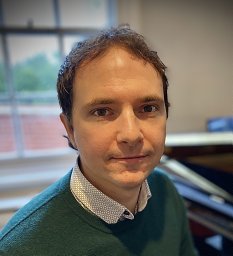 John Bashford合作论文数School of Medicine;University of Tasmania;School of Medicine, University of Tasmania3J Wellwood合作论文数3F Passuello合作论文数2T Frost合作论文数2a j morton合作论文数2
 Chris Pyke合作论文数2R Herrmann合作论文数2J. Renwick合作论文数2P Browett合作论文数2C Li合作论文数2C Martin合作论文数2
 Min Kim合作论文数Ctr Virus Res, Westmead Inst Med Res2
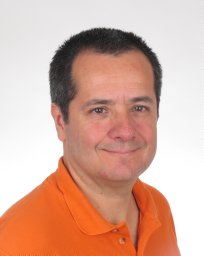 J Alejandro Lopez合作论文数School of Environment and Science, Griffith University2
 Michael S Wolf合作论文数Department of Medicine, Feinberg School of Medicine, Northwestern University;Center for Applied Health Research on Aging, Feinberg School of Medicine, Northwestern University2
 Brian Williams合作论文数Institute of Health Research and Innovation, School of Health Social Care and Life Sciences, University of the Highlands and Islands2J Stone合作论文数2
 Andrew Spencer合作论文数The Alfred Hospital;Alfred Health;Australian Centre for Blood Diseases, School of Translational Medicine, Faculty of Medicine, Nursing and Health Sciences, Monash University2C Low合作论文数2




