Cervical arthrodesis surgery focuses on fusing two or more vertebrae using a spinal implant. This paper presents a comanipulation robotic system integrated with an automated deep-learning-based path-planning generator. The cobotic assistance constraints the surgeon’s movements to a predefined drilling direction for precise screw placement. Manually determining the optimal trajectory is challenging and time-consuming due to the need to avoid critical structures such as nerves and vertebral arteries. The proposed approach significantly reduces surgical planning time while improving accuracy and efficiency. Experimental findings indicate promising performance, and the planning outcomes can be applied in surgeries following the surgeon’s assessment. This study highlights the potential of combining robotic assistance and deep learning for safe and effective pedicle screw placement in spinal surgery.
This paper addresses the insufficiency of trained echography personnel in developed countries and the need for specialized skill development by introducing a novel 6-DOF parallel Cartesian haptic device for initial sonography training. The proposed mechanism consists of two identical limbs linked by a tool rod with a high-pitched screw for precise vertical actuation. Equipped with a functional sonography probe and a self-rotation mechanism using constant velocity joints, the system enables scanning of body phantoms to simulate pathologies. The direct and inverse kinematics are analyzed to determine the probe’s position and orientation. The developed concept is designed to provide force feedback with values closer to those encountered in real scans while utilizing a structure built from affordable components. These advantages make it particularly appealing compared to existing systems, especially in developing regions.
In the field of laparoscopic surgery, research is currently focusing on the development of new robotic systems to assist practitioners in complex operations, improving the precision of their medical gestures. In this context, the performance of these robotic platforms can be conditioned by various factors, such as the robot's accessibility and dexterity in the task workspace. In this paper, we present a new strategy for improving the kinematic and dynamic performance of a 7-degrees of freedom robot-assisted camera-holder system for laparoscopic surgery. This approach involves the simultaneous optimization of the robot base placement and the laparoscope mounting orientation. To do so, a general robot capability representation approach is implemented in an innovative multiobjective optimization algorithm. The obtained results are first evaluated in simulation and then validated experimentally by comparing the robot's performances implementing both the existing and the optimized solution. The optimization result led to a 2% improvement in the accessibility index and a 14% enhancement in manipulability. Furthermore, the dynamic performance criteria resulted in a substantial 43% reduction in power consumption.
The shortage of specialized sonography professionals and the need for efficient training methods have led to the development of various sonography training solutions. This paper introduces a cost-effective sonography training system, combining a parallel master haptic device, body phantoms for simulating pathologies, and specialized software. The proposed mechanism is a 5-degree-of-freedom (5-DOF) parallel robot with two identical parts fixed on a stationary frame. It features a probe for scanning body phantoms and a self-rotation mechanism. The direct and inverse kinematic problems are analyzed to determine the probe's position and orientation. The proposed system offers a more affordable alternative to existing sonography training solutions, which can be prohibitively expensive, especially in developing countries. It provides a more realistic scan representation, offering a potential solution to address the shortage of sonography specialists while delivering high-quality training.
The main objective of this paper is to discuss the experimental validation of a tele-operation system for remote center-of-motion tasks, such as laparoscopic surgery. This validation is based on the use of an extra sensor placed on the master manipulator. The tele-operation system is composed of a new hybrid haptic device (nHH) intended to be used as a master manipulator controlling a collaborative robot, used as a slave surgical robot. The resolution of the forward kinematic model (FKM) of the master device is performed experimentally thanks to the use of an extra sensor. The IMU, as the extra sensor, is installed on the serial part of the nHH device to measure the orientation and is enabled to solve the FKM of the parallel part of the nHH device. The use of an extra sensor reduces the calculation time, improves the accuracy of the KFM, and makes it suitable for real-time applications. The preliminary validation of the force feedback in the nHH workspace is validated. Experiments were conducted on the master–slave platform to validate the proposed approach. The results are promising, which proves that the nHH device presents a suitable performance for the desired task.
In this study, we focus on a 3DOF (RRR) spherical parallel manipulator (SPM) employed as haptic interface (HI) for teleoperation application. We started by presenting the kinematic model of the interface, its different working modes and identifying singularity zones within the operational workspace (WS). As a solution, a redundant architecture is proposed where we used a fourth motor to enhance the dexterity of the device. Subsequently, our study takes a closer look at the comparative analysis of working modes in the purpose of selecting the optimal starting configuration for our interface. This selection ensures an optimized torque distribution across various WS configurations where we respect the limit of torques for every motor in order to stay in a safe zone of control.
This paper focuses on developing a novel hybrid-haptic (nHH) device with a remote center of rotation with 4 DOFs (degrees of freedom) intendant to be used as a haptic device. The new architecture is composed of two chains handling each one a part of the motions. It has the advantages of a parallel robot as high stiffness and accuracy, and the large workspace of the serial robots. The optimal synthesis of the nHH was performed using real-coded genetic algorithms. The optimization criteria and constraints were established and successively formulated and solved using a mono-objective function. A validation and comparison study were performed between the spherical parallel manipulator and the nHH. The obtained results are promising since the nHH is compared to other similar task devices, such as spherical parallel manipulator, and presents a suitable kinematic performance with a task workspace free singularity inside.
Cable-driven parallel robots (CDPRs) are still gaining attention thanks to their interesting characteristics compared to serial or classic parallel manipulators. However, the limited range of rotation of their end-effectors reduces their application fields to predominantly translational movements. In this context, the issue of extending the rotational workspace of a CDPR while maintaining a compact robot structure is addressed in this paper. This work is motivated by the need to find the optimal CDPR for upper limb rehabilitation allowing to assist the patient's hand along a set of prescribed tasks. Firstly, a reconfigurable robot, where the motors' locations are movable, is proposed in order to help reaching all the prescribed poses. Although this solution presents promising results compared to classical CDPRs, it involves a sizable robot structure inadequate to rehabilitation application. To improve the obtained solution, another approach is proposed, based on combining the large translational workspace of CDPRs and the large rotational workspace of serial manipulators. The optimal structure of a hybrid robot will be considered for the prototype design.
This paper deals with the experimental validation of a novel hybrid haptic device (nHH) intended to be used in a robotic teleoperation platform for laparoscopic surgery. The contribution of this work is to cope with the complexity of the Forward Kinematic Model (FKM) of the nHH and to validate its resolution experimentally through the use of an additional sensor: an IMU attached to its end-effector (serial part). Thus, this sensor allows to measure the orientation of the end-effector, allowing to solve the forward model of the parallel part of the nHH. Experiments have been conducted on the prototype of the hybrid device and, as expected, the FKM computation time is reduced. The proposed approach is validated and the obtained results demonstrate the significance of placing an IMU sensor on the serial part of the device, which makes the nHH suitable for real-time applications.
In this paper a concept of a low-cost system for initial training of sonography specialists is presented. The system consists of a 6 DOF haptic device equipped with force feedback, body phantom and a special software. The haptic device is intended to help in learning and improving basic motions used during ultrasound scanning. The body phantom is necessary to imitate a real human body and simulate pathologies. Several different technologies for body phantom manufacturing were proposed and tested with ultrasound scanner. The comparison with real human body scan allowed choosing the most suitable manufacturing approaches for further development.
A visual based control method based on coupling a camera with a cable-driven parallel robot (CDPR) is proposed in this paper. This work is motivated by the need of overcoming the robot uncertainties resulting from cable vibrations or inaccurate initial configurations. The poses taken by the end-effector are recorded in real time and used as feedback for the control loop to enhance the robot accuracy. Experimental tests were conducted on a planar CDPR dedicated to rehabilitation and allowing to assist the patient's upper limb along a preselected path. The reference path of the prescribed exercise was recorded, for a healthy volunteer, using a motion capture system. The implementation results show a remarkable increase in the robot accuracy. In addition, thanks to the proposed correction, the initial pose of the end-effector has no longer an impact on the robot behavior. The prescribed task can be performed independently of the starting pose.
This paper presents an approach to improve the resolution of the forward kinematic model (FKM) of parallel manipulators. This approach is based on placing sensors on one leg of the manipulator rather than placing them on the actuated joints at the base. Using this method, we aim to cope with the complexity of the FKM of parallel manipulators and to improve the computation time of the FKM. The proposed method is applied on two different robots, i.e.: the 3-UPU and RAF manipulators which are Translational Parallel Manipulators (TPMs). Simulations were carried out to validate this method. These simulations show how the serial approach improve the accuracy, overcome singular configurations inside the workspace and speed up the resolution of the FKM.
The design of a teleoperated 8-DoF redundant robot for Doppler sonography is detailed in this paper. The proposed robot is composed of a 7-DoF robotic arm mounted on a 1-DoF linear axis. This solution has been conceived to allow Doppler ultrasound examination of the entire patient’s body. This paper details the design of the platform and proposes two alternative control modes to deal with its redundancy at the torque level. The first control mode considers the robot as a full 8-DoF kinematics chain, synchronizing the action of the eight joints and improving the global robot manipulability. The second control mode decouples the 7-DoF arm and the linear axis controllers and proposes a switching strategy to activate the linear axis motion when the robot arm approaches the workspace limits. Moreover, a new adaptive Joint-Limit Avoidance (JLA) strategy is proposed with the aim of exploiting the redundancy of the 7-DoF anthropomorphic arm. Unlike classical JLA approaches, a weighting matrix is actively adapted to prioritize those joints that are approaching the mechanical limits. Simulations and experimental results are presented to verify the effectiveness of the proposed control modes.
In this paper, a novel surgical robotic platform intended to assist surgeons in cervical spine surgery is presented. The purpose of this surgery is to treat the cervical spine instabilities. The surgical procedure requires drilling into specific region of the vertebrae in order to attach spinal implants and thus ensure a normal spacing between each vertebra concerned. In this context, the proposed robotic platform allows to control and restrict the surgeon's movements to a specific drilling direction set by the surgeon. The current platform is composed of a collaborative robot with seven degrees-of-freedom (DoF) equipped with a drilling tool and directly comanipulated by the surgeon. A motion capture system, as an exteroceptive sensor device, provides the robot controller with the movement data of the vertebra to be drilled. Robot Operating System (ROS) framework is used to enable real-time communication between the collaborative robot and the visual exteroceptive device. In addition, an implemented compliance control program allows to enhance the safety aspect of the robotic platform. Indeed, the collaborative robot follows the patient's movements while constraining the tool movements to an optimal trajectory as well as a limited drilling depth selected by the surgeon. The collaborative robot's elbow movements are also restricted by exploiting the null-space in order to avoid collisions with other equipment or the medical team members. Experimental drilling trials have been performed by an orthopedic surgeon to validate the usefulness and different functionalities of the developed robotic platform, and provide that a collaborative robot can comply with a spine surgery procedure. These preliminary tests were performed in a lumbar spine model for which the use of a robotic device is most frequent due to a lower complexity compared to the cervical spine.
Bioinspired robots are useful tools to study complex biomechanical processes of animal locomotion. Key movements and kinematic parameters are under the control of experimenters, which is impossible to perform when experimenting with living animals. The primary challenge to test biological hypotheses is designing realistic robots taking inspiration from swimming snakes. Yet, underlying biomechanics of undulatory swimming i.e., anguilliform swimming, remains poorly understood. Many of underwater snakebots are made of rigid segments that form a broken-line system, unlike the skeleto-muscular systems of living snakes include more than 200 vertebrae, conferring an extreme fluidity. This paper introduces a novel design based on hybrid continuum cable driven robot (HCDR) developed through interaction with biologists and roboticists. This Biology-Push design significantly increases the fluidity and freedom of the robot's motion. Thus, improved mimic snake's locomotion is given using cable-driven to represent linkages between muscles and vertebrae providing good fluidity. In addition, the association of rigid and flexible parts allows a homogeneous distribution of actuators and masses to design autonomous swimming snake robot. Combining literature data and kinematic of swimming snakes’ analyses, we implemented a kinematic model to control prototype’ motion in both a plane and a volume. Finally, a comparative study between the device kinematics and the snake's movements is carried out.
Multi-robot systems have become important in various applications. These robotic platforms consisting of several robotic arms collaborating in a common workspace are a suitable tool to perform complex tasks, such as surgical applications. However, the placement of each robotic arm has an impact on the whole system kinematics and dynamic performance. In this paper, we present a novel technique to optimize the base location of the robot manipulators based on the capability map to develop a bi-cobot system dedicated to medical applications. This technique is implemented to simultaneously identify the base placement of the two collaborative robots while optimizing their kinematic criteria and the system compactness. The obtained results are evaluated using a cobot simulation platform for the execution of minimally invasive surgical tasks.
Replicating animal movements with robots provides powerful research tools because key parameters can be manipulated at will. Facing the lack of standard methods and the high complexity of biological systems, an incremental bioinspired approach is required. We followed this method to design a snake robot capable of reproducing the natural swimming gait of snakes, i.e., the lateral undulations of the whole body. Our goal was to shift away from the classical broken line design of poly-articulated snake robots to mimic the far more complex fluid movements of snakes. First, we examined the musculoskeletal systems of different snake species to extract key information, such as the flexibility or stiffness of the body. Second, we gathered the swimming kinematics of living snakes. Third, we developed a toolbox to implement the data that are relevant to technical solutions. We eventually built a prototype of an artificial body (not yet fitted with motors) that successfully reproduced the natural fluid lateral undulations of snakes when they swim. This basis is an essential step for designing realistic autonomous snake robots.
Designing and modelling bioinspired robots enables mimicking complex biomechanical process as snake swimming locomotion. Cable-driven compliant continuum robot made of separated modules was specifically designed as biology-push process to accurately reproduce snake’s locomotion. This paper aims to present the design and modelling of a bioinspired two sections Serial Continuum Robot (SCR). This latter is a hybrid snake-arm composed of two sections assembled in series as a serial standard manipulator. Each section of the snake-arm is independently actuated and consists of 2-DoF. This polyvalent design combines the advantage of flexible continuum robot and serial manipulator. Swimming snake-like robot is presented as an example of biomimetic application, where the robot is able to significantly mimic snake locomotion with a homogeneous distribution of actuators.
Assistive robotic rehabilitation can be classified into two groups, the passive mode where the robot moves the patient’s affected member along the desired movement, and the assisted as needed mode, where the subject performs the exercises by himself and the robot interacts only to guarantee the accuracy of the movement. This paper proposes an optimal design of a 3-DoF planar cable-driven parallel robot intended for upper limb rehabilitation as well as the torque control strategies adopted for the assisted as needed and the passive rehabilitation modes. In this context, a motion capture system was carried out for the desired trajectories and the measured data were analyzed in order to extract the robot prescribed workspace.
 Med Amine Laribi合作论文数Institut PPRIME, Université de Poitiers88
 Marc Arsicault合作论文数48
 M. A. Laribi合作论文数42
 Lotfi Romdhane合作论文数Graduate School of Science and Technology of Sousse42
 Juan Sebastian Sandoval Arevalo合作论文数41
 Abdelfattah Mlika合作论文数31
 Houssem Saafi合作论文数29
 Jean-Pierre Gazeau合作论文数26
 Terence Essomba合作论文数National Central University18a chaker合作论文数Mech Lab Sousse LMS, Univ Sousse17
 Sami Bennour合作论文数Laboratoire de Mécanique de Sousse, Université de Sousse12
 Samir Lahouar合作论文数Laboratoire de Mécanique des Solides, CNRS12Ferdaws Ennaiem合作论文数10Jeanpaul Lallemand合作论文数9
 Giuseppe Carbone合作论文数8
 Y Ayoubi合作论文数Dept GMSC Pprime Institute, CNRS University of Poitiers8Gerard Poisson合作论文数8
 Fabien Courreges合作论文数8
 P. Vulliez合作论文数6
 Ines Ben Hamida合作论文数6
 Antoine Eon合作论文数5
 Elie Gautreau合作论文数Pprime Institute, CNRS-University of Poitiers-ENSMA5
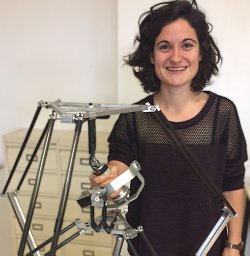 Margot Vulliez合作论文数LURPA, (ENS Cachan, Université Paris-sud 11) 61 Av. du Pdt Wilson,94230 Cachan, France5Gabriel Ramírez合作论文数5
 Majdi Meskini合作论文数4Jean-Michel Guilhem合作论文数4
 Celestin Preault合作论文数4
 Nael Daoud合作论文数CNRS, Univ Poitiers4
 Ibrahim, M.Yousef合作论文数4Boutin, L.合作论文数4
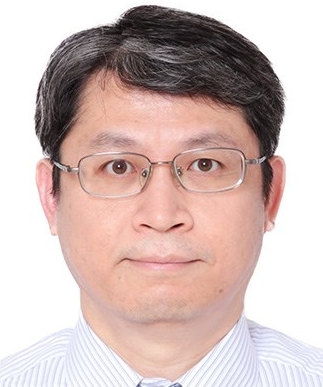 Chieh-Tsai Wu (吴杰才)合作论文数Chang Gung Memorial Hospital International Medical Center;Linkou Chang Gung Memorial Hospital4
 Carl Nelson合作论文数Department of Mechanical & Materials Engineering, College of Engineering, University of Nebraska-Lincoln4
 José Alfonso Pámanes García合作论文数4Laurence Nouaille合作论文数4Patrick Rambeaud合作论文数4
 Patrick Lacouture合作论文数Laboratoire de Mécanique des Solides, Université de Poitiers4
 Xavier Bonnet合作论文数3
 Amir Trabelsi合作论文数3Cyril Breque合作论文数3Riviere, T.合作论文数3Tanguy Vendeuvre合作论文数3
 Pierre Vieyres合作论文数3
 Victor Petuya合作论文数Department of Mechanical Engineering, Faculty of Engineering in Bilbao, Bizkaia, Spain3Mónica Urízar合作论文数3
 Mykhailo Riabtsev合作论文数2Aurélien Thomas合作论文数2j a pamanes garcia合作论文数2Bertrand Beaufrere合作论文数2Koszulinski Alizée合作论文数2




