BACKGROUND AND OBJECTIVES:Women with multiple sclerosis (MS) are at risk of disease reactivation in the early postpartum period. Ocrelizumab (OCR) is an anti-CD20 therapy highly effective at reducing MS disease activity. Data remain limited regarding use of disease-modifying therapies (DMTs), including OCR, and disease activity during peripregnancy periods. METHODS:We performed a retrospective cohort study using data from the MSBase Registry including pregnancies conceived after December 31, 2010, from women aged 18 years and older, with relapsing-remitting MS or clinically isolated syndrome. Women were classified by preconception exposure to DMTs, including OCR, rituximab (RTX), natalizumab (NAT), stratified into active (NAT-A; continued ≥28 weeks of gestation, restarted ≤1 month postpartum) or conservative (NAT-C; continued ≤4 weeks of gestation, restarted >1 month postpartum) strategies, dimethyl fumarate (DMF) or low-efficacy DMTs (interferon-beta, glatiramer acetate). Annualized relapse rates (ARRs) were calculated for 12-month prepregnancy, pregnancy, and 6-month postpartum periods. RESULTS:A total of 2,009 live births from 1,744 women were analyzed, including 73 live births from 69 women treated with preconception OCR. For OCR, no within-pregnancy relapse was observed and 3 women (4.1%) experienced 1 relapse in the postpartum period (ARR 0.09 [95% CI 0.02-0.27]). For NAT-A, 3 (3.7%) of 82 women relapsed during pregnancy (0.05 [0.01-0.15]) and 4 (4.9%) relapsed during postpartum (0.10 [0.03-0.26]). However, for NAT-C, 13 (15.9%) of 82 women relapsed within pregnancy (0.32 [0.20-0.51]) and 25 (30.5%) relapsed during postpartum (0.74 [0.50-1.06]). In the low-efficacy DMT group, 101 (7.6%) of 1,329 women experienced within-pregnancy relapse (0.12 [0.10-0.14]), followed by an increase in postpartum relapse activity with 234 women (17.6%) relapsing (0.43 [0.38-0.48]). This was similarly seen in the DMF group with 13 (7.9%) of 164 women experiencing within-pregnancy relapse (0.12 [0.06-0.20]) and 25 (15.2%) of 164 relapsing postpartum (0.39 [0.26-0.57]). Our RTX cohort had 0 of 24 women experiencing within-pregnancy relapse and 3 (12.5%) of 24 experiencing postpartum relapse. DISCUSSION:Women treated with OCR or NAT-A were observed to have low relapse rates during pregnancy and postpartum. NAT-C was associated with increased risk of relapses. There was no within-pregnancy relapse in our RTX cohort, although we caution overinterpretation due to our sample size. An effective DMT strategy with a favorable safety profile for the mother and infant should be discussed and implemented well in advance of planning a family. CLASSIFICATION OF EVIDENCE:This study provides Class III evidence that for women with relapsing-remitting MS or clinically isolated syndrome who become pregnant, ocrelizumab, rituximab, and natalizumab (continued ≥28 weeks of gestation and restarted ≤1 month postpartum) were associated with reduced risk of relapses, compared with other therapeutic strategies.
BACKGROUND:Observational studies looking at clinical a++nd MRI outcomes of treatments in pediatric MS, could assess current treatment algorithms, and provide insights for designing future clinical trials. OBJECTIVE:To describe baseline characteristics and clinical and MRI outcomes in MS patients initiating ocrelizumab and fingolimod under 18 years of age. METHODS:MS patients seen at 12 centers of US Network of Pediatric MS were included in this study if they had clinical and MRI follow-up and started treatment with either ocrelizumab or fingolimod prior to the age of 18. RESULTS:Eighty-seven patients initiating fingolimod and 52 initiating ocrelizumab met the inclusion criteria. Before starting fingolimod, mean annualized relapse rate was 0.43 (95 % CI: 0.29 - 0.65) and 78 % developed new T2 lesions while during treatment it was 0.12 (95 % CI: 0.08 - 1.9) and 47 % developed new T2 lesions. In the ocrelizumab group, the mean annualized relapse rate prior to initiation of treatment was 0.64 (95 % CI: 0.38-1.09) and a total of 83 % of patients developed new T2 lesions while during treatment it was 0.09 (95 % CI: 0.04-0.21) and none developed new T2 lesions. CONCLUSION:This study highlights the importance of evaluating current treatment methods and provides insights about the agents in the ongoing phase III trial comparing fingolimod and ocrelizumab.
This article describes the coaching strategies of the NESTORE e-coach, a virtual coach for promoting healthier lifestyles in older age. The novelty of the NESTORE project is the definition of a multi-domain personalized pathway where the e-coach accompanies the user throughout different structured and non-structured coaching activities and recommendations. The article also presents the design process of the coaching strategies, carried out including older adults from four European countries and experts from the different health domains, and the results of the tests carried out with 60 older adults in Italy, Spain and The Netherlands.
Introduction/Aims Data regarding weight, height/length, and growth status of patients with spinal muscular atrophy (SMA) who have received only supportive care are limited. This cross-sectional study describes these measurements in patients with Type 1 and Types 2/3 SMA and compares them with reference values from typically developing children. Methods Retrospective baseline data from three sites in the Pediatric Neuromuscular Clinical Research Network (Boston, New York, Philadelphia) were used. Descriptive statistics for weight, height/length, body mass index-for-age, as well as weight-for-length and absolute and relative deviations from reference values (ie, 50th percentile from World Health Organization/Centers for Disease Control growth charts) were calculated. Furthermore, growth status was reported. Results A total of 91 genetically confirmed patients with SMA receiving optimal supportive care and without any disease-modifying treatment were stratified into Types 1 (n = 28) and 2/3 SMA (n = 63). Patients with Type 1 SMA weighed significantly less (median = -7.5%) compared with reference values and patients with Types 2/3 SMA were significantly shorter (mean = -3.0%) compared with reference values. The median weight was considerably below the 50th percentile in both groups of patients, even if they received a high standard of care and proactive feeding support. Discussion More research is needed to understand which factors influence growth longitudinally, and how to accurately capture growth in patients with SMA. Further research should investigate the best time to provide feeding support to avoid underweight, especially in patients with Type 1, and how to avoid the risk of overfeeding, especially in patients with Types 2/3 SMA.
In recent years, due to the rise in availability of unstructured big data and technological affordances, there has been a proverbial "explosion" of research within the field of sentiment analysis and affective computing, facilitating the study of in-situ communicated emotion and its accurate detection at an unprecedented scale. Increasingly the emotional dimension and its key important role is being recognized in ecoaching, with attempts at its integration within such systems. This chapter reviews the predominant extant models for representing affect, as well as emotion related states relevant to older persons' experiences, including the state-of-art for their automated detection and integration within e-coaching systems. Given the approaches available, we describe how the NESTORE system addresses emotion recognition, self-tracking and subsequent feedback intended to help older adults make sense of their affective experiences across their daily life, as well as the role it can play in holistic e-coaching systems. Finally, from the NESTORE experience, we draw recommendations about how future e-coaching system could be implemented in the future to include the emotional dimension.
This chapter discusses the theoretical behaviour change framework and its integration and implementation of behaviour change techniques that form the conceptual psychological basis for innovative but efficient coaching approach. We review the current state of e-coaching solutions for older adults that can be found in the literature and identify gaps. Finally, we review and discuss the technological implementation of behaviour change techniques applied in NESTORE to support healthy older adults to adopt a healthy lifestyle in all NESTORE well-being domains as reference case study.
Based on the international guidelines on healthy lifestyles for older adults in different well-being domains, this chapter describes the general approach of personalized coaching proposed in NESTORE by the domain experts involved in the project. The coaching domains that are the basis of the NESTORE virtual coach include physical activity, nutrition, cognition and social behaviour. Each domain, although maintaining its peculiar characteristics and specific aspects, present a common personalization pathway, based on the actual status of the users. The coaching design approach used in NESTORE includes the identification of domain-specific targets and pathways to deal with the critical aspects of ageing. The personalization of the coaching plans is based on initialization/assessment variables that are gathered by the NESTORE system.
Social integration is a key predictor of health in later life, as is cognitive functioning. This chapter describes the evidence related to levels of and interventions on social integration and cognitive functioning for older adults and outlines how this evidence was translated into the personalized coaching approach in NESTORE in both of these domains. From the technological side, social beacons are used to obtain objective contact measures for users' local social networks and thus complement self-report information on social interactions beyond face-to-face contacts. In the cognitive domain, a serious game involving a multidomain cognitive training was developed on the basis of evidence-based game and training principles.
Virtual Coaches, also known as e-coaches, are a disruptive technology in healthcare. Indeed, among other usages, they might provide cost-effective solutions for increasing human wellbeing in different domains, such as physical, nutritional, cognitive, social, and emotional. This paper presents a systematic review of virtual coaches specifically aimed at improving or maintaining older adults' health in the aforementioned domains. Such digital systems assume various forms, from classic apps, to more advanced conversational agents or robots. Fifty-six articles describing a virtual coach for older adults and aimed at improving their wellbeing were identified and further analyzed. In particular, we presented how previous studies defined their virtual coaches, which behavioral change models and techniques they adopted and the overall system architecture, in terms of monitoring solutions, processing methods and modalities for intervention delivery. Our results show that few thorough evaluations of e-coaching systems have been conducted, especially regarding multi-domain coaching approaches. Through our analysis, we identified the wellbeing domains that should be addressed in future studies as well as the most promising behavior change models and techniques and coaching interfaces. Previous work illustrates that older adults often appreciate conversational agents and robots. However, the lack of a multidomain intervention approach in the current literature motivates us to seek to define future solutions.
In the context of the fourth revolution in healthcare technologies, leveraging monitoring and personalization across different domains becomes a key factor for providing useful services to maintain and promote well-being. This is even more crucial for older people, with aging being a complex multi-dimensional and multi-factorial process which can lead to frailty. The NESTORE project was recently funded by the EU Commission with the aim of supporting healthy older people to sustain their well-being and capacity to live independently. It is based on a multi-dimensional model of the healthy aging process that covers physical activity, nutrition, cognition, and social activity. NESTORE is based on the paradigm of the human-in-the-loop cyber-physical system that, exploiting the availability of Internet of Things technologies combined with analytics in the cloud, provides a virtual coaching system to support healthy aging. This work describes the design of the NESTORE methodology and its IoT architecture. We first model the end-user under several domains, then we present the NESTORE system that, analyzing relevant key-markers, provides coaching activities and personalized feedback to the user. Finally, we describe the validation strategy to assess the effectiveness of NESTORE as a coaching platform for healthy aging.
Virtual Coaches, also known as e-coaches, are a disruptive technology in healthcare. Indeed, among other usages, they might provide cost-effective solutions for increasing human wellbeing in different domains, such as physical, nutritional, cognitive, social, and emotional. This paper presents a systematic review of virtual coaches specifically aimed at improving or maintaining older adults’ health in the aforementioned domains. Such digital systems assume various forms, from classic apps, to more advanced conversational agents or robots. Fifty-six articles describing a virtual coach for older adults and aimed at improving their wellbeing were identified and further analyzed. In particular, we presented how previous studies defined their virtual coaches, which behavioral change models and techniques they adopted and the overall system architecture, in terms of monitoring solutions, processing methods and modalities for intervention delivery. Our results show that few thorough evaluations of e-coaching systems have been conducted, especially regarding multi-domain coaching approaches. Through our analysis, we identified the wellbeing domains that should be addressed in future studies as well as the most promising behavior change models and techniques and coaching interfaces. Previous work illustrates that older adults often appreciate conversational agents and robots. However, the lack of a multidomain intervention approach in the current literature motivates us to seek to define future solutions.
This chapter argues that the question of whether working memory training can induce cognitive plasticity in terms of transfer effects cannot be conclusively answered yet due to persisting methodological issues across the literature. The shortcomings discussed include the lack of theoretically motivated selection of training and transfer tasks, the lack of active control groups, and small sample sizes. These problems call into question the strength of the existing evidence. Indeed, reevaluating published findings with Bayesian inference indicated that only a subset of published studies contributed interpretable evidence. The chapter concludes that the current body of literature cannot conclusively support claims that WM training does or does not improve cognitive abilities and stresses the need for theory-driven, methodologically sound studies with larger sample sizes.
This paper describes the NESTORE e-coaching strategy and system architecture and its unique approach to support older adults to achieve a healthier lifestyle. The novelty of the NESTORE project is the definition of a multi-domain personalized pathway where the e-coach accompany the user throughout different structured and non-structured coaching activities and recommendations. The NESTORE e-Coach is the result of a highly multidisciplinary EU project, granted under the call SC1-PM-15-2017.
Little is still known about the neuroanatomical substrates related to changes in specific cognitive abilities in the course of healthy aging, and the existing evidence is predominantly based on cross-sectional studies. However, to understand the intricate dynamics between developmental changes in brain structure and changes in cognitive ability, longitudinal studies are needed. In the present article, we review the current longitudinal evidence on correlated changes between magnetic resonance imaging-derived measures of brain structure (e.g. gray matter/white matter volume, cortical thickness), and laboratory-based measures of fluid cognitive ability (e.g. intelligence, memory, processing speed) in healthy older adults. To theoretically embed the discussion, we refer to the revised Scaffolding Theory of Aging and Cognition. We found 31 eligible articles, with sample sizes ranging from n = 25 ton = 731 (median n =104), and participant age ranging from 19 to 103. Several of these studies report positive correlated changes for specific regions and specific cognitive abilities (e.g. between structures of the medial temporal lobe and episodic memory). However, the number of studies presenting converging evidence is small, and the large methodological variability between studies precludes general conclusions. Methodological and theoretical limitations are discussed. Clearly, more empirical evidence is needed to advance the field. Therefore, we provide guidance for future researchers by presenting ideas to stimulate theory and methods for development.
Objectives: An engaged lifestyle has been linked to measures of functional ability in everyday life. However, the underlying mechanism of this link is still understudied. We propose working memory as a potential mediator of this relation. Methods: Modeling data of 158 older adults with a latent-variables approach, we examined whether working memory mediated the relation between an engaged lifestyle, that is, intellectual, social, and physical activities, and functional ability, that is, self-reported everyday failures and test-based everyday performance. Results: Working memory was found to fully mediate the relation between gaming activities and test-based everyday performance. Furthermore, we found a negative association between sports activities and self-reported everyday failures not mediated through working memory, indicating that individuals who reported high levels of sports activities reported fewer everyday cognitive failures. All other lifestyle activities were, however, neither directly nor indirectly associated with functional ability. Discussion: Working memory is one pathway by which gaming activities are related to test-based measures of functional ability in everyday life. Given the overlapping cognitive demands of working memory, gaming activities, and the test-based measure of functional ability, the findings suggest that while an engaged lifestyle can benefit functional ability, those benefits may be limited to highly similar domains.
The question of whether working memory training leads to generalized improvements in untrained cognitive abilities is a longstanding and heatedly debated one. Previous research provides mostly ambiguous evidence regarding the presence or absence of transfer effects in older adults. Thus, to draw decisive conclusions regarding the effectiveness of working memory training interventions, methodologically sound studies with larger sample sizes are needed. In this study, we investigated whether or not a computer-based working memory training intervention induced near and far transfer in a large sample of 142 healthy older adults (65 to 80 years). Therefore, we randomly assigned participants to either the experimental group, which completed 25 sessions of adaptive, process-based working memory training, or to the active, adaptive visual search control group. Bayesian linear mixed-effects models were used to estimate performance improvements on the level of abilities, using multiple indicator tasks for near (working memory) and far transfer (fluid intelligence, shifting, and inhibition). Our data provided consistent evidence supporting the absence of near transfer to untrained working memory tasks and the absence of far transfer effects to all of the assessed abilities. Our results suggest that working memory training is not an effective way to improve general cognitive functioning in old age.
 Röcke Christina合作论文数International Normal Aging and Plasticity Imaging Center, University of Zurich13
 Giovanna Rizzo合作论文数Institute for Biomedical Technologies, National Research Council7
 Mastropietro Alfonso合作论文数7
 Claudia Christina von Bastian合作论文数7
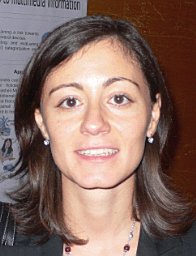 Mugellini Elena合作论文数University of Applied Sciences of Western Switzerland7
 ABOU KHALED Omar合作论文数University of Applied Sciences of Western Switzerland, Fribourg, Switzerland6
 Leonardo Angelini合作论文数Dipartimento Interateneo di Fisica;Istituto Nazionale di Fisica Nucleare;Sezione di Bari;Sezione di Bari, Istituto Nazionale di Fisica Nucleare6
 Mira El Kamali合作论文数University of Applied Sciences and Arts Western Switzerland, HES SO Fribourg5
 Maurizio Caon合作论文数University of Applied Sciences and Arts Western Switzerland5
 Paula Subías-Beltrán合作论文数4Orte Silvia合作论文数4
 Martin D. Sykora合作论文数Ctr Informat Management, Loughborough Univ4
 Suzanne Elayan合作论文数Loughborough University4
 Simone Porcelli合作论文数Istituto di Bioimmagini e Fisiologia Molecolare, CNR4
 Isabelle Kniestedt合作论文数Delft Univ Technol, Delft, Netherlands3
 C. Ziylan合作论文数Res Ctr Innovat Care, Rotterdam Univ Appl Sci3
 Noemi Boque合作论文数3
 Filippo Palumbo合作论文数National Research Council, Institute of Information Science and Technologies “Alessandro Faedo”,3
 Antonino Crivello合作论文数3
 Josep Maria Del Bas合作论文数3
 Mérillat Susan合作论文数3
 Mike Martin合作论文数Deutsches Zentrum für Alternsforschung (DZFA) Bergheimer Straße 20 69115 Heidelberg3Giuseppe Andreoni合作论文数3
 Francesco Carrino合作论文数University of Applied Sciences of Western Switzerland, University of Bedfordshire3
 Michele Girolami合作论文数CNR-ISTI3Laura Fernandez Maldonado合作论文数2Koen de Gans合作论文数2
 Radek Ampapa合作论文数2Elisabetta Cartechini合作论文数2
 Mario Habek合作论文数2
 Wei Yeh合作论文数2N. Pasquarelli合作论文数2Stella Hughes合作论文数2
 Saloua Mrabet合作论文数2J. Prevost合作论文数2O. Skibina合作论文数2Pierre Duquette合作论文数2
 Giorgio Manferdelli合作论文数Inst Sport Sci, Univ Lausanne2
 Matteo Foschi合作论文数Department of Neuroscience, Neurology Unit-S. Maria delle Croci Hospital of Ravenna2
 Richard Macdonell合作论文数2
 R. Gouider合作论文数2
 Guy Laureys合作论文数2
 Jiwon Oh合作论文数Institute of Medical Science, Temerty Faculty of Medicine, University of Toronto;St. Michael's Hospital;Johns Hopkins University2Tomas Kalincik合作论文数Department of Medicine, Melbourne Medical School, Faculty of Medicine, Dentistry and Health Sciences, The University of Melbourne2Davide Maimone合作论文数2
 Jeannette Lechner-Scott合作论文数School of Medicine and Public Health, College of Health, Medicine and Wellbeing, University of Newcastle;John Hunter Hospital2
 Van Pesch Vincent合作论文数Cliniques Universitaires Saint-Luc2
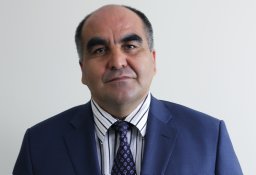 Türkoğlu Recai合作论文数Haydarpasa Numune Education and Research Hospital, Istanbul University2Girard Marc合作论文数2




