Background and objectives: Accidental dural puncture (ADP) during epidural analgesia is a debilitating complication. Symptoms of ADP post-dural puncture headache (PDPH) are headache while rising from supine to upright position, nausea, and neck stiffness. While age, gender and needle characteristics are established risk factors for ADP, little is known about risk factors in laboring women.Methods: All cases of ADP during epidural analgesia treated with blood-patching during a 3-years period were retrospectively reviewed. Each case was matched to two controls according to delivery period.Results: Forty-nine cases of blood patches after ADP out 17 977 epidural anesthesia procedures were identified (0.27%). No differences were found between cases and controls with regards to body mass index, labor stage at time of epidural, length of second stage, location of epidural along the lumbar vertebrae, anesthesiologist's experience or time when epidural was done. In cases of ADP, significantly lower doses of local anesthetics were injected (10.9 versus 13.5 cc, p<0.001); anesthesiologists reported significantly more trials of epidurals (70 versus 2.8% more than one trial, p<0.001), more patient movement during the procedure (13 versus 0%, p<0.001), more intra-procedure suspicion of ADP (69 versus 0%, p<0.001) and more cases where CSF/blood was drawn with the syringe (57 versus 2.4%, p<0.001).Conclusion: ADP during labor is a rare but debilitating complication. Risk factors for this iatrogenic complication include patient movement and repeated epidural trials. Intra-procedure identification of ADP is common, allowing early intervention with blood patching where indicated.
BACKGROUND:A growing number of Eritrean and Sudanese refugees seek medical assistance in the labor and delivery ward of our facility. Providing treatment to this unique population is challenging since communication is limited and pregnancy follow-up is usually absent.OBJECTIVES:To compare the perinatal outcome of refugees and Israeli parturients.METHODS:The medical and financial records of all refugees delivered between May 2010 and April 2011 were reviewed. Perinatal outcome was compared to that of native Israeli controls.RESULTS:During this period 254 refugees were delivered (2.3% of deliveries). Refugees were significantly younger and leaner. They had significantly more premature deliveries under 37 weeks (23 vs. 10, P = 0.029) and under 34 weeks gestation (9 vs. 2, P = 0.036) with more admissions to the neonatal intensive care unit (15 vs. 5, P = 0.038). Overall cesarean section rate was similar but refugees required significantly more urgent surgeries (97% vs. 53%, P = 0.0001). Refugees had significantly more cases of meconium and episiotomies but fewer cases of epidural analgesia. There were 2 intrauterine fetal deaths among refugees, compared to 13 of 11,239 deliveries during this time period (P = 0.036), as well as 7 pregnancy terminations following sexual assault during their escape. Sixty-eight percent of refugees had medical fees outstanding with a total debt of 2,656,000 shekels (US$ 767,250).CONCLUSIONS:The phenomenon of African refugees giving birth in our center is of unprecedented magnitude and bears significant medical and ethical implications. Refugees proved susceptible to adverse perinatal outcomes compared to their Israeli counterparts. Setting a pregnancy follow-up plan could, in the long run, prevent adverse outcomes and reduce costs involved in treating this population.
The objective of our study was to measure C-Reactive Protein (CRP) levels repeatedly during term pregnancies and to examine the hypothesis that an increase in CRP levels could be used to predict timing of onset of labor and/or PROM, as well as to assess possible correlation between increased CRP levels and intra/post partum fever. This was a prospective study, approved by the local IRB. The study included women with term singleton pregnancies (>39 weeks), without maternal or fetal complications. Blood samples including CRP levels and CBC were taken during routine post date follow up visits. Time of regular contractions, admission to L&D room and time of delivery were recorded as well as episodes of intra partum fever or cases of endometritis identified post partum. Forty three women were included in this study. Twenty nine women had spontaneous onset of labor, 14 women had induction of labor. Mean CRP levels increased significantly toward labor- 6.5±4.3 mg/L in the first post term visit vs 9.61±6.4 mg/L in last visit before labor (p=0.019). In women presenting with spontaneous labor there was a correlation between time to onset of labor and increment in CRP levels (Pearson correlation test, r -0.39, P-0.01). Reciever operator curve of CRP change over time could not predict onset of labor with reasonable sensitivity and specificity. No difference in CRP levels was found between women presenting with spontaneous labor and those who were induced. Levels of WBC increased towards labor but this was not statisticaly significant. There was a correlation between time to onset of labor and increment in WBC levels (Pearson correlation test, r -0.347, P-0.03). There were only 2 women with fever post partum and their levels of CRP were variable. CRP increases significantly as women approach labor. Nevertheless, CRP cannot be used as a predictor for timing of onset of labor at term, neither as a single measurement nor with repeated measurements.
 Ariel Many合作论文数5Nadav Michaan合作论文数4Joseph B. Lessing合作论文数3
 Ido Laskov合作论文数2
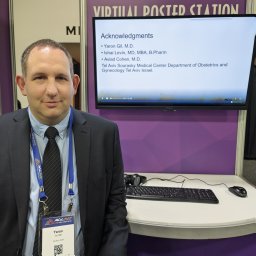 Yaron Gil合作论文数1
 Baruch Yoav合作论文数Department of Clinical Medicine, University of La Sapienza1Uri Erlich合作论文数1Michael Kupferminc合作论文数1Yinon Cohen合作论文数Department of Sociology and Department of Labor Studies, Tel Aviv University1Jessica Ascher-Landsberg合作论文数1Michael Shenhav合作论文数1Sharon Maslovitz合作论文数1




