The ability to construct mental models of the world is a central aspect of understanding. Similarly, visual understanding can be viewed as the ability to construct a representative model of the system depicted in an image. This work explores the capacity of Vision Language Models (VLMs) to recognize and simulate the systems and mechanisms depicted in images using the Im2Sim methodology. The VLM is given a natural image of a real-world system (e.g., cities, clouds, vegetation) and is tasked with describing the system and writing code that simulates and generates it. This generative code is then executed to produce a synthetic image, which is compared against the original. This approach is tested on various complex emergent systems, ranging from physical systems (waves, lights, clouds) to vegetation, cities, materials, and geological formations. Through analysis of the models and images generated by the VLMs, we examine their understanding of the systems in images. The results show that leading VLMs (GPT, Gemini) demonstrate the capacity to understand and model complex, multi-component systems across multiple layers of abstraction and a wide range of domains. At the same time, the VLMs exhibit limited ability to replicate fine details and low-level arrangements of patterns in the image. These findings reveal an interesting asymmetry: VLMs combine high-level, deep visual understanding of images with limited perception of fine details.
Shapes and textures are the basic building blocks of visual perception. The ability to identify shapes regardless of orientation, texture, or context, and to recognize textures and materials independently of their associated objects, is essential for a general visual understanding of the world. This work introduces the Large Shape and Textures dataset (LAS T), a giant collection of highly diverse shapes and textures, created by unsupervised extraction of patterns from natural images. This dataset is used to benchmark how effectively leading Large Vision-Language Models (LVLMs) understand shapes, textures, and materials in 2D and 3D scenes. For shape recognition, we test the models' ability to match images of identical shapes that differ in orientation, texture, color, or environment. Our results show that the shape recognition capabilities of the LVLMs remain significantly below human performance. LVLMs rely predominantly on high-level and semantic features and struggle with abstract shapes lacking clear class associations. For texture and material recognition, we evaluated the models' ability to identify images with identical textures and materials across different objects and environments. Interestingly, leading LVLMs approach human-level performance in recognizing materials in 3D scenes, yet substantially underperform humans when identifying simpler more abstract 2D textures. These results are consistent across a wide range of leading VLMs (GPT/Gemini/LLama/Qwen) and foundation vision models (DINO/CLIP), exposing major deficiencies in the ability of leading models to understand fundamental visual concepts. In contrast, simple nets trained directly for these tasks achieve high accuracy. The LAS T dataset, featuring over 600,000 images for 2D/3D shape, texture, and material recognition and retrieval, is publicly available.
Vastextures is a vast repository of 500,000 textures and PBR materials extracted from real-world images using an unsupervised process. The extracted materials and textures are extremely diverse and cover a vast range of real-world patterns, but at the same time less refined compared to existing repositories. The repository is composed of 2D textures cropped from natural images and SVBRDF/PBR materials generated from these textures. Textures and PBR materials are essential for CGI. Existing materials repositories focus on games, animation, and arts, that demand a limited amount of high-quality assets. However, virtual worlds and synthetic data are becoming increasingly important for training A.I systems for computer vision. This application demands a huge amount of diverse assets but at the same time less affected by noisy and unrefined assets. Vastexture aims to address this need by creating a free, huge, and diverse assets repository that covers as many real-world materials as possible. The materials are automatically extracted from natural images in two steps: 1) Automatically scanning a giant amount of images to identify and crop regions with uniform textures. This is done by splitting the image into a grid of cells and identifying regions in which all of the cells share a similar statistical distribution. 2) Extracting the properties of the PBR material from the cropped texture. This is done by randomly guessing every correlation between the properties of the texture image and the properties of the PBR material. The resulting PBR materials exhibit a vast amount of real-world patterns as well as unexpected emergent properties. Neutral nets trained on this repository outperformed nets trained using handcrafted assets.
Visual recognition of materials and their states is essential for understanding the physical world, from identifying wet regions on surfaces or stains on fabrics to detecting infected areas on plants or minerals in rocks. Collecting data that captures this vast variability is complex due to the scattered and gradual nature of material states. Manually annotating real-world images is constrained by cost and precision, while synthetic data, although accurate and inexpensive, lacks real-world diversity. This work aims to bridge this gap by infusing patterns automatically extracted from real-world images into synthetic data. Hence, patterns collected from natural images are used to generate and map materials into synthetic scenes. This unsupervised approach captures the complexity of the real world while maintaining the precision and scalability of synthetic data. We also present the first comprehensive benchmark for zero-shot material state segmentation, utilizing real-world images across a diverse range of domains, including food, soils, construction, plants, liquids, and more, each appears in various states such as wet, dry, infected, cooked, burned, and many others. The annotation includes partial similarity between regions with similar but not identical materials and hard segmentation of only identical material states. This benchmark eluded top foundation models, exposing the limitations of existing data collection methods. Meanwhile, nets trained on the infused data performed significantly better on this and related tasks. The dataset, code, and trained model are available. We also share 300,000 extracted textures and SVBRDF/PBR materials to facilitate future datasets generation.
Large vision language models (LVLM) are the leading A.I approach for achieving a general visual understanding of the world. Models such as GPT, Claude, Gemini, and LLama can use images to understand and analyze complex visual scenes. 3D objects and shapes are the basic building blocks of the world, recognizing them is a fundamental part of human perception. The goal of this work is to test whether LVLMs truly understand 3D shapes by testing the models ability to identify and match objects of the exact same 3D shapes but with different orientations and materials/textures. A large number of test images were created using CGI with a huge number of highly diverse objects, materials, and scenes. The results of this test show that the ability of such models to match 3D shapes is significantly below humans but much higher than random guesses. Suggesting that the models have gained some abstract understanding of 3D shapes but still trail far beyond humans in this task. Mainly it seems that the models can easily identify the same object with a different orientation as well as matching identical 3D shapes of the same orientation but with different materials and textures. However, when both the object material and orientation are changed, all models perform poorly relative to humans. Code and benchmark are available.
Transparent object perception is a crucial skill for applications such as robot manipulation in household and laboratory settings. Existing methods utilize RGB-D or stereo inputs to handle a subset of perception tasks including depth and pose estimation. However transparent object perception remains to be an open problem. In this paper, we forgo the unreliable depth map from RGB-D sensors and extend the stereo based method. Our proposed method, MVTrans, is an end-to-end multi-view architecture with multiple perception capabilities, including depth estimation, segmentation, and pose estimation. Additionally, we establish a novel procedural photo-realistic dataset generation pipeline and create a large-scale transparent object detection dataset, Syn-TODD, which is suitable for training networks with all three modalities, RGB-D, stereo and multi-view RGB. https://ac-rad.github.io/MVTrans/
A tool that could suggest new personalized research directions and ideas by taking insights from the scientific literature could profoundly accelerate the progress of science. A field that might benefit from such an approach is artificial intelligence (AI) research, where the number of scientific publications has been growing exponentially over recent years, making it challenging for human researchers to keep track of the progress. Here we use AI techniques to predict the future research directions of AI itself. We introduce a graph-based benchmark based on real-world data—the Science4Cast benchmark, which aims to predict the future state of an evolving semantic network of AI. For that, we use more than 143,000 research papers and build up a knowledge network with more than 64,000 concept nodes. We then present ten diverse methods to tackle this task, ranging from pure statistical to pure learning methods. Surprisingly, the most powerful methods use a carefully curated set of network features, rather than an end-to-end AI approach. These results indicate a great potential that can be unleashed for purely ML approaches without human knowledge. Ultimately, better predictions of new future research directions will be a crucial component of more advanced research suggestion tools.
Visual recognition of materials and their states is essential for understanding the world, from determining whether food is cooked, metal is rusted, or a chemical reaction has occurred. However, current image recognition methods are limited to specific classes and properties and can't handle the vast number of material states in the world. To address this, we present MatSim: the first dataset and benchmark for computer vision-based recognition of similarities and transitions between materials and textures, focusing on identifying any material under any conditions using one or a few examples. The dataset contains synthetic and natural images. Synthetic images were rendered using giant collections of textures, objects, and environments generated by computer graphics artists. We use mixtures and gradual transitions between materials to allow the system to learn cases with smooth transitions between states (like gradually cooked food). We also render images with materials inside transparent containers to support beverage and chemistry lab use cases. We use this dataset to train a Siamese net that identifies the same material in different objects, mixtures, and environments. The descriptor generated by this net can be used to identify the states of materials and their subclasses using a single image. We also present the first few-shot material recognition benchmark with natural images from a wide range of fields, including the state of foods and beverages, types of grounds, and many other use cases. We show that a net trained on the MatSim synthetic dataset outperforms state-of-the-art models like Clip on the benchmark and also achieves good results on other unsupervised material classification tasks. Dataset, generation code and trained models have been made available at: https://github.com/ZuseZ4/MatSim-Dataset-Generator-Scripts-And-Neural-net
A tool that could suggest new personalized research directions and ideas by taking insights from the scientific literature could significantly accelerate the progress of science. A field that might benefit from such an approach is artificial intelligence (AI) research, where the number of scientific publications has been growing exponentially over the last years, making it challenging for human researchers to keep track of the progress. Here, we use AI techniques to predict the future research directions of AI itself. We develop a new graph-based benchmark based on real-world data -- the Science4Cast benchmark, which aims to predict the future state of an evolving semantic network of AI. For that, we use more than 100,000 research papers and build up a knowledge network with more than 64,000 concept nodes. We then present ten diverse methods to tackle this task, ranging from pure statistical to pure learning methods. Surprisingly, the most powerful methods use a carefully curated set of network features, rather than an end-to-end AI approach. It indicates a great potential that can be unleashed for purely ML approaches without human knowledge. Ultimately, better predictions of new future research directions will be a crucial component of more advanced research suggestion tools.
The MatSim Dataset and benchmark Synthetic dataset and real images benchmark for visual similarity recognition of materials and textures. MatSim: a synthetic dataset, a benchmark, and a method for computer vision-based recognition of similarities and transitions between materials and textures focusing on identifying any material under any conditions using one or a few examples (one-shot learning). Based on the paper: One-shot recognition of any material anywhere using contrastive learning with physics-based rendering Benchmark_MATSIM.zip: contain the benchmark made of real-world images as described in the paper MatSim_object_train_split_1,2,3.zip: Contain a subset of the synthetics dataset for images of CGI images materials on random objects as described in the paper. MatSim_Vessels_Train_1,2,3.zip : Contain a subset of the synthetics dataset for images of CGI images materials inside transparent containers as described in the paper. *Note: these are subsets of the dataset; the full dataset can be found at: https://e1.pcloud.link/publink/show?code=kZIiSQZCYU5M4HOvnQykql9jxF4h0KiC5MX or https://icedrive.net/s/A13FWzZ8V2aP9T4ufGQ1N3fBZxDF Code: Up to date code for generating the dataset, reading and evaluation and trained nets can be found in this URL:https://github.com/sagieppel/MatSim-Dataset-Generator-Scripts-And-Neural-net Dataset Generation Scripts.zip: Contain the Blender (3.1) Python scripts used for generating the dataset, this code might be odl up to date code can be found here Net_Code_And_Trained_Model.zip: Contain a reference neural net code, including loaders, trained models, and evaluators scripts that can be used to read and train with the synthetic dataset or test the model with the benchmark. Note code in the ZIP file is not up to date and contains some bugs For the Latest version of this code see this URL Further documentation can be found inside the zip files or in the paper.
Computer-based de-novo design of functional molecules is one of the most prominent challenges in cheminformatics today. As a result, generative and evolutionary inverse designs from the field of artificial intelligence have emerged at a rapid pace, with aims to optimize molecules for a particular chemical property. These models 'indirectly' explore the chemical space; by learning latent spaces, policies, distributions or by applying mutations on populations of molecules. However, the recent development of the SELFIES string representation of molecules, a surjective alternative to SMILES, have made possible other potential techniques. Based on SELFIES, we therefore propose PASITHEA, a direct gradient-based molecule optimization that applies inceptionism techniques from computer vision. PASITHEA exploits the use of gradients by directly reversing the learning process of a neural network, which is trained to predict real-valued chemical properties. Effectively, this forms an inverse regression model, which is capable of generating molecular variants optimized for a certain property. Although our results are preliminary, we observe a shift in distribution of a chosen property during inverse-training, a clear indication of PASITHEA's viability. A striking property of inceptionism is that we can directly probe the model's understanding of the chemical space it was trained on. We expect that extending PASITHEA to larger datasets, molecules and more complex properties will lead to advances in the design of new functional molecules as well as the interpretation and explanation of machine learning models.
LabPics Chemistry Dataset LabPics Medical Dataset The dataset contains annotated images for both material and vessels in chemistry labs, medical labs, and any area where liquids and solids are handled within vessels. There are two levels of annotation for each image. One annotation set for vessels and the second for the material phases inside these vessels. Vessels are defined as any container that can carry materials such as Jars, Erlenmayers, Tubes, Funnels, syringes, IV bags, and any other labware or glassware that can contain or carry materials. Material phases are any material contained within or on the vessel. For example, for two-phase separating liquids, each liquid phase is annotated as one instance. If there is foam above the liquid or a chunk of solid inside the liquid, the foam, liquid, and solid will be annotated as different phases. In addition, vessel parts like cork, labels, and valves are annotated as instances. For each instance, there is a list of all the classes it belongs to, and a list of its property. For vessels, the instance classes are the vessel type (Cup, jar, Separatory-funnel…) and the vessel properties (Transparent, Opaque…). For materials, the classes are the material types ( Liquid, solid, suspension, foam, powder…) and their properties (Scattered, On vessel surface…), and for parts, the part type (cork/label). In addition, the relations between instances are annotated. This includes which materials instances are inside which vessels, which vessels are linked to each other or are inside each other (for vessels inside other vessels), and which material phase is immersed inside another material phase. In addition to instance segmentation maps, the dataset also includes semantic segmentation maps that give for each pixel in the image all the classes to which it belongs. In other words, for each class (Liquid, Solid, Vessel, Foam), there is a map of all the regions in the image belonging to this class. Note that every pixel and every instance can have several classes. In addition, instances often overlap, like in the case of material inside the vessel, vessel inside the vessel, and material phase immerse inside other material (like solid inside liquid). Older version of LabPics with 2K images can be found in this URL: https://zenodo.org/record/3697452 **New dataset with 50k simulated (CGI) images of materials, liquid, and objects inside transparent vessels, with 2D and 3D annotation can be downloaded from this url: https://zenodo.org/record/5508261#.YVN_y3tE1H7 File sources and copyright Creating this dataset was impossible without a community of chemists who take and share high-quality photos of their experiments. Most of the images of this dataset were shared by these sources. Copyright for all images belongs to their contributors. The dataset is shared for academic purposes only. For any other use of the images, inquire with the image source. The source of every image is mention in the source.txt file located next to the image file. Specific copyright for each image also appears in the same file. If no copyright is mentioned, contact the image source for inquiries. See Image sources and copyright file in main folder and source.txt in image folder for detail. "This research was developed with funding from the Defense Advanced Research Projects Agency (DARPA). The views, opinions and/or findings expressed are those of the author and should not be interpreted as representing the official views or policies of the Department of Defense or the U.S. Government." grant# HR00111920027
The basis of many object manipulation algorithms is RGB-D input. Yet, commodity RGB-D sensors can only provide distorted depth maps for a wide range of transparent objects due light refraction and absorption. To tackle the perception challenges posed by transparent objects, we propose TranspareNet, a joint point cloud and depth completion method, with the ability to complete the depth of transparent objects in cluttered and complex scenes, even with partially filled fluid contents within the vessels. To address the shortcomings of existing transparent object data collection schemes in literature, we also propose an automated dataset creation workflow that consists of robot-controlled image collection and vision-based automatic annotation. Through this automated workflow, we created Toronto Transparent Objects Depth Dataset (TODD), which consists of nearly 15000 RGB-D images. Our experimental evaluation demonstrates that TranspareNet outperforms existing state-of-the-art depth completion methods on multiple datasets, including ClearGrasp, and that it also handles cluttered scenes when trained on TODD. Code and dataset will be released at https://www.pair.toronto.edu/TranspareNet/
This work explores the use of computer vision for image segmentation and classification of medical fluid samples in transparent containers (for example, tubes, syringes, infusion bags). Handling fluids such as infusion fluids, blood, and urine samples is a significant part of the work carried out in medical labs and hospitals. The ability to accurately identify and segment the liquids and the vessels that contain them from images can help in automating such processes. Modern computer vision typically involves training deep neural nets on large datasets of annotated images. This work presents a new dataset containing 1,300 annotated images of medical samples involving vessels containing liquids and solid material. The images are annotated with the type of liquid (e.g., blood, urine), the phase of the material (e.g., liquid, solid, foam, suspension), the type of vessel (e.g., syringe, tube, cup, infusion bottle/bag), and the properties of the vessel (transparent, opaque). In addition, vessel parts such as corks, labels, spikes, and valves are annotated. Relations and hierarchies between vessels and materials are also annotated, such as which vessel contains which material or which vessels are linked or contain each other. Three neural networks are trained on the dataset: One network learns to detect vessels, a second net detects the materials and parts inside each vessel, and a third net identifies relationships and connectivity between vessels.
We present TransProteus, a dataset, and methods for predicting the 3D structure, masks, and properties of materials, liquids, and objects inside transparent vessels from a single image without prior knowledge of the image source and camera parameters. Manipulating materials in transparent containers is essential in many fields and depends heavily on vision. This work supplies a new procedurally generated dataset consisting of 50k images of liquids and solid objects inside transparent containers. The image annotations include 3D models, material properties (color/transparency/roughness...), and segmentation masks for the vessel and its content. The synthetic (CGI) part of the dataset was procedurally generated using 13k different objects, 500 different environments (HDRI), and 1450 material textures (PBR) combined with simulated liquids and procedurally generated vessels. In addition, we supply 104 real-world images of objects inside transparent vessels with depth maps of both the vessel and its content. We propose a camera agnostic method that predicts 3D models from an image as an XYZ map. This allows the trained net to predict the 3D model as a map with XYZ coordinates per pixel without prior knowledge of the image source. To calculate the training loss, we use the distance between pairs of points inside the 3D model instead of the absolute XYZ coordinates. This makes the loss function translation invariant. We use this to predict 3D models of vessels and their content from a single image. Finally, we demonstrate a net that uses a single image to predict the material properties of the vessel content and surface.
This work presents a machine learning approach for computer vision-based recognition of materials inside vessels in a chemistry lab and other settings. In addition, we release a dataset associated with the training of the model for further model development. The task to learn is finding the region, boundaries, and category for each material phase and vessel in an image. Handling materials inside mostly transparent containers is the main activity performed by human and robotic chemists in the laboratory. Visual recognition of vessels and their content is essential for performing this task. Modern machine vision methods learn recognition tasks by using datasets containing a large number of annotated images. This work presents the Vector-LabPics dataset, which consists of 2187 images of materials within mostly transparent vessels in a chemistry lab and other general settings. The images are annotated for both the vessels and the individual material phases inside them, and each instance is assigned one or more classes (liquid, solid, foam, suspension, powder,...). The fill level, labels, corks, and parts of the vessel are also annotated. Several convolutional nets for semantic and instance segmentation were trained on this dataset. The trained neural networks achieved good accuracy in detecting and segmenting vessels and material phases, and in classifying liquids and solids, but relatively low accuracy in segmenting multiphase systems such as phase-separating liquids.
A newer and larger version of this dataset can be found here: https://zenodo.org/record/4736111 The Vector-LabPics V1 dataset contains 2187 images of chemical experiments with materials within mostly transparent vessels in various laboratory settings and in everyday conditions such as beverage handling. Each image in the dataset has an annotation of the region of each material phase and its type. In addition, the region of each vessel and its labels, parts, and corks are also marked. For more details see: https://pubs.acs.org/doi/10.1021/acscentsci.0c00460 Acknowledgments We like to thank the sources of the images used for creating this dataset without them this work was not possible. These sources include Nessa Carson (@SuperScienceGrl Twitter), Chemical and Engineering Science chemistry in pictures, YouTube channels dedicated to chemistry experiments: NurdRage, NileRed, DougsLab, ChemPlayer, and Koen2All. Additional sources for images include Instagram channels chemistrylover_(Joana Kulizic),Chemistry.shz (Dr.Shakerizadeh-shirazi), MinistryOfChemistry, Chemistry And Me, ChemistryLifeStyle, vacuum_distillation, and Organic_Chemistry_Lab. We are grateful to the Defense Advanced Research Projects Agency (DARPA) for funding this project under award number W911NF-18-2-0036 from the Molecular Informatics program. A.A.-G. Thanks Anders G. Frøseth for his generous support. Images of the dataset were taken from images and videos shared on Youtube and Instagram, Twitter and Tumblr channels and other contributors; we do not have copyright for the images. Any commercial or none academic use of the images depends on acquiring permission from the owner of the images. Note that the name of each image contains the image source. For any non-academic use of the images, please contact their sources for permission. We like to thank the following channels for sharing the images used in this dataset. We like to thank the sources of the images used for creating this dataset without them this work was not possible. These sources include Nessa Carson (@SuperScienceGrl Twitter), Chemical and Engineering Science chemistry in pictures, YouTube channels dedicated to chemistry experiments: NurdRage, NileRed, DougsLab, ChemPlayer, and Koen2All. Additional sources for images include Instagram channels chemistrylover_(Joana Kulizic),Chemistry.shz (Dr.Shakerizadeh-shirazi), MinistryOfChemistry, Chemistry And Me, ChemistryLifeStyle, vacuum_distillation, and Organic_Chemistry_Lab. We are grateful to the Defense Advanced Research Projects Agency (DARPA) for funding this project under award number W911NF-18-2-0036 from the Molecular Informatics program. A.A.-G. Thanks Anders G. Frøseth for his generous support. Images from C&EN's Chemistry in Pictures (cen.chempics.org) used here with permission from C&EN and ACS. All rights reserved. Please contact cenchempics@acs.org to inquire about republishing.
In machine learning and other fields, suggesting a good solution to a problem is usually a harder task than evaluating the quality of such a solution. This asymmetry is the basis for a large number of selection oriented methods that use a generator system to guess a set of solutions and an evaluator system to rank and select the best solutions. This work examines the use of this approach to the problem of panoptic image segmentation and class agnostic parts segmentation. The generator/evaluator approach for this case consists of two independent convolutional neural nets: a generator net that suggests variety segments corresponding to objects, stuff and parts regions in the image, and an evaluator net that chooses the best segments to be merged into the segmentation map. The result is a trial and error evolutionary approach in which a generator that guesses segments with low average accuracy, but with wide variability, can still produce good results when coupled with an accurate evaluator. The generator consists of a Pointer net that receives an image and a point in the image, and predicts the region of the segment containing the point. Generating and evaluating each segment separately is essential in this case since it demands exponentially fewer guesses compared to a system that guesses and evaluates the full segmentation map in each try. The classification of the selected segments is done by an independent region-specific classification net. This allows the segmentation to be class agnostic and hence, capable of segmenting unfamiliar categories that were not part of the training set. The method was examined on the COCO Panoptic segmentation benchmark and gave results comparable to those of the basic semantic segmentation and Mask-RCNN methods. In addition, the system was used for the task of splitting objects of unseen classes (that did not appear in the training set) into parts.
 Alán Aspuru-Guzik合作论文数Department of Chemistry, Faculty of Arts & Science, University of Toronto;NVIDIA;Kebotix, Inc.12
 Haoping Xu合作论文数6
 Manuel S. Drehwald合作论文数University of Toronto4Jolina Li合作论文数4
 Yi Ru (Helen) Wang合作论文数Paul G. Allen School of Computer Science and Engineering, University of Washington3
 Mario Krenn合作论文数Artificial Scientist Lab, Theory Division, Max Planck Institute for the Science of Light3Mor Bismuth合作论文数2Nima Sanjabi合作论文数2
 Andrew Gritsevskiy合作论文数2
 Joao P. Moutinho合作论文数Inst Telecomunicacoes, Phys Informat & Quantum Technol Grp2
 Yangxinyu Xie合作论文数Dept Comp Sci, Univ Texas Austin2
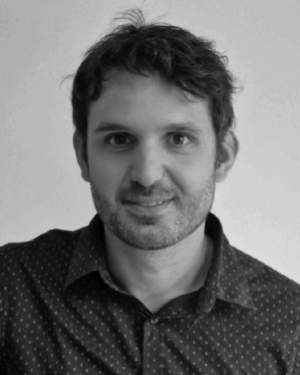 Bruno C. Coutinho合作论文数Inst Telecomunicacoes2
 Francisco Valente合作论文数CISUC Ctr Informat & Syst, Univ Coimbra2
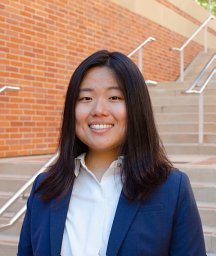 Harlin Lee合作论文数Carnegie Mellon Univ, Dept Elect & Comp Engn, Pittsburgh, PA 15213 USA2
 Michael Kopp合作论文数2Lorenzo Buffoni合作论文数Instituto Superior Tecnico2
 Jacob Foster合作论文数College of Social Sciences, University of California, Los Angeles2
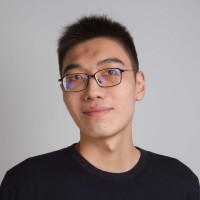 Yichao Lu合作论文数Stealth AI Startup;Alpha 8 AI2
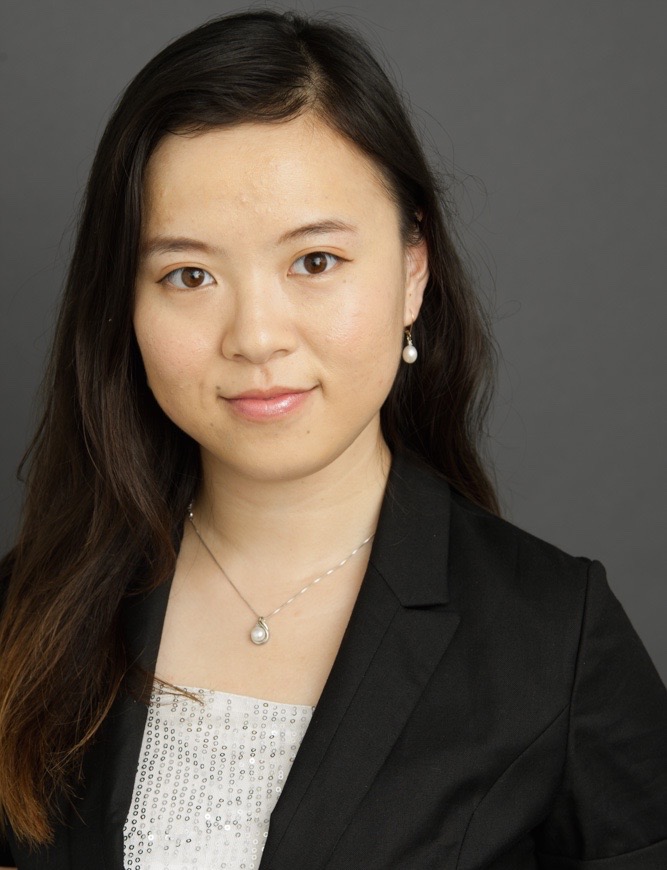 Rose Yu (虞琦)合作论文数Department of Computer Science and Engineering, Jacobs School of Engineering, University of Californ, San Diego2
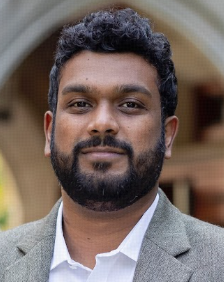 Rishi Sonthalia合作论文数Boston College2
 Joel Bernstein合作论文数Department of Chemistry, Ben-Gurion University of the Negev2
 Animesh Garg合作论文数School of Interactive Computing, College of Computing, Georgia Institute of Technology2Moshe Portnoy合作论文数2
 Gitti L. Frey合作论文数Department of Materials Engineering, Technion2
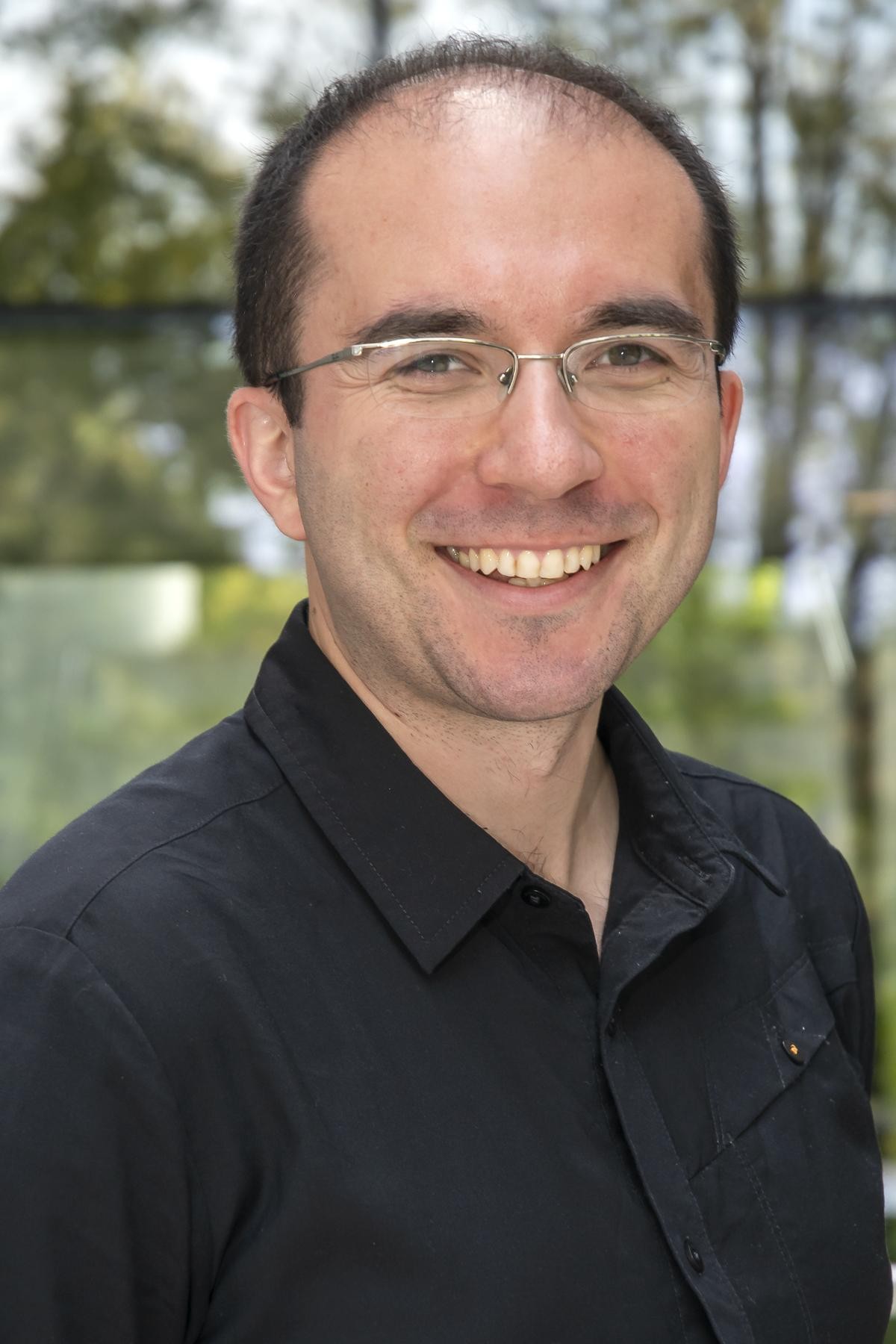 Florian Shkurti合作论文数Robot Vision and Learning Lab, Department of Computer Science, University of Toronto2Ngoc Mai Tran合作论文数2Tal Kachman合作论文数1Cynthia Shen合作论文数1
 Yuchi Zhao合作论文数1Han Hao合作论文数1
 Fridman Natalia合作论文数1
 Eran Rabani合作论文数Department of Chemistry, University of California, Berkeley;School of Chemistry, Faculty of Exact Sciences, Tel Aviv University1




