The three essays in this dissertation examine issues related to family structure and marriage in Sub-Saharan Africa. The first two essays explore how family structures influence children's outcomes. The third essay focuses on the data quality of marriage histories collected in a longitudinal survey. The first essay examines whether the timing and type of orphanhood is associated with early sexual debut and early marriage among 12-19-year-old adolescents in Burkina Faso, Ghana, Malawi, and Uganda. I also test whether education mediates orphans' risk of early sexual initiation and early marriage. Discrete-time event history models suggest that female double orphans, regardless of timing of orphanhood, have greater odds of early sexual debut than do nonorphans. Education explains little of their increased risk. In contrast, male orphans of any type reveal no increased vulnerability to early sexual debut. Uganda is the only country where female orphans, specifically double orphans and those who are paternal orphans before age 10, have greater odds of early marriage, with education accounting for a small portion of the risk. The second essay investigates the relationship between parental divorce and children's schooling in rural Malawi. Child fixed effects regression models are used to control for unobserved heterogeneity that could affect both parental divorce and children's schooling. Results suggest that children from divorced marriages have completed, on average, fewer grades of schooling than children from intact marriages. No differences in current school enrollment and schooling gap (among children currently in school) are found by parents' marriage status. The third essay measures the reliability of marriage histories collected in two waves of the Malawi Longitudinal Study of Families and Health. Multivariate regression analyses are used to examine the characteristics associated with misreporting marriages and dates of marriage. Paired and unpaired statistical tests assess whether marriage indicators are affected by misreporting. Results indicate that a significant proportion of marriages are underreported and that misreporting is not random. Several individual, marriage, and survey-related characteristics are associated with underreporting marriages and misreporting marriage dates. I also find that misreporting leads to biased marriage indicators.
Over the past decade, the annual number of new HIV infections and HIV-related deaths has been declining steadily in most regions of the world, primarily due to significant scale-up in prevention and treatment. Approximately 2.5 million people became newly infected in 2011—a 20% reduction from 2001 (1). Even in sub-Saharan Africa, the number of newly infected people has decreased in 23 of the 49 countries in the region (1). Despite this progress, sub-Saharan Africa still accounted for 71% of newly infected adults and children and 69% of people living with HIV in the world in 2011 (1). While there has also been decreasing incidence of HIV infection in adolescents in many countries—linked to clear trends toward safer behaviours and practices, including increased condom use and reduction in the number of sexual partners—adolescents remain particularly vulnerable to the infection, and HIV continues to be a prominent cause of death in this segment of the population (1). In many countries, incidence rates of HIV in adolescents and young people (15–24) remain unacceptably high, and adolescents still account disproportionately for over 41% of new HIV infection in the 15–49 age group (2).
 r kapinga合作论文数2
 Chae Sophia合作论文数University of Pennsylvania2
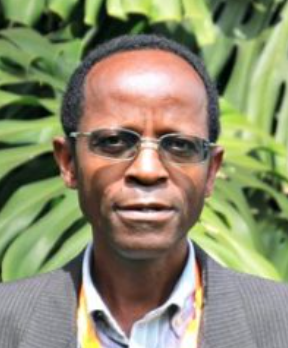 Robert Mwanga Mwanga合作论文数International Potato Center2
 Bankole A Cole合作论文数1Francisco Ernesto合作论文数1
 Richard Guy White合作论文数1Stuart Gillespiei合作论文数1nathan vasher合作论文数1molly e murtaugh合作论文数1belay tseganneh合作论文数1Reimund P. Rötter合作论文数1M-C Boily合作论文数1
 julius agbor agbor合作论文数Dept Econ, Stellenbosch Univ1
 Beckline Mukete合作论文数Dept Forest Management, Beijing Forestry Univ1Maria I. Andrade合作论文数Int Potato Ctr, IIAM1Donald Enarson合作论文数1Kate K. Orroth合作论文数1alice hills合作论文数1Karen Cheng合作论文数University of California, Irvine, Irvine, California, USA1
 Karoliina Rimhanen合作论文数Bioecon & Environm, Nat Resources Inst Finland Luke1Anne Buvé合作论文数1Andreas Jahn合作论文数1Maroyi Alfred合作论文数1
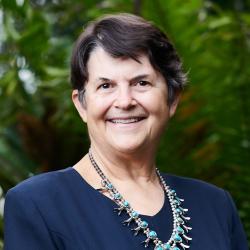 Jan W. Low合作论文数International Potato Center;Department of Global Development, College of Agriculture and Life Sciences, Cornell University1Judith R Glynn合作论文数Department of Epidemiology and Population Health, London School of Hygiene and Tropical Medicine1South Asia合作论文数1J. D. F. Habbema合作论文数1Ian Scoones合作论文数1A.D. Harries合作论文数1Mike Page合作论文数is a Consultant Physician working at the Royal Glamorgan Hospital near Cardiff. His main interests are in Endocrinology and Diabetes, postgraduate training and clinical hospital management. Conflicts of interest: none declared1Beth Doerr合作论文数1
 Robert Riviello合作论文数Harvard Medical School, Brigham and Women’s Hospital Division of Trauma, Burns, and Surgical Critical Care 75 Francis Street Boston MA 02120 USA1Claremont Colleges合作论文数1Sharon Healey合作论文数1
 Roel Bakker合作论文数Wageningen Institute of Animal Sciences (WIAS),, Wageningen Agricultural University1
 Helena Kahiluoto合作论文数Agricultural Research Centre of Finland1
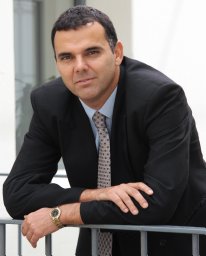 John Luiz合作论文数Wits Business School, University of the Witwatersrand1J.S.H. Low合作论文数Department of Radiation Oncology, National Cancer Centre1
 Somayeh Moradi合作论文数1Emmanuel U. Nzewi合作论文数1
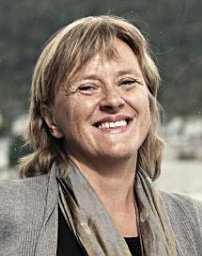 Lise Rakner合作论文数Oxford Policy Management1
 Richard Hayes合作论文数Department of Infectious Disease Epidemiology, Faculty of Epidemiology and Population Health, London School of Hygiene & Tropical Medicine;Centre for Data and Statistical Science for Health, London School of Hygiene & Tropical Medicine1
 Simeon Ehui合作论文数1Laura Hebert合作论文数1African Countries合作论文数1
 Simon E Bull合作论文数National Institute of Biotechnology and Genetic Engineering1Doruk Ozgediz合作论文数1
 Siri Gloppen合作论文数Department of Government, Faculty of Social Sciences, University of Bergen;Bergen School of Global Study, University of Bergen1
 Alemayehu Geda合作论文数Addis Ababa University1




