Electrocatalysts play a pivotal role in the electrochemical water splitting process to produce hydrogen fuel. The advancement of this technology relies on the development of efficient, cost-effective, and readily available electrocatalysts. Twodimensional (2D) MXene materials have garnered significant attention due to their unique physicochemical properties, rendering them promising candidates for electrocatalytic applications. While there are numerous types of MXene materials available, only a few possess intrinsic hydrogen evolution reaction (HER) catalytic activity. However, MXene materials can serve as excellent platforms for enhancing catalytic HER activity by combining them with other substances, owing to their large specific surface area, high conductivity, and abundant surface functional groups. In this study, we initially conducted a predictive analysis using density functional theory (DFT) to assess the potential of combining CoP with Ti 3 C 2 T x MXene materials (where T x represents -F and -OH functional groups) in reducing the adsorption free energy of hydrogen (Delta G H *). The results indicated that the CoP-Ti 3 C 2 T x nanocomposites exhibited a Delta G H * value approaching 0, suggesting promising HER performance. Following this theoretical prediction, we synthesized the CoP-Ti 3 C 2 T x MXene nanocomposites. Comprehensive characterization of the synthesized nanocomposites was performed using various techniques, including scanning electron microscopy (SEM), transmission electron microscopy (TEM), X-ray diffraction (XRD), and X-ray photoelectron spectroscopy (XPS). These analyses confirmed the successful decoration of CoP on the MXene nanosheets and provided insights into the structural and compositional properties of the nanocomposites. Furthermore, we evaluated the electrochemical performance of the CoP-Ti 3 C 2 T x nanocomposites through linear sweep voltammetry and chronoamperometry measurements. The results demonstrated superior catalytic activity and stability for the HER compared to pure Ti 3 C 2 T x and CoP catalysts. Specifically, the as -synthesized CoP-Ti 3 C 2 T x MXene nanocomposites exhibited remarkable electrocatalytic HER kinetics, featuring a low overpotential of 135 mV at a current density of 10 mA center dot cm -2 and a small Tafel slope of 48 mV center dot dec -1 in a 0.5 mol center dot L -1 H 2 SO 4 solution, with the electrocatalyst maintaining stability for up to 50 h. Subsequent theoretical calculations were conducted to elucidate the factors contributing to the exceptional electrocatalytic performance of the CoP-Ti 3 C 2 T x MXene nanocomposites. It was determined that the metallic conductivity of Ti 3 C 2 T x MXene materials, well -structured interface charge transfer, and optimized electronic structure of CoP played significant roles in enhancing catalytic activity. In conclusion, this study underscores the potential of CoPdecorated Ti 3 C 2 T x MXene nanocomposites as promising electrocatalysts for efficient HER in various energy conversion and storage devices. These findings represent a significant contribution to the development of robust and efficient catalysts for hydrogen generation, a critical component of renewable energy applications and sustainable development.
电化学传感器具有简单、分析时间短、成本低、灵敏度高等优点,在环境分析和药物分析中越来越受重视.各种纳米材料和信号放大策略已被制备并用于电化学传感器的构建材料,如金纳米颗粒、双金属纳米颗粒、功能化石墨烯、碳纳米管、石墨烯量子点和金属有机框架.碳基材料具有优异的性能,包括丰富的孔结构、高比表面积、可调的表面功能性、良好的、导电性、易于化学功能化,在电化学传感领域显示出广阔的应用前景.该文具体阐述了碳基材料的性质、结构和合成,讨论了碳基及复合材料在电化学传感中的应用,有效的提高了灵敏度,最后对碳基材料面临的挑战和未来发展进行了展望.
Due to their superior hydrophilicity and conductivity, ultra-high volumetric capacitance, and rich surface-chemistry properties, MXenes exhibit unique and excellent performance in catalysis, energy storage, electromagnetic shielding, and life sciences. Since they are derived from ceramics (MAX phase) through etching, one of the challenges in MXenes preparation is the inevitable exposure of metal atoms on their surface and embedding of anions and cations. Because the as-obtained MXenes are always in a thermodynamically metastable state, they tend to react with trace oxygen or oxygen-containing groups to form metal oxides or degrade, leading to sharply declined activity and impaired performance. Therefore, improving the stability of MXenes-based materials is of practical significance in relevant applications. Unfortunately, there lacks a comprehensive review in the literature on relevant topics. To help promote the wide applications of MXenes, we review from the following aspects: (i) insights into the factors affecting the stability of MXenes-based materials, including oxidation of MXenes flakes, stability of MXenes colloidal solutions, and swelling and degradation of MXenes thin-film, (ii) strategies for enhancing the stability of MXenes-based materials by optimizing MAX phase synthesis and modifying the MXenes preparation, and (iii) techniques for further increasing the stability of freshly prepared MXenes-based materials via controlling the storage conditions, and forming shielding on the surface and/or edge of MXenes flakes. Finally, some outlooks are proposed on the future developments and challenges of highly active and stable MXenes. We aim to provide guidance for the design, preparation, and applications of MXenes-based materials with excellent stability and activity.
Renewable energy powered electrocatalytic water splitting is a promising strategy for hydrogen generation, and the design and development of high-efficiency and earth-abundant electrocatalysts for hydrogen evolution reaction (HER) are highly desirable. Herein, MoS2 nanoflowers decorated two-dimensional carbonitride-based MXene Ti3CN(OH)x hybrids have been constructed by etching and post-hydrothermal methods. The electrochemical performance of the as-obtained Ti3CN(OH)x@MoS2 hybrids having a quasi core—shell structure is fascinating: An overpotential of 120 mV and a Tafel slope of 64 mV·dec−1 can be delivered at a current density of 10 mA·cm−2. And after 3,000 cyclic voltammetry cycles, it can be seen that there is no apparent attenuation. Both the experimental results and density functional theory (DFT) calculations indicate that the synergetic effects between Ti3CN(OH)x and MoS2 are responsible for the robust electrochemical HER performance. The electrons of −OH group in Ti3CN(OH)x are transferred to MoS2, making the adsorption energy of the composite for H almost vanish. The metallic Ti3CN(OH)x is also beneficial to the fast charge transfer kinetics. The construction of MXene-based hybrids with optimal electronic structure and unique morphology tailored to the applications can be further used in other promising energy storage and conversion devices.
黄铁矿(FeS2)因其资源丰富、价格低廉和具有可作为潜在的非均质Fenton试剂受到广泛关注.但FeS2具有比表面积小、Fe(Ⅱ)/Fe(Ⅲ)循环途径较少、循环使用次数低等缺陷,无法进一步满足实际应用的要求.本文综述了常见的改性FeS2非均相类Fenton优化技术,主要包括引入外场、改变催化剂载体、非均相Fenton反应过程中引入其他物质等三大方向并分析了它们的优缺点,以及FeS2非均相Fenton的机理和应用,展望了改性FeS2非均相Fenton反应未来的重点研究方向,为进一步完善改性FeS2非均相类Fenton技术优化方案,开发出低成本、高性能的非均相Fenton水处理方向提供新的思路.
CoS2 is considered to be a promising electrocatalyst for hydrogen evolution reaction (HER). However, its further widespread applications are hampered by the unsatisfactory activity due to relatively high chemisorption energy for hydrogen atom. Herein, theoretical predictions of first-principles calculations reveal that the introduction of a Cl-terminated MXenes-Ti3CNCl2 can significantly reduce the HER potential of CoS2-based materials and the Ti3CNCl2@CoS2 core-shell nanostructure has Gibbs free energy of hydrogen adsorption (∣ΔGH∣) close to zero, much lower than that of the pristine CoS2 and Ti3CNCl2. Inspired by the theoretical predictions, we have successfully fabricated a unique Ti3CNCl2@CoS2 core-shell nanostructure by ingeniously coupling CoS2 with a Cl-terminated MXenes-Ti3CNCl2. Interface-charge transfer between CoS2 and Ti3CNCl2 results in a higher degree of electronic localization and a formation of chemical bonding. Thus, the Ti3CNCl2@CoS2 core-shell nanostructure achieves a significant enhancement in HER activity compared to pristine CoS2 and Ti3CNCl2. Theoretical calculations further confirm that the partial density of states of CoS2 after hybridization becomes more non-localized, and easier to interact with hydrogen ions, thus boosting HER performance. In this work, the success of oriented experimental fabrication of high-efficiency Ti3CNCl2@CoS2 electrocatalysts guided by theoretical predictions provides a powerful lead for the further strategic design and fabrication of efficient HER electrocatalysts.
利用g-C3N4与CsxWO3形成异质结作为电极修饰材料,构建了 g-C3N4/CsxWO3电化学传感器,用于对硝基酚的灵敏高效的快速检测.通过差分脉冲伏安法对该修饰电极检测对硝基酚进行电化学研究.研究结果表明,该电化学分析方法对检测对硝基酚表现出较高的灵敏度,在0.2~50 μmol·L-1的浓度范围内呈良好的线性关系,检测限约为0.067 μmol·L-1,具有较宽的线性范围和较低的检测限,良好的稳定性、重现性和抗干扰能力,可用于实际水样中对硝基酚的测定.
新型二维过渡金属碳化物、氮化物或碳氮化物(MXenes)是一种二维层状结构材料,它的稳定性、机械性能、电导率、吸附量、比表面积等性能在各个方面都有一定的优势,还有着新奇的层状结构,已经被广泛应用于光电催化、能量存储、电磁干扰屏蔽等其他方面.主要综述了近年来MXenes材料在光催化应用领域中的最新理论和实验工作,包括光催化分解水、二氧化碳还原、处理污染物、光热治疗等诸多方面.最后,对MXenes及其复合材料在新兴领域的未来发展和研究方向提出了独特的见解和展望.
The rational construction of a high-efficiency step-scheme heterojunctions is an effective strategy to accelerate the pho-tocatalytic H2.Unfortunately,the variant energy-level matching be-tween two different semiconductor confers limited the photocatalytic performance.Herein,a newfangled graphitic-carbon nitride (g-C3N4)based isotype step-scheme heterojunction,which consists of sul-fur-doped and defective active sites in one microstructural unit,is successfully developed by in-situ polymerizing N,N-dimethyl-formamide (DMF) and urea,accompanied by sulfur (S) powder.Therein,the polymerization between the amino groups of DMF and the amide group of urea endows the formation of rich defects.The propul-sive integration of S-dopants contributes to the excellent fluffiness and dispersibility of lamellar g-C3N4.Moreover,the developed heterojunc-tion exhibits a significantly enlarged surface area,thus leading to the more exposed catalytically active sites.Most importantly,the simultane-ous introduction of S-doping and defects in the units of g-C3N4 also results in a significant improvement in the separation,transfer and recom-bination efficiency of photo-excited electron-hole pairs.Therefore,the resulting isotype step-scheme heterojunction possesses a superior photocatalytic H2 evolution activity in comparison with pristine g-C3N4.The newly afforded metal-free isotype step-scheme heterojunction in this work will supply a new insight into coupling strategies of heteroatoms doping and defect engineering for various photocatalytic systems.
二维材料因其载流子迁移和热量扩散都被限制在二维平面内,使得这种材料展现出许多奇特的性质而受到广泛关注.二维过渡金属碳化物、氮化物或碳氮化物(MXenes)是一种新型的二维层状结构材料,具有高电子传导率、较大的比表面积、较好的机械性能以及独特的层状结构,已被广泛应用于储能、催化、环境等领域.该文主要阐述了MXenes基光催化剂的不同制备策略并总结了不同制备过程中的优缺点.最后,对MXenes基光催化剂及其复合材料在新兴领域的未来发展和研究方向提出了独特的见解和展望.
MXenes, an emerging two-dimensional (2D) transition metal carbides, nitrides and carbonitrides, have exhibited great potential as electrocatalysts for hydrogen evolution reaction (HER) due to the excellent characters, including excellent structural and chemical stability, superior electrical conductivity, and large active surface area. In this comprehensive study, firstly, the preparation advances of MXenes are systematically summarized. Then, the representative applications of MXenes-based HER electrocatalysts are introduced, from experimental and theoretical aspects. Thirdly, the strategies for improving HER catalytic activity of MXenes are demonstrated, such as optimizing active sites by termination modification and metal-atom doping, increasing active sites by fabricating various nanostructures. Finally, the existing challenges and new opportunities for MXenes-based electrocatalysts are also elucidated. This paper provides reference for the future development of new and efficient MXenes-based electrocatalysts for hydrogen production through water-splitting technology.
Excitonic effects induced via Coulomb interactions and an appropriate interfacial contact of electrode modified materials play crucial roles in transfer/separation of interfacial charge carriers during the electrochemical sensing process. Herein, an oxygen vacancy (Vo) mediated step-scheme (S-scheme) heterojunction of WO2.9/g-C3N4 was fabricated by electrostatic self-assembly of high-purity commercial WO2.9 nanoparticles and ultrathin g-C3N4 nanosheets, where g-C3N4 nanosheets were prepared via polymerization followed ultrasonic-assisted exfoliation. The fabricated Vo-S-scheme WO2.9/g-C3N4 heterojunction-based sensor exhibited superior electrochemical performance for detecting environmental hormone 4-nitrophenol (4-NP). Due to the introduction of Vo, an increased free-charge-carriers, a built-in electric field and a high adsorption energy are generated at the heterojunction interface, which all can significantly improve the sensitivity of this proposed sensor. It also showed good reproducibility, high accuracy, good recovery, and strong feasibility for 4-NP detection in real samples. This work not only conduces significantly to understanding the defective structures and S-scheme heterojunctions, but also provides new insights into designing and constructing novel efficient electrochemical sensors.
 Jing Zou (邹菁)合作论文数武汉工程大学化学与环境工程学院12
 Jizhou Jiang (江吉周)合作论文数Collaborative Innovation Centre for Optoelectronic Science Technology,Shenzhen University12
 Zhiguo Xiong合作论文数8LIAO Guodong (廖国东)合作论文数8Xiaomiao He合作论文数4
 Kun Xiang合作论文数3
 Neng Li (李能)合作论文数School of Materials Science and Engineering, Wuhan University of Technology3
 Song Liu (刘松)合作论文数College Of Chemistry and Chemical Engineering, Hunan University3Jiahe Peng合作论文数2Meiqing Yang合作论文数2
 Yongjing Wang (王永净)合作论文数College of Environment & Safety Engineering, Fuzhou University2
 Jyh-Ping Hsu (徐治平)合作论文数Dispersed Phase Laboratory2Haitao Wang合作论文数1Pingxiu Wu合作论文数1Fangyi Li合作论文数1
 Zechao Zhuang合作论文数Tsinghua Univ, Dept Chem, Beijing 100084, Peoples R China1Wenming DENG (邓文明)合作论文数1WU Jing (吴晶)合作论文数1
 Guoyin Zhu (朱国银)合作论文数Nanjing University of Information Science & Technology1
 Peng Zhang (张鹏)合作论文数School of Materials Science and Engineering, Zhengzhou University1
 Arramel合作论文数1
 Wee-Jun Ong (王伟俊)合作论文数School of Energy and Chemical Engineering, Xiamen University Malaysia;Center of Excellence for NaNo Energy & Catalysis Technology, Xiamen University Malaysia1
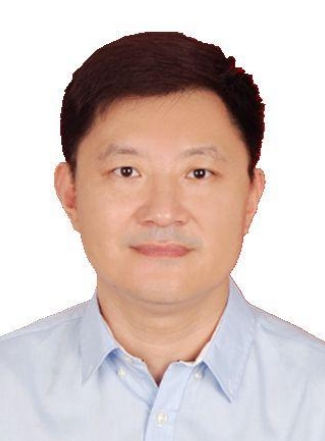 Wei Sun (孙伟)合作论文数Hainan Normal University1
 Yizhou Zhang (张一洲)合作论文数School of Chemistry and Materials Science, Nanjing University of Information Science & Technology1
 Xin Li (李鑫)合作论文数College of Forestry and Landscape Architecture, South China Agricultural University1
 Tianyou Zhai (翟天佑)合作论文数School of Materials Science and Engineering, Huazhong University of Science and Technology;Center of New Materials and Devices, Huazhong University of Science and Technology;State Key Laboratory of Materials Processing and Die & Mould Technology, Huazhong University of Science and Technology1




