People often spontaneously synchronise with one other during social interactions, but this synchrony may be weaker in autism. There are few methods available for measuring social synchrony outside the lab, which makes it hard to know what natural patterns of synchrony should look like. Here we present SocSensors, a system that uses wearable sensors to evaluate interpersonal synchrony, and use it to uncover social behaviours in young autistic people with learning difficulties. We used wrist-worn accelerometers to collect data from the interactions of 3 groups of children (and adults) during school activities: autistic children aged 5-6, autistic children aged 12-17, and neurotypical children aged 4-5. We evaluate a wavelet-based method to calculate interpersonal synchrony between all possible pairings. The output of this analysis and the proposed visualisations provide a convenient way to estimate social engagement. We compare our measures to blind independent video ratings of social engagement and find a clear positive correlation, which validates the use of sensors for in-the-wild studies of social behaviour in autism. We also demonstrate a range of analyses for which SocSensors can be used, including quantifying individual differences in social behaviour, uncovering social relationships within a group, and uncovering group differences of interpersonal coordination between autistic and neurotypical children. We also provide an analysis toolbox for others to build on our approach. The results show how wearable sensors enable a new type of research on real-world social interactions and advance our understanding of social synchrony.
This paper presents a novel method to synchronize multiple wireless inertial measurement unit sensors (IMU) using their onboard magnetometers. The basic method uses an external electromagnetic pulse to create a known event measured by the magnetometer of multiple IMUs and in turn uses this to synchronize the devices. An initial evaluation using four commercial IMUs reveals a maximum error of 40 ms per hour as limited by a 25 Hz sample rate. Building on this we introduce a novel method to improve synchronization beyond the limitations imposed by the sample rate and evaluate this in a further study using 8 IMUs. We show that a sequence of electromagnetic pulses, in total lasting <3-s, can reduce the maximum synchronization error to 8 ms (for 25 Hz sample rate, and accounting for the transient response time of the magnetic field generator). An advantage of this method is that it can be applied to several devices, either simultaneously or individually, without the need to remove them from the context in which they are being used. This makes the approach particularly suited to synchronizing multi-person on-body sensors while they are being worn.
Studying social interaction in real-world settings is of increasing importance to social cognitive researchers. Theatre provides an ideal opportunity to study rich face-to-face interactions in a controlled, yet natural setting. Here we collaborated with Flute Theatre to investigate interpersonal synchrony between actors-actors, actors-audience and audience-audience within a live theatrical setting. Our 28 participants consisted of 6 actors and 22 audience members, with 5 of these audience members being audience participants in the show. The performance was a compilation of acting, popular science talks and demonstrations, and an audience participation period. Interpersonal synchrony was measured using inertial measurement unit (IMU) wearable accelerometers worn on the heads of participants, whilst audio-visual data recorded everything that occurred on the stage. Participants also completed post-show self-report questionnaires on their engagement with the overall scientists and actors performance. Cross Wavelet Transform (XWT) and Wavelet Coherence Transform (WCT) analysis were conducted to extract synchrony at different frequencies, pairing with audio-visual data. Findings revealed that XWT and WCT analysis are useful methods in extracting the multiple types of synchronous activity that occurs when people perform or watch a live performance together. We also found that audience members with higher ratings on questionnaire items such as the strength of their emotional response to the performance, or how empowered they felt by the performance, showed a high degree of interpersonal synchrony with actors during the acting segments of performance. We further found that audience members rated the scientists performance higher than the actors performance on questions related to their emotional response to the performance as well as, how uplifted, empowered, and connected to social issues they felt. This shows the types of potent connections audience members can have with live performances. Additionally, our findings highlight the importance of the performance context for audience engagement, in our case a theatre performance as part of public engagement with science rather than a stand-alone theatre performance. In sum we conclude that interdisciplinary real-world paradigms are an important and understudied route to understanding in-person social interactions.
Autism is a diverse neurodevelopmental condition that has a hugely varying impact of the lives of autistic people. It is only in the last decades that a greater understanding and public awareness of the autism spectrum has come about, in-part thanks to a growing body of research into the condition. Wearable technology offers great promise in furthering autism research by providing an ability to do detailed behavioral analysis in real-life settings, such as in schools, with minimal intrusion. Such work is particularly crucial in exploring behaviours of those with complex needs and intellectual disabilities, a group who traditionally have been under-served. To achieve this there is a need for wearables that are both practical and acceptable to the individuals being studied. This paper presents our findings from a human-centred design approach to developing and deploying wrist-worn sensors among a diverse population of 16 autistic and 12 neurotypical children over a period of several months. Findings and recommendations from this work highlight the need to take both sensory factors and emotional dysregulation into account when designing wearables for autism. Individual aesthetic and social considerations are particularly important for older children. Equally, a period of sensor desensitisation is necessary when working among those with more complex needs.
This paper presents a novel method to synchronise multiple IMU (inertial measurement units) devices using their onboard magnetometers. The method described uses an external electromagnetic pulse to create a known event measured by the magnetometer of multiple IMUs and in turn used to synchronise these devices. The method is applied to 4 IMU devices decreasing their de-synchronisation from 270ms when using only the RTC (real time clock) to 40ms over a 1 hour recording. It is proposed that this can be further improved to approximately 3ms by increasing the magnetometer's sample frequency from 25Hz to 300Hz.
Deliberate manipulation of topological defects is of particular interest for liquid crystal applications. For example, surface bistability occurs in the grating aligned Zenithal Bistable Device due to the stabilisation of ±½ defects at the points of high surface curvature. Conventional latching between continuous and defect states has previously been simulated satisfactorily using Q-tensor models that include the effect of weak-anchoring and flexoelectricity. However, experimental studies show that some arrangements lead to anomalous latching regimes. The Q-tensor model is used to show that such effects occur when the defects become detached from the surface and have more complex paths in the bulk of the sample.
This paper proposes a general design method for microstrip devices using liquid crystal (LC) at microwave frequencies. The method employs lumped element modelling to first optimise the filter at the working frequency. Then EM simulation is used for the second optimisation and the full-wave simulation. LC is used as the tunable material since the anisotropy can be changed with low voltages. The approach of modelling LC as a homogeneous anisotropy demonstrated with Computer Simulation Technology (CST) Microwave Studio is an acceptable approximation, which accurately predicts the tuning range. A new tunable inverted microstrip filter using nematic LCs at millimetre-wave frequencies is designed to verify the method. The proposed design utilises interdigital capacitors in parallel with two inductive loops to form a bandpass filter. It is fabricated and measured, and shows that the centre frequency varies from 5.01 to 5.51 GHz (10% tunability) and achieves a 3-dB bandwidth of 450 MHz, which is in good agreement with simulation results. A finite element simulation is used to investigate the behaviour of LC directors in the fully switched state; the effective permittivity is extracted from finite-element simulation and used in CST to achieve an even more accurate agreement with experimental results. [GRAPHICS] .
A procedure combining accurate liquid crystal and electromagnetic modelling is developed for the analysis of wave propagation through liquid crystal devices. This is required to study the optics of high resolution liquid crystal cells or cells containing very small features, where diffraction effects occur. It is also necessary for the study of optical waveguiding devices using liquid crystal as variable permittivity substrates. An accurate finite element modelling program is used to find the permittivity tensor distribution, which is then used to find the response of the device to an excitation electromagnetic field by means of a finite difference in the frequency domain (FDFD) approach.
A device is proposed for lasing: a thin layer of perovskite between chiral polymer films, the band edge of which coincides with the perovskite emission. Characterisation of the device and simulation results are presented.
The structure of the liquid crystal (LC) director at the edge of an electrode with planar alignment is investigated in this paper. Results for a thin layer (0.5 μm) have already been presented in [1], where a defect pair was obtained on one side of an electrode edge. In contrast, a thick layer LC device has been observed in the laboratory using a microscope (Figure 1). At the edge of one side of the electrode, a zig-zag line is visible experimentally. This has been simulated by director modeling together with calculation of the optical properties, allowing comparison with experiment.
Q-tensor simulation of the liquid crystal structure at the edge of electrodes has been carried out. The modeling shows a twist wall, which reverses direction to form a zig-zag structure. The results are compared with experiment. Also a defect loop is found in micro-lenses formed using a hole electrode structure.
Q-tensor simulation of the liquid crystal structure at the edge of electrodes has been carried out. The modeling shows a twist wall, which reverses direction to form a zig-zag structure. The results are compared with experiment. Also a defect loop is found in micro-lenses formed using a hole electrode structure.
AbstractModeling of nematic liquid crystal structures using the tensor method are presented for various configurations. In particular defect formation at the edges of electrodes, which depend on alignment direction have been studied, as well as droplets of cholesteric liquid crystals, where the pitch must adapt to conform to the surface alignment of the droplet and the position of the defects at the poles.
In this paper, we describe a single-user glasses-free (autostereoscopic) 3D display where images from a pair of picoprojectors are projected on to a retroreflecting screen. Real images of the projector lenses formed at the viewer's eyes produce exit pupils that follow the eye positions by the projectors moving laterally under the control of a head tracker. This provides the viewer with a comfortable degree of head movement. The retroreflecting screen, display hardware, infrared head tracker, and means of stabilizing the image position on the screen are explained. The performance of the display in terms of crosstalk, resolution, image distortion, and other parameters is described. Finally, applications of this display type are suggested.
Optical waveguides are considered and investigated for laser beam combining and colour homogenization for use in a three colour laser based display system. A recently developed laser is calibrated and the best method for designing an all-waveguide combining and homogenising system is investigated. Ray tracing simulations are performed and the results are presented. An optical combination of lenses is designed and used for laser beam focusing into a 200 μm fibre core diameter step index silica core multimode fibre. We also designed and simulated a slab waveguide for beam shaping and beam homogenizing.
The essential dielectric properties, the basic alignment techniques, and the common measurement methods of the nematic liquid crystal (LC) at RF are briefly reviewed. A new device for the broadband measurement of the dielectric constants and loss tangents of nematic LCs at microwave and millimeter-wave frequencies is presented. This device whose specification and fabrication are outlined is essentially a two dielectric layer microstrip structure with coplanar-waveguide terminals, which is easy to fabricate. Compared to previous structures, the proposed device is extremely broadband with 15-65-GHz bandwidth, benefits from a solid exposed ground plane for easy temperature test, and operates under bias voltage. The technique for the extraction of the dielectric parameters of the nematic LC analyzed by this device is explained and the sources imposing the frequency limits on the device performance are identified. Two different nematic LCs, MDA-00-3506 and GT3-23001, are characterized and the results are shown to compare well with those available in the literature. In the comparisons, the maximum difference found for the dielectric constants for MDA-00-3506 is 5% and for GT3-23001 is 5.3%.
Liquid crystal substrates have been shown to provide the means to develop low-cost, reconfigurable, adaptive and tuneable microwave devices for mobile and wireless communication systems. In order to take maximum advantage of the possibilities that these materials offer and to design LC-based devices appropriately, techniques for the characterisation of the liquid crystal dielectric properties are needed. Similarly, appropriate modelling methods are required to simulate accurately the switching behaviour of the liquid crystal and the characteristics of the wave propagation through the devices, taking full consideration of the point-by-point variation of the material tensor permittivity.
AbstractModelling has been carried out of the Liquid Crystal structures at the edges of electrodes for planar aligned devices, used as phase modulators. The voltage dependence and a threshold voltage of the defect formation is found. The effect of adjacent pixels used in high resolution in LCOS is investigated.
Induced bulk orientation of nematic liquid crystal in contact with micron-scale patterned surfaces is investigated using the Landau-de Gennes theory by means of three-dimensional simulations. The effect of the size and spacing of square cross-sectional well and post patterns is investigated and shown to influence the orientation of the liquid crystal bulk, far removed from the surface. Additionally, the effective anchoring strength of the induced alignment is estimated using a modified version of the torque balance method. Both azimuthal and zenithal multistability are shown to exist within unique ranges of feature sizes.
 F Anibal Fernandez合作论文数Department of Electronic and Electrical Engineering;University College London;Department of Electronic and Electrical Engineering, University College London71
 Richard James合作论文数Department of Electronic & Electrical Engineering, University College London37
 Eero Willman合作论文数26
 Dariush Mirshekar-Syahkal合作论文数RF & Microwave Research Laboratory, School of Computer Science and Electronic Engineering, University of Essex16
 David Selviah合作论文数Department of Electronic and Electrical Engineering, Faculty of Engineering Sciences, University College London16
 Phil Surman合作论文数11
 Senad Bulja合作论文数11Jb Davies合作论文数10
 Hakan Urey合作论文数Optical Microsystems Laboratory, Koc University;Department of Electrical Engineering, Koc University;CY Vision;Stoparkinson Healthcare Systems, LLC;Tarabios9f dipasquale合作论文数8
 Kristiaan Neyts合作论文数ELIS Department, Faculty of Engineering Sciences, Ghent University8dkg de boer合作论文数6lawrence george commander合作论文数6
 Lawrence Seddon合作论文数6Mc Gardner合作论文数6
 Zijun Nie合作论文数6
 Kaan Aksit合作论文数Department of Computer Science, Faculty of Engineering Sciences, University College London;Computational Light Laboratory, University College London6
 Mani Yazdanpanahi合作论文数6v c kishore合作论文数5
 Hadi Baghsiahi合作论文数Correvate Limited/UCL5
 Antonia Hamilton合作论文数Institute of Cognitive Neuroscience, University College London5
 Prafulla Deo合作论文数5Damien Gerard Mcdonnell合作论文数5
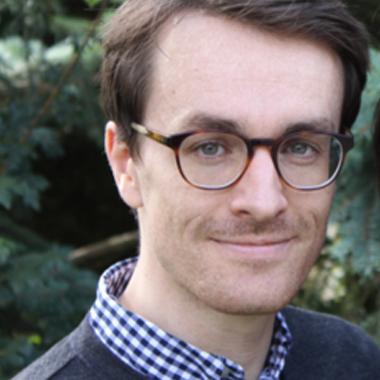 Jamie A Ward合作论文数Department of Computing, Goldsmiths, University of London;LiveTree5
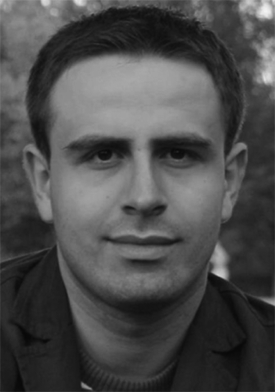 erdem erden合作论文数4Mengyang Yang合作论文数4
 Michael Hird合作论文数Department of Chemistry, University of Hull4Khaled Sarayeddine合作论文数4
 Stefaan Vermael合作论文数4Kenneth Toyne合作论文数4
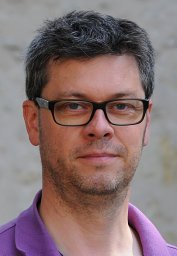 Herbert De Smet合作论文数TFCG Microsystems;Ghent University;TFCG Microsystems, Elis|Ghent University4Huifang Deng合作论文数4Thomas J. Gilbert合作论文数3g w gray合作论文数3John Cliff Jones合作论文数3
 Adolfo Fernandez Fernandez合作论文数Grp Estudos Arqueoloxia Antiguldade & Terr GEAAT, Univ Vigo3
 Selim Olcer合作论文数3
 Baghsiahi Hadi合作论文数3
 W. A. Crossland合作论文数3
 Patrick J. Smith合作论文数Department of Psychiatry and Behavioral Sciences, Duke University Medical Center3Armanda C Nieuwkerk合作论文数3
 Cian M Taylor合作论文数3
 Philip Trwoga合作论文数3R. Cortie合作论文数3l seddon合作论文数2S. Vermael合作论文数2Em Mccabe合作论文数2J.A.M.M. van Haaren合作论文数2e p raynes合作论文数2




