In this paper, we describe and analyze a new architecture for ring Metropolitan Area Networks (MANs): Counter Rotating Slotted Ring (CRSR). CRSR consists of two unidirectional rings shared among the network stations. Both the rings have erasure nodes appropriately placed between each or several stations. The transmission time is slotted. Each slot has some control bits and one of the control bit indicates if the slot is busy or not. An empty slot can be marked as busy and used for transmitting data. Once a busy slot reaches its destination, the data is read and the slot is marked as ''read''. The erasure nodes identify the ''read'' slots and erase the data from these slots so that the slots can be reused. This process reduces the traffic intensity, which in turn results in less bandwidth requirements for transporting the same amount of information. The performance of CRSR is evaluated by using mathematical and simulation techniques. Several interesting results are presented in this paper in comparison with DQDB.
An important aspect of a health care delivery system is nursing. The use of technology is a vital aspect for delivering an optimum and complete nursing care to individuals; and also for improving the quality and delivery mechanism of nursing care. The model proposed for Nursing Knowledge Management System is a novel knowledge-based decision support system for nurses to capture and manage nursing practice, and further, to monitor nursing care quality, as well as to test aspects of an electronic health record for recording and reporting nursing practice. As part of ongoing collaborative research of the nursing school and the department of computer science, a prototype toolset was developed to capture and manage nursing practice in order to improve the quality of care. This paper focuses on implementing a web based SOA based solution for Automated Classification for Nursing Care Categories, based on the knowledge gained from the prototype for nursing care practice.
Feature selection for supervised learning concerns the problem of selecting a number of important features (w.r.t. the class labels) for the purposes of training accurate prediction models. Traditional feature selection methods, however, fail to take the sample distributions into consideration which may lead to poor prediction for minority class examples. Due to the sophistication and the cost involved in the data collection process, many applications, such as biomedical research, commonly face biased data collections with one class of examples (e. g., diseased samples) significantly less than other classes (e. g., normal samples). For these applications, the minority class examples, such as disease samples, credit card frauds, and network intrusions, are only a small portion of the data but deserve full attention for accurate prediction. In this paper, we propose three filtering techniques, Higher Weight (HW), Differential Minority Repeat (DMR) and Balanced Minority Repeat (BMR), to identify important features from datasets with biased sample distribution. Experimental comparisons with the ReliefF method on five datasets demonstrate the effectiveness of the proposed methods in selecting informative features for accurate prediction of minority class examples.
In this paper, the authors introduce an interactive visualization and analysis system for Drive Test Data (DTD) evaluation designed to provide first-hand mobile-phone performance assessment for different parties—including phone manufacturers and network providers—to review phone and network performance such as service coverage and voice quality. The authors propose an integrated data-visualization system, iVESTA (interactive Visualization and Evaluation System for drive Test dAta) for mobile phone drive-test data. The objective was to project high-dimensional DTD data onto well-organized web pages, such that users can visually study phone performance with respect to different factors. iVESTA employs a web-based architecture, which enables users to upload DTD and immediately visualize the test results and observe phone and network performance with respect to factors such as dropped call rate, signal quality, vehicle speed, handover and network delays. iVESTA provides a practical test environment for phone manufacturers and network service providers to perform comprehensive studies on their products from the real-world DTD.
Intrusion Detection System (IDS) plays a very important role on information security. In this paper, we present an application-level intrusion detection algorithm named Graph-based Sequence-Learning Algorithm (GSLA). GSLA includes data pre-processing, normal profile construction and session marking. In GSLA, the normal profile is built through a session-learning method, which is used to determine an anomaly session. We conduct experiments and evaluate the performance of GSLA with other conventional algorithms, such as Markov Chain Model (MM) and K-means Algorithm. The results show that GSLA improves the effectiveness of anomaly detection.
This paper describes an approach of enriching computer science & engineering education by engaging students in an interdisciplinary research project. The research project is put forth by a join interdisciplinary research group that consists of students and faculty members from College of Computer Science & Engineering and College of Nursing. One of the goals of this interdisciplinary collaboration is to broaden students’ research and education experience, and in the mean time to engage students in solving real world problems that have great impact in our society. This paper presents some of the lessons learned and provides some recommendations of conducting successful interdisciplinary research involving students in the near future.
Microarray experiments usually output small volumes but high dimensional data. Selecting a number of genes relevant to the tasks at hand is usually one of the most important steps for the expression data analysis. While numerous researches have demonstrated the effectiveness of gene selection from different perspectives, existing endeavors, unfortunately, ignore the data imbalance reality, where one type of samples (e.g., cancer tissues) may be significantly fewer than the other (e.g., normal tissues). In this paper, we carry out a systematic Study to investigate the impact of gene selection on imbalanced microarray data. Our objective is to understand that if gene selection is applied to imbalanced expression data, what kind of consequences it may bring to the final results? For this purpose, we apply five gene selection measures to eleven microarray datasets, and employ four learning methods to build classification models from the data containing selected genes only. Our study will bring important findings and draw numerous conclusions on (1) the impact of gene selection on imbalanced data, and (2) behaviors of different learning methods on the selected data.
Providing people with a complete and responsive healthcare solution requires a multi-tiered health service delivery system. One aspect in the healthcare hierarchy is the need for care provided by nurses. Nursing care and observation provide the basis for nurses to communicate their practice with others in the healthcare system. It is necessary to capture and manage knowledge of nursing care to improve the quality nursing practice. This paper proposes a novel knowledge-based decision support system for nurses to capture and manage nursing practice, and further, to monitor nursing care quality, as well as to test aspects of an electronic health record for recording and reporting nursing practice. As part of ongoing collaborative research of the nursing school and the department of computer science, a prototype toolset was developed to capture and manage nursing practice in order to improve the quality of care. A case study is presented to demonstrate the toolset used by nurses in a local hospital environment.
Feature selection concerns the problem of selecting a number of important features (w.r.t. the class labels) in order to build accurate prediction models. Traditional feature selection methods, however, fail to take the sample distributions into the consideration which may lead to poor predictions for minority class examples. Due to the sophistication and the cost involved in the data collection process, many applications, such as Biomedical research, commonly face biased data collections with one class of examples (e.g., diseased samples) significantly less than other classes (e.g., normal samples). For these applications, the minority class examples, such as disease samples, credit card frauds, and network intrusions, are only a small portion of the data collections but deserve full attentions for accurate prediction. In this paper, we propose three filtering techniques, Higher Weight (HW), Differential Minority Repeat (DMR) and Balanced Minority Repeat (BMR), to identify important features from biased data collections. Experimental comparisons with the ReliefF method on five datasets demonstrate the effectiveness of the proposed methods in selecting informative features from data with biased sample distributions.
Drive Test Data (DTD) evaluation intends to provide first-hand mobile phone performance assessment such that different parties, including phone manufacturers and network providers, can review the phone and network performance, e.g., service coverage and voice quality, from different perspectives. Due to many uncertainties involved in the test environments, e.g., terrain, interference, vehicle speed, and network delay, it is crucial to properly digest the DTD data such that users can draw valid conclusions like "phone A outperforms phone B in the suburb area". We argue that because of the inherent complexity of the test environments, DTD collected from the fields suffer from low quality, low integrity, high uncertainty, and low interpretability. An evaluation tool should consider all such reality issues in order to develop a practical product. For this purpose, we report, in this paper, an integrative data visualization system iVESTA (interactive Visualization and Evaluation System for driven Test dAta) for iDEN (integrated Digital Enhanced Network [1]) drive test data. Our objective is to project high dimensional DTD data onto well-organized web pages, such that users can visually study phone performance with respect to different factors. iVESTA employs a web-based architecture which enables users to upload DTD and immediately visualize the test results and observe phone and network performances with respect to factors such as dropped call rate, signal quality, vehicle speed, handover and network delays. iVESTA provides a practical test environment for phone manufacturers and network service providers to perform comprehensive study on their products from the real-world DTD.
Recent improvements in affordable and effecient integrated electronic devices have a considerable impact on advancing the state of wireless sensor networks (WSNs), which constitute the platform of a broad range of applications related to national security, surveillance, military, health care, environmental monitoring, smart spaces, inventory tracking, and recently industrial controls. A WSN is a collection of a large number of wireless nodes deployed to measure and report certain parameters such as temperature, pressure, humidity, etc. Each node consists of sensing, processing, power and radio units. Sensor nodes are usually deployed to serve one application and are configured to operate as a multi-hop network. A WSN contains one or more sinks that relay data between users and sensor nodes. The main functions of a sensor node are to sense the surrounding environment and to participate in data forwarding. Additionally, a sensor node might perform data aggregation in order to reduce the bandwidth consumption, power consumption for communication, and media access delay. The two important operations of a WSN are data dissemination (send data/queries from sinks to sensor nodes) and data gathering (send sensed data from sensor nodes to the sinks).
 Abhijit S. Pandya合作论文数abstract citings collaborative colleagues19
 Muhammad ilyas Ilyas合作论文数Natl Ctr Excellence Phys Chem, Univ Peshawar9
 james helman合作论文数7carolyn wales合作论文数7brock wagenaar合作论文数7brian bulkowski合作论文数7mark vickers合作论文数7joseph decker合作论文数7
 Bassem Alhalabi合作论文数Department of Electrical Engineering and Computer Science, College of Engineering & Computer Science, Florida Atlantic University7
 Shihong Huang合作论文数University of California6
 Xingquan (Hill) Zhu合作论文数Department of Electrical Engineering and Computer Science, College of Engineering and Computer Science, Florida Atlantic University6Marilyn Parker合作论文数5
 Kamal Abu Hena Mostafa合作论文数4Saeed Rajput合作论文数Florida Atlantic University4
 Nalin Sharda合作论文数3
 Lianfen Qian合作论文数Department of Mathematical Sciences;Florida Atlantic University;Department of Mathematical Sciences, Florida Atlantic University3Yuhong Dong合作论文数2Yongsuk Lee合作论文数2
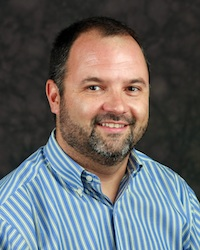 Oge Marques合作论文数Department of Computer Science and Engineering
Florida Atlantic University2Krishna K. Adusumilli合作论文数2Mohammad Khalid Hamza合作论文数2S Jayadevappa合作论文数1m khalid hamza合作论文数1Kurapati Venkatesh合作论文数1sudeep anandapuram合作论文数1mahesh mutha合作论文数1xundong ding合作论文数1Ali Abu-El Humos合作论文数1
Oge Marques合作论文数Department of Computer Science and Engineering
Florida Atlantic University2Krishna K. Adusumilli合作论文数2Mohammad Khalid Hamza合作论文数2S Jayadevappa合作论文数1m khalid hamza合作论文数1Kurapati Venkatesh合作论文数1sudeep anandapuram合作论文数1mahesh mutha合作论文数1xundong ding合作论文数1Ali Abu-El Humos合作论文数1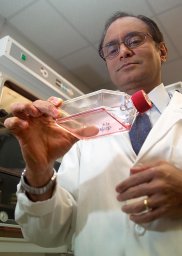 Ramaswamy Narayanan合作论文数Dept Biol Sci, Florida Atlantic Univ1Noell, D.合作论文数1Xiaoguang Sun合作论文数1Jihong Chen合作论文数1
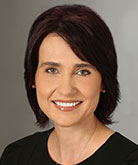 Mihaela Cardei合作论文数Department of Electrical Engineering and Computer Science, College of Engineering and Computer Science, Florida Atlantic University1
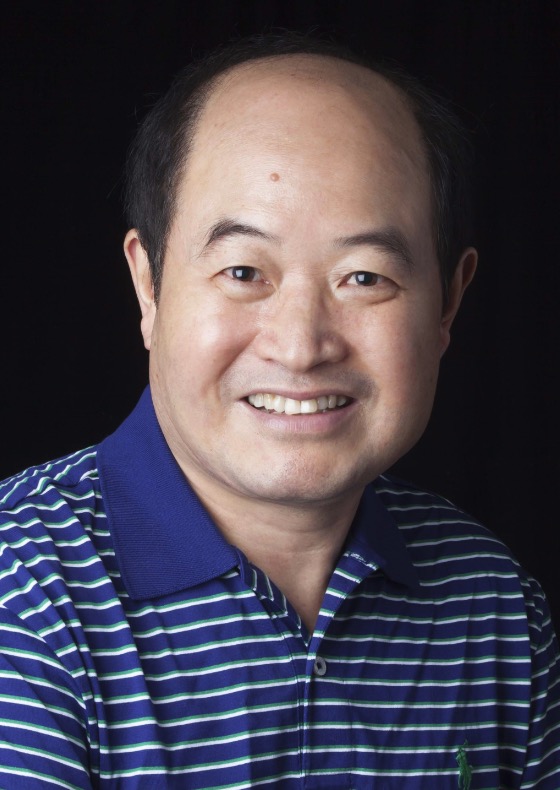 Yong Shi (石勇)合作论文数School of Economics and Management, University of Chinese Academy of Sciences1Bing Wu合作论文数1Roy Levow合作论文数1Kelley Newlin合作论文数1
 Jawad Khan合作论文数University of Cincinnati1
 David M. Marcovitz合作论文数Education Department, Loyola College in Maryland1Subhomoy Dass合作论文数1
 Nancy Romance合作论文数1
 Shubhang Tripathi合作论文数1Young-Uhg Lho合作论文数1
 Jennifer-Ann Monique Anderson合作论文数Google1M. Larrondo-Petrie合作论文数College of Engineering and Computer Science;Florida Atlantic University1




