The ever-increasing throughput demand is aimed to be met by the combined use of the radio frequency (RF) and free space optical (FSO) spectrum. However, making this combination into practice is still uncertain, especially for high-mobility scenarios with a limited coherence window for beam training and tracking. Accordingly, significant research efforts are being made towards the integrated RF and FSO framework. In this paper, we propose an integrated framework that makes use of the RF spectrum with the FSO spectrum to serve vehicles that are moving under the coverage of a cloud radio access network (CRAN). The proposed scenario simultaneously exploits the advantages of large distance coverage and a huge spectrum from RF and FSO, respectively. It poses the challenge of higher attenuation of FSO through the coordinated multi-point (CoMP) transmission for users being served by FSO spectrum. At the same time, the proposed framework takes care of the high attenuation of RF signals under poor weather conditions, e.g., rainy conditions, by providing a hybrid link with the FSO spectrum. Furthermore, the simulation results show that a reduction of hand-off is observed through the proposed scheme of integration of RF with FSO spectrum in the CRAN-assisted vehicular networks.
This paper is based on time domain analysis of electromagnetic field incident normally on double negative (DNG) metamaterial slab backed by perfect electric conductor (PEC). Electromagnetic fields are analyzed based on double exponential pulse being incident over PEC backed DNG metamaterial slab. Further, the strength of reflected fields from the interface between air and DNG slab, and transmitted fields in DNG slab are evaluated analytically. Evaluated results in terms of amplitude of reflected pulse and transmitted pulse are plotted both for Double Positive (DPS), i.e. dielectric and DNG metamaterial cases. Thus, the effect of both PEC backed DPS & DNG metamaterial slab are investigated and compared.
Autonomous vehicles (AVs) are currently getting widespread attention and considered as a highly promising application of wireless communication. Due to the standout features of 5G/6G, it is capable of supporting V2X (Vehicular to Everything) communications and can fulfill the communication requirements. For the efficient vehicular ad-hoc network (VANET), lower latency and ultra-reliability are prime requirements. Next, larger handoffs, high interference, and dynamic traffic are the major obstacles to seamless connectivity. These issues can be effectively tackled through the concept of Machine Learning (ML). In this paper, we conduct a comprehensive survey of vehicular communication, discussing its major challenges, highlighting the transformative potential of ML algorithms, and addressing the implementation challenges of ML for creating a smooth vehicular network. Furthermore, we explore future research opportunities in this direction.
The forthcoming wireless network is expected to support a wide range of applications, from supporting autonomous vehicles to massive Internet of Things (IoT) deployments. However, the coexistence of diverse applications under a unified framework presents several challenges, including seamless resource allocation, latency management, and systemwide optimization. Considering these requirements, this paper introduces WIND (Wireless Intelligent Network Digital Twin), a self-adaptive, self-regulating, and self-monitoring framework that integrates Federated Learning (FL) and multi-layer digital twins to optimize wireless networks. Unlike traditional Digital Twin (DT) models, the proposed framework extends beyond network modeling, incorporating both communication infrastructure and application-layer DTs to create a unified, intelligent, and context-aware wireless ecosystem. Besides, WIND utilizes local Machine Learning (ML) models at the edge node to handle low-latency resource allocation. At the same time, a global FL framework ensures long-term network optimization without centralized data collection. This hierarchical approach enables dynamic adaptation to traffic conditions, providing improved efficiency, security, and scalability. Moreover, the proposed framework is validated through a case study on federated reinforcement learning for radio resource management. Furthermore, the paper emphasizes the essential aspects, including the associated challenges, standardization efforts, and future directions opening the research in this domain.
Higher frequencies, such as Terahertz waves (THz waves), are gaining widespread attention and emerging as the foundational framework for next-generation communication systems (e.g., 6G). These frequencies offer a larger bandwidth, unlocking new opportunities, including applications like vehicular communication. Due to significant traffic variations, vehicles frequently experience outages. Therefore, this scenario requires ultra-reliability and improved coverage. To meet these requirements, we introduced an architecture that uses joint transmission from two distinct Terahertz Stations (TSs), which offers several benefits. Primarily, this collaborative approach is expected to enhance network connectivity by reducing outage probability. Additionally, the use of THz waves can support higher data rates and lower latency, which are crucial for real time communication.
Cloud Radio Access Network (CRAN) is considered the most preferable architecture for higher frequencies (especially for mm-Wave scenarios) due to Coordinated Multi-Point (CoMP) transmission facilities. However, its potential still needs to be explored, specifically in vehicular communication. The need for extensive pre-transmission processing in a CoMP-enabled framework may become outdated for highly mobile scenarios. To address this issue, we introduce a modified integrated CRAN architecture, offering several benefits. The proposed architecture leverages both micro-wave and mm-wave technologies collaboratively to enhance the coverage of running vehicles. Furthermore, this architecture serves vehicles according to their road type, which includes: i.) Urban Areas i.e., high-traffic scenario, where the vehicles are slow-moving, and ii.) Highway, i.e., light-traffic scenario, where the vehicles are moving at high speed. Through simulation results, we demonstrate the significant performance improvements of the proposed architecture compared to traditional CRAN-based transmission.
Cloud Radio Access Network (CRAN) is the most preferred cellular architecture to support milli-meter wave (mm-Wave) transmission. It fulfills the requisites of mm-Wave communication by enabling Coordinated Multi Point (CoMP) framework. However, the potential of CRAN is not exploited to its maximum, especially from the perspective of high mobility scenarios, e.g., vehicular transmission. This is because; a) CoMP-enabled framework requires exceptional pre-transmission processing, which may soon outdate for high mobility scenarios, b) the network is usually designed to support peak hour traffic and hence mostly remains under-utilized during sparse traffic conditions. To mitigate such issues, this work proposes a modified RAN with Traffic Aware Hybrid CRAN Scheme (TRASH) aiming two-fold advantages; a) micro-Wave and mm-Wave are jointly utilized to enhance reliability of fast moving scenario, b) a sub-RAN architecture is introduced to support traffic fluctuations. Moreover, through simulation results, it is shown that TRASH provides significant performance enhancement against traditional CRAN based transmission.
Currently, the Rate Splitting Multiple Access (RSMA) scheme is gaining widespread attention as the most promising technique for multiple access in next-generation wireless communications. Its standout feature is the ability to support non-orthogonal transmission, making it increasingly popular for its interference-free transmission capabilities in highly diverse scenarios, which has been a critical bottleneck in existing access schemes. RSMA is considered to outperform its counterparts in terms of achievable rate and overall performance. This paper introduces RSMA and its system model along with its advantages over traditional schemes. It demonstrates the superiority in system performance as compared to orthogonal and non-orthogonal multiple access schemes. Additionally, we highlight the implementation challenges of RSMA and discuss future research opportunities in this direction.
Abstract Coordinated Multi‐Point (CoMP) transmission in Cloud Radio Access Network (CRAN) requires a large amount of data transmission and processing within a coherence time window. Hence, CoMP transmission puts a lot of burden on the central processor and back‐haul unit. Also, establishing CoMP for high‐mobility users is challenging due to small coherence window and large beamforming overhead over mm‐Wave transmission. This paper proposes a two‐layer CRAN architecture with intelligent mm‐Wave and micro‐Wave allocation. A dual connectivity framework has been introduced to increase the coverage of high‐mobility users. Further, it is shown that the proposed scenario reduces the load on the central processor and central back‐haul. To avoid unnecessary handoffs, a mobility management algorithm is also proposed, which can provide seamless connectivity to the users irrespective of their velocity. Further, through simulation results, it is shown that the proposed network outperforms the existing CRAN framework.
The forthcoming wireless world is expected to have a variety of applications including massive IoT devices, vehicular communication, high-quality gaming, etc. Due to distinct Quality of Service (QoS) requirements, these applications demand different size of band-width and often possess significant variations in the working. Therefore, it is challenging for the existing cellular infrastructures to support such wide range of applications. On the other hand, there are some wireless technologies that are still underutilized, e.g., Narrow-Band Internet of Things (NB-IoT). To fill this gap, we propose a an integrated Cloud Radio Access Network (CRAN) architecture. Specifically, this work integrates the existing CRAN architecture with the NB-IoT. CRAN supports Coordinated Multi-Point (CoMP) transmission. So, the proposed integrated scheme intends to utilize full potential of microwave and mm-wave. Moreover, simulation results show that our proposed architecture suitably provides a better quality of Service (QoS) to all respective users.
The coexistence of massive Internet of Things (IoT)network and modern technologies (e.g., high speed gaming and self driving vehicles) requires a versatile network which can provide support to all such applications. Since the Quality of Service (QoS) requirement of each application is different from one another, the existing Radio Access network (RAN) is unable to support such diverse applications. Consequently, Open Radio Access Network(O-RAN) is being considered as the most viable solution for next generation RAN. In this paper, we present the evolution of RAN along with the possible architecture and features of the most promising next generation RAN (i.e., ORAN). This work mainly discusses architectural and functional advancement of the RAN in each generation. In addition, we discuss various challenges associated with O-RAN implementation and possible opportunities created with the advent by O-RAN.
Last few decades have witnessed tremendous growth in terrestrial communication. This has happened with improved technologies at both the physical layer as well as network layer level. This paper surveys some of the key technological advancements implemented towards the fulfilment of ever increasing demands. Basically, this paper provides a comprehensive review of the applications and challenges associated with different generation of communication system and technological enhancement towards their fulfilment. In addition, we discuss main features of next generation cloud radio area network architecture along with the cooperative transmission schemes. Further, it is shown that Cloud Radio Access Network (CRAN) is the most suitable alternative for next generation architecture.
 Brijesh Kumbhani合作论文数12
 Rohit Singh合作论文数6
 Sam Darshi合作论文数Dept Elect Engn, Indian Inst Technol Ropar3
 Nishant Gupta合作论文数2
 Sagnik Bhattacharyya合作论文数Dept Elect Engn, Indian Inst Technol Ropar1
 Ila Sharma合作论文数Department of Electronics and Communication, Malaviya National Institute of Technology1
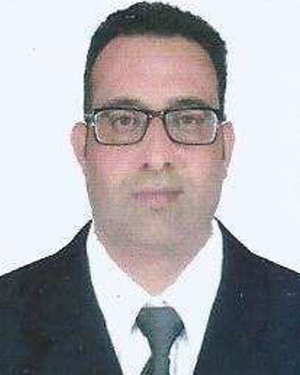 Khurshed A. Shah合作论文数Dept Phys, Cluster Univ1
 Aryan Kaushik合作论文数School of Engineering and Informatics, University of Sussex1
 Ghanshyam Singh合作论文数Department of Electrical and Electronic Engineering, University of Johannesburg1
 Ramona Trestian合作论文数London Digital Twin Research Centre, Middlesex University London1
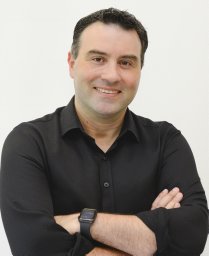 Berk Canberk合作论文数Dept Comp Engn, Istanbul Tech Univ1
 Purav Shah合作论文数College of Engineering, Mathematics and Physical Sciences, University of Exeter1
 Ioan Sorin Comsa合作论文数University of Bedfordshire, University of Applied Sciences of Western Switzerland1




