The rapid construction of three-dimensional (3D) heterocyclic frameworks is a key challenge in contemporary medicinal chemistry. The molecules with three-dimensional complexity hold a greater probability to improve clinical outcomes, solubility, selectivity for target proteins, and metabolic stability. However, the prevalence of flat molecules persists among new drug candidates, primarily owing to the multitude of chemical methods available for their synthesis. In principle, the dearomative functionalization of N-heteroarene allows for the conversion of readily available planar molecules into partially or fully saturated nitrogen heterocycles, which are most significant structural motifs of pharmaceuticals and natural products. Unfortunately, these reactions are very rare because of the inherent challenge imposed by heteroarenes' poor reactivity, rendering the process thermodynamically unfavorable. Herein, we report a modular approach for accessing 3D chemical space in translating planar heteroarenes into valuable 3D heterocycles via the installation of a highly versatile cyano group as a new vector. This approach is enabled by the in situ generation of reactive, non-symmetric iodane by combining cyanide anion and bench-stable PhI(OAc)2. This reaction represents a rare example of 1,2-dicyanation of N-heteroarenes that meets the numerous requirements for broad implementation in drug and agrochemical discovery. The transformation is highly selective and amenable to a wide range of N-heteroarenes and late-stage partial saturation of drugs and agrochemicals.
The significance of chelation-assisted C-H functionalization stands upon the superior site-selectivity, easy synthesis, and diverse product utility. In this work, we design a meta-directing scaffold by tuning the side chain of a pyrimidine-based template to attain unconventional site-selectivity in anilines. A simple methyl substitution at the side chain enhances the directing group (DG) efficacy significantly, leading to an almost exclusive meta-selectivity. The current DG further enables a meta-selective cyanation of aniline and its higher homologues irrespective of the substrate electronic bias. The synthetic impact of the methodology is further highlighted with late-stage functionalizations of two very popular local anesthetics butamben and benzocaine. A thorough experimental and in silico study further unfolds the importance of the substitution effect in attaining superior site-selectivity and the role of silver carbonate in the mechanistic cycle.
A bioinspired synthesis of Pinoxaden metabolites 2-5 is described herein. A site-selective C-H oxidation strategy validated by density functional theory (DFT) calculations was devised for preparing metabolites 2-4. Oxidation of the benzylic C-H bond in tertiary alcohol 7 using K2S2O8 and catalytic AgNO3 formed the desired metabolite 2 that enabled access to metabolites 3 and 4 in a single step. Unlike most metal/persulfate-catalyzed transformations reported for the C-C and C-O bond formation reactions wherein the metal acts as a catalyst, we propose that Ag(I)/K2S2O8 plays the role of an initiator in the oxidation of intermediate 7 to 2. Metabolite 2 was subjected to a ruthenium tetroxide-mediated C-H oxidation to form metabolites 3 and 4 as a mixture that were purified to isolate pure standards of these metabolites. Metabolite 5 was synthesized from readily available advanced intermediate 9via a House-Meinwald-type rearrangement in one step using a base.
The site-specific oxidation of strong C(sp3)-H bonds is of uncontested utility in organicsynthesis. From simplifying access to metabolites and late-stage diversification of lead compoundsto truncating retrosynthetic plans, there is a growing need for new reagents and methods forachieving such a transformation in both academic and industrial circles. One main drawback ofcurrent chemical reagents is the lack of diversity with regards to structure and reactivity thatprevent a combinatorial approach for rapid screening to be employed. In that regard, directedevolution still holds the greatest promise for achieving complex C–H oxidations in a variety ofcomplex settings. Herein we present a rationally designed platform that provides a step towardsthis challenge using N-ammonium ylides as electrochemically driven oxidants for site-specific,chemoselective C(sp3)–H oxidation. By taking a first-principles approach guided by computation,these new mediators were identified and rapidly expanded into a library using ubiquitous buildingblocks and trivial synthesis techniques. The ylide-based approach to C–H oxidation exhibitstunable selectivity that is often exclusive to this class of oxidants and can be applied to real worldproblems in the agricultural and pharmaceutical sectors.
A simple method to prepare a 2,6-disubstituted aniline containing a N-sec-alkyl group and a carbonyl on one ortho substituent is reported. This method was used to accomplish the first synthesis of side chain oxidized ethylsulfonic acid (ESA) and oxanilic acid (OXA) metabolites of S-Metolachlor (S-Moc) herbicide. The 2,6-disubstituted aniline functionality was installed by a Sugasawa reaction of readily available ortho-toluidine. The N-sec alkyl group was introduced by a Mitsunobu alkylation of the nosyl-activated 2-acetyl-6-methyl-substituted aniline. This crucial step enabled access to the key 2,6-disubstituted aniline intermediate which was used in the divergent synthesis of S-Moc metabolites. A bioinspired synthesis of the keto-ESA metabolite was achieved in one step from the hydroxyl-ESA metabolite using a ruthenium-catalyzed oxidation. (C) 2016 Elsevier Ltd. All rights reserved.
A bioinspired synthesis of the sedaxane metabolite 2 from intermediate 3 using catalytic VO(acac)2 and O2 is described. Intermediate 3 was synthesized starting from 2-bromostyrene in four steps. The inner cyclopropyl ring of 3 was assembled with trans geometry using a highly diastereoselective Nishiyama cyclopropanation, and the outer hydroxycyclopropyl ring was installed using the Kulinkovich cyclopropanation. Additionally, conversion of 3 into 2 was demonstrated in in vitro microbial culture experiments consisting of bacteria and fungi.
 Bruce P McKillican合作论文数4William J. Eberle合作论文数3Christopher D Cook合作论文数3Moses G. Gichinga合作论文数3
 David Allen Hunt合作论文数2
 Debabrata Maiti合作论文数Department of Chemistry, Indian Institute of Technology Bombay2Jeffrey Perine合作论文数1Suparna Dutta合作论文数1subho roy合作论文数1Kanhaiya Kumar Bhagat合作论文数1Samantha Marshall合作论文数1Longrui Chen合作论文数1Ethan Carlson合作论文数1Nikunj Kumar合作论文数1Puneet Gupta合作论文数1Masato Saito合作论文数1Sudip Maiti合作论文数1
 Mayank Tanwar合作论文数1Katarina J. Makaravage合作论文数1
 Teja Chitrala合作论文数Organ & Med Chem Res Lab, Vellore Inst Technol1
 Sagar Udyavara合作论文数Department of Chemical Engineering and Materials Science, University of Minnesota1
 Debora Chiodi合作论文数1
 Sukumar Pradhan合作论文数1
 Trisha Bhattacharya合作论文数Department of Chemistry, Indian Institute of Technology Bombay1
 Michael Meanwell合作论文数Simon Fraser Univ, Dept Chem, Burnaby, BC V5A 1S6, Canada1Tianhua Tang合作论文数Dept Chem, Univ Utah1
 Cian Kingston合作论文数Scripps Research Institute1
 Christian Malapit合作论文数Department of Chemistry, Weinberg College of Arts and Sciences, Northwestern University1
 Chi He (何炽)合作论文数State Key Laboratory of Multiphase Flow in Power Engineering, Xi'an Jiaotong University;School of Energy and Power Engineering, Xi'an Jiaotong University1Eastgate Martin D合作论文数1Schmidt Michael A合作论文数1Kawamata Yu合作论文数1
 Rafael Navratil合作论文数1
 Pengfei Hu (胡鹏飞)合作论文数Department of Chemistry, School of Science, Westlake University1
 Matthew S. Sigman合作论文数Department of Chemistry, College of Science, The University of Utah1
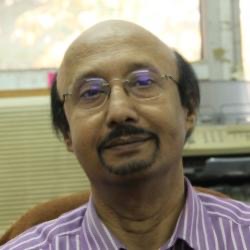 Goutam Kumar Lahiri合作论文数Department of Chemistry, Indian Institute of Technology Bombay1
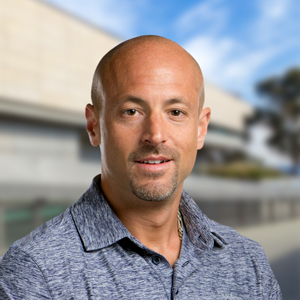 Phillippe Baran合作论文数Department of Chemistry, The Scripps Research Institute1
 Shelley D. Minteer合作论文数Department of Chemistry, Missouri University of Science and Technology;Kummer Institute Center for Resource Sustainability, Missouri University of Science and Technology;Minteer Research Lab, Missouri University of Science and Technology1
 Massimiliano Lamberto合作论文数1
 Matthew Neurock合作论文数Department of Chemical Engineering and Materials Science, College of Science and Engineering, University of Minnesota1




