Most earlier studies of DHTs under churn have either depended on simulations as the primary investigatio n tool, or on establishing bounds for DHTs to function. In this paper, we present a complete analytical study of churn using a master-equation-based approach, used traditionally in n o equilibrium statistical mechanics to describe steady-sta te or transient phenomena. Simulations are used to verify all the oretical predictions. We demonstrate the application of ou r methodology to the Chord system. For any rate of churn and stabilization rates, and any system size, we accurately pre dict the fraction of failed or incorrect successor and finger poin ters and show how we can use these quantities to predict the performance and consistency of lookups under churn. We also discuss briefly how churn may actually be of different ’types ’ and the implications this will have for the functioning of DH Ts
In recent years, adaptive HTTP streaming protocols have become the de-facto standard in the industry for the distribution of live and video-on-demand content over the Internet. This paper presents SmoothCache 2.0, a distributed cache platform for adaptive HTTP live streaming content based on peer-to-peer (P2P) overlays. The contribution of this work is twofold. From a systems perspective, to the best of our knowledge, it is the only P2P platform which supports recent live streaming protocols based on HTTP as a transport and the concept of adaptive bitrate switching. From an algorithmic perspective, the system describes a novel set of overlay construction and prefetching techniques that realize: i ) substantial savings in terms of the bandwidth load on the source of the stream, and ii ) CDN-quality user experience in terms of playback latency and the watched bitrate. In order to support our claims, we conduct a methodical evaluation on thousands of real consumer machines.
In this work, we present a distributed caching solution which addresses the problem of efficient delivery of HTTP live streams in large private networks. With our system, we have conducted tests on a number of pilot deployments. The largest of them, with 3000 concurrent viewers, consistently showed that our system saves more than 90% of traffic towards the source of the stream while providing the same quality of user experience of a CDN. Another result is that our solution was able to reduce the load on the bottlenecks in the network by an average of 91.6%.
This paper presents the design and implementation of the Dynamic Transport Library (DTL), a UDP-based reliable transport library, initially designed for - but not limited to - peer-to-peer applications. DTL combines many features not simultaneously offered by any other transport library including: i) Wide scope of congestion control levels starting from less-than-best-effort to high-priority, ii) Prioritization of traffic relative to other non-DTL traffic, iii) Prioritization of traffic between DTL connections, iv) NAT-friendliness, v) Portability, and vi) Application level implementation. Moreover, DTL has a novel feature, namely, the ability to change the level of aggressiveness of a certain connection at run-time. All the features of the DTL were validated using a controlled environment as well as the Planet Lab testbed.
In this paper, we present SmoothCache, a peer-to-peer live video streaming (P2PLS) system. The novelty of SmoothCache is threefold: i) It is the first P2PLS system that is built to support the relatively-new approach of using HTTP as the transport protocol for live content, ii) The system supports both single and multi-bitrate streaming modes of operation, and iii) In Smoothcache, we make use of recent advances in application-layer dynamic congestion control to manage priorities of transfers according to their urgency. We start by explaining why the HTTP live streaming semantics render many of the existing assumptions used in P2PLS protocols obsolete. Afterwards, we present our design starting with a baseline P2P caching model. We, then, show a number of optimizations related to aspects such as neighborhood management, uploader selection and proactive caching. Finally, we present our evaluation conducted on a real yet instrumented test network. Our results show that we can achieve substantial traffic savings on the source of the stream without major degradation in user experience.
Peer2View is a commercial peer-to-peer live video streaming (P2PLS) system. The novelty of Peer2View is threefold: i) It is the first P2PLS platform to support HTTP as transport protocol for live content, ii) The system supports both single and multi-bitrate streaming modes of operation, and iii) It makes use of an application-layer dynamic congestion control to manage priorities of transfers. Peer2View goals are to achieve substantial savings towards the source of the stream while providing the same quality of user experience of a CDN.
In this thesis, we explore the use of a centrally-coordinated peer-to-peer overlay as a possible solution to the live streaming problem. Our contribution lies in showing that such approach is indeed feasible given that a number of key challenges are met. The motivation behind exploring an alternative design is that, although a number of approaches have been investigated in the past, e.g. mesh-pull and tree-push, hybrids and best-of-both-worlds mesh-push, no consensus has been reached on the best solution for the problem of peer-to-peer live streaming, despite current deployments and reported successes. In the proposed system, we model sender/receiver peer assignments as an optimization problem. Optimized peer selection based on multiple utility factors, such as bandwidth availability, delays and connectivity compatibility, make it possible to achieve large source bandwidth savings and provide high quality of user experience. Clear benefits of our approach are observed when Network Address Translation constraints are present on the network. We have addressed key scalability issues of our platform by parallelizing the heuristic which is the core of our optimization engine and by implementing the resulting algorithm on commodity Graphic Processing Units (GPUs). The outcome is a Linear Sum Assignment Problem (LSAP) solver for time-constrained systems which produces near-optimal results and can be used for any instance of LSAP, i.e. not only in our system. As part of this work, we also present our experience in working with Network Address Translators (NATs) traversal in peer-to-peer systems. Our contribution in this context is threefold. First, we provide a semi-formal model of state of the art NAT behaviors. Second, we use our model to show which NAT combinations can be theoretically traversed and which not. Last, for each of the combinations, we state which traversal technique should be used. Our findings are confirmed by experimental results on a real network. Finally, we address the problem of reproducibility in testing, debugging and evaluation of our peer-to-peer application. We achieve this by providing a software framework which can be transparently integrated with any already-existing software and which is able to handle concurrency, system time and network events in a reproducible manner.
We introduce NileStore, a replica placement algorithm based on an economical model for use in Peer-assisted cloud storage. The algorithm uses storage and bandwidth resources of peers to offload the cloud provider's resources. We formulate the placement problem as a linear task assignment problem where the aim is to minimize time needed for file replicas to reach a certain desired threshold. Using simulation, We reduce the probability of a file being served from the provider's servers by more than 97.5% under realistic network conditions.
Peer-assisted cloud storage systems use the unutilized resources of the clients subscribed to a storage cloud to offload the servers of the cloud. The provider distributes data replicas on the clients instead of replicating on the local infrastructure. These replicas allow the provider to provide a highly available, reliable and cheap service at a reduced cost. In this work we introduce Nile Store, a protocol for replication management in peer-assisted cloud storage. The protocol converts the replica placement problem into a linear task assignment problem. We design five utility functions to optimize placement taking into account the bandwidth, free storage and the size of data in need of replication on each peer. The problem is solved using a sub optimal greedy optimization algorithm. We show our simulation results using the different utilities under realistic network conditions. Our results show that using our approach offloads the cloud servers by about 90% compared to a random placement algorithm while consuming 98.5% less resources compared to a normal storage cloud.
Peer-assisted cloud storage systems use the unutilizedresources of the clients subscribed to a storage cloudto offload the servers of the cloud. The provider distributesdata replicas on the clients ...
In this paper we present what are, in our experience, the best practices in Peer-To-Peer (P2P) application development and how we combined them in a middleware platform called Mesmerizer. We explain how simulation is an integral part of the development process and not just an assessment tool. We then present our component-based event-driven framework for P2P application development, which can be used to execute multiple instances of the same application in a strictly controlled manner over an emulated network layer for simulation/testing, or a single application in a concurrent environment for deployment purpose. We highlight modeling aspects that are of critical importance for designing and testing P2P applications, e.g. the emulation of Network Address Translation and bandwidth dynamics. We show how our simulator scales when emulating low-level bandwidth characteristics of thousands of concurrent peers while preserving a good degree of accuracy compared to a packet-level simulator.
In this paper we present an exploration of central coordination as a way of managing P2P live streaming overlays. The main point is to show the elements needed to construct a system with that approach. A key element in the feasibility of this approach is a near real-time optimization engine for peer selection. Peer organization in a way that enables high bandwidth utilization plus optimized peer selection based on multiple utility factors make it possible to achieve large source bandwidth savings and provide high quality of user experience. The benefits of our approach are also seen most when NAT constraints come into play.
In this paper we modify a fast heuristic solver for the Linear Sum Assignment Problem (LSAP) for use on Graphical Processing Units (GPUs). The motivating scenario is an industrial application for P2P live streaming that is moderated by a central node which is periodically solving LSAP instances for assigning peers to one another. The central node needs to handle LSAP instances involving thousands of peers in as near to real-time as possible. Our findings are generic enough to be applied in other contexts. Our main result is a parallel version of a heuristic algorithm called Deep Greedy Switching (DGS) on GPUs using the CUDA programming language. DGS sacrifices absolute optimality in favor of low computation time and was designed as an alternative to classical LSAP solvers such as the Hungarian and auctioning methods. The contribution of the paper is threefold: First, we present the process of trial and error we went through, in the hope that our experience will be beneficial to adopters of GPU programming for similar problems. Second, we show the modifications needed to parallelize the DGS algorithm. Third, we show the performance gains of our approach compared to both a sequential CPU-based implementation of DGS and a parallel GPU-based implementation of the auctioning algorithm.
Peer-to-Peer (P2P) computing is a recent hot topic in the areas of networking and distributed systems. Work on P2P computing was triggered by a number of ad-hoc systems that made the concept popular. Later, academic research efforts started to investigate P2P computing issues based on scientific principles. Some of that research produced a number of structured P2P systems that were collectively referred to by the term ``Distributed Hash Tables'' (DHTs). However, the research occurred in a diversified way leading to the appearance of similar concepts yet lacking a common perspective and not heavily analyzed. In this thesis we present a number of papers representing our research results in the area of structured P2P systems grouped as two sets labeled respectively ``Designs'' and ``Analyses''. The contribution of the first set of papers is as follows. First, we present the principle of distributed k-ary search (DKS) and argue that it serves as a framework for most of the recent P2P systems known as DHTs. That is, given the DKS framework, understanding existing DHT systems is done simply by seeing how they are instances of that framework. We argue that by perceiving systems as instances of the DKS framework, one can optimize some of them. We illustrate that by applying the framework to the Chord system, one of the most established DHT systems. Second, We show how the DKS framework helps in the design of P2P algorithms by two examples: (a) The DKS(n;k;f) system which is a system designed from the beginning on the principles of distributed k-ary search. (b) Two broadcast algorithms that take advantage of the distributed k-ary search tree. The contribution of the second set of papers is as follows. We account for two approaches that we used to evaluate the performance of a particular class of DHTs, namely the one adopting periodic stabilization for topology maintenance. The first approach was of an intrinsic empirical nature. In that approach, we tried to perceive a DHT as a physical system and account for its properties in a size-independent manner. The second approach was of a more analytical nature. In this approach we applied the technique of Master equations, which is a widely used technique in the analysis of natural systems. The application of the technique lead to a highly accurate description of the behavior of structured overlays. Additionally, the thesis contains a primer on structured P2P systems that tries to capture the main ideas that are prevailing in the field and enumerates a subset of the current hot and open research issues.
This paper deals with solving large instances of the Linear Sum Assignment Problems (LSAPs) under realtime constraints, using Graphical Processing Units (GPUs). The motivating scenario is an industrial application for P2P live streaming that is moderated by a central tracker that is periodically solving LSAP instances to optimize the connectivity of thousands of peers. However, our findings are generic enough to be applied in other contexts. Our main contribution is a parallel version of a heuristic algorithm called Deep Greedy Switching (DGS) on GPUs using the CUDA programming language. DGS sacrifices absolute optimality in favor of a substantial speedup in comparison to classical LSAP solvers like the Hungarian and auctioning methods. We show the modifications needed to parallelize the DGS algorithm and the performance gains of our approach compared to a sequential CPU-based implementation of DGS and a mixed CPU/GPU-based implementation of it.
 Seif Haridi合作论文数Division of Software and Computer Systems, Department of Computer Science, School of Electrical Engineering and Computer Science, KTH Royal Institute of Technology21
 Roberto Roverso合作论文数School for Information and Communication Technology (ICT), Royal Institute of Technology (KTH)13
 Erik Aurell合作论文数KTH Royal Institutet of Technology7
 Supriya Krishnamurthy合作论文数Stockholms Universitet6
 Mohammed El-Beltagy合作论文数6
 Amgad Naiem合作论文数5
 Per Willem Brand合作论文数4
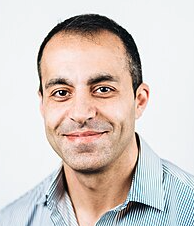 Ali Ghodsi合作论文数Databricks;Computer Science Division, Department of Electrical Engineering & Computer Science, University of California, Berkeley3
 Ahmed Ali-Eldin合作论文数Umeå University3Luc Onana Alima合作论文数3LO Alima合作论文数2
 Riccardo Reale合作论文数Peerialism Inc2
 E. Aurell合作论文数Department of Computational Biology at KTH2Mikael Högqvist合作论文数Zuse Institute Berlin2S Haridi合作论文数1
 Mahmoud Ismail合作论文数1
 Peter Van Roy合作论文数Catholic University of Louvain Department of Computing Science and Engineering1Donatien Grolaux合作论文数Université catholique de Louvain School of Management (IAG) Place des Doyens, 1 B-1348 Louvain-la-Neuve Belgium1Mahmoud Rafea合作论文数Head of the Knowledge Engineering and Expert System Building Tools Department, Swedish Institute of Computer Science (SICS)1




