Despite growing enrollments in computing-related programs, retention, particularly of students from minoritized groups, remains a challenge. Recent research has demonstrated that a stronger sense of disciplinary identity may contribute to increased persistence in STEM fields. The goal of this work is to identify factors that lead to identity development among computer science students. In Fall 2019, we began a scholarship program to support low-income, academically talented students. Scholars receive financial support and participate in programming designed to cultivate computing identity. In the first year, scholars participate in an early arrival program, a two-credit introduction to the field, cohort enrollment, and one-on-one faculty mentoring. We explore a baseline measure of computing identity using two existing instruments: (1) a subset of questions from the Conceptual Understanding & Physics Identity Development (CUPID) survey to assess students' perceived recognition, interest and performance/competence; and (2) an adapted version of the STEM Professional Identity Overlap (STEM-PIO) which uses a pictorial representation to assess perceived recognition, performance, competence, typicality, and centrality. Participants included three groups of students: second-year scholars who have participated in one year of programming (n=3); first-year scholars (2020/2021) (n=3); and a comparison group of students taking first-semester computer science classes (n=20). We find that, for the CUPID survey items, second-year students rated themselves higher for recognition, interest and performance/competence items. This suggests that students who have spent a year in our program have developed a greater sense of computing identity. For the STEM-PIO survey, however, we find that the second-year students selected lower ratings than the first-year students for all five items, and had lower ratings than the comparison students for perceived typicality, competence, and performance items. This result is unexpected. We observe that while STEM-PIO asks students to compare the extent to which they overlap with a CS professional, CUPID focuses more on how students perceive their own interest and ability. During the first year of our program, scholars participate in a class that introduces them to CS professionals through talks, panels, and field trips. We hypothesize that greater exposure to CS professionals led the second-year scholars to select lower ratings for the STEM-PIO questions. Our second finding indicates that males (n=12) consistently reported the highest ratings for the CUPID survey and four of five questions on the STEM-PIO survey, however ratings reported by females (n=13) were not significantly lower. Students who identified as Other (n=2) selected lower ratings on all items across both instruments, suggesting an area of improvement for our program. Finally, the CUPID questions with the lowest overall ratings were the following: (1) My instructors/teachers see me as a computer savvy person, and (2) Others ask me for help with software (applications/programs). This suggests additional areas where our program could improve. We will continue to administer both instruments annually to better understand how, when, and why our students develop computing identity. By better understanding identity development we can work to improve persistence in computing programs.
Disciplinary identity may play a significant role in determining one's persistence in a field.This study documents undergraduate computer science major students' evolving computer science (CS) identity as they participate in the CES|CS program.Drawing on data from two identity measures (CUPID and STEM-PIO) and student interviews, we present a case study of two students' evolving CS identities over two years.
This Research to Practice Full Paper presents the experiences and lessons learned from five programs that provide financial awards and a holistic student support structure to low-income, academically talented students in Science, Technology, Engineering, and Mathematics (STEM). This report synthesizes the experiences of a diverse set of institutions, both public and private, that vary in size and geographic location. We have experience supporting students from a range of disciplines with an emphasis on students studying Computer Science. The goals of this work are to (1) outline the decisions that must be considered when designing a financial award program; (2) describe the interventions we have implemented and underline the institutional contexts that have led to their success; (3) describe the unique challenges posed by the COVID pandemic; and (4) highlight key elements necessary for successful program implementation. We specifically discuss the challenges we have encountered when implementing existing best practices. We report observations and results, some of which buttress those reported in the literature. Our work is intended to serve as a guide for educators who wish to implement programs to support students from financially disadvantaged and/or historically marginalized groups. By sharing our experiences and pain points, we hope to make it easier for them to design and implement effective programs adapted to their institutional needs and contexts.
This Birds-of-a-Feather session is for anyone interested in the NSF Scholarships in STEM (S-STEM) program, including current and former Principal Investigators (PIs) and those planning to apply. The S-STEM program funds scholarships and activities to support low-income, academically talented students in STEM. Any institution of higher education may apply, and the program supports a variety of projects. Designing and implementing a successful S-STEM project is challenging. The goal of this session is to catalyze a community of practice for S-STEM PIs. It will provide an opportunity to discuss lessons learned and best practices for proposal writing, project implementation, and providing student support. Specific topics to be discussed include the following: (1) Understanding the solicitation requirements and common proposal mistakes; (2) Scholar recruitment and data-driven approaches for selection; (3) Cohort building including activities for students from different majors or class years and integration of new students into existing cohorts; and (4) Remediation strategies including proactive interventions and peer support. Session leaders will introduce each topic; participants will then join a breakout group discussion of one topic. Lastly, participants will be invited to join a Slack workspace dedicated to S-STEM best practices and lessons.
As Computer Science departments see increasing enrollments, first generation college students and students from low-income backgrounds often suffer due to larger class sizes, scarcity of resources (such as fewer opportunities and longer waits to meet one-on-one with the professor or teaching assistant), and lack of community. Computer science as a field continues to struggle with recruiting and retaining diverse students. This leads to students struggling to find a community of like-minded students with whom they can study, take classes, attend departmental events, and so on. In our project, funded by the NSF S-STEM program, we are investigating the benefits of sustained support structures to help academically talented students from low-income backgrounds. As part of this program, before their first year at our university, we conducted a one-week Early Arrival program (Head Start) to introduce students to educational resources on campus as well as to introduce them to preliminary computer science concepts. The Head Start program also includes social activities with faculty, current students, student leaders from our department's student organizations, and tutors from the peer tutoring center in our department. The program was open to other incoming local freshmen as well. This helped students in our program make connections with other incoming students. Based on the survey conducted at the end of the Head Start program, the sessions the students found most useful were an introduction to the major requirements and a discussion of potential career paths for CS majors. The students also were extremely satisfied with the organized social events with student leaders from Women in Tech and the Diversity in Computing student groups in our department. The Faculty Scavenger Hunt, which was designed to allow students to get to know the faculty members in the department in a fun and engaging manner, was also rated highly by students. Students were not as satisfied with workshops focused on general study skills and time management. In the future we plan to rework these sessions to include a more clear connection to the CS major One of the key goals of the Head Start program is to build student confidence and a support structure that will encourage students to leverage available resources during their remaining years of study. All but one student indicated that they felt the Head Start program left them very prepared or extremely prepared to take advantage of the resources available in the college. Student comments suggest that overall, the program was successful: “Getting to know the community was amazing, and the information was valuable to receive.” “I thought it was a thoughtful, helpful program that made me better overall as a CS student.” We are encouraged by these survey results and student comments. We will build on this head start experience as an important part of the larger project to prepare low-income, academically talented students for the technology workforce by offering a comprehensive suite of structured opportunities to learn from and contribute back to the departmental, technical, and broader local community.
Energy recommender systems attempt to help users attain energy saving goals at home, however previous systems fall short of tailoring these recommendations to users’ devices and behaviors. In this paper we explore the foundations of a user-centered home energy recommendation system. We first conduct a study on a set of recommendations published by utility companies and government agencies to determine the types of recommendations may be popular among typical users. We then design micro-models to estimate energy savings for popular recommendations and conduct a followup study to see if users are likely to carry out these recommendations to achieve estimated savings. We found that users prefer low-cost but potentially tedious recommendations to those that are expensive, however users are unwilling to adopt recommendations that will require long-term lifestyle changes. We also determine that a subset of popular recommendations can lead to substantial energy savings.
Behavioral recommendations for achieving energy savings in the home are extremely common, however how to effectively influence users to adopt such recommendations is not well understood. In this work, we present the results of a feasibility study, conducted over a 4-week period, that deployed a phone-based recommendation system designed to encourage participants to follow the popular utility-company recommendation: Consider dimmer switches to adjust the light to the lowest level necessary for an activity. We found that the system did influence participants to follow the recommendation and some even realized that they preferred dimmer lighting, suggesting that recommendation systems can serve to demonstrate to participants that they can maintain comfort even with lower energy consumption levels.
Networking Networking Women (N2Women) celebrated its 10-year anniversary at the fifth N2Women Workshop co-located with MobiCom 2016. Founded in 2006 by Tracy Camp and Wendi Heinzelman, N2Women is a discipline-specific community for researchers in the communications and networking field. The main goal of N2Women is to foster connections among the underrepresented women in computer networking and related research fields. N2Women allows women to connect with other women who share the same research interests, who attend the same conferences, who face the same career hurdles, and who share common career objectives.
Motivated by both cost savings and environmental concerns, managing energy in the home has become increasingly important. Though both user-driven and automated solutions have shown promise, a deeper understanding of the characteristics of energy usage behavior is necessary to inform the design of such systems. In this work, we present the results of a study that explores the insights and characteristics participants are able to derive using two well-known visualization techniques for time series data. We find that participants are able to extract a variety of relevant features and explain general and anomalous patterns of behavior. We also find that the preferred visualization is both user- and task-dependent. These findings may be used as the basis for new systems for home energy management.
Home energy management systems have become more widely available due to the continued emphasis on environmental consciousness, the increased implementations of smart grids/smart meters, and the desire to have more control over one's home. A key challenge in designing effective home energy management systems is understanding the underlying causes that impact home energy consumption. To address this challenge, in this paper, we present results from an interview-based study of 22 households in Baltimore City, Maryland, across a wide range of income groups, occupant types (age, number of home occupants, and occupation), and house types (rentals and user-owned). Using a semi-structured interviewing process, we present several insights regarding home energy consumption that impact the usage and effectiveness of current and future systems. As an example, we find that non-human occupants, such as pets, significantly influence home energy consumption. Additionally, household dynamics and hierarchy, as well as routine behavior and individual habits, produce significant decision making challenges for an energy management system. Finally, problems with home insulation and appliance age are seen as fiscally insurmountable, suggesting that newer, cheaper, and readily available retrofit solutions would be beneficial.
The key to designing better home energy management systems is in-depth understanding of the context underlying energy usage. The common method of inferring the underlying context is data collection through extensive sensor deployments and then deriving contextual ties between factors like occupancy and energy consumption. There is, therefore, a lack of studies that use first principle approaches like interviewing households to understand the major factors that influence energy consumption. In this work-in-progress paper, we present preliminary results from an interview-based study on households in low-income neighborhoods in Baltimore City. We show that there are several factors like house insulation, use of old appliances, and specific activities that influence energy consumption. Moreover, we have found that households in these neighborhoods are willing to volunteer their homes as testbeds for collecting contextual data and are primarily incentivized by reduction in their electricity bill.
Managing energy in the home is key to creating a sustainable future for our society. More tools are increasingly available to measure home energy usage, however these tools provide little insight into questions such as why an appliance consumes more energy than normal or what kinds of behavioral changes might be most likely to reduce energy usage in the home. To answer these questions, a deeper understanding of the causal factors that influence energy usage is necessary. In this work, we conduct a broad study of factors that influence energy consumption of individual devices in the home. Our first contribution is collection of a context-rich data set from six homes across the United States. The second contribution of this work is a set of insights into key factors influencing energy usage derived by the novel application of a rule mining algorithm to identify significant associations between energy usage and four key features: hour of the day, day of the week, use of other appliances in the home, and user-supplied annotations of activities such as working or cooking. Our analysis confirms our hypothesis that, though most devices show a regular pattern of daily or weekly use, this is not true for all devices. Associations that relate use of two different devices in the same home are often stronger, and are observed for nearly 25% of device uses. Overall, we observe that the associations derived from the first five weeks of data in our data set are sufficient to explain nearly 70% of the device uses in the subsequent five weeks of data, and over 90% of the associations identified during the first five weeks recur in the latter portion of the data set. The associations identified by our approach may be used to to aid in end-user applications that heighten awareness and encourage energy savings, improve energy disaggregation algorithms, or even detect anomalous uses that may signal problems in aging-in-place homes.
Predictability of home energy usage forms the basis of many home energy management and demand-response systems. While existing studies focus on designing more accurate prediction algorithms, a comprehensive energy management solution requires a broad understanding of prediction accuracy at different granularities, for example appliance and home, as well as different time horizons, for example an hour, day, or week into the future. In this paper, we undertake an analysis of predictability of power draw of appliances and whole-home energy consumption at four different time horizons: an hour, a quarter-day, a day, and a week in the future. Our analysis presents two research contributions. Our first contribution is a diverse dataset, GreenHomes, that includes appliance power draw and whole-home energy consumption data from seven homes across three states in the United States over a two-year period. Our second and primary contribution is a set of insights into the predictability of home energy usage. We show that simple statistic-based algorithms perform as well as sophisticated machine learning algorithms and time-series based predictors. These simple algorithms can considerably reduce the computational need for large-scale predictive analysis of home energy data. We also show that appliance-level power draw is more predictable than whole-home energy consumption at shorter time horizons while home-level energy consumption is more predictable at longer time horizons. Finally, we show that there is large variation in predictability across homes. This variation may be attributed to home type and points to the need for personalized energy management systems.
Home energy management is becoming increasingly important and, though there are a plethora of tools for accessing energy consumption data, few provide concrete insights that can directly help users manage demand. Mechanisms that enable a user to draw connections between activities and energy consumption by attaching contextual labels to energy events are a promising step; however solutions for collecting annotations from users can be error prone or intrusive. This work presents a system for collecting in situ annotations using a smartphone application coupled with an off-the-shelf home energy measurement infrastructure. We use a novel power profiling approach to identify important energy consumption events and solicit contextual annotations from the user via a push notification sent to a smartphone. Using a five-week study performed in five homes, we show that our power profiling approach can identify a significant percentage of important energy consumption events using a very small number of monitored devices. We were able to collect an average of over 2 annotations per day and while users provided a wide range of annotations, the motivation to provide annotations varied across subjects.
This work presents a system for collecting user activity annotations using in-home distributed energy monitoring combined with a novel algorithm that generates device-specic proles used to identify potentially important changes in user context. In a ve-week study of ve homes, the system was able to generate proles for 80% of the devices studied. Moreover, between four and ve important changes in user context were identied when background loads were accurately distinguished.
Quadriplegia and paraplegia are disabilities that result from injuries to the spinal cord and neuromuscular disorders such as cerebral palsy. Patients suffering from quadriplegia have varied levels of impaired motor movements, hence, performing quotidian tasks like controlling home appliances is challenging for quadriplegics. The use of hand and eye gestures to perform these tasks is a plausible remedy, but available solutions often assume considerable limb movement, are not fit for long-term use, and may not be applicable to quadriplegics with varied range of motor impairments. To address this problem, we present the design, implementation, and evaluation of a multi-sensor gesture recognition system that uses comfortable and low power wearable sensors. We have designed an EOG-based headband using textile electrodes and a glove that uses flex sensors and an accelerometer to detect eye and hand gestures. The gestures are used to control appliances remotely in a home setting and we show that they have good accuracy, latency, and energy consumption characteristics.
For students to be successful in upper-division courses and as junior developers, they must master concepts such as code design and concurrency. However, traditional grading and partial credit often allows students to pass courses without demonstrating appropriate mastery. This paper reports on our experience applying mastery learning and expert code review to our software development course. We compare two consecutive semesters of this course---one using a traditional approach and the other using mastery learning and expert code review. We discuss our experience setting student expectations, the differences in grades and code quality between the semesters, and provide recommendations on how to improve and adapt this approach for other courses.
This work presents a system for collecting user activity annotations using in-home distributed energy monitoring combined with a novel algorithm that generates device-specific profiles used to identify potentially important changes in user context. In a five-week study of five homes, the system was able to generate profiles for 80% of the devices studied. Moreover, between four and five important changes in user context were identified when background loads were accurately distinguished.
The expanding deployment of renewable energy sources as well as the widespread deployment of smart meters enables and encourages demand management in homes. Like smart meters, most solar or other renewable deployments allow homeowners to carefully monitor energy supply and past energy consumption, however, using this information to drive demand management is still a manual process. The overarching goal of our work is to automate the process of adapting energy demand to meet supply, which requires a comprehensive understanding of home energy use. Though home energy measurement systems exist, they are often intrusive---requiring several physical components and using often limited resources including energy and bandwidth. In this work, we present the design of a system for comprehensive home energy measurement and analyze the resource requirements of the basic system. Using data collected from six deployments, including one in an off-grid home, we then present two techniques for reducing the resource requirements of the system. Our techniques reduce the energy footprint of the system as well as the amount of physical infrastructure required, making adoption of the system more attractive, particularly to those who live in homes powered by renewable energy sources.
 Nilanjan Banerjee合作论文数University of Maryland Baltimore County19
 Kevin C. Almeroth合作论文数Department of Computer Science, University of California, Santa Barbara13
 Alark Joshi合作论文数Yale University8
 David Lachut合作论文数7
 Mark D. Corner合作论文数University of Massachusetts Amherst5Lazeeb Choudhury合作论文数5
 Kiran Nagaraja合作论文数NEC Labs America Inc,the Panic Lab researching high availability design for cluster-based network services5
 Neel Sundaresan合作论文数Microsoft4
 Sophie Engle合作论文数University of San Francisco, San Francisco, CA4
 Bruce Bimber合作论文数Department of Political Science, University of California, Santa Barbara4Matthew V. Law合作论文数Informat Sci, Cornell Univ3
 Vana Kalogeraki合作论文数Department of Informatics, Athens University of Economics and Business3
 Dejan Milojicic合作论文数Hewlett Packard Labs, Hewlett Packard Enterprise3
 Matthew Malensek合作论文数Colorado State University3
 Xornam S. Apedoe合作论文数Learning Research & Development Center, University of Pittsburgh3
 Jacob Sorber合作论文数Clemson University3
 Jim Pruyne合作论文数University of Wisconsin -- Madison3R. Lukose合作论文数2Paul Kmiec合作论文数2Sean P. Brydon合作论文数2Mayank Thirani合作论文数2jonathan humfrey合作论文数2
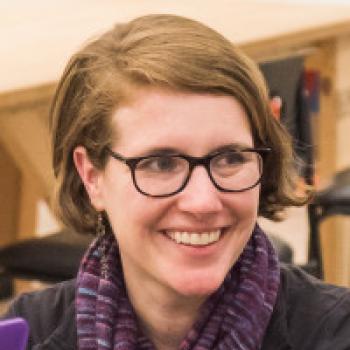 Amy Hurst合作论文数Department of Occupational Therapy, Steinhardt School of Culture, Education, and Human Development, New York University2
 Tracy Key Camp合作论文数Department of Computer Science, Colorado School of Mines2
 Stan Kurkovsky合作论文数Central Connecticut State University2
 Kevin Moran合作论文数SAGE Lab, Department of Computer Science, College of Engineering and Computer Science, University of Central Florida2
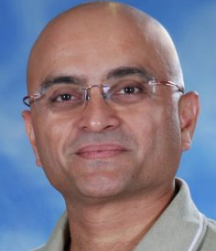 Amruth N. Kumar合作论文数Ramapo College of New Jersey2Zhongnan Shen合作论文数2
 Deepak Ganesan合作论文数Department of Computer Science, Manning College of Information & Computer Sciences, University of Massachusetts Amherst;Center for Personalized Health Monitoring, Institute for Applied Life Sciences, University of Massachusetts Amherst2
 Peter R. Cappello合作论文数Univ. of California2
 Germaine Irwin合作论文数Information Systems, UMBC2hovey raymond strong合作论文数1MO Neary合作论文数1Victoria Hong合作论文数1Marcus Chong合作论文数1N Banerjee合作论文数1
 Stephanie E. August合作论文数1
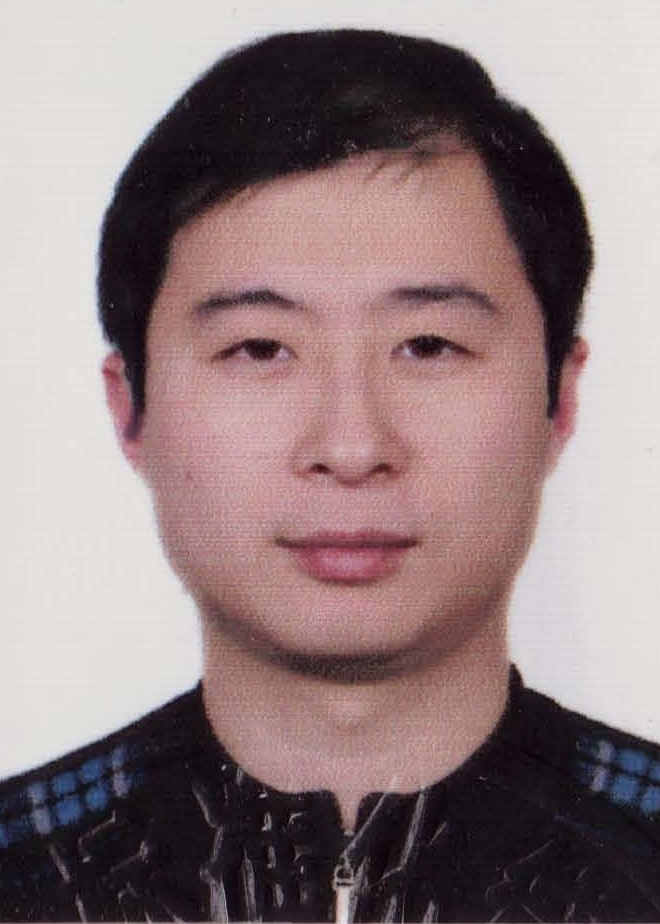 Xu Zhou (周旭)合作论文数中国科学院计算机网络信息中心1
 Ahmad Rahmati合作论文数Rice University1
 Alexander Nelson合作论文数1
 Lin Zhong (钟林)合作论文数Department of Computer Science, Yale University1
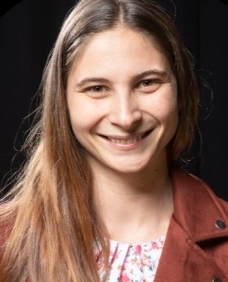 Maria A. Kazandjieva合作论文数Graft1Denitsa Tilkidjieva合作论文数1Michael O. Neary合作论文数1
 Vinay Varadan合作论文数Columbia University1
 Katia Jaffres-Runser合作论文数INSA-Lyon, Université de Lyon1Simon Piel合作论文数1
 Mark A. Pauley合作论文数1
 Bruno Richard合作论文数Laboratoire d'Informatique de l'Universite du Maine1




