Currently affecting around 1 in 68 children, autism spectrum disorder (ASD) is a psychological disorder that is mostly diagnosed by the age of five or later. However, the catch lies in the fact that increased delay in the diagnosis leads to increase in complexities and cost of the treatment. ASD inhibits the patient from interacting with the society. Reduced social interaction and aberrant behavior are the cardinal symptoms of ASD and are usually detected in children by the age of two, when they are still in their developing phase. Thus, ASD is included in the list of developmental disorders which comprises attachment disorder, attention deficit/hyperactivity disorder, etc. Referred to as autism spectrum disorder, this umbrella term includes various types such as autistic disorder, Asperger’s syndrome, and pervasive developmental disorder. These three categories are based on the severity of autism spectrum. Autistic disorder, commonly referred to as autism, itself affects around 2 million people in India. Apart from this, while staggering statistic shows that ASD affects at least 70 million of the individuals worldwide, its diagnosis still remains an abstruse task. To ameliorate this detection process, the paper aims at finding the best machine learning algorithm for classification of the dataset into whether the person is suffering from autism or not. Besides, if the person does not show symptoms of autism, then the target is to detect whether the patient is vulnerable to any other types of ASD as discussed before. The intention of the proposed methodology is not to replace the presence of medical personnel in the process of diagnosis, but only to provide assistance and corroborate with the opinion of the concerned doctor.
Page 1. 2019 Twelfth International Conference on Contemporary Computing (IC3) August 8 – 10, 2019 Author Index Agarwal, Palak 55 Chahal, Ekam Singh 145 Agarwal, Paridhi 201 Chana, Inderveer 127 Agarwal, Parul 101 Chandra, Satish 55, 145 Agarwal, Shubham 186 Chaudhary, Anurag Singh 260 Agarwal, Sonali 66 Chaudhary, Gopal 62 Agarwal, Tejasv 301 Chauhan, Ankit Singh 83 Agarwal, Vandana 206 Chawla, Indu 83 Aggarwal, Apoorva 191 Chen, Ke 1 Aggarwal, Mayur 217 Dabhane, Shardul 151 Aggrawal, Niyati 217 Dawn, Suma 36, 42 Agrawal, Himanshu 244 De, Paramita 255 Agrawal, Saurabh 313 Dhiman, Vipasha 238 Ahuja, Bhawna 290 Dixit, Akshay Kumar 83 Akhtar, Nadeem 174 Dixit, Asmita 134 Amarpuri, Lakshay 313 Fulzele, Prasenjeet 295 Anand, Sanket 180 Gandhi, Charu 7 Ankita 112 Gangal, Saurabh 112 Arora, Anuja 89, 106 Garg, Mukund 250 …
In recent times, graphical user interface (GUI) has become the de facto standard for interfacing with software. Designing software for specific target audience has become easier as GUIs have evolved over the years, in order to better satisfy the basic goals of interface design. But there is no one-size-fits-all solution to user interface design for a broader target audience consisting of both the technically proficient and the layman. This implies the need for interfaces that adapt based on users' needs and environment. In this paper we propose and provide an implementation of a multi-user application launcher for Android devices, which adapts based on current user and location to provide contextual application list and suggestions. In this proposed system, different users can create multiple profiles and configure their own application list, which can be switched either manually or automatically based on user's location as each profile is associated with a geofence.
In recent years, biometrics using facial recognition has become an important part of many industries like security, retail, marketing, health-care, etc. Internet of Things has played a pivotal role in enhancing and automating technology for practical applications. However, there exist some issues with implementing these systems practically. In this paper, an attendance management system is proposed which can detect and recognize faces of an entire class from a few pictures and mark the attendance of the recognized students. IoT cameras have been used instead of a smartphone camera to increase coverage and reduce the number of missed attendances. In addition to reducing manual work, it has also been ensured that this system is completely secure. The system proposed mainly comprises of IoT Camera Module, custom back-end server and separate Android apps for teachers and students. The system is also able to provide high accuracy at low cost as compared to other other similar applications and hence is suitable for real-life use.
 Raj Gite合作论文数2Sai Yerramreddy合作论文数2
 Anurag Chaudhary合作论文数1
 Varsha Garg合作论文数1Shreya Garg合作论文数1Palak Agarwal合作论文数1
 Parul Agarwal合作论文数1Aman Bajpayee合作论文数1Shivansh Goel合作论文数1Hardik Bhardwaj合作论文数1Priyank Gour合作论文数1Mukund Garg合作论文数1Vipasha Dhiman合作论文数1Mayur Aggarwal合作论文数1Bhavika Bhutani合作论文数1Novesh Garg合作论文数1Prasenjeet Fulzele合作论文数1Satish Chandra合作论文数1Ayush Gupta合作论文数1Rajat Bishnoi合作论文数1Shivam Bang合作论文数1Tejasv Agarwal合作论文数1Shardul Dabhane合作论文数1
 Isha Gupta合作论文数Department of Chemistry, Maharshi Dayanand University1Ekam Singh Chahal合作论文数Department of Computer Science and Engineering/ Information Technology, Jaypee Institute of Information Technology1
 Royston D'Mello合作论文数Department of Computer Engineering, Sardar Patel Institute of Technology1
 Asmita Dixit合作论文数Dept CS & IT, Jaypee Inst Informat Technol1Yash Kokate合作论文数Department of Computer Engineering, Sardar Patel Institute of Technology1Ananya D. Ojha合作论文数Sardar Patel Institute of Technology1
 Yajurv Bhatia合作论文数Biometrics Technology Lab, University of Calgary1
 Niyati Aggrawal合作论文数Jaypee Inst Informat & Technol1Priti Bhardwaj合作论文数C-DAC, Indira Gandhi Delhi Technical University for Women1Rishabh Gulati合作论文数1
 Dhananjay R. Kalbande合作论文数Department of Computer Engineering, Sardar Patel Institute of Technology, Mumbai, India1
 Himanshu Agrawal合作论文数Department of Computer Science & Engineering and Information Technology, Jaypee Institute of Information Technology1Anurag Goel合作论文数1Gopal Chaudhary合作论文数1
 Anjali Goyal合作论文数Jaypee Inst Informat Technol, Noida, India1
 Vandana Agarwal合作论文数Dept. of Comput. Sci. & Inf. Syst., Birla Inst. of Technol. & Sci.;c;Dept. of Comput. Sci. & Inf. Syst., Birla Inst. of Technol. & Sci.1Gharpure, P.合作论文数1
 Niyati Baliyan合作论文数1
 Indu Chawla合作论文数1
 Tania Banerjee-Mishra合作论文数Department of Computer Information Science and Engineering, University of Florida1
 Arora, Parul合作论文数Netaji Subhas Inst. of Technology;c;Netaji Subhas Inst. of Technology1
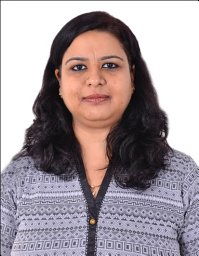 Charu Gandhi合作论文数1
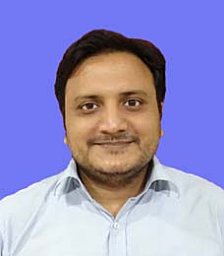 Agrawal Saurabh合作论文数Department of Medicine, Indiana University School of Medicine1Sanjay Goel合作论文数the Information Technology Management Department (School of Business) at the University at Albany1
 Sonali Agarwal合作论文数Indian Institute of Information Technology, Allahabad1
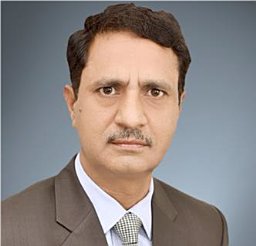 Naeem Akhtar合作论文数Department of Plant;Breeding and Genetics;University of Agriculture;Department of Plant|Breeding and Genetics, University of Agriculture1




