Meta-analysis aims to generalize results from multiple related statistical analyses through a combined analysis. While the natural outcome of a Bayesian study is a posterior distribution, traditional Bayesian meta-analyses proceed by combining summary statistics (i.e., point-valued estimates) computed from data. In this paper, we develop a framework for combining posterior distributions from multiple related Bayesian studies into a meta-analysis. Importantly, the method is capable of reusing pre-computed posteriors from computationally costly analyses, without needing the implementation details from each study. Besides providing a consensus across studies, the method enables updating the local posteriors post-hoc and therefore refining them by sharing statistical strength between the studies, without rerunning the original analyses. We illustrate the wide applicability of the framework by combining results from likelihood-free Bayesian analyses, which would be difficult to carry out using standard methodology.
Transformer-based models for amortized probabilistic inference, such as neural processes, prior-fitted networks, and tabular foundation models, excel at single-pass *marginal* prediction. However, many real-world applications require coherent *joint distributions* that capture dependencies between predictions. While purely autoregressive architectures efficiently generate such distributions, they sacrifice the flexible set-conditioning that makes these models powerful for meta-learning. Conversely, the standard approach to obtain joint distributions from set-based models requires expensive re-encoding of an updated context set at each autoregressive step. We introduce a *causal autoregressive buffer* that preserves the advantages of both paradigms. Our approach decouples context encoding from updating the conditioning set. The model processes the context once and caches it, while a dynamic buffer captures target dependencies: as targets are incorporated, they enter the buffer and attend to both the cached context and previously buffered targets. This enables efficient batched autoregressive generation and one-pass joint predictive density evaluation. Training seamlessly integrates set-based and autoregressive modes at minimal additional cost. Across synthetic functions, EEG signals, cognitive models, and tabular data, our method matches the predictive accuracy of strong baselines while delivering up to $20\times$ faster joint sampling.
This paper develops a theory of graph classification under domain shift through a random-graph generative lens, where we consider intra-class graphs sharing the same random graph model (RGM) and the domain shift induced by changes in RGM components. While classic domain adaptation (DA) theories have well-underpinned existing techniques to handle graph distribution shift, the information of graph samples, which are itself structured objects, is less explored. The non-Euclidean nature of graphs and specialized architectures for graph learning further complicate a fine-grained analysis of graph distribution shifts. In this paper, we propose a theory that assumes RGM as the data generative process, exploiting its connection to hypothesis complexity in function space perspective for such fine-grained analysis. Building on a vector-valued reproducing kernel Hilbert space (vRKHS) formulation, we derive a generalization bound whose shift penalty admits a factorization into (i) a domain discrepancy term, (ii) a spectral-geometry term summarized by the accessible truncated spectrum, and (iii) an amplitude term that aggregates convergence and construction-stability effects. We empirically verify the insights on these terms in both real data and simulations.
Despite the explosive growth of AI and the technologies built upon it, predicting and inferring the sub-optimal behavior of users or human collaborators remains a critical challenge. In many cases, such behaviors are not a result of irrationality, but rather a rational decision made given inherent cognitive bounds and biased beliefs about the world. In this paper, we formally introduce a class of computational-rational (CR) user models for cognitively-bounded agents acting optimally under biased beliefs. The key novelty lies in explicitly modeling how a bounded memory process leads to a dynamically inconsistent and biased belief state and, consequently, sub-optimal sequential decision-making. We address the challenge of identifying the latent user-specific bound and inferring biased belief states from passive observations on the fly. We argue that for our formalized CR model family with an explicit and parameterized cognitive process, this challenge is tractable. To support our claim, we propose an efficient online inference method based on nested particle filtering that simultaneously tracks the user's latent belief state and estimates the unknown cognitive bound from a stream of observed actions. We validate our approach in a representative navigation task using memory decay as an example of a cognitive bound. With simulations, we show that (1) our CR model generates intuitively plausible behaviors corresponding to different levels of memory capacity, and (2) our inference method accurately and efficiently recovers the ground-truth cognitive bounds from limited observations (less than 100 steps). We further demonstrate how this approach provides a principled foundation for developing adaptive AI assistants, enabling adaptive assistance that accounts for the user's memory limitations.
With the widespread availability of pre-trained diffusion models, there are many options for which models to use and how to use them together. Making these decisions depends highly on both the user's goals and the expertise of each model. Taking this into account, we propose coordinating models as one would a specialized workforce--through a fair yet efficient division of labor. Divide-and-Denoise uses multiple pre-trained diffusion models, each defined over the same space, to refine a noisy sample over time. At every timestep, we alternate between (i) dividing the sample into regions in a way that satisfies our game-theoretic criteria and (ii) denoising a region with the assigned model in a way that respects our alignment criteria. This leads to a new composite denoising process that evolves together with a division process. Since ground truth for how models should interact is typically not available in our setup, we measure how well Divide-and-Denoise coordinates a team of single-concept text-to-image diffusion models relative to a multi-concept model. Across several image quality metrics including the GenEval benchmark, our method generates images that capture the strengths of each model, outperforming baselines and resolving common failures like missing objects and mismatched attributes.
Bayesian posterior predictive densities as non-conformity scores and Bayesian quadrature are used to estimate and minimise the expected prediction set size. Operating within a split conformal framework, BCP provides valid coverage guarantees and demonstrates reliable empirical coverage under model misspecification. Across regression and classification tasks, including distribution-shifted settings such as ImageNet-A, BCP yields prediction sets of comparable size to split conformal prediction, while exhibiting substantially lower run-to-run variability in set size. In sparse regression with nominal coverage of 80 percent, BCP achieves 81 percent empirical coverage under a misspecified prior, whereas Bayesian credible intervals under-cover at 49 percent.
Flow-based models have established state-of-the-art performance in generative modeling across domains, but are hard to interpret due to their complex latent embeddings. In particular, the entanglement of generative factors in the latent space hinders controlled generation. We circumvent this issue by appealing to a novel conditional generator based on Lie groups that disentangles an alternative latent space, which is aligned closely with the latent flow space using an adversarial loss. Our approach facilitates interpretable conditional generation while obviating the need to expand the dimensionality of the flow space (owing to its invertibility requirements). The proposed model demonstrates strong performance across conditional image (including, outperforming StyleGAN on MNIST, dSprites) and molecule (using standard QM9, ZINC and MOSES) generation tasks
Individual brains are unique in structure and function. Functional differences are captured by neural fingerprints, which reflect individual differences in behavior and cognition as well as group-level changes related to neurodegenerative diseases. Most research efforts so far have focused on fingerprints comprising full functional connectomes. However, the high dimensionality of the connectomes can increase computational load and impede performance of machine learning methods in potential applications. A low-dimensional alternative that retains individual features of the full connectomes would thus be beneficial. The present study employed latent-noise Bayesian Reduced Rank Regression (lnBRRR) to learn low-dimensional latent spaces that capture individual features in functional connectivity and power spectral density data derived from MEG recordings. LnBRRR performance was assessed with low training set sizes (N = 20-44), and against principal component analysis and linear discriminant analysis. Model performance was also assessed with task data, and the solutions were compared across task conditions with cosine similarity to establish whether individual features are altered by different cognitive processes. LnBRRR captured generalizable individual patterns already at N = 20 but N = 30-35 was needed to reach optimal test accuracies and to prevent potential overfitting. The model also achieved comparable performance to the alternative models. Latent fingerprints derived from task data attained comparable performance to resting-state latent fingerprints, and lnBRRR solutions were shown to generalize across conditions. Additionally, the model solutions for power spectral density data were discovered to be notably similar, yet differently rotated, over task conditions, suggesting that similar patterns of individual features were captured by the model regardless of the task condition. Altogether, the present results highlight lnBRRR as a potential tool for neuroimaging data analysis and demonstrate that individual differences in power spectral density are largely intrinsic and unaffected by varying cognitive processes.
AI assistants often collaborate by proposing candidate edits, plans, or designs that users evaluate before adoption. Existing assistance methods focus on proposal quality or user-goal inference, often assuming that the user can reliably evaluate any proposal, which can fail in practice because of bounded rationality. We study evaluability-aware proposal planning, where proposals serve both as task interventions and as probes for learning latent preferences and evaluation constraints, where the resulting belief updates then guide later proposals. We formalise this setting as ProSE, a hidden-parameter sequential assistance problem, and instantiate it with a KL-regularised bounded-rational binary response model in which acceptance trades off value gain against a distance-dependent evaluability penalty. Analysing the planning consequence of this likelihood reveals that likely accepted proposals and informative probes need not coincide, which explains why planners that only pursue acceptance systematically underperform. We operationalise ProSE with ProSE-Plan, a depth-2 Bayes-adaptive planner that scores proposals by possible responses and response-induced posterior beliefs. In controlled graph simulations, ProSE-Plan improves over evaluability-unaware and myopic baselines when evaluation cost is the bottleneck, and a probe-commit ablation confirms that our approach selects informative proposals that simpler methods miss. Our results thus identify user evaluability as a planning-relevant dimension of AI assistance, complementary to generation quality and preference inference.
Bayesian conformal optimisation methods often use the same held-out data both to search for efficient prediction sets and to certify coverage or risk. This coupling is natural for high-probability risk-control guarantees, but it is not necessary when the target is standard finite-sample marginal conformal coverage. We propose Decoupled Conformal Optimisation (DCO), a train-tune-calibrate design principle that uses an independent tuning split for efficiency-oriented structural selection and a fresh calibration split for the final conformal quantile. Conditional on the tuned structure, standard split-conformal exchangeability yields finite-sample marginal coverage for any candidate class, without a confidence parameter or multiple-testing correction. DCO therefore targets a different finite-sample guarantee from PAC-style methods: marginal conformal coverage rather than high-probability risk control. Under consistency assumptions on the coupled risk bound, the two approaches nevertheless converge to the same population threshold. Across classification and regression benchmarks, including ImageNet-A, CIFAR-100, Diabetes, California Housing, and Concrete, DCO tracks the nominal coverage level closely while often reducing average prediction-set size or interval width relative to PAC-style calibration. On ImageNet-A, for example, the average set size decreases from 26.52 to 25.26 and the 95th-percentile set size from 58.95 to 53.73; on Diabetes, the average interval width decreases from 2.098 to 1.914.
Natural gradients have long been studied in deep reinforcement learning due to their fast convergence properties and covariant weight updates. However, computing natural gradients requires inversion of the Fisher Information Matrix (FIM) at each iteration, which is computationally prohibitive in nature. In this paper, we present an efficient and scalable natural policy optimization technique that leverages a rank-1 approximation to full inverse-FIM. We theoretically show that under certain conditions, a rank-1 approximation to inverse-FIM converges faster than policy gradients and, under some conditions, enjoys the same sample complexity as stochastic policy gradient methods. We benchmark our method on a diverse set of environments and show that it achieves superior performance to standard actor-critic and trust-region baselines.
Human-in-the-loop Bayesian optimization (HITL BO) methods utilize human expertise to improve the sample-efficiency of BO. Most HITL BO methods assume that a domain expert can quantify their knowledge, for instance by pinpointing query locations or specifying their prior beliefs about the location of the maximum as a probability distribution. However, since human expertise is often tacit and cannot be explicitly quantified, we consider a setting where domain knowledge of an expert is elicited via pairwise comparisons of designs. We interpret the expert's pairwise judgements as noisy evidence about the values of the observable objective function and develop a principled method for combining the information obtained via direct observations and pairwise queries. Specifically, we derive a cost-aware value-of-information acquisition function that balances direct observations against pairwise queries. The proposed method approaches the convex hull of the trajectories of the individual information sources: when pairwise queries are cheap it substantially improves sample-efficiency over observation-only BO, and when pairwise queries are costly or noisy, it recovers the performance of standard BO by relying on direct observations alone.
Bayesian experimental design (BED) is a principled framework for data-efficient design of sequential experiments. However, existing BED methods are unable to adapt to dynamic constraints inherent in real-world tasks due to budget limitations, varying costs, or physical constraints that restrict how designs evolve over time. In this paper, we introduce a novel approach to BED that enables constrained optimization of experimental designs by combining offline pre-training of an amortized policy and a posterior network with online multi-step lookahead planning using scenario trees. We empirically demonstrate that our method yields substantially more informative design sequences than existing methods across a range of constrained BED tasks, while incurring only a modest additional computational overhead.
Black-box optimization in science and engineering often comes with side information: experts, simulators, pretrained predictors, or heuristics can suggest which candidates look promising. This information can accelerate search, but it can also be biased, input-dependent, or misleading. Feedback-aware BO methods typically handle one task at a time, limiting their ability to generalize over multiple sources of feedback. In-context optimizers address cross-task adaptation, but usually assume that optimization history is the only available signal at test time. We study feedback-informed in-context black-box optimization (FICBO), where a pretrained optimizer conditions on both the observed history and cheap auxiliary feedback for the current candidate set. We introduce a structured feedback prior that models how feedback sources vary in their access, relevance, and distortion relative to the true objective, and use it to pretrain a feedback-aware transformer. At test time, the model estimates source reliability in context by comparing observed objective values with auxiliary signals, improving query selection. On synthetic and real-world tasks, FICBO effectively exploits informative feedback while remaining robust to weak or misleading sources, improving over other baselines. Empirical investigations further illustrate how the model perceives test-time sources, offering insights into its interpretability and decision-making process.
Bayesian optimization (BO) is a widely used framework for optimizing expensive black-box functions, commonly based on Gaussian process (GP) surrogate models. Its effectiveness relies on uncertainty quantification that is both sharp (informative) and well-calibrated along the BO trajectory. In practice, GP kernel hyperparameters are unknown and are refit online from sequentially collected (non-i.i.d.) data, which can yield miscalibrated or overly conservative uncertainty and lies outside the fixed-kernel assumptions of standard BO regret theory. We propose Online Sharp-Calibrated Bayesian Optimization (OSCBO), a BO algorithm that adaptively balances GP sharpness and calibration by casting hyperparameter selection as a constrained online-learning problem. We also show that OSCBO preserves sublinear regret bounds by leveraging the theoretical guarantees of the underlying online learning algorithm. Empirically, OSCBO performs competitively across synthetic and real-world benchmarks, ranking among the strongest methods in final simple regret while maintaining robust cumulative-regret behavior.
Addressing the domain adaptation problem becomes more challenging when distribution shifts across domains stem from latent confounders that affect both covariates and outcomes. Existing proxy-based approaches that address latent shift rely on a strong completeness assumption to uniquely determine (point-identify) a robust predictor. Completeness requires that proxies have sufficient information about variations in latent confounders. For imperfect proxies the mapping from confounders to the space of proxy distributions is non-injective, and multiple latent confounder values can generate the same proxy distribution. This breaks the completeness assumption and observed data are consistent with multiple potential predictors (set-identified). To address this, we introduce latent equivalent classes (LECs). LECs are defined as groups of latent confounders that induce the same conditional proxy distribution. We show that point-identification for the robust predictor remains achievable as long as multiple domains differ sufficiently in how they mix proxy-induced LECs to form the robust predictor. This domain diversity condition is formalized as a cross-domain rank condition on the mixture weights, which is substantially weaker assumption than completeness. We introduce the Proximal Quasi-Bayesian Active learning (PQAL) framework, which actively queries a minimal set of diverse domains that satisfy this rank condition. PQAL can efficiently recover the point-identified predictor, demonstrates robustness to varying degrees of shift and outperforms previous methods on synthetic data and semi-synthetic dSprites dataset.
The abundance of pre-trained diffusion models provides an opportunity for composition. Combining several models, however, runs the risk of one model dominating or models disagreeing with each other. Here, we propose Divide-and-Denoise, a method for coordinating multiple pre-trained diffusion models during sampling. Much like managing a specialized workforce, our method creates a fair but efficient division of labor across models. Central to our method is the notion of an allocation which defines the responsibility of each model to every region of the noisy sample. At every timestep, we then denoise by (i) updating the allocation by solving a fair division game, where we divide the sample into regions that maximize total utility under fairness constraints, and (ii) aligning the models with this allocation, where we guide each model to denoise within its assigned region. This leads to a new composite denoising process that evolves in tandem with a division process. We evaluate Divide-and-Denoise on conditional image generation. Across several quality metrics, including the GenEval benchmark, our method outperforms baselines and resolves common failures including missing objects and mismatched attributes. Experiments show that Divide-and-Denoise utilizes each model's expertise without neglecting any other model.
Gradient regularization (GR) has been shown to improve the generalizability of trained models. While Natural Gradient Descent has been shown to accelerate optimization in the initial phase of training, little attention has been paid to how the training dynamics of second-order optimizers can benefit from GR. In this work, we propose Gradient-Regularized Natural Gradients (GRNG), a family of scalable second-order optimizers that integrate explicit gradient regularization with natural gradient updates. Our framework provides two complementary algorithms: a frequentist variant that avoids explicit inversion of the Fisher Information Matrix (FIM) via structured approximations, and a Bayesian variant based on a Regularized-Kalman formulation that eliminates the need for FIM inversion entirely. We establish convergence guarantees for GRNG, showing that gradient regularization improves stability and enables convergence to global minima. Empirically, we demonstrate that GRNG consistently enhances both optimization speed and generalization compared to first-order methods (SGD, AdamW) and second-order baselines (K-FAC, Sophia), with strong results on vision and language benchmarks. Our findings highlight gradient regularization as a principled and practical tool to unlock the robustness of natural gradient methods for large-scale deep learning.
Learning effective policies for adaptive data acquisition remains challenging: posterior-based methods rely on surrogate models and posterior approximations that can be misspecified or biased, while direct policy-learning methods map from historical observations and fail to exploit available model representations, making learning harder. We introduce policy learning with belief representations (POLAR), based on the insight that optimal data acquisition depends on the observation history only through a sufficient belief state. Specifically, POLAR decouples representation learning from policy learning by leveraging pretrained predictive foundation models as belief-state encoders, training a policy head on top of their representations. This yields a simple, unified amortised policy learning framework for Bayesian experimental design, Bayesian optimisation, and active learning, differing only in the task-specific utility used to train the policy. Empirically, we find that POLAR outperforms state-of-the-art amortised methods across diverse tasks while requiring far fewer training samples, demonstrating a significant step in the scalability and efficiency of amortised data acquisition.
Scientific experiments are often designed to maximize information gain, yet in many applications the primary objective is to support reliable downstream decision-making. Existing decision-aware experimental design and active learning methods typically assume well-specified outcome models and implicitly rely on the stability of the optimal decision under real-world perturbations. In practice, however, experimental outcomes are frequently influenced by hidden or weakly modeled effects, which can substantially alter decision optimality and lead to misleading conclusions. We study sequential adversarially robust decision-aware experimental design, where data acquisition has to take into account information gain against plausible worst-case unexpected effects, modeled here as variation in adversarial variables. Building on Bayesian decision theory, we formalize an adversarially robust optimal decision under this setting and derive a principled Bayesian experimental design criterion. The criterion explicitly targets decision stability rather than nominal optimality. Experiments on synthetic and real-world scientific datasets show that conventional decision-aware design can converge rapidly to high confidence yet fragile decisions, while our robustness-aware approach yields decisions that are significantly more stable and reliable under adversarial variation.
 Arto Klami合作论文数Department of Computer Science of University of Helsinki54
 Janne Sinkkonen合作论文数Neural Networks Research Centre;Helsinki University of Technology;Neural Networks Research Centre, Helsinki University of Technology39
 Markus Heinonen合作论文数Aalto University38
 Jaakko Peltonen合作论文数Neural Networks Research Centre, Helsinki University of Technology, P.O. Box 5400, FI-02015 HUT, Finland37
 Giulio Jacucci合作论文数Department of Computer Science, Faculty of Science, University of Helsinki;Aalto University;Helsinki Institute of Information Technology36
 Tuukka Ruotsalo合作论文数Department of Computer Science, Faculty of Science, University of Copenhagen31
 Kai Puolamäki合作论文数Department of Computer Science in University of Helsinki29
 Janne Nikkilä合作论文数Helsinki University of Technology
Laboratory of Computer and Information Science
P.O. Box 5400
FIN-02015 HUT29
Janne Nikkilä合作论文数Helsinki University of Technology
Laboratory of Computer and Information Science
P.O. Box 5400
FIN-02015 HUT29 Jarkko Venna合作论文数25
 Jarkko Salojarvi合作论文数School of Biological Sciences, College of Science, Nanyang Technological University24
 Teuvo Kohonen合作论文数Academy of Finland24
 Pekka Marttinen合作论文数Helsinki Institute for Information Technology, Department of Computer Science, Aalto University23
 Jukka Corander合作论文数Probabilistisk Inferens Laboratorium, Institute of Basic Medical Sciences, Faculty of Medicine, University of Oslo;Department of Mathematics and Statistics, University of Helsinki, Finland21
 Dorota Glowacka合作论文数Department of Computer Science, Faculty of Science, University of Helsinki20
 Eerika Savia合作论文数20
 Merja Oja合作论文数Neural Networks Research Centre, Helsinki University of Technology20
 Antti Honkela合作论文数Neural Networks Research Centre, Helsinki University of Technology18
 Manuel J. A. Eugster合作论文数18
 Leo Lahti合作论文数Department of Information and Computer Science;Helsinki University of Technology;Department of Information and Computer Science, TKK Helsinki University of Technology17
 Timo Honkela合作论文数Aalto University School of Science,
Department of Information and Computer Science16Tomi Peltola合作论文数15
Timo Honkela合作论文数Aalto University School of Science,
Department of Information and Computer Science16Tomi Peltola合作论文数15 Antti Kangasrääsiö合作论文数Department of Computer Science, Aalto University15
 Diego P P Mesquita合作论文数Federal University of Ceará14
 Pedram Daee合作论文数Sch. of ECE, Univ. of Tehran;c;Sch. of ECE, Univ. of Tehran14
 Matej Oresic合作论文数School of Medical Sciences, Örebro University;Turku Bioscience Centre, University of Turku14
 Luigi Acerbi合作论文数Department of Computer Science, University of Helsinki13
 Antti Ajanki合作论文数Aalto University School of Science, Espoo, Finland13
 Petri Myllymaki合作论文数Probabilistic Adaptive Systems Research Programme (PAS);Helsinki Institute for Information Technology (HIIT);Department of Computer Science;Intelligent Systems Specialisation Area;Complex Systems Computation Research Group (CoSCo);University of Helsinki13
 Daolang Huang合作论文数Department of Computer Science, School of Science, Aalto University;Finnish Center for Artificial Intelligence;University of Helsinki12
 Julien Martinelli合作论文数Inria Saclay Ile de France, Palaiseau, France12
 Krista Lagus合作论文数Adaptive Informatics Research Centre12Ilkka Huopaniemi合作论文数Aalto University;School of Science and Technology;Department of Information and Computer Science;Helsinki Institute for Information Technology;Helsinki Institute for Information Technology, Aalto University12T Kohonen合作论文数11
 Paul Blomstedt合作论文数11
 Tommi Suvitaival合作论文数Department of Information and Computer Science, Helsinki University of Technology11
 Suleiman A. Khan合作论文数Aalto University11
 Oswald Barral合作论文数Helsinki Inst Informat Technol HIIT, Univ Helsinki10
 Ola Engkvist合作论文数AstraZeneca R&D Gothenburg10
 Melih Kandemir合作论文数Department of Mathematics and Computer Science, University of Southern Denmark10
 Ayush Bharti合作论文数Department of Computer Science, Aalto University;Finnish Centre for Artificial Intelligence10
 Tianyu Cui合作论文数Johnson & Johnson Innovative Medicine9
 Christophe Roos合作论文数Euformatics Oy9
 Tero Aittokallio合作论文数Department of Cancer Genetics, Institute for Cancer Research, Division of Cancer Medicine, Oslo University Hospital;Oslo Centre for Biostatistics and Epidemiology, Oslo University Hospital;Institute for Molecular Medicine Finland, University of Helsinki9
 Hiroshi Mamitsuka (馬見塚拓)合作论文数Bioinformatics Center, Institute for Chemical Research, Kyoto University;Graduate School of Pharmaceutical Sciences, Kyoto University9
 Krister Wennerberg合作论文数Biotech Research & Innovation Centre, University of Copenhagen9
 Kumaripaba Athukorala合作论文数University of Helsinki9
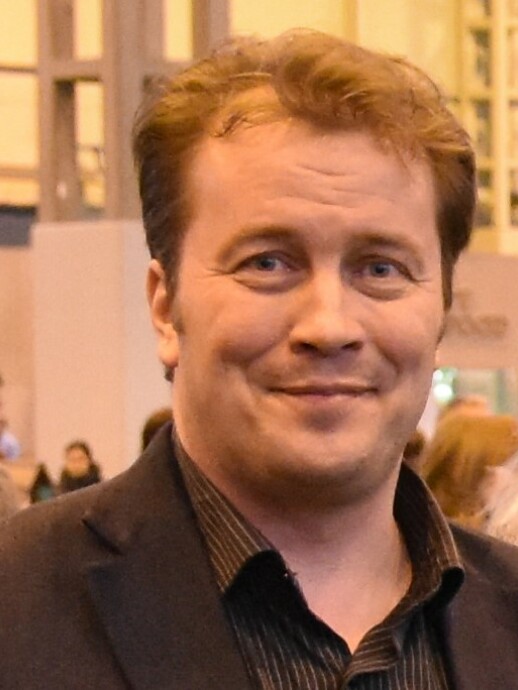 Seppo Virtanen合作论文数Department of Computing, University of Turku9
 Juuso A. Parkkinen合作论文数Helsinki Institute for Information Technology HIIT, Aalto University9




