Ammonia leaching kinetics of a complex Cu-ore assaying 8.8% Cu and 36.1% Fe was examined. Mineralogical characterization indicated that the major phase of the ore was siderite with chalcopyrite as the major sulfide mineral. The effects of parameters such as agitation, temperature, NH3 concentration, particle size and oxygen partial pressure (pO2) were investigated. Under the standard leaching conditions of 125–212 µm particle size, 120 °C, 1.29 mol/L NH3 and 202 kPa of pO2, about 83% Cu could be selectively extracted in 2.5 h. However, when using higher NH3 concentration and lower particle size, more than 95% extraction was achieved. The leaching process was found to be surface reaction controlling. The estimated activation energy was (37.6±1.9) kJ/mol and empirical orders of reaction with respect to pO2 and [NH3] were about 0.2 and 1, respectively.
Hydrometallurgy is the most suitable extractive technique for the extraction and purification of manganese as compared to all other techniques including biometallurgy and pyrometallurgical processes. In the hydrometallurgical processing of manganese from its ore, the leach liquors often contain divalent ions such as iron, manganese, copper, nickel, cobalt and zinc along with other impurities which make manganese very difficult to separate. The processes employed for solution concentration and purification in the hydrometallurgical processing of manganese include precipitation, cementation, solvent extraction and ion exchange. Solvent extraction also proves more efficient and it plays vital roles in the purification and separation of the manganese as compared to all other techniques. A detailed review of the various steps involved in the hydrometal-lurgical manganese processing, concentration and purification processes and newer processes of extraction of manganese from ores and waste materials were discussed.
The extraction of nickel (II) from a spent hydro-desulfurization catalyst containing 11.6 pct Ni was carried out through sulfuric acid leaching. Variations of parameters such as the concentration of acid, temperature, and time, were studied and optimized. Nickel hydroxide was precipitated from the leach liquor via neutralization with 1 M sodium hydroxide up to pH 12 in three different methods: normal neutralization precipitation, and then neutralization precipitation followed by aging at 353 K (80 °C) for 4 hours and neutralization of the leach liquor with 10 pct (v/v) of 0.1 N sodium lauryl sulfate. X-ray diffraction (XRD) and transmission electron microscopy (TEM) microanalysis shows a difference in crystallinity with the method of precipitation. The nickel hydroxide contains Cu(II), Co(II), Zn(II), and Mn(II) as trace impurities. The discharge capacities of the precipitated nickel hydroxides were 120 mAhg−1, 140.72 mAhg−1, and 145.2 mAhg–1 for aged sample, sample without surfactant, and with surfactant respectively.
This work, constituting the second part of acid leaching of total Lead studied the extraction efficiency of Pb (II) by solvent extraction techniques by Dithizone in chloroform. The development of simple hydrometallurgical route for possible recovery of total lead from spent motorcycle battery ash leach liquor in hydrochloric acid solution has been investigated using combination of leaching, cementation, precipitation, solvent extraction and stripping techniques. The influence of extractant concentration on lead extraction and the extraction temperature on the total Lead extraction efficiency were examined. An extraction efficiency of 98% total Pb(II) was obtained by 0.01 mol/L Dithizone in chloroform at pH 8.3 from the initial 10g/L motorcycle ash leach liquor containing mainly 763.1 mg/L Pb, 4.3 mg/L Zn (10.7 mg/L after cementation) and 28.8mg/L Fe. Other constituents such as Cu, Mn, Ca and As whose concentrations in each case are less than 2mg/L after leaching, were first separated by cementation with zinc granules, followed by the total Iron removal by precipitating with 4mol/L ammoniacal solution to a pH 3.5 at 25±2 0C. Stripping of 98% total Pb(II) from dithizone extract by 0.1 mol/L hydrochloric acid solution was achieved. The values of thermodynamic data obtained on total Pb(II) extraction showed that the extraction by 0.01 mol/L Dithizone in chloroform is thermodynamically favourable. Finally, a simple hydrometallurgical scheme for the operational procedures for the extraction of total Pb(II) from the spent motorcycle ash liquor was presented.
Chalcopyrite ores are usually processed by means of hydrometallurgical or pyrometallurgical processes, but due to environmental aspects and the possibility of increased exploitation of mixed and lower grade ores and relatively small isolated deposits, there has been a worldwide upsurge of interest in the hydrometallurgical processes of this ore as compared to pyrometallurgy. The different concentrates obtained through differential flotation in pyrometallurgy are usually of poor quality with low metal recovery. This further makes pyrometallurgical processing of chalcopyrite very difficult and costly and rendered them difficult to commercialize. As a result, the metal value is preferably extracted directly from low grade ores through hydrometallurgical process. A detailed review of chalcopyrite deposits, production and consumption, mining, ore processing, steps involved in the pyrometallurgical and hydrometallurgical processing of copper as well as the dissolution kinetics and microbial studies of chalcopyrite ore were discussed.
 Folahan Adekola合作论文数Department of Chemistry, University of Ilorin4
 abdul r sheik合作论文数3
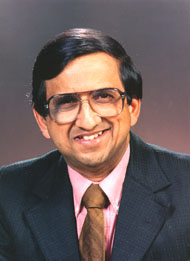 Malay Ghosh合作论文数Department of Statistics University of Florida3
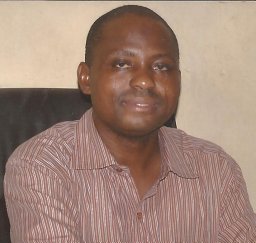 Alafara A. Baba合作论文数Department of Chemistry, University of Ilorin3Rafiu B. Bale合作论文数2
 Olushola Sunday Ayanda合作论文数Faculty of Applied Sciences, Cape Peninsula University of Technology2A. A. Baba合作论文数1Yvonne Salubi合作论文数1
 Kuranga I. Ayinla合作论文数Dept Ind Chem, Univ Ilorin1
 Ayonbala Baral (A.BARAL)合作论文数Fac Met & Energy Engn, Kunming Univ Sci & Technol1
 Ghosh Malay合作论文数1
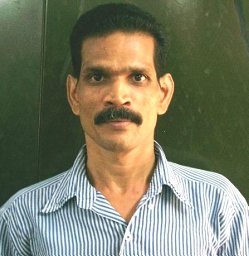 Danda Srinivas Rao合作论文数Regional Research Laboratory (CSIR), Bhubaneswar-751 013, India1
 Kali Sanjay合作论文数Regional Research Laboratory, Bhubaneswar, India1
 Barsha Dash合作论文数Institute of Minerals and Materials Technology, Bhubaneswar, 751013 Orissa, India1
 Tondepu Subbaiah合作论文数Institute of Minerals and Materials Technology (CSIR) Formerly Regional Research Laboratory Bhubaneswar 751 013 Orissa India1




