Deploying robots in dynamic, human-populated environments will require techniques for adaptable robot skill acquisition that extend beyond pre-programmed functionality. Learning from demonstration (LfD) methods enable robots to learn skills from human-provided trajectories demonstrated in situ. However, prior work has shown non-expert end-users struggle to provide demonstrations that enable robots to perform complex, multi-step tasks, or to generalize skill knowledge beyond a specific environment and task context. This work enables robots to actively participate in the situated learning interaction by autonomously providing bespoke guidance in response to end-users' demonstrations, thus improving end-users' ability to teach robots useful skills via LfD. We introduce a novel LfD system integrating foundation model (FM)-based textual feedback and augmented reality (AR)-based visual feedback. The FM and AR feedbacks operate synergistically, with FM feedback helping users break tasks down effectively and with AR feedback allowing users to quickly evaluate how well demonstrations perform and generalize. This system provides targeted, actionable guidance throughout the demonstration process: it enhances users' ability to define, decompose, and demonstrate modular, repurposable skills capable of accomplishing complex tasks. We validate our system with a human-subjects experiment in which participants receive bespoke feedback as they teach a robot via kinesthetic demonstrations in a pair of robotic manipulation domains. From this study, we observe positive results demonstrating that the combination of AR and FM feedback improves the quality and generalizability of robot policies, compared to AR feedback alone, FM feedback alone, or a baseline system where learned skills can be played physically on the robot.
Robot learning from humans has been proposed and researched for several decades as a means to enable robots to learn new skills or adapt existing ones to new situations. Recent advances in AI, including learning approaches like reinforcement learning and architectures like transformers and foundation models, combined with access to massive datasets, have created attractive opportunities to apply those data-hungry techniques to this problem. We argue that the focus on massive amounts of pre-collected data, and the resulting learning paradigm, where humans demonstrate and robots learn in isolation, is overshadowing a specialized area of work we term Human-Interactive Robot Learning (HIRL). This paradigm, wherein robots and humans interact during the learning process, is at the intersection of multiple fields (AI, robotics, human-computer interaction, design and others) and holds unique promise. Using HIRL, robots can achieve greater sample efficiency (as humans can provide task knowledge through interaction), align with human preferences (as humans can guide the robot behavior toward their expectations), and explore more meaningfully and safely (as humans can utilize domain knowledge to guide learning and prevent catastrophic failures). This can result in robotic systems that can more quickly and easily adapt to new tasks in human environments. The objective of this article is to provide a broad and consistent overview of HIRL research and to guide researchers toward understanding the scope of HIRL, and current open or underexplored challenges related to four themes-namely, human, robot learning, interaction, and broader context. The article includes concrete use cases to illustrate the interaction between these challenges and inspire further research according to broad recommendations and a call for action for the growing HIRL community.
Diverse behavior policies are valuable in domains requiring quick test-time adaptation or personalized human-robot interaction. Human demonstrations provide rich information regarding task objectives and factors that govern individual behavior variations, which can be used to characterize \textit{useful} diversity and learn diverse performant policies.However, we show that prior work that builds naive representations of demonstration heterogeneity fails in generating successful novel behaviors that generalize over behavior factors.We propose Guided Strategy Discovery (GSD), which introduces a novel diversity formulation based on a learned task-relevance measure that prioritizes behaviors exploring modeled latent factors.We empirically validate across three continuous control benchmarks for generalizing to in-distribution (interpolation) and out-of-distribution (extrapolation) factors that GSD outperforms baselines in novel behavior discovery by $\sim$21\%.Finally, we demonstrate that GSD can generalize striking behaviors for table tennis in a virtual testbed while leveraging human demonstrations collected in the real world.Code is available at https://github.com/CORE-Robotics-Lab/GSD.
In human-robot interactions, human and robot agents maintain internal mental models of their environment, their shared task, and each other. The accuracy of these representations depends on each agent's ability to perform theory of mind, i.e. to understand the knowledge, preferences, and intentions of their teammate. When mental models diverge to the extent that it affects task execution, reconciliation becomes necessary to prevent the degradation of interaction. We propose a framework for bi-directional mental model reconciliation, leveraging large language models to facilitate alignment through semi-structured natural language dialogue. Our framework relaxes the assumption of prior model reconciliation work that either the human or robot agent begins with a correct model for the other agent to align to. Through our framework, both humans and robots are able to identify and communicate missing task-relevant context during interaction, iteratively progressing toward a shared mental model.
For effective human-agent teaming, robots and other artificial intelligence (AI) agents must infer their human partner's abilities and behavioral response patterns and adapt accordingly. Most prior works make the unrealistic assumption that one or more teammates can act near-optimally. In real-world collaboration, humans and autonomous agents can be suboptimal, especially when each only has partial domain knowledge. In this work, we develop computational modeling and optimization techniques for enhancing the performance of human-agent teams, where both the human and the robotic agent have asymmetric capabilities and act suboptimally due to incomplete environmental knowledge. We adopt an online Bayesian approach that enables a robot to infer people's willingness to comply with its assistance in a sequential decision-making game. Our user studies show that user preferences and team performance vary with robot intervention styles, and our approach for mixed-initiative collaboration enhances objective team performance (p<.001) and subjective measures, such as user's trust (p<.001) and perceived likeability of the robot (p<.001).
Learning from Demonstration (LfD) is a powerful method for non-roboticists end-users to teach robots new tasks, enabling them to customize the robot behavior. However, modern LfD techniques do not explicitly synthesize safe robot behavior, which limits the deployability of these approaches in the real world. To enforce safety in LfD without relying on experts, we propose a new framework, SElding with Control barrier fUnctions in inverse REinforcement learning (SECURE), which learns a customized Control Barrier Function (CBF) from end-users that prevents robots from taking unsafe actions while imposing little interference with the task completion. We evaluate SECURE in three sets of experiments. First, we empirically validate SECURE learns a high-quality CBF from demonstrations and outperforms conventional LfD methods on simulated robotic and autonomous driving tasks with improvements on safety by up to 100%. Second, we demonstrate that roboticists can leverage SECURE to outperform conventional LfD approaches on a real-world knife-cutting, meal-preparation task by 12.5% in task completion while driving the number of safety violations to zero. Finally, we demonstrate in a user study that non-roboticists can use SECURE to effectively teach the robot safe policies that avoid collisions with the person and prevent coffee from spilling.
Rearranging objects is an essential skill for robots. To quickly teach robots new rearrangements tasks, we would like to generate training scenarios from high-level specifications that define the relative placement of objects for the task at hand. Ideally, to guide the robot's learning we also want to be able to rank these scenarios according to their difficulty. Prior work has shown how generating diverse scenario from specifications and providing the robot with easy-to-difficult samples can improve the learning. Yet, existing scenario generation methods typically cannot generate diverse scenarios while controlling their difficulty. We address this challenge by conditioning generative models on spatial logic specifications to generate spatially-structured scenarios that meet the specification and desired difficulty level. Our experiments showed that generative models are more effective and data-efficient than rejection sam-pling and that the spatially-structured scenarios can drastically improve training of downstream tasks by orders of magnitude.
Focusing on failure to improve human-robot interactions represents a novel approach that calls into question human expectations of robots, as well as posing ethical and methodological challenges to researchers. Fictional representations of robots (still for many non-expert users the primary source of expectations and assumptions about robots) often emphasize the ways in which robots surpass/perfect humans, rather than portraying them as fallible. Thus, to encounter robots that come too close, drop items or stop suddenly starts to close the gap between fiction and reality. These kinds of failures - if mitigated by explanation or recovery procedures - have the potential to make the robot a little more relatable and human-like. However, studying failures in human-robot interaction requires producing potentially difficult or uncomfortable interactions in which robots failing to behave as expected may seem counterintuitive and unethical. In this space, interdisciplinary conversations are the key to untangling the multiple challenges and bringing themes of power and context into view. In this workshop, we invite researchers from across the disciplines to an interactive, interdisciplinary discussion around failure in social robotics. Topics for discussion include (but are not limited to) methodological and ethical challenges around studying failure in HRI, epistemological gaps in defining and understanding failure in HRI, sociocultural expectations around failure and users' responses.
Focusing on failure to improve human-robot interactions represents a novel approach that calls into question human expectations of robots, as well as posing ethical and methodological challenges to researchers. Fictional representations of robots (still for many non-expert users the primary source of expectations and assumptions about robots) often emphasize the ways in which robots surpass/perfect humans, rather than portraying them as fallible. Thus, to encounter robots that come too close, drop items or stop suddenly starts to close the gap between fiction and reality. These kinds of failures - if mitigated by explanation or recovery procedures - have the potential to make the robot a little more relatable and human-like. However, studying failures in human-robot interaction requires producing potentially difficult or uncomfortable interactions in which robots failing to behave as expected may seem counterintuitive and unethical. In this space, interdisciplinary conversations are the key to untangling the multiple challenges and bringing themes of power and context into view. In this workshop, we invite researchers from across the disciplines to an interactive, interdisciplinary discussion around failure in social robotics. Topics for discussion include (but are not limited to) methodological and ethical challenges around studying failure in HRI, epistemological gaps in defining and understanding failure in HRI, sociocultural expectations around failure and users' responses.
Safety is crucial for autonomous drones to operate close to humans. Besides avoiding unwanted or harmful contact, people should also perceive the drone as safe. Existing safe motion planning approaches for autonomous robots, such as drones, have primarily focused on ensuring physical safety, e.g., by imposing constraints on motion planners. However, studies indicate that ensuring physical safety does not necessarily lead to perceived safety. Prior work in Human-Drone Interaction (HDI) shows that factors such as the drone's speed and distance to the human are important for perceived safety. Building on these works, we propose a parameterized control barrier function (CBF) that constrains the drone's maximum deceleration and minimum distance to the human and update its parameters on people's ratings of perceived safety. We describe an implementation and evaluation of our approach. Results of a within-subject user study (N=15) show that we can improve perceived safety of a drone by adjusting to people individually.
Reinforcement learning has shown great potential for learning sequential decision-making tasks.Yet, it is difficult to anticipate all possible real-world scenarios during training, causing robots to inevitably fail in the long run.Many of these failures are due to variations in the robot's environment.Usually experts are called to correct the robot's behavior; however, some of these failures do not necessarily require an expert to solve them.In this work, we query non-experts online for help and explore 1) if/how non-experts can provide feedback to the robot after a failure and 2) how the robot can use this feedback to avoid such failures in the future by generating shields that restrict or correct its high-level actions.We demonstrate our approach on common daily scenarios of a simulated kitchen robot.The results indicate that non-experts can indeed understand and repair robot failures.Our generated shields accelerate learning and improve data-efficiency during retraining.
State-of-the-art robots are not yet fully equipped to automatically correct their policy when they encounter new situations during deployment. We argue that in common everyday robot tasks, failures may be resolved by knowledge that non-experts could provide. Our research aims to integrate elements of formal synthesis approaches into computational human-robot interaction to develop verifiable robots that can automatically correct their policy using non-expert feedback on the fly. Preliminary results from two online studies show that non-experts can indeed correct failures and that robots can use the feedback to automatically synthesize correction mechanisms to avoid failures.
A longstanding barrier to deploying robots in the real world is the ongoing need to author robot behavior. Remote data collection–particularly crowdsourcing—is increasingly receiving interest. In this paper, we make the argument to scale robot programming to the crowd and present an initial investigation of the feasibility of this proposed method. Using an off-the-shelf visual programming interface, non-experts created simple robot programs for two typical robot tasks (navigation and pick-and-place). Each needed four subtasks with an increasing number of programming statements (if statement, while loop, variables) for successful completion of the programs. Initial findings of an online study (N = 279) indicate that non-experts, after minimal instruction, were able to create simple programs using an off-the-shelf visual programming interface. We discuss our findings and identify future avenues for this line of research.
Driving styles play a major role in the acceptance and use of autonomous vehicles.Yet, existing motion planning techniques can often only incorporate simple driving styles that are modeled by the developers of the planner and not tailored to the passenger.We present a new approach to encode human driving styles through the use of signal temporal logic and its robustness metrics.Specifically, we use a penalty structure that can be used in many motion planning frameworks, and calibrate its parameters to model different automated driving styles.We combine this penalty structure with a set of signal temporal logic formula, based on the Responsibility-Sensitive Safety model, to generate trajectories that we expected to correlate with three different driving styles: aggressive, neutral, and defensive.An online study showed that people perceived different parameterizations of the motion planner as unique driving styles, and that most people tend to prefer a more defensive automated driving style, which correlated to their self-reported driving style.
During speech, people spontaneously gesticulate, which plays a key role in conveying information. Similarly, realistic co-speech gestures are crucial to enable natural and smooth interactions with social agents. Current end-to-end co-speech gesture generation systems use a single modality for representing speech: either audio or text. These systems are therefore confined to producing either acoustically-linked beat gestures or semantically-linked gesticulation (e.g., raising a hand when saying "high''): they cannot appropriately learn to generate both gesture types. We present a model designed to produce arbitrary beat and semantic gestures together. Our deep-learning based model takes both acoustic and semantic representations of speech as input, and generates gestures as a sequence of joint angle rotations as output. The resulting gestures can be applied to both virtual agents and humanoid robots. Subjective and objective evaluations confirm the success of our approach. The code and video are available at the project page svito-zar.github.io/gesticulator .
Humans and robots will increasingly collaborate in domestic environments which will cause users to encounter more failures in interactions. Robots should be able to infer conversational failures by detecting human users' behavioural and social signals. In this paper, we study and analyse these behavioural cues in response to robot conversational failures. Using a guided task corpus, where robot embodiment and time pressure are manipulated, we ask human annotators to estimate whether user affective states differ during various types of robot failures. We also train a random forest classifier to detect whether a robot failure has occurred and compare results to human annotator benchmarks. Our findings show that human-like robots augment users' reactions to failures, as shown in users' visual attention, in comparison to non-human-like smart-speaker embodiments. The results further suggest that speech behaviours are utilised more in responses to failures when non-human-like designs are present. This is particularly important to robot failure detection mechanisms that may need to consider the robot's physical design in its failure detection model.
The increasing use of robots in real-world applications will inevitably cause users to encounter more failures in interactions. While there is a longstanding effort in bringing human-likeness to robots, how robot embodiment affects users' perception of failures remains largely unexplored. In this paper, we extend prior work on robot failures by assessing the impact that embodiment and failure severity have on people's behaviours and their perception of robots. Our findings show that when using a smart-speaker embodiment, failures negatively affect users' intention to frequently interact with the device, however not when using a human-like robot embodiment. Additionally, users significantly rate the human-like robot higher in terms of perceived intelligence and social presence. Our results further suggest that in higher severity situations, human-likeness is distracting and detrimental to the interaction. Drawing on quantitative findings, we discuss benefits and drawbacks of embodiment in robot failures that occur in guided tasks.
 Iolanda Leite合作论文数Division of Robotics, Perception and Learning, Kungliga Tekniska Högskolan Royal Institute of Technology10
 Matthew C. Gombolay (Matthew Gombolay)合作论文数Institute for Robotics and Intelligent Machines, College of Computing, Georgia Institute of Technology;Daniel Guggenheim School of Aerospace Engineering, College of Engineering, Georgia Institute of Technology;School of Interactive Computing, College of Computing, Georgia Institute of Technology6
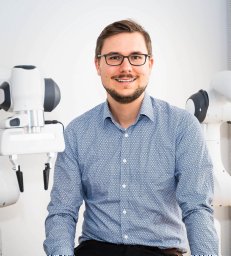 Christian Pek合作论文数Institute of Technology and Hannover Medical School, University of Braunschweig5
 Elizabeth J. Carter合作论文数Carnegie Mellon University4Zulfiqar Zaidi合作论文数Georgia Institute of Technology3
 Letian Chen合作论文数Georgia Institute of Technology3
 Jana Tumova合作论文数Division of Robotics, Perception and Learning, Department of Intelligent Systems, School of Electrical Engineering and Computer Science, KTH Royal Institute of Technology3
 Matthew B. Luebbers合作论文数Department of Computer Science, University of Colorado Boulder;Engineering Center, University of Colorado Boulder;Collaborative AI and Robotics Lab2Kavyaa Somasundaram合作论文数2
 Giulia Perugia合作论文数Uppsala University, Uppsala, Sweden2
 Katherine Harrison合作论文数Dept Themat Studies, Linkoping Univ2
 Rohan Paleja合作论文数Institute of Robotics and Intelligent Machines, Georgia Institute of Technology2
 Dimosthenis Kontogiorgos合作论文数Royal Institute of Technology2Amy Loutfi合作论文数2
 Filipa Correia合作论文数Instituto Superior Tecnico, University of Lisbon2
 André Tiago Abelho Pereira合作论文数Division of Speech, Music and Hearing, Department of Intelligent Systems, School of Electrical Engineering and Computer Science, KTH Royal Institute of Technology2
 Joakim Gustafsson合作论文数Division of Speech, Music and Hearing, Department of Intelligent Systems, School of Electrical Engineering and Computer Science, KTH Royal Institute of Technology2
 Erin Botti合作论文数Georgia Institute of Technology1
 Varshith Sreeramdass合作论文数Georgia Institute of Technology1Esmaeil Seraj合作论文数1Boran Sahindal合作论文数1linnea bjorklund合作论文数1
 Akanksha Saran合作论文数Reinforcement Learning Group, Microsoft Research1Marc van Almkerk合作论文数1
 Michelle Zhao合作论文数1Arjun Krishna合作论文数Comp Sci Dept, SUNY Stony Brook1Qingyu Xiao合作论文数313 Ferst Drive Atlanta, GA 303321Kin Man Lee合作论文数1
 Xuesu Xiao合作论文数Department of Computer Science, George Mason University;Unsorted1
 Serena Booth合作论文数Brown University1Yue Yang合作论文数1Olle Wallberg合作论文数KTH Royal Institute of Technology, Stockholm, Sweden1
 Silvia Tulli合作论文数Universidade de Lisboa, Lisbon, Portugal1
 Devleena Das合作论文数AMD1
 Taras Kucherenko合作论文数KTH Royal Inst Technol, Stockholm, Sweden1
 Patrik Jonell合作论文数KTH Royal Inst Technol, Dept Speech Mus & Hearing, Stockholm, Sweden1
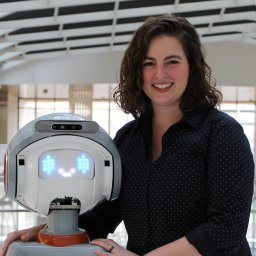 Taylor Kessler Faulkner合作论文数University of Texas at Austin1
 Ilaria Torre合作论文数Trinity College Dublin1
 R. (Rui) Li合作论文数ASML1
 Emmanuel Senft合作论文数Plymouth University1
 Mohamed Chetouani合作论文数Institut des Systemes Intelligents et de Robotique, Université Pierre et Marie Curie;Département Universitaire D’enseignement et de Formation En Orthophonie, Faculté de Médecine, Université Pierre et Marie Curie;Sorbonne Université1
 Danica Kragic合作论文数Department of Computer Science, School of Electrical Engineering and Computer Science, Royal Institute of Technology;Robotics, Perception and Learning Lab, Centre for Autonomous Systems, School of Electrical Engineering and Computer Science, Royal Institute of Technology1
 Manisha Natarajan合作论文数School of Interactive Computing, College of Computing, Georgia Institute of Technology1
 Erdem Bıyık合作论文数Department of Electrical Engineering, Stanford University1
 Pradyumna Tambwekar合作论文数School of Interactive Computing, College of Computing, Georgia Institute of Technology1
 Gustav Henter合作论文数Division of Speech, Music and Hearing, Department of Intelligent Systems, School of Electrical Engineering and Computer Science, KTH Royal Institute of Technology1
 Patric Jensfelt合作论文数Division of Robotics, Perception and Learning, School of Electrical Engineering and Computer Science, KTH Royal Institute of Technology1
 Ana Paiva合作论文数Department of Computer Science and Engineering, Instituto Superior Técnico, University of Lisbon1
 Matthew E. Taylor合作论文数Department of Computing Science, Faculty of Science, University of Alberta1




