Non-redundancy, introduced by Bessiere, Carbonnel, and Katsirelos (AAAI 2020), is a structural parameter for Constraint Satisfaction Problems (𝖢𝖲𝖯𝗌) that governs kernelization, exact and approximate sparsification, and exact streaming complexity. It is the largest size of a 𝖢𝖲𝖯 instance admitting no smaller subinstance with the same satisfying assignments. We study non-redundancy 𝖭𝖱𝖣_n(R) for Boolean symmetric 𝖢𝖲𝖯𝗌 defined by an r-ary relation R whose value depends only on Hamming weight. An instance of 𝖢𝖲𝖯(R) has n variables and constraints given by r-tuples; a constraint is satisfied exactly when the induced tuple lies in R. This class includes natural predicates such as cuts and k-SAT clauses. Our main result is a near-complete classification of the asymptotic growth of 𝖭𝖱𝖣_n(R) for symmetric Boolean predicates of arity at most 5. Using computational experiments and algebraic upper- and lower-bound criteria, we resolve every predicate of arity at most 4 and all but two predicates of arity 5. For upper bounds, we introduce t-balancedness, a lifted, higher-degree version of the balancedness notion of Chen, Jansen, and Pieterse (Algorithmica 2020). We prove that t-balancedness is equivalent to the existence of degree-t multilinear polynomials capturing R, and hence implies 𝖭𝖱𝖣_n(R)=O(n^t). For lower bounds, we use Carbonnel's (CP 2022) framework: predicates admitting a special reduction from k-ary OR inherit OR's lower bound Ω(n^k). The only unresolved arity-5 predicates in our framework have bounds Ω(n^2) and O(n^3); we reduce their exact classification to natural extremal set-system questions.
We study the single-pass streaming complexity of deciding satisfiability of Constraint Satisfaction Problems (CSPs). A CSP is specified by a constraint language Γ, that is, a finite set of k-ary relations over the domain [q] = {0, …, q-1}. An instance of 𝖢𝖲𝖯(Γ) consists of m constraints over n variables x_1, …, x_n taking values in [q]. Each constraint C_i is of the form {R_i,(x_i_1 + λ_i_1, …, x_i_k + λ_i_k)}, where R_i ∈ Γ and λ_i_1, …, λ_i_k∈ [q] are constants; it is satisfied if and only if (x_i_1 + λ_i_1, …, x_i_k + λ_i_k) ∈ R_i, where addition is modulo q. In the streaming model, constraints arrive one by one, and the goal is to determine, using minimum memory, whether there exists an assignment satisfying all constraints. For k-SAT, Vu (TCS 2024) proves an optimal Ω(n^k) space lower bound, while for general CSPs, Chou, Golovnev, Sudan, and Velusamy (JACM 2024) establish an Ω(n) lower bound; a complete characterization has remained open. We close this gap by showing that the single-pass streaming space complexity of 𝖢𝖲𝖯(Γ) is precisely governed by its non-redundancy, a structural parameter introduced by Bessiere, Carbonnel, and Katsirelos (AAAI 2020). The non-redundancy 𝖭𝖱𝖣_n(Γ) is the maximum number of constraints over n variables such that every constraint C is non-redundant, i.e., there exists an assignment satisfying all constraints except C. We prove that the single-pass streaming complexity of 𝖢𝖲𝖯(Γ) is characterized, up to a logarithmic factor, by 𝖭𝖱𝖣_n(Γ).
For an arbitrary family of predicates ℱ⊆{0,1}^[q]^k and any ε> 0, we prove a single-pass, linear-space streaming lower bound against the gap promise problem of distinguishing instances of Max-CSP(ℱ) with at most β+ε fraction of satisfiable constraints from instances of with at least γ-ε fraction of satisfiable constraints, whenever Max-CSP(ℱ) admits a (γ,β)-integrality gap instance for the basic LP. This subsumes the linear-space lower bound of Chou, Golovnev, Sudan, Velingker, and Velusamy (STOC 2022), which applies only to a special subclass of CSPs with linear-algebraic structure. (Their result itself generalizes work of Kapralov and Krachun (STOC 2019) for Max-CUT.) Our approach identifies the right “analytic” analogues of previously-used linear-algebraic conditions; this yields substantial simplifications while capturing a much larger class of problems. Our lower bound is essentially optimal for single-pass streaming, since: (1) All CSPs admit (1-ε)-approximations in quasilinear space, and (2) sublinear-space streaming algorithms can simulate the LP (on bounded-degree instances), giving approximation algorithms when integrality gap instances do not exist. The starting point for our lower bound is a reduction from a "distributional implicit hidden partition” problem defined by Fei, Minzer, and Wang (STOC 2026) in the context of multi-pass streaming. Our result is an analogue of theirs in the single-pass setting, where we obtain a much stronger (and tight) space lower bound.
Given a stream x_1,x_2,…,x_n of items from a Universe U of size poly(n), and a parameter ε>0, an item i∈ U is said to be an ℓ_2 heavy hitter if its frequency f_i in the stream is at least √(εF_2), where F_2=∑_i∈ U f_i^2. Efficiently detecting such heavy hitters is a fundamental problem in data streams and has several applications in both theory and in practice. The classical 𝖢𝗈𝗎𝗇𝗍𝖲𝗄𝖾𝗍𝖼𝗁 algorithm due to Charikar, Chen, and Farach-Colton [2004], was the first algorithm to detect ℓ_2 heavy hitters using O(log^2 n/ε) bits of space, and their algorithm is optimal for streams with deletions. A work due to Braverman, Chestnut, Ivkin, Nelson, Wang, and Woodruff [2017] gave the 𝖡𝖯𝖳𝗋𝖾𝖾 algorithm which detects ℓ_2 heavy hitters in insertion-only streams using only O(log(1/ε)/εlog n ) space. Note that any algorithm requires at least Ω(1/εlog n) space to output O(1/ε) heavy hitters in the worst case. While 𝖡𝖯𝖳𝗋𝖾𝖾 achieves optimal space bound for constant ε, their bound could be sub-optimal for ε=o(1). For random order streams, where the stream elements can be adversarial but their order of arrival is uniformly random, Braverman, Garg, and Woodruff [2020] showed that it is possible to achieve the optimal space bound of O(1/εlog n) for every ε= Ω(1/2^√(log n)). In this work, we generalize their result to partially random order streams where only the heavy hitters are required to be uniformly distributed in the stream. We show that it is possible to achieve the same space bound, but with an additional assumption that the algorithm is given a constant approximation to F_2 in advance.
The Max-DICUT problem has gained a lot of attention in the streaming setting in recent years, and has so far served as a canonical problem for designing algorithms for general constraint satisfaction problems (CSPs) in this setting. A seminal result of Kapralov and Krachun [STOC 2019] shows that it is impossible to beat 1/2-approximation for Max-DICUT in sublinear space in the single-pass streaming setting, even on bounded-degree graphs. In a recent work, Saxena, Singer, Sudan, and Velusamy [SODA 2025] prove that the above lower bound is tight by giving a single-pass algorithm for bounded-degree graphs that achieves (1/2-ε)-approximation in sublinear space, for every constant ε>0. For arbitrary graphs of unbounded degree, they give an O(1/ε)-pass O(log n) space algorithm. Their work left open the question of obtaining 1/2-approximation for arbitrary graphs in the single-pass setting in sublinear space. We make progress towards this question and give a two-pass algorithm that achieves (1/2-ε)-approximation in sublinear space, for every constant ε>0.
We identify a connection between the approximability of CSPs in two models: (i) sublinear space streaming algorithms, and (ii) the basic LP relaxation. We show that whenever the basic LP admits an integrality gap, there is an Ω(√(n))-space sketching lower bound. We also show that all existing linear space streaming lower bounds for Max-CSPs can be lifted to integrality gap instances for basic LPs. For bounded-degree graphs, by combining the distributed algorithm of Yoshida (STOC 2011) for approximately solving the basic LP with techniques described in Saxena, Singer, Sudan, and Velusamy (SODA 2025) for simulating a distributed algorithm by a sublinear space streaming algorithm on bounded-degree instances of Max-DICUT, it appears that there are sublinear space streaming algorithms implementing the basic LP, for every CSP. Based on our results, we conjecture the following dichotomy theorem: Whenever the basic LP admits an integrality gap, there is a linear space single-pass streaming lower bound, and when the LP is roundable, there is a sublinear space streaming algorithm.
A constraint satisfaction problem (CSP), \(\textsf {Max-CSP}(\mathcal {F})\) , is specified by a finite set of constraints \(\mathcal {F}\subseteq \lbrace [q]^k \rightarrow \lbrace 0,1\rbrace \rbrace\) for positive integers q and k . An instance of the problem on n variables is given by m applications of constraints from \(\mathcal {F}\) to subsequences of the n variables, and the goal is to find an assignment to the variables that satisfies the maximum number of constraints. In the (γ ,β)-approximation version of the problem for parameters 0 ≤ β ≤ γ ≤ 1, the goal is to distinguish instances where at least γ fraction of the constraints can be satisfied from instances where at most β fraction of the constraints can be satisfied. In this work, we consider the approximability of this problem in the context of sketching algorithms and give a dichotomy result. Specifically, for every family \(\mathcal {F}\) and every β < γ, we show that either a linear sketching algorithm solves the problem in polylogarithmic space or the problem is not solvable by any sketching algorithm in \(o(\sqrt {n})\) space. In particular, we give non-trivial approximation algorithms using polylogarithmic space for infinitely many constraint satisfaction problems. We also extend previously known lower bounds for general streaming algorithms to a wide variety of problems, and in particular the case of q = k =2, where we get a dichotomy, and the case when the satisfying assignments of the constraints of \(\mathcal {F}\) support a distribution on \([q]^k\) with uniform marginals. Prior to this work, other than sporadic examples, the only systematic classes of CSPs that were analyzed considered the setting of Boolean variables q = 2, binary constraints k =2, and singleton families \(|\mathcal {F}|=1\) and only considered the setting where constraints are placed on literals rather than variables. Our positive results show wide applicability of bias-based algorithms used previously by [ 47 ] and [ 41 ], which we extend to include richer norm estimation algorithms, by giving a systematic way to discover biases. Our negative results combine the Fourier analytic methods of [ 56 ], which we extend to a wider class of CSPs, with a rich collection of reductions among communication complexity problems that lie at the heart of the negative results. In particular, previous works used Fourier analysis over the Boolean cube to initiate their results and the results seemed particularly tailored to functions on Boolean literals (i.e., with negations). Our techniques surprisingly allow us to get to general q -ary CSPs without negations by appealing to the same Fourier analytic starting point over Boolean hypercubes.
Many geographic information systems applications rely on data provided by user devices in the road network, including traffic monitoring, driving navigation, and road closure detection. The underlying signal is generally collected by sampling locations from user trajectories. The sampling process, though critical for various applications, has not been studied sufficiently in the literature. While the most natural way to sample a trajectory may be to use a frequency based algorithm, e.g., sampling locations every x seconds, such a sampling strategy can be quite wasteful in resources (e.g., server-side processing, user battery) as well as stored user data. In this work, we conduct a horizontal study of various location sampling algorithms (based on frequency, road geography, reservoir sampling, etc.) and assess their trade-offs in terms of the size of the stored data and the induced quality of training for prediction tasks (specifically predicting speeds on road segments).
We explore the use of local algorithms in the design of streaming algorithms for the Maximum Directed Cut problem. Specifically, building on the local algorithm of Buchbinder et al. (FOCS'12) and Censor-Hillel et al. (ALGOSENSORS'17), we develop streaming algorithms for both adversarially and randomly ordered streams that approximate the value of maximum directed cut in bounded-degree graphs. In n-vertex graphs, for adversarially ordered streams, our algorithm uses O(n^1-Ω(1)) (sub-linear) space and for randomly ordered streams, our algorithm uses logarithmic space. Moreover, both algorithms require only one pass over the input stream. With a constant number of passes, we give a logarithmic-space algorithm which works even on graphs with unbounded degree on adversarially ordered streams. Our algorithms achieve any fixed constant approximation factor less than 1/2. In the single-pass setting, this is tight: known lower bounds show that obtaining any constant approximation factor greater than 1/2 is impossible without using linear space in adversarially ordered streams (Kapralov and Krachun, STOC'19) and Ω(√(n)) space in randomly ordered streams, even on bounded degree graphs (Kapralov, Khanna, and Sudan, SODA'15). In terms of techniques, our algorithms partition the vertices into a small number of different types based on the structure of their local neighborhood, ensuring that each type carries enough information about the structure to approximately simulate the local algorithm on a vertex with that type. We then develop tools to accurately estimate the frequency of each type. This allows us to simulate an execution of the local algorithm on all vertices, and thereby approximate the value of the maximum directed cut.
An ordering constraint satisfaction problem (OCSP) is given by a positive integer $k$ and a constraint predicate $\Pi$ mapping permutations on $\{1,\ldots,k\}$ to $\{0,1\}$. Given an instance of OCSP$(\Pi)$ on $n$ variables and $m$ constraints, the goal is to find an ordering of the $n$ variables that maximizes the number of constraints that are satisfied, where a constraint specifies a sequence of $k$ distinct variables and the constraint is satisfied by an ordering on the $n$ variables if the ordering induced on the $k$ variables in the constraint satisfies $\Pi$. OCSPs capture natural problems including "Maximum acyclic subgraph (MAS)" and "Betweenness". In this work we consider the task of approximating the maximum number of satisfiable constraints in the (single-pass) streaming setting, where an instance is presented as a stream of constraints. We show that for every $\Pi$, OCSP$(\Pi)$ is approximation-resistant to $o(n)$-space streaming algorithms. This space bound is tight up to polylogarithmic factors. In the case of MAS our result shows that for every $\epsilon>0$, MAS is not $1/2+\epsilon$-approximable in $o(n)$ space. The previous best inapproximability result only ruled out a $3/4$-approximation in $o(\sqrt n)$ space. Our results build on recent works of Chou, Golovnev, Sudan, Velingker, and Velusamy who show tight, linear-space inapproximability results for a broad class of (non-ordering) constraint satisfaction problems over arbitrary (finite) alphabets. We design a family of appropriate CSPs (one for every $q$) from any given OCSP, and apply their work to this family of CSPs. We show that the hard instances from this earlier work have a particular "small-set expansion" property. By exploiting this combinatorial property, in combination with the hardness results of the resulting families of CSPs, we give optimal inapproximability results for all OCSPs.
In the maximum directed cut problem, the input is a directed graph G=(V,E), and the goal is to pick a partition V = S ∪ (V ∖ S) of the vertices such that as many edges as possible go from S to V∖ S. Oblivious algorithms, introduced by Feige and Jozeph (Algorithmica'17), are a simple class of algorithms for this problem. These algorithms independently and randomly assign each vertex v to either S or V ∖ S, and the distribution of v's assignment is determined using only extremely local information about v: its bias, i.e., the relative difference between its out- and in-degrees. These algorithms have natural implementations in certain graph streaming models, where they have important implications (Saxena, Singer, Sudan, and Velusamy, SODA'23, FOCS'23, Kallaugher, Parekh, and Voronova, STOC'24). In this work, we narrow the gap between upper and lower bounds on the best approximation ratio achievable by oblivious algorithms for Max-Directed-Cut. We show that there exists an oblivious algorithm achieving an approximation ratio of at least 0.4853, while every oblivious algorithm obeying a natural symmetry property achieves an approximation ratio of at most 0.4889. The previous known bounds were 0.4844 and 0.4899, due to Singer (APPROX'23) and Feige and Jozeph, respectively. Our techniques involve designing principled parameterizations of the spaces of algorithms and lower bounds and then executing computer searches through these spaces.
We study the problem of fairly allocating a multiset $M$ of $m$ indivisible items among $n$ agents with additive valuations. Specifically, we introduce a parameter $t$ for the number of distinct types of items and study fair allocations of multisets that contain only items of these $t$ types, under two standard notions of fairness: 1. Envy-freeness (EF): For arbitrary $n$, $t$, we show that a complete EF allocation exists when at least one agent has a unique valuation and the number of items of each type exceeds a particular finite threshold. We give explicit upper and lower bounds on this threshold in some special cases. 2. Envy-freeness up to any good (EFX): For arbitrary $n$, $m$, and for $t\le 2$, we show that a complete EFX allocation always exists. We give two different proofs of this result. One proof is constructive and runs in polynomial time; the other is geometrically inspired.
We consider prophet inequalities subject to feasibility constraints that are the intersection of $q$ matroids. The best-known algorithms achieve a $\Theta(q)$-approximation, even when restricted to instances that are the intersection of $q$ partition matroids, and with i.i.d.~Bernoulli random variables. The previous best-known lower bound is $\Theta(\sqrt{q})$ due to a simple construction of [Kleinberg-Weinberg STOC 2012] (which uses i.i.d.~Bernoulli random variables, and writes the construction as the intersection of partition matroids). We establish an improved lower bound of $q^{1/2+\Omega(1/\log \log q)}$ by writing the construction of [Kleinberg-Weinberg STOC 2012] as the intersection of asymptotically fewer partition matroids. We accomplish this via an improved upper bound on the product dimension of a graph with $p^p$ disjoint cliques of size $p$, using recent techniques developed in [Alon-Alweiss European Journal of Combinatorics 2020].
We give an $\widetilde{O}(\sqrt{n})$-space single-pass 0.483-approximation streaming algorithm for estimating the maximum directed cut size (Max-DICUT) in a directed graph on n vertices. This improves over an $O(\log n)$-space $4 / 9\lt 0.45$ approximation algorithm due to Chou, Golovnev, and Velusamy (FOCS 2020), which was known to be optimal for $o(\sqrt{n})$-space algorithms. Max-DICUT is a special case of a constraint satisfaction problem (CSP). In this broader context, we give the first CSP for which algorithms with $\widetilde{O}(\sqrt{n})$- space can provably outperform $o(\sqrt{n})$- space algorithms. The key technical contribution of our work is development of the notions of a first-order snapshot of a (directed) graph and of estimates of such snapshots. These snapshots can be used to simulate certain (non-streaming) Max-DICUT algorithms, including the “oblivious” algorithms introduced by Feige and Jozeph (Algorithmica, 2015), who showed that one such algorithm Previous work of the authors (SODA 2023) studied the restricted case of bounded-degree graphs, and observed that in this setting, it is straightforward to estimate the snapshot with $\ell_{1}$ errors and this suffices to simulate oblivious algorithms. But for unbounded-degree graphs, even defining an achievable and sufficient notion of estimation is subtle. We describe a new notion of snapshot estimation and prove its sufficiency using careful smoothing techniques, and then develop an algorithm which sketches such an estimate via a delicate process of intertwined vertex- and edge-subsampling. Prior to our work, the only streaming algorithms for any CSP on general instances were based on generalizations of the $O(\log n)$-space algorithm for Max-DICUT, and can roughly be characterized as based on “zeroth” order snapshots. Our work thus opens the possibility of a new class of algorithms for approximating CSPs by demonstrating that more sophisticated snapshots can outperform cruder ones in the case of Max-DICUT.
We show that the size of maximum cut in a planar graph with $m$ edges is at least $2m/3$. We also show that maximal planar graphs saturate this bound.
We initiate a study of the streaming complexity of constraint satisfaction problems (CSPs) when the constraints arrive in a random order. We show that there exists a CSP, namely Max-DICUT, for which random ordering makes a provable difference. Whereas a 4/9 approximate to 0.445 approximation of DICUT requires O(root n) space with adversarial ordering, we show that with random ordering of constraints there exists a 0.483-approximation algorithm that only needs O(log n) space. We also give new algorithms for Max-DICUT in variants of the adversarial ordering setting. Specifically, we give a two-pass (log n) space 0.483-approximation algorithm for general graphs and a single-pass ($) over tilde(root n) space 0.483-approximation algorithm for bounded-degree graphs. On the negative side, we prove that CSPs where the satisfying assignments of the constraints support a one-wise independent distribution require Omega(root n)-space for any non-trivial approximation, even when the constraints are randomly ordered. This was previously known only for adversarially ordered constraints. Extending the results to randomly ordered constraints requires switching the hard instances from a union of random matchings to simple Erd.os-Renyi random (hyper)graphs and extending tools that can perform Fourier analysis on such instances. The only CSP to have been considered previously with random ordering is Max-CUT where the ordering is not known to change the approximability. Specifically it is known to be as hard to approximate with random ordering as with adversarial ordering, for O(root n) space algorithms. Our results show a richer variety of possibilities and motivate further study of CSPs with randomly ordered constraints.
We analyze the sketching approximability of constraint satisfaction problems on Boolean domains, where the constraints are balanced linear threshold functions applied to literals. In~particular, we explore the approximability of monarchy-like functions where the value of the function is determined by a weighted combination of the vote of the first variable (the president) and the sum of the votes of all remaining variables. The pure version of this function is when the president can only be overruled by when all remaining variables agree. For every $k \geq 5$, we show that CSPs where the underlying predicate is a pure monarchy function on $k$ variables have no non-trivial sketching approximation algorithm in $o(\sqrt{n})$ space. We also show infinitely many weaker monarchy functions for which CSPs using such constraints are non-trivially approximable by $O(\log(n))$ space sketching algorithms. Moreover, we give the first example of sketching approximable asymmetric Boolean CSPs. Our results work within the framework of Chou, Golovnev, Sudan, and Velusamy (FOCS 2021) that characterizes the sketching approximability of all CSPs. Their framework can be applied naturally to get a computer-aided analysis of the approximability of any specific constraint satisfaction problem. The novelty of our work is in using their work to get an analysis that applies to infinitely many problems simultaneously.
We consider the approximability of constraint satisfaction problems in the streaming setting. For every constraint satisfaction problem (CSP) on n variables taking values in {0,…,q−1}, we prove that improving over the trivial approximability by a factor of q requires Ω(n) space even on instances with O(n) constraints. We also identify a broad subclass of problems for which any improvement over the trivial approximability requires Ω(n) space. The key technical core is an optimal, q−(k−1)-inapproximability for the Max k-LIN-mod q problem, which is the Max CSP problem where every constraint is given by a system of k−1 linear equations mod q over k variables. Our work builds on and extends the breakthrough work of Kapralov and Krachun (Proc. STOC 2019) who showed a linear lower bound on any non-trivial approximation of the MaxCut problem in graphs. MaxCut corresponds roughly to the case of Max k-LIN-mod q with k=q=2. For general CSPs in the streaming setting, prior results only yielded Ω(√n) space bounds. In particular no linear space lower bound was known for an approximation factor less than 1/2 for any CSP. Extending the work of Kapralov and Krachun to Max k-LIN-mod q to k>2 and q>2 (while getting optimal hardness results) is the main technical contribution of this work. Each one of these extensions provides non-trivial technical challenges that we overcome in this work.
A constraint satisfaction problem (CSP), $\text{Max}-\text{CSP}(\mathcal{F})$, is specified by a finite set of constraints $\mathcal{F}\subseteq\{[q]^{k}\rightarrow\{0,1\}\}$ for positive integers $q$ and $k$. An instance of the problem on $n$ variables is given by $m$ applications of constraints from $\mathcal{F}$ to subsequences of the $n$ variables, and the goal is to find an assignment to the variables that satisfies the maximum number of constraints. In the ($\gamma, \beta$)-approximation version of the problem, for parameters $0\leq\beta < \gamma\leq 1$, the goal is to distinguish instances where at least $\gamma$ fraction of the constraints can be satisfied from instances where at most $\beta$ fraction of the constraints can be satisfied. In this work we consider the approximability of this problem in the context of sketching algorithms and give a dichotomy result. Specifically, for every family $\mathcal{F}$ and every $\beta < \gamma$, we show that either a linear sketching algorithm solves the problem in polylogarithmic space, or the problem is not solvable by any sketching algorithm in $o(\sqrt{n})$ space. We also extend previously known lower bounds for general streaming algorithms to a wide variety of problems, and in particular the case of $q=k=2$ where we get a dichotomy and the case when the satisfying assignments of $f$ support a distribution on $[q]^{k}$ with uniform marginals. Prior to this work, other than sporadic examples, the only systematic class of CSPs that were analyzed considered the setting of Boolean variables $q=2$, binary constraints $k=2$, singleton families $\vert \mathcal{F}\vert =1$ and only considered the setting where constraints are placed on literals rather than variables. Our positive results show wide applicability of bias-based algorithms used previously by [2] and [3], which we extend to include richer norm estimation algorithms, by giving a systematic way to discover biases. Our negative results combine the Fourier analytic methods of [4], which we extend to a wider class of CSPs, with a rich collection of reductions among communication complexity problems that lie at the heart of the negative results. In particular, previous works used Fourier analysis over the Boolean cube to initiate their results and the results seemed particularly tailored to functions on Boolean literals (i.e., with negations). Our techniques surprisingly allow us to get to general $q$-ary CSPs without negations by appealing to the same Fourier analytic starting point over Boolean hypercubes.
We present a general framework for designing approximately revenue-optimal mechanisms for multi-item additive auctions, which applies to both truthful and non-truthful auctions. Given a (not necessarily truthful) single-item auction format $A$ satisfying certain technical conditions, we run simultaneous item auctions augmented with a personalized entry fee for each bidder that must be paid before the auction can be accessed. These entry fees depend only on the prior distribution of bidder types, and in particular are independent of realized bids. We bound the revenue of the resulting two-part tariff mechanism using a novel geometric technique that enables revenue guarantees for many common non-truthful auctions that previously had none. Our approach adapts and extends the duality framework of Cai et al [CDW16] beyond truthful auctions. Our framework can be used with many common auction formats, such as simultaneous first-price, simultaneous second-price, and simultaneous all-pay auctions. Our results for first price and all-pay are the first revenue guarantees of non-truthful mechanisms in multi-dimensional environments, addressing an open question in the literature [RST17]. If all-pay auctions are used, we prove that the resulting mechanism is also credible in the sense that the auctioneer cannot benefit by deviating from the stated mechanism after observing agent bids. This is the first static credible mechanism for multi-item additive auctions that achieves a constant factor of the optimal revenue. If second-price auctions are used, we obtain a truthful $O(1)$-approximate mechanism with fixed entry fees that are amenable to tuning via online learning techniques.
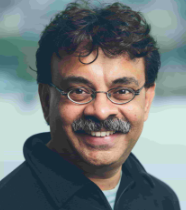 Madhu Sudan合作论文数John A. Paulson School of Engineering and Applied Sciences, Harvard University12
 Chining Chou (周紀寧)合作论文数The Theory of Computation Group at Harvard University10
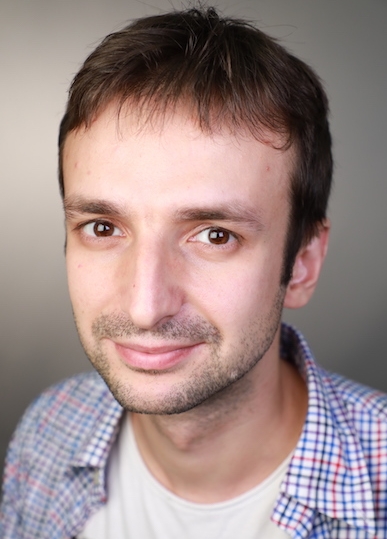 Alexander Golovnev合作论文数Department of Computer Science, College of Arts & Sciences, Georgetown University;Centre for Quantum Technologies, National University of Singapore10
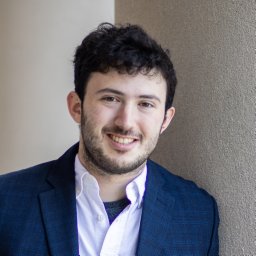 Noah Singer合作论文数Harvard University8
 Raghuvansh Raj Saxena合作论文数School of Technology and Computer Science, Tata Institute of Fundamental Research4
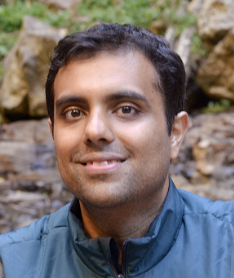 Ameya A. Velingker合作论文数Google Research3
 Pranay Gorantla合作论文数Phys Dept, Princeton Univ2
 Maxwell Fishelson合作论文数Massachusetts Institute of Technology2
 Madhur Tulsiani合作论文数Department of Computer Science, The University of Chicago2
 Brendan Lucier合作论文数Microsoft Research2
 Constantinos Daskalakis合作论文数Computer Science & Artificial Intelligence Laboratory, Schwarzman College of Computing, Massachusetts Institute of Technology;Percepta2
 Vasilis Syrgkanis合作论文数School of Engineering, Stanford University;Institute for Computational and Mathematical Engineering, Stanford University2Vivek Kumar合作论文数1David Xiang合作论文数1Joanna Boyland合作论文数1
 Mitali Bafna合作论文数Department of Mathematics, Massachusetts Institute of Technology1Tarun Prasad合作论文数1
 Kunal Marwaha合作论文数Dept Comp Sci, Univ Chicago1
 Sara Ahmadian合作论文数Google Research1Huacheng Yu合作论文数1
 Amirbehshad Shahrasbi合作论文数Microsoft1
 Sreenivas Gollapudi合作论文数Google1
 Jaikumar Radhakrishnan合作论文数Tata Inst Fundamental Res1
 Venkatesan Guruswami合作论文数Department of Electrical Engineering & Computer Sciences, University of California, Berkeley;Department of Mathematics, University of California, Berkeley1
 Palash Dey合作论文数Department of Computer Science and Engineering, Indian Institute of Technology, Kharagpur1
 Matt Weinberg合作论文数Department of Computer Science, School of Engineering and Applied Science, Princeton University1
 Kostas Kollias合作论文数Google1




