Many techniques for automated program repair involve syntactic program transformations. Applying combinations of such transformations on faulty code yields fix candidates whose correctness must be determined. Exploring these combinations leads to an explosion on the number of generated fix candidates that severely limits the applicability of such fault repair techniques. This explosion is most times tamed by not considering fix candidates exhaustively, and by disabling intra-statement modifications. In this article we present a technique for program repair that considers an ample set of intra-statement syntactic operations, and explores fix candidates exhaustively up to a provided bound. The suitability of the technique, implemented in our tool Stryker, is supported by a novel mechanism to detect and prune infeasible fix candidates. This allows Stryker to repair programs with several bugs, whose fixes require multiple modifications. We evaluate our technique on a benchmark of faulty Java container classes, which Stryker is able to repair, pruning significant parts of the space of generated candidates when more than one bug is present in the code.
A new approach to web application development is presented, in which an application is constructed by configuring and composing concepts drawn from a catalog developed by experts. A concept is a self-contained, reusable increment of functionality. Each concept includes both front-end and back-end functionality, and exports a collection of components—full-stack GUI elements, backed by application logic and database storage. To build an app, the developer imports concepts from the catalog, tunes them to fit the application’s particular needs via configuration variables, and links concept components together to create pages. Components of different concepts may be executed independently, or bound together declaratively with dataflows and synchronization. The instantiation, configuration, linking and binding of components is all expressed in a simple template language that extends HTML. The approach has been implemented in a platform called Déjà Vu, which we outline and compare to conventional web application architectures. We describe a case study in which a collection of applications previously built as team projects for a web programming course were replicated in Déjà Vu. Preliminary results validate our hypothesis, suggesting that a variety of non-trivial applications can be built from a repository of generic concepts.
Git is a widely used version control system that is powerful but complicated. Its complexity may not be an inevitable consequence of its power but rather evidence of flaws in its design. To explore this hypothesis, we analyzed the design of Git using a theory that identifies concepts, purposes, and misfits. Some well-known difficulties with Git are described, and explained as misfits in which underlying concepts fail to meet their intended purpose. Based on this analysis, we designed a reworking of Git (called Gitless) that attempts to remedy these flaws. To correlate misfits with issues reported by users, we conducted a study of Stack Overflow questions. And to determine whether users experienced fewer complications using Gitless in place of Git, we conducted a small user study. Results suggest our approach can be profitable in identifying, analyzing, and fixing design problems.
ABSTRACTIt is commonly asserted that the success of a software development project, and the usability of the final product, depend on the quality of the concepts that underlie its design. Yet this hypothesis has not been systematically explored by researchers, and conceptual design has not played the central role in the research and teaching of software engineering that one might expect. As part of a new research project to explore conceptual design, we are engaging in a series of case studies. This paper reports on the early stages of our first study, on the Git version control system. Despite its widespread adoption, Git puzzles even experienced developers and is not regarded as easy to use. In an attempt to understand the root causes of its complexity, we analyze its conceptual model and identify some undesirable properties; we then propose a reworking of the conceptual model that forms the basis of (the first version of) Gitless, an ongoing effort to redesign Git and experiment with the effects of conceptual simplifications.
In this article we present a novel technique for automated parallel bug-finding based on the sequential analysis tool TACO. TACO is a tool based on SAT-solving for efficient bug-finding in Java code with rich class invariants. It prunes the SAT-solver's search space by introducing precise symmetry-breaking predicates and bounding the relational semantics of Java class fields. The bounds computed by TACO generally include a substantial amount of nondeterminism; its reduction allows us to split the original analysis into disjoint subproblems. We discuss the soundness and completeness of the decomposition. Furthermore, we present experimental results showing that MUCHO-TACO, our tool which implements this technique, yields significant speed-ups over TACO on commodity cluster hardware.
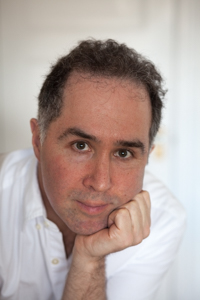 Daniel Jackson合作论文数Department of Electrical Engineering and Computer Science, Massachusetts Institute of Technology;Computer Science & Artificial Intelligence Laboratory, Massachusetts Institute of Technology4
 Luciano Zemin合作论文数2
 Marcelo Frias合作论文数Instituto Tecnológico de Buenos Aires;CONICET Dialoga2
 Barry McNamara合作论文数1Czarina Lao合作论文数1Maryam Archie合作论文数1
 Simón Emmanuel Gutiérrez Brida合作论文数Computer Science Department, University of Rio1Ali Mili合作论文数College of Computing Science, New Jersey Institute of Technology1Guido Marucci Blas合作论文数1
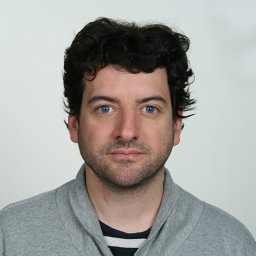 Juan Pablo Galeotti合作论文数Department of Computer Science, Universidad de Buenos Aires1Lucas Pizzagalli合作论文数1
 A. Jaoua合作论文数Computer Science and engineering department, University of Qatar1
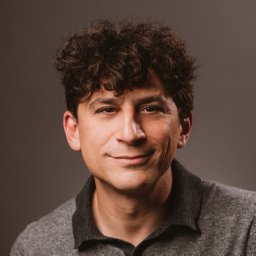 Nicolás Rosner合作论文数Department of Computer Science, Universidad de Buenos Aires1
 Nazareno Aguirre合作论文数Departamento de Computación, Facultad de Ciencias Exactas, Físico-Químicas y Naturales, Universidad Nacional de Río Cuarto1




