Evaluation of cavitation erosion risk, whether through numerical (CFD) or experimental methods, is crucial in many fluid flow design processes. This risk correlates directly with cavitation signals on affected surfaces. The aim of this study is to optimize the placement of piezoelectric sensors to investigate cavitation-induced erosion on solid surfaces and to enhance the numerical evaluation of their correlation with recorded signals from the sensors. In this study, based on the technical specifications of the K23 tunnel, a convergent-divergent channel has been designed to reduce the pressure in its test section below the vapor pressure, thereby creating the potential for bubble formation on the sample plate. Within this channel, four semi-cylindrical bluff bodies have been utilized as the most effective obstacles to increase cavitation erosion. A quick method for identifying cavitation erosion involves applying a special color to the sample plate. The Film Applicator has been employed as the optimal tool for achieving a uniform color and a thin paint layer on the sample plate. Through CFD modeling, potential cavitation zones are identified under various test conditions to refine the placement of piezoelectric sensors in experimental tests. As a result, piezoelectric sensors are positioned more accurately to measure sound pressure levels. The sound pressure levels obtained using piezoelectric sensors in the time domain, are compared with erosion-induced cavitation zones on the sample test surfaces. The strong agreement between sound pressure levels and observed erosion on the sample plates confirms the accuracy and improvement in the placement of piezoelectric sensors based on CFD modeling.
Many researches have been performed about Lab-On-Chip microfluidic systems experimentally and numerically. At the best of our knowledge, there are so few numerical assessments about Lab-On-Disk. Hence, aim of the present paper is numerical investigation of Lab-On-Disk (Laboratory-On-Disk or LOD) platforms because of its broadened usage in variety of assays in different fields of science particularly in biomedicine, drug delivery, biomedical and diagnostic assays. To fulfill this purpose, Lattice Boltzmann Method (LBM) has been employed to assess droplet generation in a T-junction through investigation of influential parameters such as Bond number (Bo), density ratio, viscosity ratio and some geometrical parameters such as width ratio of the channels (nuzzle) and height of the main channel at both sides of the junction. Results revealed that growing Bo number altered flow regime while viscosity ratio did not have any considerable effect. Incline in width of the nuzzle generated small droplet whereas its increment enlarged droplet size. Inequality in the height of the main channel at the junction postponed droplet formation but generated larger one.
Ship movement in the shallow seas creates a significant hydrodynamic pressure field about the ship that has effect on the environmental structures such as waterway beds, stationary or moving neighbored vessels, and can also affect marine life.Therefore, the study of this phenomenon is very important in many applications.The present study investigated the hydrodynamic pressure field caused by an oil tanker with 247 m long, 53 m wide and 17 m draft moving at different speeds of 10, 15 and 20 knots on a sea level with a depth of 80 m.The fluid flow governing equations including the continuity equation, the momentum equations, and the K-ε turbulence model are solved numerically and the SIMPLE algorithm is used to correlate the pressure and velocity fields.An accurate Trimmer's structured mesh has been utilized to discrete the studied domain around the ship.To validate the methodology, the obtained dimensionless velocity field is compared with those presented by other works a good consistency is observed.As expected, the magnitude of the hydrodynamic pressure field varied as a function of the distance to the body of the vessel, ship's traveling velocity and magnitude of the draft.In this study, the minimum effects of the pressure were for the case of 10 knots (the minimum working velocity of heavy vessels) and 80 m of depth with a maximum pressure of 980 Pa.The results show that the pressure field dissipation occurs more rapidly in close distances to the vessel, and the pressure field domain decreases with a lower slope in far away from of the body.a hydrodynamic pressure correlation is obtained based on the depth and ship's velocity.Two and three-dimensional hydrodynamic pressure contours are also presented for different depths and velocities.Moreover, he hydrodynamic pressure increments in 12 and 7 m drafts are investigated and that shows after the 3/4 height of the bulbous bow lies below the sea surface, the increase in draft has little effect on the hydrodynamic pressure field.
During hot seasons the inlet temperature of Nitrogen increases, as a result compressor consumes more power for compressing a specific mass ratio of fluid and consequently total energy consumption of the compressor increases as well. In this research, a three stage centrifugal compressor with intercooler was modeled thermodynamically to decreases the energy consumption of the compressor. In each compressor, isentropic efficiency, outlet temperature of the Nitrogen gas and power compression was studied. The effect of inlet Nitrogen temperature and cooling water temperature on intercoolers' efficiency were investigated. In this study, Nitrogen gas is considered as an ideal gas. It is found that, in each compressor any growth in inlet temperature of the Nitrogen gas will result in linear increase in the outlet temperature of the Nitrogen gas and power compression furthermore, observed that increasing the temperature of Nitrogen gas has the most negative effect on efficiency and power compression of the first compressor in comparison to the second and the third compressor, it will result in a 10% decrease in special power compression specially during summer time. According to these results, it is figured out that any growth in inlet Nitrogen temperature causes a smooth decline in isentropic and Power Compression of the first, second and third compressors besides increasing the temperature of the Nitrogen gas increases the isentropic efficiency up to 3% and increasing the cooling water temperature decreases the intercooler efficiency up to 7%.
In this study, phase field method of Lattice Boltzmann method (LBM) is employed to simulate the collision of a droplet with inclined dry walls under gravitational force. At first, dynamic behavior of moving droplet in a horizontal channel, through this method, has been investigated to verify convective boundary condition as the outlet one. Relatedly, falling of a droplet in vertical channel under gravity without any obstacle in certain Ohnesorge number (Oh) and Eotvos number (Eo), as related dimensionless numbers, is enquired. Then, breakup of a falling drop in the range of Eo [Formula: see text], Oh [Formula: see text], various angles of solid walls [Formula: see text], different sizes of the drop diameter [Formula: see text], influence of density ratio and parameter [Formula: see text] corresponding to surface tension are investigated. The results indicated that by increase in Eo, the breakup and deformation of droplet increased after collision while by growing Oh, the droplet retained its spherical shape. Change in the [Formula: see text] and [Formula: see text] has effect only on the size of generated fragments. Furthermore, higher density ratio reinforced gravitational force and resulted in more deformation of the droplet and its resistance was enhanced by higher parameter [Formula: see text].
There are various researches about microfluidic systems to appraise influential parameters such as viscosity ratio, volumetric flow rate and Capillary number (Ca). But microfluidic processes are involved in other issues such as valving or making delay in dispersed phase releasing and attaining smooth mixture for chemical reactions. The aim of this paper is investigation of the influential parameters such as Ca number and particularly geometric parameters on droplet releasing, amplifying droplet generation rate in Lab-On-Chip (Laboratory-On-Chip or LOC) microfluidic T-junction using Lattice Boltzmann Method (LBM), applicable in encapsulation, drug delivery, diagnosis of the cancer cells, blood tests and Nucleic Acid (NA) assays. To fulfill this purpose, an asymmetry has been imposed on height of the junction. The results indicated that at a specific difference in height of the junction, the dispersed phase delayed to inter the main duct performing like an active valve instead of utilizing wax to postpone dispersed fluid entrance in the main channel resulting in fluids contamination. Combination of different Ca and asymmetry of the junction amplified droplet generation, desirable in Nucleic Acid assays. Various widths of lateral channel ratio, imposed on the junction illustrated its influence on size and number of droplets. Different entrance velocity ratios were set on the unequal height T-junction indicated its impact on droplet size without any change in other parameters such as volumetric rate of fluids (Q). Change of junction angle caused forming of the slug-like thread providing a slow movement, enhancing contact surface of two phases and consequently smooth mixing of fluids for reaction without any vibration or shaking which is impossible in microfluidic systems.
In this study, energy and exergy analyses of a horizontal axis wind turbine are presented based on blade element momentum theory (BEM) under different yaw angles. Velocity, temperature, pressure and specific humidity are considered as metrological parameters. The wind flow is assumed steady, and exergy destruction are taken to account for wind blades. Results show that the BEM can predict he axial and tangential forces in different spans satisfactory. It is interesting to note that by increasing of yaw angle from 0° to 15° at wind speeds from 10 to 24 m/s, the energy and exergy efficiencies see a slight decrease in comparison with yaw angle of 0°. At wind speeds from 18 to 24 m/s, under yaw angle of 30°, by rising the wind speed, energy and exergy efficiencies increase due to reduction of the axial force on the wind turbine rotor.
In this paper, the effect of stall delay on distribution of normal forces in different sections of rotor are studied by an enhanced version of the blade element momentum theory (BEM), based on the 3D correction Chaviaropoulos and Hansen mode. This model is computed at wind speed of 24m/s under the yaw angle 15◦. It is found that the BEM calculation on the outer (the radial distance more than 35% spanwies) spanwise is more trustable than inner spanwise. At 60, 82 and 92% spans, the 3D correction does not affect the output result and stall does not occur. Relative velocity rose dramatically at 25 and 35% spans, consequently angle of attack increased too particularly between azimuth angles from 270◦ up to 90◦. In this regions, stall phenomena are happened. Also it is found that the 3D correction has the maximum effect on 35 and 25% spans. The maximum improvement is 99.57% at 35% section and the azimuth angle 121◦.
In this study, the analysis of energy and exergy of a horizontal axis wind turbine based on blade element momentum (BEM) theory is presented. The computations are validated against wind tunnel data measured in the MEXICO wind turbine experiment. Blade roughness as one of the important environmental parameters is considered in the computations. Results show that the blade element momentum (BEM) theory has good ability to predict the energy and exergy efficiencies. The computation of energy and exergy exhibits that with the increasing the roughness from 0 mm to 0.5 mm, 2324 W of the output power is reduced. Roughness of 0.5 mm at the wind speed of 16 m/s reduced exergy and energy efficiencies 5.75% and 5.83%, respectively. It is also found that the roughness in the first four months of the operation has a more negative effect on the wind turbine performance.
دییامن هدافتسا لیذ ترابع زا هلاقم نیا هب عاجرا يارب : Please cite this article using: A. sarreshtehdari, M. Chahartaghi, A. M. Avatefi Nejad, Modeling and analysis of fluidized bed dryer of Bandar Imam Petrochemical Complex for energy and exergy efficiency improvement, Modares Mechanical Engineering, Vol. 14, No. 11, pp. 77-88, 2014 (In Persian) لدم يزاس لیلحت و کشخ لایس رتسب نک عمتجم هدزاب دوبهب روظنم هب ماما ردنب یمیشورتپ
Experiments are conducted to study the micro-bubble effects on the vortex induced vibration on a small sphere. In this study, micro-bubbles were generated by electrolysis of electrolyte liquid on the surface of a steel sphere. A range of micro-bubble generation and fluid flow rates were examined to vanish the periodic amplitude of VIV displacement. It confirmed that the microbubble generation strongly affects on the VIV displacement amplitude. Consequently it is possible to disappear, periodic displacement of such vibrations, using micro-bubble; whereas required micro-bubble correlated to the vortexes strong or fluid flow velocity.
This paper presents a detailed finite element analysis-based design procedure of the forced water cooling system for a low voltage claw pole transverse flux permanent magnet motor (TFPM), which is used in marine propulsion systems. Iron and copper losses density distributions are obtained using commercial finite element method software JMAG 10.5. Surface water cooling system, with spiral cooling ducts passing through the aluminum hosing of the stator, is chosen as the proper cooling system. To prevent any thermal and electrical unbalanced situation, for each phase separate water input and output are considered. Dimensions of the cooling ducts, as well as the velocity of water flowing through these ducts are calculated in a way that makes the water flow completely turbulent, having the right speed for cooling purposes. Number of required cooling ducts for an acceptable temperature distribution, below the thermal limits of motor, is determined by finite element thermal analysis. To consider the worst case scenario, a number of assumptions are made in the thermal analysis of the motor.
Small particles in near wall region provide complex conditions in fluid flow and shear stress behavior on solid surface. Fluid-particles and particle-particle interactions in these kinds of flows make a two way coupling problem in a two phase flow complicated phenomenon. In this research the effect of small particles in near wall zone was investigated by implementation of their force effects on fluid flow instead of particle implementation in fluid flow. The forces on particles were obtained from flow conditions and the effect of particles on fluid flow in previous steps of modeling, in the other words local velocity and local pressure fields make effective force on particle position while particle effects, equal and in opposite direction, imposed on fluid flow, based on second Newton low, in particle position and in each step. Added Mass, Drag, Lift, gravitational-buoyancy, and Pressure forces were accounted in this study. These force elements leads to particle dynamic motion and they are presented respectively in Equation 1. Figure 1 shows sample of calculated forces in a duct flow.
Modification of shear stress due to air bubbles injection in a rotary device was investigated experimentally. Air bubbles inject to the water flow crosses the neighbor of the hub which can rotate just by water flow shear stresses, in this device. Increasing air void fraction leads to decrease of shear stresses exerted on the hub surface until in high void fractions, the hub motion stopped as observed. Amount of skin friction decrease has been estimated by counting central hub rotations. Wall shear stress was decreased by bubble injection in all range of tested Reynolds number, changing from 50,378 to 71,238, and also by increasing air void fraction from zero to 3.06%. Skin friction reduction more than 85% was achieved in this study as maximum measured volume of air fraction injected to fluid flow while bubbles are distinct and they do not make a gas layer. Significant skin friction reduction obtained in this special case indicate that using small amount of bubble injection causes large amount of skin friction reduction in some rotary parts in the liquid phases like as water.
In present research, improvement of a microbubble generator's performance via reliance on fluid dynamics characteristics is Studied numerically, and then some experiments are executed. In in elementary cylindrical microbubble generator, water flow enters the device via six diagonal nozzles, and passes a rotational path around a central motionless hub. This flow breaks the big bubbles entering file device by gas injection from air nozzles. The high-intensity turbulence and shear flow in this device is the Cause of the air bubble breaking process. These small bubbles can be used to reduce frictional drag on the contact Surface of moving solid bodies in water flow. To improve the operation of the apparatus, some Suggested geometrical shapes were investigated numerically and were optimized based on the bubbles' effective breaking-up parameters. The experimental results illustrated good performance of the recent apparatus for generating smaller bubbles.
In the work, modification of wall shear stress due to air bubble injection on a rotary apparatus was experimentally investigated. In this device, water flow field causes a rotary motion of hub by shear forces. Injected air bubbles cross the near wall region of the hub surface and affect its rotary behavior (in constant water flow rates). Void fraction increase leads to decrease of rotational velocity provided by the flow shear stresses. In high-void fractions, the hub motion stops completely. The amount of skin friction reduction was estimated by measurement of hub rotational velocity. Rotational velocity decrease, due to bubble injection leads to the reduction of wall shear stress in all range of water flow rates. More than 90 percent of rotational velocity reduction was achieved in maximum void fraction. This result expresses the significant reduction of shear stress on the rotary hub. The considerable amount of skin friction reduction obtained in this special test case indicates the effectiveness of gas bubbles injection on skin friction reduction in some rotary parts for special applications.
Geometrical properties of generated microbubbles induced by different fluid flow patterns were investigated experimentally. Image processing method has been used to find microbubble size distribution and to determine bubbles’ roundness as well. Three types of flow patterns were produced by changing microbubble generator configuration in order to improve bubbles’ size distribution. These different geometrical configurations of designed microbubble generator were used to generate microbubbles in various air volume fractions. Obtained results confirm direct relation between generated microbubbles size and their distribution with fluid flow patterns. More complex geometry creating high turbulent regions are suggested to increase bubble breaking up especially for high values of void fractions.
In this paper, a new method for microbubble generation independent of porous media has been introduced. The approach used in the microbubble generator is based on high turbulent intensity rotational flow. At first, a simple cylindrical model is investigated experimentally. In the model, water enters the device via six diagonal nozzles and mixes with air coming from six holes at the bottom of the device. Passing a rotational trace around central motionless rod, air particles are broken up to tiny bubbles. Size of bubbles is measured and bubbles smaller than 1mm in diameter were found. Finally, improved microbubble generator with the similar mechanism has been introduced. Internal flow passes longer trajectory around the central rotating hub because of its design characteristic that let it rotate by inlet water excitation. Bubbles with diameters less than 300 microns are generated by this method. Size of bubbles is measured experimentally in different void fractions for different outlet gap size. Outlet flow gap changes from 20mm to 8mm and 3mm in three experiments. The best result is observed in the third experiment at which microbubbles smaller than 100 micron are observed. The desirable bubbles' size is achieved at void fraction of 15% that could be increased up to 60%.
Electrochemical method is a technique for measuring local velocity or wall shear stress on the boundary of fluid and solid. The most important advantage of this method is that the measurement probe is flush mounted on the wall so it doesn't interfere with flow. This method can be used for different kinds of flows, single, multiphase and time-dependence flows. In this paper, the theory of electrochemical method, materials, applications, advantages, limitations and other important notes of this method are reviewed. Then, wall shear stress in a tube with 12mm in diameter is measured by this method. Reynolds number is changing from 50 to 16000. Experimental results are compared with theoretical results. They are in good agreement.
improvement of the random vortex method (RVM), a numerical scheme that combines the representation of the vorticity field by a number of Lagrangian vortex elements of finite cores with a stochastic simulation of diffusion using random walk, is investigated. Multiple scales method Base on Rankin vortex model, used to derive different orders of vorticity transport equation, and physical description of terms presented. This new aspect presents the reason of limitation of vortex method and explains how it is possible to develop this method, base of understanding of physical behavior of flow in various conditions. Base on this view point it is possible to explain why vortex method in some of applications don't have satisfying Results.
 Nowrouz Mohammad Nouri合作论文数Applied Hydrodynamics Laboratory, Iran University of Science and Technology7
 Elham Maghsoudi合作论文数Dept. of Mech. Eng., Louisiana State Univ.;c;Dept. of Mech. Eng., Louisiana State Univ.4
 Batool Hoseinpour合作论文数Mechanical Engineering Department, Shahrood University of Technology3
 Esmail Mahmoodi合作论文数Shahrood Univ Technol3
 Ali Khanjari合作论文数2
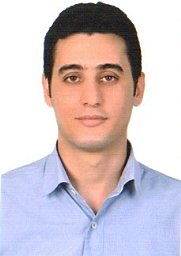 Hamid Reza Ashorynejad合作论文数Fac Mech Engn, Babol Univ Technol2
 Mahmood Chahartaghi合作论文数2
 Sayed Ehsan Alavi合作论文数Shahid Chamran University of Ahvaz1
 Mahmoud Salari合作论文数Imam Hossein University1Amin Moosaie合作论文数1
 Ahmad Darabi合作论文数1
 Tahanian, H.合作论文数1Mohammad Saeed Seif合作论文数1Majid Yahyaei合作论文数1




