Prisoner's Dilemma (PD) games have become a well-established paradigm for studying the mechanisms by which cooperative behavior may evolve in societies consisting of selfish individuals. Recent research has focused on the effect of spatial and connectivity structure in promoting the emergence of cooperation in scenarios where individuals play games with their neighbors, using simple "memoryless" rules to decide their choice of strategy in repeated games. While heterogeneity and structural features such as clustering have been seen to lead to reasonable levels of cooperation in very restricted settings, no conditions on network structure have been established, which robustly ensure the emergence of cooperation in a manner that is not overly sensitive to parameters such as network size, average degree, or the initial proportion of cooperating individuals. Here, we consider a natural random network model, with parameters that allow us to vary the level of "community" structure in the network, as well as the number of high degree hub nodes. We investigate the effect of varying these structural features and show that, for appropriate choices of these parameters, cooperative behavior does now emerge in a truly robust fashion and to a previously unprecedented degree. The implication is that cooperation (as modelled here by PD games) can become the social norm in societal structures divided into smaller communities, and in which hub nodes provide the majority of inter-community connections.
It is shown that for any computably enumerable degree a 6= 0, any degree c 6= 0, and any Turing degree s, if s ≥ 0, and c.e. in a, then there exists a c.e. degree x with the following properties, (1) x < a, c 6≤ x, (2) a is splittable over x, and (3) x = s. This implies that the Sacks’ splitting theorem and the Sacks’ jump theorem can be uniformly combined. A corollary is that there is no atomic jump class consisting entirely of Harrington non-splitting bases.
A partial order is computably well founded if it does not computably embed a copy of omega*, the order type of the negative integers. It is computably scattered if it does not computably embed a copy of eta, the order type of Q. It is known that, for each of these properties, there are computable partial orders satisfying the property which do not have a computable linear extension with the same property. Rosenstein showed, however, that for both of these properties, every computable partial order satisfying the property has a Delta(0)(2) linear extension also satisfying the property. Thus, linear extensions of a computable order preserving the properties of computable well foundedness or computable scatteredness can always be found at the Delta(0)(2) level of the arithmetical hierarchy, but not at the Delta(0)(1) level. In this paper, we investigate at which level of the Ershov hierarchy such linear extensions can be found. We show that, for both properties, every computable partial order satisfying the property has an omega-c.e. linear extension with the same property. We establish that this is the best possible result within the Ershov hierarchy by constructing, respectively, computably well founded and computably scattered orders which do not have n-c.e. linear extensions which are computably well founded and computably scattered respectively, for any n < omega. In a strengthening of Rosenstein's theorems in another direction, we show that a linear extension preserving each of these properties can be computed using any oracle satisfying an escape property, which includes the class of non-generalised low(2) sets. Finally, we show that the analogue of Rosenstein's theorems do not hold for the property of not computably embedding a copy of zeta, the order type of the integers, by constructing a computable partial ordering which does not embed zeta, but such that every Delta(0)(2) linear extension of the ordering does admit a computable embedding of zeta.
Nature was computing long before humans started. It is the algorithmic content of the universe makes it an environment we can survive in. On the other hand, computation has been basic to civilisation from the earliest times. But computability? Computability theory is computation with consciousness, and entails the huge step from doing computation to observing and analysing the activity, and understanding something about what we can and cannot compute. And then — using the knowledge acquired as a stepping stone to a better understanding of the world we live in, and to new and previously unexpected computational strategies. It is relatively recently that computability graduated from being an essential element of our daily lives to being a concept one could talk about with precision. Computability as a theory originated with the work of Gödel, Turing, Church and others in the 1930s. The idea that reasoning might be essentially algorithmic goes back to Gottfried Leibniz — as he says in The Art of Discovery (1685), [24, p.51]:
This book questions the relevance of computation to the physical universe. Our theories deliver computational descriptions, but the gaps and discontinuities in our grasp suggest a need for continued discourse between researchers from different disciplines, and this book is unique in its focus on the mathematical theory of incomputability and its relevance for the real world. The core of the book consists of thirteen chapters in five parts on extended models of computation; the search for natural examples of incomputable objects; mind, matter, and computation; the nature of information, complexity, and randomness; and the mathematics of emergence and morphogenesis. This book will be of interest to researchers in the areas of theoretical computer science, mathematical logic, and philosophy.
We indicate how to fix an error in the proof of the main theorem of our original paper, pointed out to us by Yong Liu and Keng Meng Ng.
Gödel’s work [Gö34] on undecidable theories and the subsequent formalisations of the notion of a recursive function ([Tu36], [Kl36] etc.) have led to an ever deepening understanding of the nature of the non-computable universe (which as Gödel himself showed, includes sets and functions of everyday significance). The nontrivial aspect of Church’s Thesis (any function not contained within one of the equivalent definitions of recursive/Turing computable, cannot be considered to be effectively computable) still provides a basis not only for classical and generalised recursion theory, but also for contemporary theoretical computer science. Recent years, in parallel with the massive increase in interest in the computable universe and the development of much subtler concepts of ‘practically computable’, have seen remarkable progress with some of the most basic and challenging questions concerning the non-computable universe, results both of philosophical significance and of potentially wider technical importance. Relativising Church’s Thesis, Kleene and Post [KP54] proposed the now standard framework of the degrees of unsolvability D as the appropriate fine structure theory for ω . A technical basis was found in the various equivalent notions of relative computability provided by Turing [Tu39], Kleene [Kl43], Post [Po43] and others. Within the study of D it has become
A summary is not available for this content so a preview has been provided. Please use the Get access link above for information on how to access this content.
Alan Turing (1912-1954) made seminal contributions to mathematical logic, computation, computer science, artificial intelligence, cryptography and theoretical biology. In this volume, outstanding scientific thinkers take a fresh look at the great range of Turing's contributions, on how the subjects have developed since his time, and how they might develop still further. The contributors include Martin Davis, J. M. E. Hyland, Andrew R. Booker, Ueli Maurer, Kanti V. Mardia, S. Barry Cooper, Stephen Wolfram, Christof Teuscher, Douglas Richard Hofstadter, Philip K. Maini, Thomas E. Woolley, Eamonn A. Gaffney, Ruth E. Baker, Richard Gordon, Stuart Kauffman, Scott Aaronson, Solomon Feferman, P. D. Welch and Roger Penrose. These specially commissioned essays will provoke and engross the reader who wishes to understand better the lasting significance of one of the twentieth century's deepest thinkers.
A summary is not available for this content so a preview has been provided. Please use the Get access link above for information on how to access this content.
We develop an approach to the longstanding conjecture of Kierstead concerning the character of strongly nontrivial automorphisms of computable linear orderings. Our main result is that for any -like computable linear ordering B, such that B has no interval of order type , and such that the order type of B is determined by a -limitwise monotonic maximal block function, there exists computable LB such that L has no nontrivial automorphism. (C) 2016 WILEY-VCH Verlag GmbH & Co. KGaA, Weinheim
We consider Luciano Floridi's proposal for a structural realism based on an Informational Structural Realism which, as he describes in his book (p. 339): ‘As a form of realism … is committed to the existence of a mind-independent reality addressed by, and constraining knowledge’. In doing this, we inform and reform aspects of the argument within a mathematical and, specifically, computability theoretic context.
Turing’s (Proceedings of the London Mathematical Society 42:230–265, 1936) paper on computable numbers has played its role in underpinning different perspectives on the world of information. On the one hand, it encourages a digital ontology, with a perceived flatness of computational structure comprehensively hosting causality at the physical level and beyond. On the other (the main point of Turing’s paper), it can give an insight into the way in which higher order information arises and leads to loss of computational control—while demonstrating how the control can be re-established, in special circumstances, via suitable type reductions. We examine the classical computational framework more closely than is usual, drawing out lessons for the wider application of information–theoretical approaches to characterizing the real world. The problem which arises across a range of contexts is the characterizing of the balance of power between the complexity of informational structure (with emergence, chaos, randomness and ‘big data’ prominently on the scene) and the means available (simulation, codes, statistical sampling, human intuition, semantic constructs) to bring this information back into the computational fold. We proceed via appropriate mathematical modelling to a more coherent view of the computational structure of information, relevant to a wide spectrum of areas of investigation.
 Angsheng Li (李昂生)合作论文数School of Computer Science and Engineering, Beihang University18
 Andrea Sorbi合作论文数14
 J. van Leeuwen合作论文数Algorithms and Complexity Group, Division of Algorithms, Department of Information and Computing Sciences, Faculty of Science, Utrecht University13
 Mariya Soskova合作论文数Department of Mathematics, College of Letters & Science, University of Wisconsin-Madison8Benedikt Löwe合作论文数8
 Marat Arslanov合作论文数Department of Algebra and Mathematical Logic, Kazan Federal University;N.I. Lobachevsky Institute of Mathematics and Mechanics, Kazan Federal University;Volga Region Scientific-Educational Centre of Mathematics, Kazan Federal University8
 Yue Yang合作论文数Department of Mathematics, Faculty of Science, National University of Singapore4
 Alistair Lachlan合作论文数Department of Mathematics, Simon Fraser University4Iskander Kalimullin合作论文数4
 Steffen Lempp合作论文数Department of Mathematics
University of Wisconsin–Madison4John K. Truss合作论文数4Xiaoding Yi合作论文数3
Steffen Lempp合作论文数Department of Mathematics
University of Wisconsin–Madison4John K. Truss合作论文数4Xiaoding Yi合作论文数3 George Barmpalias合作论文数State Key Lab of Computer Science, Institute of Software, Chinese Academy of Sciences;University of Chinese Academy of Sciences3
 Jinyi Cai (蔡进一)合作论文数Department of Computer Sciences, School of Computer, Data & Information Sciences, University of Wisconsin-Madison3
 Manindra Agrawal合作论文数Department of Computer Science and Engineering, Indian Institute of Technology, Kanpur3Franz Probst合作论文数3
 Leen Torenvliet合作论文数Insitute for Language Logic and Computation (ILLC)3
 Leo Harrington合作论文数3
 Carlo Bucci合作论文数Laboratori Nazionali del Gran Sasso, Istituto Nazionale di Fisica Nucleare2
 Gopal T V合作论文数2Charles M. Harris合作论文数DEPARTMENT OF MATHEMATICS2
 Anuj Dawar合作论文数Department of Computer Science and Technology, University of Cambridge2
 Kyung Il Lee合作论文数CHA Stem Cell Institute, CHA University2
 Yicheng Pan (潘祎诚)合作论文数School of Computer Science and Engineering, Beihang University1b magri合作论文数1logic colloquium合作论文数1A. Rulofs合作论文数1Andrew E. M. Lewis合作论文数1
 Yitian Yang合作论文数AI for Social Good Lab, National University of Singapore1P. Ferger合作论文数1P. Colling合作论文数1Ri Soare合作论文数1R.K. Woodruff合作论文数1W. Seidel合作论文数1Gl Salmon合作论文数1
 Norman E. Booth合作论文数1d stock合作论文数1
 F. von Feilitzsch合作论文数1oliver meier合作论文数1Anthony Morphett合作论文数School of Mathematics and Statistics, Faculty of Science, The University of Melbourne1Xi Yong (雍兮)合作论文数1
 Zhiyong Liu (刘智永)合作论文数School of Mathematics and Statistics, Ningxia University1Urmas Nagel合作论文数Laboratory of Chemical Physics, National Institute of Chemical Physics and Biophysics1
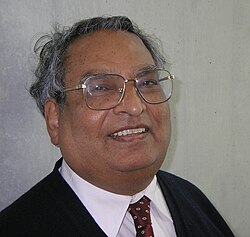 Kanti Mardia合作论文数School of Mathematics, Faculty of Engineering and Physical Sciences, University of Leeds1
 Stefan Pokorski合作论文数Institute for Advanced Study (IAS), Technische Universität München1
 Paola Bonizzoni合作论文数Dipartimento di Informatica Sistemistica e Comunicazione, Università Degli Studi di Milano-Bicocca1Leo Stodolsky合作论文数Theory Group, Max-Planck-Institut für Physik1
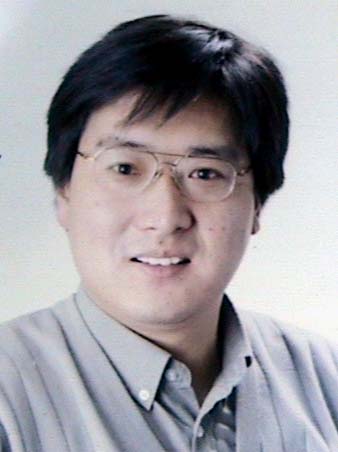 Guohua Wu合作论文数Division of Mathematical Sciences, School of Physical and Mathematical Sciences, College of Science, Nanyang Technological University1Klaus Ambos-Spies合作论文数1




