Ab initio calculations using the STO-3G basis set were used to obtain the optimal geometry and total energy for several conformations of N-acetyl-L-alanylglycine amide. The most stable structure 1 has two C7 rings, each of which includes a 1:3 hydrogen bond. Structure 2 having a Type-I beta turn with a 1:4 hydrogen bond is only 0.9 kcal/mol above 1. Structure 3 having a Type-II beta turn with a 1:4 hydrogen bond is 1.8 kcalmol above 1. In agreenent with experiments and molecular mechanics calculations, all three of these structures are expected to co-exist as a statistical ensemble. Structure 4 having one C7 ring with a 1:3 hydrogen bond and structure 5' in an extended conformation with no hydrogen bond are both 3.2 kcalmol above 1 and thus contribute less to the ensemble. Partially optimized structures having a Type-I', Type-II' or Type-III beta turn are more than 5 kcalmol above 1 and probably do not contribute to the ensemble of interconverting structures for Ac-Ala-Gly-NH2.
ChemInformVolume 18, Issue 41 Physical Organic Chemistry ChemInform Abstract: The γ Turn: Ab initio Calculations on Proline and N-Acetylproline Amide A.-M. SAPSE, A.-M. SAPSE Dr. Anne-Marie Sapse, John Jay Coll., City Univ. New York, New York, NY 10019, USASearch for more papers by this authorL. MALLAH-LEVY, L. MALLAH-LEVY Dr. Anne-Marie Sapse, John Jay Coll., City Univ. New York, New York, NY 10019, USASearch for more papers by this authorS. B. DANIELS, S. B. DANIELS Dr. Anne-Marie Sapse, John Jay Coll., City Univ. New York, New York, NY 10019, USASearch for more papers by this authorB. W. ERICKSON, B. W. ERICKSON Dr. Anne-Marie Sapse, John Jay Coll., City Univ. New York, New York, NY 10019, USASearch for more papers by this author A.-M. SAPSE, A.-M. SAPSE Dr. Anne-Marie Sapse, John Jay Coll., City Univ. New York, New York, NY 10019, USASearch for more papers by this authorL. MALLAH-LEVY, L. MALLAH-LEVY Dr. Anne-Marie Sapse, John Jay Coll., City Univ. New York, New York, NY 10019, USASearch for more papers by this authorS. B. DANIELS, S. B. DANIELS Dr. Anne-Marie Sapse, John Jay Coll., City Univ. New York, New York, NY 10019, USASearch for more papers by this authorB. W. ERICKSON, B. W. ERICKSON Dr. Anne-Marie Sapse, John Jay Coll., City Univ. New York, New York, NY 10019, USASearch for more papers by this author First published: October 13, 1987 https://doi.org/10.1002/chin.198741054Read the full textAboutPDF ToolsRequest permissionExport citationAdd to favoritesTrack citation ShareShare Give accessShare full text accessShare full-text accessPlease review our Terms and Conditions of Use and check box below to share full-text version of article.I have read and accept the Wiley Online Library Terms and Conditions of UseShareable LinkUse the link below to share a full-text version of this article with your friends and colleagues. Learn more.Copy URL Share a linkShare onFacebookTwitterLinkedInRedditWechat No abstract is available for this article. Volume18, Issue41October 13, 1987 RelatedInformation
Betabellin (beta-barrel bell-shaped protein) was designed to provide a framework for the construction of binding and active sites. Its two identical peptide chains are COOH-terminally cross-linked by a symmetric diamino acid. Each chain should fold into an amphiphilic 4-stranded anti-parallel beta-pleated sheet. Each 32-residue chain of betabellin 4 is shown below, where Abu = 4-aminobutyric acid and Phi = 4-iodophenylalanine. Cross-linker X is 3,5-bis(aminoethyl)benzoic acid (Bab). A disulfide bridge between the two Cys-21 residues increases structural rigidity. Betabellin 5 contains D-amino acids at six positions in each chain (Pro, Asn). Betabellins 4 and 5 were synthesized from Boc/sub 2/Bab-Abu-NH-resin by simultaneous solid-phase assembly of both chains and were purified by gel filtration and centrifugal partition chromatography. CD and NMR studies indicate substantial beta-sheet structure.
 Bw Erickson合作论文数5
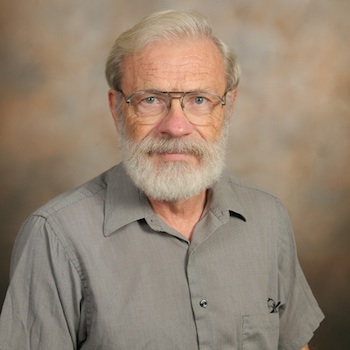 David C. Richardson合作论文数Department of Biochemistry, Duke University School of Medicine4Bruce W. Erickson合作论文数4Fw Bobe合作论文数2Anne-Marie Sapse合作论文数2Lina Mallah-Levy合作论文数2elisabeth albrecht合作论文数1DC RICHARDSON合作论文数1CG UNSON合作论文数1
 Jane S. Richardson合作论文数Department of Biochemistry, School of Medicine, Duke University;Basic Science Departments, School of Medicine, Duke University1
 Jane Shelby Richardson合作论文数Department of Biochemistry, School of Medicine, Duke University1P. Anantha Reddy合作论文数1Anne Marie Sapse合作论文数1




