In order to overcome the initial seed point selection and less robust of the order growth in the general region growing algorithm, the color image region growing algorithm is proposed with a robust order growth in this study. First, the local color histograms of all the pixels and Neighbor Similarity Factor (NSF) are calculated. Secondly, the seed selection rules, seed growth criteria and growth termination criterion are established by NSF value, segmentation is early made for image. Finally, unclassified points are reclassified to get the final segmentation result. By comparison with the JSEG algorithm testing, computation time and accuracy of the segmentation algorithm has obvious advantages.
In this paper, a powerful open Multiple Instance Learning (MIL) framework is proposed. Such an open framework is powerful since different sub-methods can be plugged into the framework to generate different specific Multiple Instance Learning algorithms. In our proposed framework, the Multiple Instance Learning problem is first converted to an unconstrained optimization problem by the Minimum Square Error (MSE) criterion, and then the framework can be constructed with an open form of hypothesis and gradient search method. The proposed Multiple Instance Learning framework is applied to the drug activity problems in bioinformatics applications. Specifically, experiments are conducted on the Musk-I dataset to predict the binding activity of drug molecules. In the experiments, an algorithm with the exponential hypothesis model and the Quasi-Newton method is embedded into our proposed framework. We compare our proposed framework with other existing algorithms and the experimental results show that our proposed framework yields a good accuracy of classification, which demonstrates the feasibility and effectiveness of our framework.
Traffic video analysis can provide a wide range of useful information such as vehicle identification, traffic flow, to traffic planners. In this paper, a framework is proposed to analyze the traffic video sequence using unsupervised vehicle detection and spatio-temporal tracking that includes an image/video segmentation method, a background learning/subtraction method and an object tracking algorithm. A real-life traffic video sequence from a road intersection is used in our study and the experimental results show that our proposed unsupervised framework is effective in vehicle tracking for complex traffic situations.
The Synchronized Multimedia Integration Language (SMIL) allows Web designers to design complicated and vivid multimedia presentations in a declarative manner. In this paper, an abstract semantic model called Multimedia Augmented Transition Network (MATN) is used to model the conceptual structure of SMIL, as well as the temporal relations and synchronization control. The advantages of using the MATN model are its simplicity and ease of modification (scalability). Users can easily generate their favorite multimedia presentations using MATNs and render them using the SMIL players. Since the SMIL specification is quite new to the Internet society, the functionality of the players is limited, i.e., they often acquire proprietary platforms or cannot deal with MPEG or RTP media objects. Another contribution of this paper is to propose a novel architecture based on Java JMF technology for tackling with such constraints.
 Mei-Ling Shyu合作论文数Faculty of Electrical and Computer Engineering, Division of Energy, Matter and Systems, School of Science and Engineering, University of Missouri-Kansas City4
 Chengcui Zhang合作论文数Knowledge Discovery and Data Mining Lab, Department of Computer Sciences, College of Arts and Sciences, University of Alabama at Birmingham2
 M Galun合作论文数1C Kenney合作论文数1X Huang合作论文数1Runing Ma (马儒宁)合作论文数Nanjing University of Aeronautics and Astronautics1
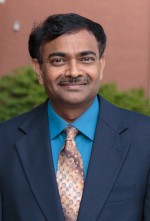 Srinivas Peeta合作论文数H. Milton Stewart School of Industrial and Systems Engineering, College of Engineering, Georgia Institute of Technology;School of Civil and Environmental Engineering, College of Engineering, Georgia Institute of Technology;Strategic Energy Institute, Georgia Institute of Technology;Autonomous and Connected Transportation Lab, Georgia Institute of Technology1
 Qiong Peng合作论文数Chinese Academy of Sciences, Chinese Academy of Sciences1
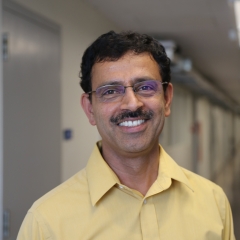 B.S. Manjunath合作论文数Center for Bio-image Informatics, University of California, Santa Barbara;Vision Research Lab, University of California, Santa Barbara;Center for Multimodal Big Data Science and Healthcare, University of California, Santa Barbara;Department of Electrical and Computer Engineering, The Robert Mehrabian College of Engineering, University of California, Santa Barbara1
 Ronen Basri合作论文数Department of Computer Science and Applied Mathematics, Weizmann Institute of Science;Toyota Technological Institute at Chicago1Sheng-Tun Li合作论文数Institute of Information Management
National Cheng Kung University1
Ronen Basri合作论文数Department of Computer Science and Applied Mathematics, Weizmann Institute of Science;Toyota Technological Institute at Chicago1Sheng-Tun Li合作论文数Institute of Information Management
National Cheng Kung University1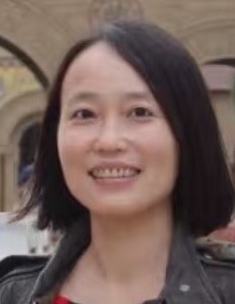 Min Chen合作论文数Division of Computing & Software Systems, School of Science, Technology, Engineering & Mathematics, University of Washington, Bothell1Antonio Carlos Sobieranski合作论文数Universidade Federal de Santa Catarina;Departamento de Informática e Estatística;Laboratório de Processamento de Imagens e Computação Gráfica;Laboratório de Processamento de Imagens e Computação Gráfica, Universidade Federal de Santa Catarina1
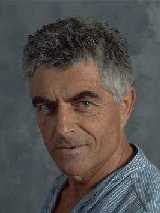 Achi Brandt合作论文数Department of Applied Mathematics & Computer Science, The Weizmann Institute of Science1
 Giuseppe Placidi合作论文数1
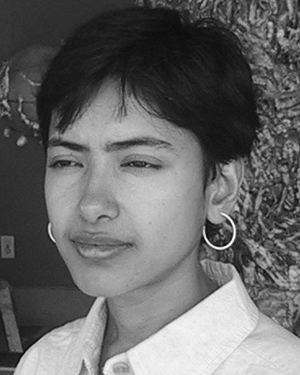 Jesmin F. Khan合作论文数Department of Electrical and Computer Engineering, University of Alabama in Huntsville1
 Kasun Wickramaratna合作论文数Department of Electrical and Computer Engineering, University of Miami1
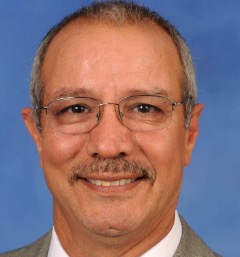 Reza Adhami合作论文数Department of Electrical & Computer Engineering, University of Alabama in Huntsville1
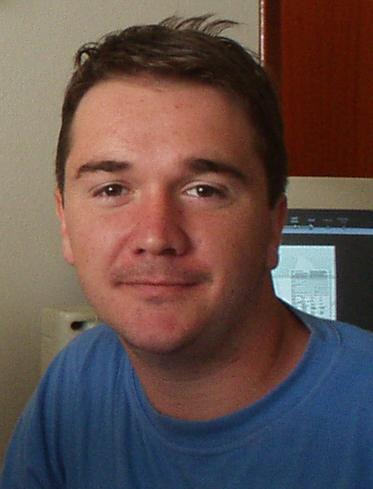 D. D. Abdala合作论文数Faculdade de Computação, Universidade Federal de Uberlândia1
 Leandro Coser合作论文数Universidade Federal de Santa Catarina;Departamento de Informática e Estatística;Laboratório de Processamento de Imagens e Computação Gráfica;Laboratório de Processamento de Imagens e Computação Gráfica, Universidade Federal de Santa Catarina1




