Abstract This chapter takes for granted the notion that communities of Buddhist studies scholars and communities of Buddhist practice exist in a symbiotic relationship in North America. Whereas previous scholarship has examined this relationship on the level of the individual, primarily through the figure of the “scholar-practitioner,” here the author argues that the relationship is also systemic or institutional. This relationship has in many ways defined both the academic field of Buddhist studies (broadly defined) and many communities of practice—or what is often taken for granted as “American Buddhism.” Such an analysis complicates the standard historical narratives of Buddhism and Buddhist studies and calls into question the reification of objectivist scholarship as a normative ideal in the field.
Background: Activating mutations in KRAS (including KRAS G12V) are well-described oncogenic drivers in solid tumors. Patients with KRAS driver mutations have a poor prognosis, and most KRAS-mutated cancers lack effective therapies. T cell receptor (TCR)-T cell therapies targeting mutant KRAS have demonstrated proof of concept in the clinic, but duration of response remains a challenge. AFNT-211 represents a novel strategy to address the immunosuppressive tumor microenvironment and improve response rate and duration in solid tumors. Rationale: AFNT-211 autologous CD4+ and CD8+ T cells are engineered to express a high avidity HLA-A*11:01restricted, KRAS G12V-specific, transgenic TCR; the wildtype CD8α/β coreceptor; and a FAS-41BB switch receptor. The intended mechanism of action is recognition and elimination of KRAS G12V-mutated tumor cells by AFNT-211. AFNT-211 is designed to enhance anti-tumor activity via the following mechanisms of action as shown in preclinical models: (1) the CD8α/β coreceptor enables MHC-I-restricted TCR recognition of the KRAS G12V target by CD4+ T cells; (2) engaging CD4+ helper T cell responses drives enhanced CD8+ T cell cytotoxic activity and prevents T cell exhaustion; (3) the FAS-41BB chimeric switch receptor drives increased T cell activity, circumventing native FAS apoptotic signaling. Methods: This ongoing Phase 1, first-in-human, multicenter, open-label study of AFNT-211 (1) evaluates safety/tolerability, (2) determines the optimal biological dose (OBD) and recommended Phase 2 dose (RP2D), and (3) assesses preliminary antitumor activity. The study consists of 2 parts: dose escalation and dose expansion. Dose escalation is guided by the Bayesian optimal interval Phase 1/2 (BOIN12) design to determine the OBD. The BOIN12 design quantifies the desirability of a dose in terms of toxicity-efficacy tradeoff and adaptively allocates patients to the dose with the highest estimated desirability. The RP2D will be selected based on the BOIN12 design and the totality of benefit/risk assessment. Patients enrolling in dose expansion will be treated at the OBD/RP2D in indication-specific cohorts. This study is conducted in patients aged ≥ 18 years who are HLA-A*11:01-positive with advanced/metastatic solid tumors harboring a KRAS G12V mutation, and intolerance of/progression on at least 1 prior systemic therapy. Patients undergo leukapheresis to collect T cells for the manufacturing of AFNT-211 and receive lymphodepleting chemotherapy prior to AFNT-211 infusion. This is followed by a 28-day dose-limiting toxicity observation period (dose escalation only) and a post-treatment follow-up period for 24 months/until disease progression. The study is open for recruitment in the United States (NCT06105021). Citation Format: Shaunica Mitchell, Binaish Khan, Francis Payumo, E. Gabriela Chiorean, Zhubin Gahvari, J. Randolph Hecht, Michael Hurwitz, Rom Leidner, Heinz-Josef Lenz, Meredith Pelster, Salman Punekar, Adam Schoenfeld, Dan Zhao, Markus Vallaster, Dirk Nagorsen. AFNT-211: A phase1 study of autologous CD4+ and CD8+ T cells engineered to express a high avidity HLA-A*11:01-restricted, KRAS G12V-specific, transgenic TCR; CD8α/β coreceptor; and a FAS41BB switch receptor in patients with advanced/metastatic solid tumors [abstract]. In: Proceedings of the American Association for Cancer Research Annual Meeting 2024; Part 2 (Late-Breaking, Clinical Trial, and Invited Abstracts); 2024 Apr 5-10; San Diego, CA. Philadelphia (PA): AACR; Cancer Res 2024;84(7_Suppl):Abstract nr CT076.
Abstract The Making of American Buddhism tells the story of how Japanese Americans in the 1950s made possible American Buddhism. Using the Berkeley Bussei, a Buddhist magazine published from 1939 to 1960, as a case study, the book demonstrates how Japanese American Buddhists argued that Buddhism was both what made them good Americans and what they had to contribute to America—a rational and scientific religion of peace. Such rhetorical constructions of Buddhist modernism were common at midcentury, and this study centers American Jōdo Shinshū Buddhists in this history. Boldly claiming an American Buddhist identity, even in the face of racial and religious discrimination, they created communities, published magazines, and hosted scholarly conventions and translation projects. In short, Nisei Buddhists built religious infrastructure. Without this infrastructure, the Buddhist modernists and Beat Generation writers who are often credited with popularizing Buddhism in the later twentieth century would not have had places to publish their ideas and communities in which to learn Buddhist practice. D. T. Suzuki, Alan Watts, Jack Kerouac, and Gary Snyder, all of whom make appearances in the Berkeley Bussei, were supported by or connected to the Nisei Buddhist community. This book recenters their experiences and the unseen labor that ultimately made possible American Buddhism.
Interval Assignment (IA) is the problem of selecting the number of mesh edges (intervals) for each curve for conforming quad and hex meshing. The intervals x is fundamentally integer-valued. Many other approaches perform numerical optimization then convert a floating-point solution into an integer solution, which is slow and error prone. We avoid such steps: we start integer, and stay integer. Incremental Interval Assignment (IIA) uses integer linear algebra (Hermite normal form) to find an initial solution to the meshing constraints, satisfying the integer matrix equation Ax=b. Solving for reduced row echelon form provides integer vectors spanning the nullspace of A. We add vectors from the nullspace to improve the initial solution, maintaining Ax=b. Heuristics find good integer linear combinations of nullspace vectors that provide strict improvement towards variable bounds or goals. IIA always produces an integer solution if one exists. In practice we usually achieve solutions close to the user goals, but there is no guarantee that the solution is optimal, nor even satisfies variable bounds, e.g. has positive intervals. We describe several algorithmic changes since first publication that tend to improve the final solution. The software is freely available.
We propose primal–dual mesh optimization algorithms that overcome shortcomings of the standard algorithm while retaining some of its desirable features. “Hodge-Optimized Triangulations” defines the “HOT energy” as a bound on the discretization error of the diagonalized Delaunay Hodge star operator. HOT energy is a natural choice for an objective function, but unstable for both mathematical and algorithmic reasons: it has minima for collapsed edges, and its extrapolation to non-regular triangulations is inaccurate and has unbounded minima. We propose a different extrapolation with a stronger theoretical foundation, and avoid extrapolation by recalculating the objective just beyond the flip threshold. We propose new objectives, based on normalizations of the HOT energy, with barriers to edge collapses and other undesirable configurations. We propose mesh improvement algorithms coupling these. When HOT optimization nearly collapses an edge, we actually collapse the edge. Otherwise, we use the barrier objective to update positions and weights and remove vertices. By combining discrete connectivity changes with continuous optimization, we more fully explore the space of possible meshes and obtain higher quality solutions.
Abstract Japanese immigrants to North America were among the first to establish Buddhist communities outside Asia. The majority of these immigrants were affiliated with the Jōdo Shinshū school of Pure Land Buddhism. Despite this affiliation, much of the scholarship on early American Buddhism has downplayed this sectarian affiliation. This chapters offers a corrective to this view by locating early Japanese Buddhist immigrants within the larger cultural and religious contexts of pan-Pacific Buddhist modernist and missionary projects. These missionaries, it is argued, were simultaneously practicing a sectarian Jōdo Shinshū Buddhism, promoting Buddhist modernism, and creating cosmopolitan communities. The chapter opens with a discussion of normative Jōdo Shinshū history and thought to orient the reader to this understudied Buddhist tradition.
This chapter contextualizes Buddhist practice in North America and Europe, paying particular attention to the historical development of a diversity of traditions; adaptation of practice to new cultural contexts; and the intersection of embodied practices and embodied identities. The chapter focuses on developments in the Hawai‘ian context, Chinese and Japanese immigrants to the mainland of North America during the nineteenth and twentieth centuries, as well as the intellectual interest in Buddhism. The chapter clarifies the themes of adaptation, language, sociopolitical structures, and identity through a series of case studies on Zen, meditation, Buddhist sites, and social engagements. The chapter points to several lacunae in the field that represent future research vistas.
We show how to sample uniformly within the three‐sided region bounded by a circle, a radial ray, and a tangent, called a “chock.” By dividing a 2D planar rectangle into a background grid, and subtracting Poisson disks from grid squares, we are able to represent the available region for samples exactly using triangles and chocks. Uniform random samples are generated from chock areas precisely without rejection sampling. This provides the first implemented algorithm for precise maximal Poisson‐disk sampling in deterministic linear time. We prove O(n · M(b) log b), where n is the number of samples, b is the bits of numerical precision and M is the cost of multiplication. Prior methods have higher time complexity, take expected time, are non‐maximal, and/or are not Poisson‐disk distributions in the most precise mathematical sense. We fill this theoretical lacuna.
Spleen tyrosine kinase (SYK) is a critical regulator of signaling in a variety of immune cell types such as B-cells, monocytes, and macrophages. Accordingly, there have been numerous efforts to identify compounds that selectively inhibit SYK as a means to treat autoimmune and inflammatory diseases. We previously disclosed GS-9973 (entospletinib) as a selective SYK inhibitor that is under clinical evaluation in hematological malignancies. However, a BID dosing regimen and drug interaction with proton pump inhibitors (PPI) prevented development of entospletinib in inflammatory diseases. Herein, we report the discovery of a second-generation SYK inhibitor, GS-9876 (lanraplenib), which has human pharmacokinetic properties suitable for once-daily administration and is devoid of any interactions with PPI. Lanraplenib is currently under clinical evaluation in multiple autoimmune indications.
Polyhedral meshes are increasingly becoming an attractive option with particular advantages over traditional meshes for certain applications. What has been missing is a robust polyhedral meshing algorithm that can handle broad classes of domains exhibiting arbitrarily curved boundaries and sharp features. In addition, the power of primal-dual mesh pairs, exemplified by Voronoi-Delaunay meshes, has been recognized as an important ingredient in numerous formulations. The VoroCrust algorithm is the first provably-correct algorithm for conforming polyhedral Voronoi meshing for non-convex and non-manifold domains with guarantees on the quality of both surface and volume elements. A robust refinement process estimates a suitable sizing field that enables the careful placement of Voronoi seeds across the surface circumventing the need for clipping and avoiding its many drawbacks. The algorithm has the flexibility of filling the interior by either structured or random samples, while preserving all sharp features in the output mesh. We demonstrate the capabilities of the algorithm on a variety of models and compare against state-of-the-art polyhedral meshing methods based on clipped Voronoi cells establishing the clear advantage of VoroCrust output.
Polyhedral meshes are increasingly becoming an attractive option with particular advantages over traditional meshes for certain applications. What has been missing is a robust polyhedral meshing algorithm that can handle broad classes of domains exhibiting arbitrarily curved boundaries and sharp features. In addition, the power of primal-dual mesh pairs, exemplified by Voronoi-Delaunay meshes, has been recognized as an important ingredient in numerous formulations. The VoroCrust algorithm is the first provably-correct algorithm for conforming polyhedral Voronoi meshing for non-convex and non-manifold domains with guarantees on the quality of both surface and volume elements. A robust refinement process estimates a suitable sizing field that enables the careful placement of Voronoi seeds across the surface circumventing the need for clipping and avoiding its many drawbacks. The algorithm has the flexibility of filling the interior by either structured or random samples, while preserving all sharp features in the output mesh. We demonstrate the capabilities of the algorithm on a variety of models and compare against state-of-the-art polyhedral meshing methods based on clipped Voronoi cells establishing the clear advantage of VoroCrust output.
We statistically infer fluid flow and transport properties of porous materials based on their geometry and connectivity, without the need for detailed We summarize structure by persistent homology and then determines the similarity of structures using image analysis and statistics. Longer term, this may enable quick and automated categorization of rocks into known archetypes. We first compute persistent homology of binarized 3D images of material subvolume samples. The persistence parameter is the signed Euclidean distance from inferred material interfaces, which captures the distribution of sizes of pores and grains. Each persistence diagram is converted into an image vector. We infer structural similarity by calculating image similarity. For each image vector, we compute principal components to extract features. We fit statistical models to features estimates material permeability, tortuosity, and anisotropy. We develop a Structural SIMilarity index to determine statistical representative elementary volumes.
Edition description: Drawing on the growing interest in methodological approaches to Buddhist studies, this volume explores how methodologies can shape our understanding of the diversity of Buddhist traditions throughout the ages. International contributors from the USA, Canada, UK, China and Japan explore case studies and reflect on methods in the study of Buddhism, united by their debt to influential Buddhist studies scholar Richard K. Payne.Methods in Buddhist Studies features new and original translations of rare materials, now available in English for the first time, as well as new ethnographic studies of rural and understudied areas of Japan. Topics discussed include the resurgence of Buddhism in contemporary China; Buddhist practices around food and consumption; the development of modern Buddhist Universities; rituals; consumerism; and the construction of the canon from such perspectives as history, textual studies, ritual studies.The chapters are drawn from both Payne’s students and his colleagues, demonstrating the breadth of his intellectual interests. Having served as the Dean of the Institute of Buddhist Studies, Berkeley, for over two decades and on multiple editorial and professional committees for the American Academy of Religion, Oxford University Press, and the University of Hawai'i Press, Payne’s scholarship has left a remarkable impact on the field, making this volume is essential reading for students and scholars of contemporary Buddhism and Buddhist studies.
Abstract Many approaches to the study of Buddhism and media overlap with traditional Buddhist studies methods such as textual analysis, art theory, ethnography, and ritual studies, as well as studies of material culture. Media studies may concern itself with contemporary media messages and forms, but it need not be limited to the realms of mass media and popular culture. In foregrounding media and material cultural, scholars can trace the development and flow of Buddhism as a global religion and cultural phenomenon. Such studies also invariably draw attention to the lived aspects of the religion: How do Buddhists enact or perform Buddhism? How do Buddhists communicate ideas about Buddhism both to other Buddhists as well as to outsiders? And how do these communicative acts change one’s understanding of Buddhism? Such questions go beyond the merely textual, historical, or philosophical and call us to answer deeper questions about the nature of Buddhism in the contemporary, global age.
Bruton’s tyrosine kinase (BTK) is a clinically validated target for B-cell leukemias and lymphomas with FDA-approved small-molecule inhibitors ibrutinib and acalabrutinib. Tirabrutinib (GS-4059/ONO-4059, Gilead Sciences, Inc., Foster City, CA) is a second-generation, potent, selective, irreversible BTK inhibitor in clinical development for lymphoid malignancies, including chronic lymphocytic leukemia (CLL) and diffuse large B-cell lymphoma (DLBCL). An accurate pharmacodynamic assay to assess tirabrutinib target coverage in phase 1/2 clinical studies will inform dose and schedule selection for advanced clinical evaluation. We developed a novel duplex homogeneous BTK occupancy assay based on time-resolved fluorescence resonance energy transfer (TR-FRET) to measure free and total BTK levels in a multiplexed format. The dual-wavelength emission property of terbium-conjugated anti-BTK antibody served as the energy donor for two fluorescent energy acceptors with distinct excitation and emission spectra. The assay was characterized and qualified using full-length purified recombinant human BTK protein and peripheral blood mononuclear cells derived from healthy volunteers and patients with CLL. We demonstrated assay utility using cells derived from lymph node and bone marrow samples from patients with CLL and DLBCL. Our TR-FRET-based BTK occupancy assay provides accurate, quantitative assessment of BTK occupancy in the clinical trial program for tirabrutinib and is in use in ongoing clinical studies.
 Mohamed S. Ebeida合作论文数Sandia National Laboratories34
 kevin s currie合作论文数27Peter A. Blomgren合作论文数26jeffrey e kropf合作论文数19jianjun xu合作论文数17Seung Lee合作论文数16Zhao Zhongdong合作论文数16
 John Owens合作论文数Department of Electrical and Computer Engineering, University of California, Davis16Robert W. Desimone合作论文数14
 Ahmed H. Mahmoud合作论文数Dept. of Electrical and Computer Engineering, University of California, Davis14Aaron Schmitt合作论文数13
 Ahmad Rushdi合作论文数13James W. Darrow合作论文数11Douglas A. Pippin合作论文数10
 Chandrajit Bajaj合作论文数Department of Computer Science, College of Natural Sciences, The University of Texas at Austin;Center for Computational Visualization, The Oden Institute of Computational Engineering and Sciences, The University of Texas at Austin;NuTechnix Consultants Inc.10
 Anjul Patney合作论文数NVIDIA10
 Muhammad A. Awad合作论文数Alexandria University9
 Steven Benzley合作论文数Departmen Civil and Environmental Engineering, Facuty Civil and Environmental Engineering, Brigham Young University9Pavel E. Zhichkin合作论文数8Timothy J. Tautges合作论文数Math & Computer Sciences Division
Argonne National Lab
8
Steven Benzley合作论文数Departmen Civil and Environmental Engineering, Facuty Civil and Environmental Engineering, Brigham Young University9Pavel E. Zhichkin合作论文数8Timothy J. Tautges合作论文数Math & Computer Sciences Division
Argonne National Lab
8 Wendy Young合作论文数Google Ventures7Robert Andrew Davidson合作论文数7
 Ahmed Abdelkader合作论文数Google Research7Patrick M. Knupp合作论文数in Albuquerque, New Mexico7David R. Brittelli合作论文数7douglas g stafford合作论文数6Jin-Ming Xiong合作论文数6
 Ortwine Daniel F合作论文数Genentech Inc6Mihaela Diana Danca合作论文数6
 Julie A Di Paolo合作论文数5
 Jason F. Shepherd合作论文数Sandia National Laboratories5
 Ted D. Blacker合作论文数5
 Laura Painton Swiler合作论文数Center for Computing Research, Sandia National Laboratories5James Barbosa合作论文数4P. Knupp合作论文数4PIPPIN DOUGLAS A I合作论文数4
 Karin Reif合作论文数Lymphocyte Activation Laboratory, Imperial Cancer Research Fund4
 Peter Murdoch合作论文数4Vicente J. Romero合作论文数4Heleen Scheerens合作论文数3Simon X. Zou合作论文数3Meire Bremer合作论文数3
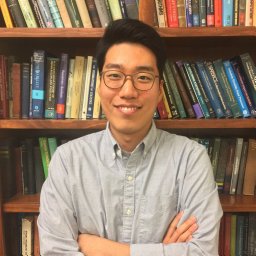 Chul Moon合作论文数Dept Stat Sci, Southern Methodist Univ3Randall Jones合作论文数3Stephen Rowe合作论文数3
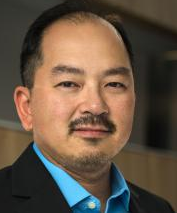 Harvey Wong合作论文数Faculty of Pharmaceutical Sciences, The University of British Columbia3
 Crawford James J合作论文数Department of Discovery Chemistry, Genentech, Inc.3Liu Lichuan合作论文数3Barbosa Antonio J合作论文数3




