IntroductionBone marrow embolization may complicate orthopedic surgery, potentially causing fat embolism syndrome. The inflammatory potential of bone marrow emboli is unclear. We aimed to investigate the inflammatory response to femoral intramedullary nailing, specifically the systemic inflammatory effects in plasma, and local tissue responses. Additionally, the plasma response was compared to that following intravenous injection of autologous bone marrow.MethodsTwelve pigs underwent femoral nailing (previously shown to have fat emboli in lung and heart), four received intravenous bone marrow, and four served as sham controls. Blood samples were collected hourly and tissue samples postmortem. Additionally, we incubated bone marrow and blood, separately and in combination, from six pigs in vitro. Complement activation was detected by C3a and the terminal C5b-9 complement complex (TCC), and the cytokines TNF, IL-1β, IL-6 and IL-10 as well as the thrombin-antithrombin complexes (TAT) were all measured using enzyme-immunoassays.ResultsAfter nailing, plasma IL-6 rose 21-fold, compared to a 4-fold rise in sham (p=0.0004). No plasma differences in the rest of the inflammatory markers were noted across groups. However, nailing yielded 2-3-times higher C3a, TCC, TNF, IL-1β and IL-10 in lung tissue compared to sham (p<0.0001-0.03). Similarly, heart tissue exhibited 2-times higher TCC and IL-1β compared to sham (p<0.0001-0.03). Intravenous bone marrow yielded 8-times higher TAT than sham at 30 minutes (p<0.0001). In vitro, incubation of bone marrow for four hours resulted in 95-times higher IL-6 compared to whole blood (p=0.03).DiscussionA selective increase in plasma IL-6 was observed following femoral nailing, whereas lung and heart tissues revealed a broad local inflammatory response not reflected systemically. In vitro experiments may imply bone marrow to be the primary IL-6 source.
We sequenced and analyzed the complete mitogenome of a Norwegian isolate of the octocoral Alcyonium digitatum using the Ion Torrent sequencing technology. The 18,790 bp circular mitochondrial genome was found to harbor the same set of 17 genes, which encode 14 protein subunits, two structural ribosomal RNAs and one tRNA, as reported in other octocorals. In addition, we detected a new tRNAPro-like gene sequence nested within the MutS protein coding region. This putative tRNA gene feature appears to be conserved among the octocorals but has not been reported previously. The A. digitatum mitogenome was also shown to harbor an optional gene (ORFA) that encodes a putative protein of 191 amino acids with unknown function. A mitogenome-based phylogenetic analysis, presented as a maximum likelihood tree, showed that A. digitatum clustered with high statistical confidence with two other Alcyonium species endemic to the Mediterranean Sea and the Southeast Pacific Ocean.
Introduction:Platelets have essential functions as first responders in the immune response to pathogens. Activation and aggregation of platelets in bacterial infections can lead to life-threatening conditions such as arterial thromboembolism or sepsis-associated coagulopathy.Methods:In this study, we investigated the role of complement in Escherichia coli (E. coli)-induced platelet aggregation in human whole blood, using Multiplate® aggregometry, flow cytometry, and confocal microscopy.Results and Discussion:We found that compstatin, which inhibits the cleavage of complement component C3 to its components C3a and C3b, reduced the E. coli-induced platelet aggregation by 42%-76% (p = 0.0417). This C3-dependent aggregation was not C3a-mediated as neither inhibition of C3a using a blocking antibody or a C3a receptor antagonist, nor the addition of purified C3a had any effects. In contrast, a C3b-blocking antibody significantly reduced the E. coli-induced platelet aggregation by 67% (p = 0.0133). We could not detect opsonized C3b on platelets, indicating that the effect of C3 was not dependent on C3b-fragment deposition on platelets. Indeed, inhibition of glycoprotein IIb/IIIa (GPIIb/IIIa) and complement receptor 1 (CR1) showed that these receptors were involved in platelet aggregation. Furthermore, aggregation was more pronounced in hirudin whole blood than in hirudin platelet-rich plasma, indicating that E. coli-induced platelet aggregation involved other blood cells. In conclusion, the E. coli-induced platelet aggregation in human whole blood is partly C3b-dependent, and GPIIb/IIIa and CR1 are also involved in this process.
Many severe inflammation conditions are complement-dependent with the complement component C5a-C5aR1 axis as an important driver. At the RNA level, the blood transcriptome undergoes programmed expression of coding and long non-coding RNAs to combat invading microorganisms. Understanding the expression of long non-coding RNAs containing Alu elements in inflammation is important for reconstructing cell fate trajectories leading to severe disease. We have assembled a pipeline for computation mining of new Alu-containing long non-coding RNAs by intersecting immune genes with known Alu coordinates in the human genome. By applying the pipeline to patient bulk RNA-seq data with sepsis, we found immune genes containing 48 Alu insertion as robust candidates for further study. Interestingly, 1 of the 48 candidates was located within the complement system receptor gene C5aR1 and holds promise as a target for RNA therapeutics.
[This corrects the article DOI: 10.1371/journal.pone.0210358.].
Hexacoral mitochondrial genomes are highly economically organized and vertebrate-like in size, structure, and gene content.A hallmark, however, is the presence of group I introns interrupting essential oxidative phosphorylation (OxPhos) genes.Two genes, encoding NADH dehydrogenase subunit 5 (ND5) and cytochrome c oxidase subunit I (COI), are interrupted with introns.The ND5 intron, located at position 717, is obligatory in all hexacoral specimens investigated.The ND5-717 intron is a giant-sized intron that carries several canonical OxPhos genes.Different modes of splicing appear to apply for the ND5-717 intron, including conventional cis-splicing, backsplicing, and trans-splicing.Three distinct versions of hexacoral COI introns are noted at genic positions 884, 867, and 720.The COI introns are of the mobile-type, carrying homing endonuclease genes (HEGs).Some COI-884 intron HEGs are highly expressed as in-frame COI exon fusions, while the expression of COI-867 intron HEGs appear repressed.We discuss biological roles of hexacoral mitochondrial ND5 and COI introns and suggest that the ND5-717 intron has gained new regulatory functions beyond self-splicing.
Ocean acidification threatens to disrupt interactions between organisms throughout marine ecosystems. The diversity of reef-building organisms decreases as seawater CO2 increases along natural gradients, yet soft-bodied animals, such as sea anemones, are often resilient. We sequenced the polyA-enriched transcriptome of adult sea anemone Anemonia viridis and its dinoflagellate symbiont sampled along a natural CO2 gradient in Italy to assess stress levels in these organisms. We found that about 3.1% of the anemone transcripts, but <1% of the Symbiodinium sp. transcripts were differentially expressed. Processes enriched at high seawater CO2 were linked to cellular stress and inflammation, including significant up-regulation of protective cellular functions and down-regulation of metabolic pathways. Transposable elements were differentially expressed at high seawater CO2, with an extreme up-regulation (> 100-fold) of the BEL-family of long terminal repeat retrotransposons. Seawater acidified by CO2 generated a significant stress reaction in A. viridis, but no bleaching was observed and Symbiodinium sp. appeared to be less affected. These observed changes indicate the mechanisms by which A. viridis acclimate to survive chronic exposure to ocean acidification conditions. We conclude that many organisms that are common in acidified conditions may nevertheless incur costs due to hypercapnia and/or lowered carbonate saturation states.
The mitochondrial genomes of mushroom corals (Corallimorpharia) are remarkable for harboring two complex group I introns; ND5-717 and COI-884. How these autocatalytic RNA elements interfere with mitochondrial RNA processing is currently not known. Here, we report experimental support for unconventional processing events of ND5-717 containing RNA. We obtained the complete mitochondrial genome sequences and corresponding mitochondrial transcriptomes of the two distantly related corallimorpharian species Ricordea yuma and Amplexidiscus fenestrafer. All mitochondrial genes were found to be expressed at the RNA-level. Both introns were perfectly removed by autocatalytic splicing, but COI-884 excision appeared more efficient than ND5-717. ND5-717 was organized into giant group I intron elements of 18.1 kb and 19.3 kb in A. fenestrafer and R. yuma, respectively. The intron harbored almost the entire mitochondrial genome embedded within the P8 peripheral segment. ND5-717 was removed by group I intron splicing from a small primary transcript that contained a permutated intron–exon arrangement. The splicing pathway involved a circular exon-containing RNA intermediate, which is a hallmark of RNA back-splicing. ND5-717 represents the first reported natural group I intron that becomes excised by back-splicing from a permuted precursor RNA. Back-splicing may explain why Corallimorpharia mitochondrial genomes tolerate giant group I introns.
A heteroplasmic tandem repeat (HTR) array occupies 100 to 300 bp of the mitochondrial DNA control region in the Atlantic cod, and recently we noted that the repeat appeared integrated in a polyadenylated mitochondrial long noncoding RNA. Here we provide a more detailed analysis of the mitochondrial HTR in the mitochondrial genome of 134 Atlantic cod specimens. We report all specimens to harbor mitochondrial HTRs in the control region, and identified 26 distinct variants among the 402 repeat motifs assessed. Whereas most specimens contained HTR profiles of 2-5 copies consisting of the same 40-bp motif, 22 specimens showed compound HTR arrays of at least two types of motifs present in the same mitochondrial DNA molecule. We found HTR profiles to be highly conserved between different tissue types of a single individual, and strictly maternally inherited in a mating experiment between parental Atlantic cod expressing different HTR profiles and array motifs. We conclude that mitochondrial heteroplasmy in the control region is very common in Atlantic cod, and results in length heterogenity of the long noncoding RNA lncCR-H.
Mitochondrial genome organization of sea anemones appears conserved among species and families, and is represented by a single circular DNA molecule of 17 to 21 kb. The mitochondrial gene content corresponds to the same 13 protein components of the oxidative phosphorylation (OxPhos) system as in vertebrates. Hallmarks, however, include a highly reduced tRNA gene repertoire and the presence of autocatalytic group I introns. Here we demonstrate that the mitochondrial genome of the deep-water sea anemone Protanthea simplex deviates significantly from that of other known sea anemones. The P. simplex mitochondrial genome contains a heavily scrambled order of genes that are coded on both DNA strands and organized along two circular mito-chromosomes, MCh-I and MCh-II. We found MCh-I to be representative of the prototypic sea anemone mitochondrial genome, encoding 12 OxPhos proteins, two ribosomal RNAs, two transfer RNAs, and a group I intron. In contrast, MCh-II was found to be a laterally transferred plasmid-like DNA carrying the conserved cytochrome oxidase II gene and a second allele of the small subunit ribosomal RNA gene.
 Bård Ove Karlsen合作论文数Faculty of Health Sciences, University of Tromsø20
 Steinar Daae Johansen合作论文数Faculty of Biosciences and Aquaculture, Nord University18
 Tom Eirik Mollnes合作论文数Department of Immunology, Institute of Clinical Medicine, Faculty of Medicine, University of Oslo11
 Truls Moum合作论文数Faculty of Biosciences and Aquaculture, Bodø University College11
 Tor Erik Jørgensen合作论文数Faculty of Biosciences and Aquaculture, Bodø University College9
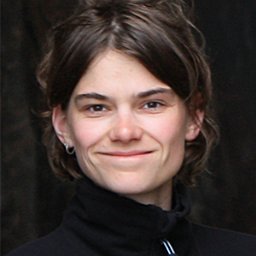 Lau Corinna合作论文数6Landsem Anne合作论文数6
 Kristin Ytterstad Pettersen合作论文数Department of Engineering Cybernetics, Faculty of Information Technology and Electrical Engineering, Norwegian University of Science and Technology;Norwegian Defence Research Establishment6
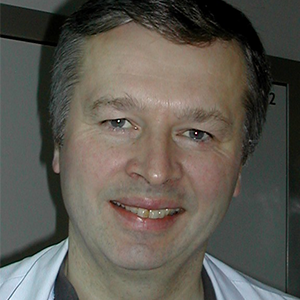 Ole Lars Brekke合作论文数Diagnostic Clinic, Nordland Hospital Trust;Institute of Clinical Medicine, UiT, The Arctic University of Tromsø;Norwegian Complement Research Group5Jarle T. Nordeide合作论文数5
 Dag H Coucheron合作论文数4Tom Mollnes合作论文数3
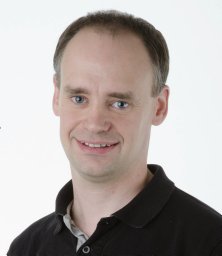 Nilsson Per H合作论文数Department of Immunology.3
 Mikael Per Dahl合作论文数3
 Erik Knutsen合作论文数Faculty of Health Sciences, University of Tromsø3
 Ilona Urbarova合作论文数3Siri Okkenhaug合作论文数3
 Morten Andreassen合作论文数3Ragna Breines合作论文数3Tomasz Furmanek合作论文数3Martin Leth-Olsen合作论文数2Alexandra Gerogianni合作论文数Linnaeus Ctr Biomat Chem, Linnaeus Univ2
 Anders Hagen Jarmund合作论文数Dept Circulat & Med Imaging ISB, NTNU Norwegian Univ Sci & Technol2
 Steinar Kristiansen合作论文数2
 Benjamin Stage Storm合作论文数Fac Nursing & Hlth Sci, Nord Univ2Sylvia Ighem Chi合作论文数2
 Nederbragt Alexander J合作论文数CEES, Univ Oslo2
 Nyrnes Siri Ann合作论文数2
 Jason Hall Spencer合作论文数School of Biological and Marine Sciences, Faculty of Science and Engineering, University of Plymouth2
 Kevin Klingan合作论文数2
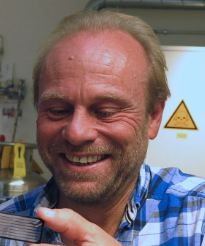 Kjetill Sigurd Jakobsen合作论文数Centre for Ecological and Evolutionary Synthesis, The Faculty of Mathematics and Natural Sciences, University of Oslo;Department of Biosciences, University of Oslo;Norwegian Sequencing Centre2
 Marco Milazzo合作论文数Dipartimento di Scienze della Terra e del Mare, University of Palermo2Hilde Fure合作论文数2Jussi Evertsen合作论文数2Sylvain Forêt合作论文数2Lars Martin Jakt合作论文数2Erik Waage Nielsen合作论文数2Dorte Christiansen合作论文数2Ole Morten Seternes合作论文数1Rolf B. Edvardsen合作论文数1Arseny Dubin合作论文数1Bent Aksel Nilsen合作论文数1Beatrice Fagerang合作论文数1Pedro Miguel Coelho Medeiros合作论文数1
 David J. Miller合作论文数Department of Animal Sciences, Education and Communications, College of Agricultural, Consumer and Environmental Sciences, University of Illinois at Urbana-Champaign1
 Ellinor Haukland合作论文数1Bizuayehu Teshome Tilahun合作论文数Faculty of Biosciences and Aquaculture, University of Nordland1
 Robin Mjelle合作论文数Department of Cancer Research and Molecular Medicine, Norwegian University of Science and Technology1




