Augmented reality techniques can be used to support system modeling and industrial operations at different levels, enabling designers and engineers to augment their real environment with relevant virtual content. In aerospace, these techniques are tightly coupled to digital twins. Together, they can enhance scarce operational resources, facilitating skill transfer and knowledge retention. It is possible to define the term digital twin based on conceptual data models as used in model-based system engineering. In this definition, a conceptual data model is used to accompany a product as an unique evolving system model through the whole lifecycle, starting from virtual abstractions and progressing toward a virtual replication of the real-world entity. Throughout the whole lifecycle, digital twins help to analyze or predict system behavior for improving decision-making and avoiding cost-expensive prototyping. In this chapter, we discuss how digital twin representations can leverage on augmented reality approaches and provide an overview of how model-based system engineering can help to maintain information consistency through the different phases of the product lifecycle. In this context, we address different aspects related to the use of augmented reality approaches for digital twins in aerospace, such as overlay precision, interaction, data visualization, and remote collaboration. Our example applications take different phases of the product lifecycle into account, from creation to operation.
In this paper, we present a concept study to facilitate maintenance of an operating aircraft based on its lifelong collected data, called Digital Twin. It demonstrates a damage assessment scenario on a real aircraft component. We propose a graphical user interface that contains menu-guided instructions and inspection documentation to increase the efficiency of manual processes. Furthermore, experts located at different sites can join via a virtual session. By inspecting a 3D model of the aircraft component, they can see synchronized information from a Digital Twin database. With Augmented Reality glasses, the Microsoft HoloLens, a Digital Twin can be experienced personally. In the inspector's view, the 3D model of the Digital Twin is directly superimposed on the physical component. This Mixed Reality Vision can be used for inspection purposes. Any inspection related information can be directly attached to the component. For example, damage locations are marked by the inspector on the component's surface and are stored in the Digital Twin database. Our scenario demonstrates how new information can be derived from the combination of collected data and analyses from the Digital Twin database. This information is used to maintain the continued airworthiness of the aircraft. Feedback from domain related engineers confirm that our interface has an enormous potential for solving current maintenance problems in the aviation industry. Additionally, our study provides ideas for the integration of further analysis functions into the interface.
We introduce Virtual Planet , an application which enables researchers to interactively explore huge planetary data sets in an intuitive way. The application allows users to navigate seamlessly between planets and provides different tools and interactive visualization to analyze the data.
In this paper we propose an integrated immersive augmented reality solution for a software tool supporting spacecraft design and verification. The spacecraft design process relies on expertise in many domains, such as thermal and structural engineering. The various subsystems of a spacecraft are highly interdependent and have differing requirements and constraints. In this context, interactive visualizations play an important role in making expert knowledge accessible. Recent immersive display technologies offer new ways of presenting and interacting with computer-generated content. Possibilities and challenges for spacecraft configuration employing these technologies are explored and discussed. A user interface design for an application using the Microsoft HoloLens is proposed. To this end, techniques for selecting a spacecraft component and manipulating its position and orientation in 3D space are developed and evaluated. Thus, advantages and limitations of this approach to spacecraft configuration are revealed and discussed.
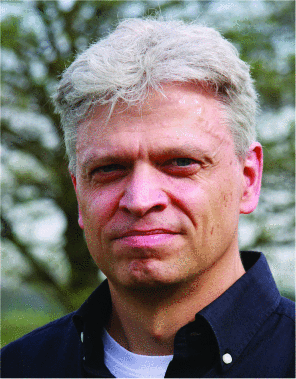 Andreas Gerndt合作论文数5
 Werner Schreiber合作论文数2Tom Kühnert合作论文数2Stefan Rilling合作论文数2
 Azeem Syed Muhammad合作论文数German Aerosp Ctr2Alexander Thomas合作论文数2
 Ralf Dorner合作论文数RheinMain University of Applied Sciences2
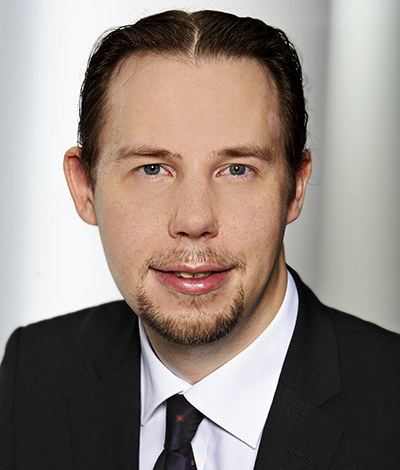 Gerd Bruder合作论文数Department of Computer Science, University of Central Florida;Synthetic Reality Lab, Institute for Simulation and Training, University of Central Florida2
 Philipp Fischer合作论文数NVIDIA2Lisa Blum合作论文数2
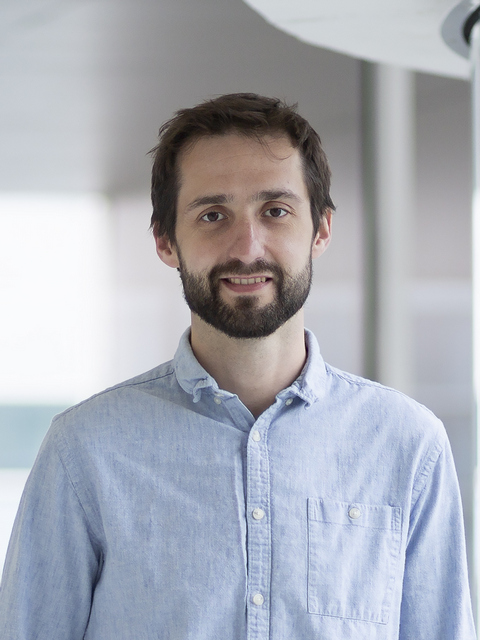 Mikel Sagardia Erasun合作论文数Vicomtech2
 Torsten Wolfgang Kuhlen合作论文数Visual Computing Institute, RWTH Aachen University2
 Katharina Hertkorn合作论文数Neatleaf GmbH2
 Thomas Hulin合作论文数German Aerospace Center (DLR) Oberpfaffenhofen Institute of Robotics and Mechatronics2
 Christian Geiger合作论文数Department of Media, Hochschule Düsseldorf2
 Manfred Bogen合作论文数Department 'Virtual Environments (VE)', Fraunhofer Institute Intelligent Analysis and Information Systems2
 Robin Wolff合作论文数University of Salford2
 Leif Oppermann合作论文数Fraunhofer Institute for Applied Information Technology2
 Janki Dodiya合作论文数The University of Reading2
 Christoffer Menk合作论文数Volkswagen AG2
 Johannes Hummel合作论文数mcminstitute
Publication: Americas Conference on Information Systems 2001
Communities: The Role of Technology
Johannes Hummel, University of St. Gallen
Ulrike Lechner, University of St. Gallen2
Johannes Hummel合作论文数mcminstitute
Publication: Americas Conference on Information Systems 2001
Communities: The Role of Technology
Johannes Hummel, University of St. Gallen
Ulrike Lechner, University of St. Gallen2 robert kaps合作论文数1guido brunnett合作论文数1Michael Kleiber合作论文数1
 Georgia Albuquerque合作论文数German Aerospace Center1
 Guido Brunnett合作论文数Technische Universitat Chemnitz
Fakultat fur Informatik1
Guido Brunnett合作论文数Technische Universitat Chemnitz
Fakultat fur Informatik1 Frank Steinicke合作论文数Department of Informatics, Faculty of Mathematics, Informatics, and Natural Sciences, University of Hamburg1
 Jens Herder合作论文数Virtual Sets and Virtual Environments Laboratory, Faculty of Media, Hochschule Düsseldorf, University of Applied Sciences1




