Contrastive language-image pre-training (CLIP) has demonstrated remarkable zero-shot classification ability, namely image classification using novel text labels. Existing works have attempted to enhance CLIP by fine-tuning on downstream tasks, but these have inadvertently led to performance degradation on unseen classes, thus harming zero-shot generalization. This paper aims to address this challenge by leveraging readily available image-text pairs from an external dataset for cross-modal guidance during inference. To this end, we propose X-MoRe, a novel inference method comprising two key steps: (1) cross-modal retrieval and (2) modal-confidence-based ensemble. Given a query image, we harness the power of CLIP's cross-modal representations to retrieve relevant textual information from an external image-text pair dataset. Then, we assign higher weights to the more reliable modality between the original query image and retrieved text, contributing to the final prediction. X-MoRe demonstrates robust performance across a diverse set of tasks without the need for additional training, showcasing the effectiveness of utilizing cross-modal features to maximize CLIP's zero-shot ability.
Weather4cast again advanced modern algorithms in AI and machine learning through a highly topical interdisciplinary competition challenge: The prediction of hi-res rain radar movies from multi-band satellite sensors, requiring data fusion, multi-channel video frame prediction, and super-resolution. Accurate predictions of rain events are becoming ever more critical, with climate change increasing the frequency of unexpected rainfall. The resulting models will have a particular impact where costly weather radar is not available. We here present highlights and insights emerging from the thirty teams participating from over a dozen countries. To extract relevant patterns, models were challenged by spatio-temporal shifts. Geometric data augmentation and test-time ensemble models with a suitable smoother loss helped this transfer learning. Even though, in ablation, static information like geographical location and elevation was not linked to performance, the general success of models incorporating physics in this competition suggests that approaches combining machine learning with application domain knowledge seem a promising avenue for future research. Weather4cast will continue to explore the powerful benchmark reference data set introduced here, advancing competition tasks to quantitative predictions, and exploring the effects of metric choice on model performance and qualitative prediction properties.
Monitoring and detecting epidemics are essential for protecting humanity from extreme harm. However, it must be done in real time for accurate epidemic detection to use limited resources efficiently and save time preventing the spread. Nevertheless, previous studies have focused on predicting the number of confirmed cases after the disease has already spread or when the relevant data are provided. Moreover, it is difficult to give the reason for predictions made using existing methods. In this study, we investigated how to detect and alert infectious diseases that might develop into pandemics soon, even before the information about a specific disease is aggregated. We propose an explainable method to detect an epidemic. This method uses only global news data, which are easily accessible in real time. Hence, we convert the news data to a graph form and cluster the news themes to curate and extract relevant information. The experiments on previous epidemics, including COVID-19, show that our approach allows the explainable real-time prediction of an epidemic disease and guides decision-making for prevention. Code is available at https://github.com/sungnyun/ Epidemics-Detection-GKG .
The Weather4Cast competition (hosted by NeurIPS 2022) required competitors to predict super-resolution rain movies in various regions of Europe when low-resolution satellite contexts covering wider regions are given. In this paper, we show that a general baseline 3D U-Net can be significantly improved with region-conditioned layers as well as orthogonality regularizations on 1x1x1 convolutional layers. Additionally, we facilitate the generalization with a bag of training strategies: mixup data augmentation, self-distillation, and feature-wise linear modulation (FiLM). Presented modifications outperform the baseline algorithms (3D U-Net) by up to 19.54% with less than 1% additional parameters, which won the 4th place in the core test leaderboard.
 Se-Young Yun合作论文数Graduate School of AI, Korea Advanced Institute of Science and Technology4
 Deukryeol Yoon合作论文数2
 Shinhwan Kang合作论文数Korea Adv Inst Sci & Technol2
 Hyeonjeong Shin合作论文数2
 Kijung Shin合作论文数Data Mining Lab, Kim Jaechul Graduate School of AI, Korea Advanced Institute of Science and Technology2
 Taehyeon Kim合作论文数Holiday Robotics2Yang Li合作论文数1Jirí Pihrt合作论文数1Federico Serva合作论文数1Llorenc Lliso合作论文数1Jihwan Oh合作论文数1
 Haiyu Dong合作论文数1Minseok Son合作论文数1Seungheon Shin合作论文数1Inyoung Lee合作论文数1Sergey Polezhaev合作论文数1Doyi Kim合作论文数1Matej Choma合作论文数1
 Namgyu Ho合作论文数Optimization and Statistical Inference Lab, Kim Jaechul Graduate School of Artificial Intelligence, Korea Advanced Institute of Science and Technology1Rudolf Raevskiy合作论文数1
 Sungnyun Kim合作论文数Optimization & Statistical Inference Lab, Korea Advanced Institute of Science and Technology;Graduate School of Artificial Intelligence, Korea Advanced Institute of Science and Technology1Jinyoung Park合作论文数1Jaewoo Shin合作论文数Korea Advanced Institute of Science and Technology1
 Brian Pulfer合作论文数Universitàdella Svizzera italiana;Università della Svizzera italiana1
 Eunbin Kim合作论文数Korea Astronomy and Space Science Institute1
 Petr Simanek合作论文数Faculty of Information Technology, Czech Technical University in Prague GoodAI1Seungju Cho合作论文数1
 Minseok Seo合作论文数Hanbat Natl Univ, Dept Informat & Commun Engn, Daejeon 34014, South Korea1
 Pedro Herruzo合作论文数1
 Yury Belousov合作论文数Department of Computer Science, University of Geneva1
 Michael Kopp合作论文数1
 Yeji Choi合作论文数Department of Chemical and Biological Engineering, Korea University1Sewoong Ahn合作论文数1
 Changick Kim合作论文数School of Electrical Engineering, College of Engineering, Korea Advanced Institute of Science and Technology;Department of Semiconductor System Engineering, College of Engineering, Korea Advanced Institute of Science and Technology1
 Jaehoon Oh合作论文数Graduate School of Data Science, Korea Advanced Institute of Science and Technology1
 Sepp Hochreiter合作论文数Institute for Machine Learning, Johannes Kepler University Linz;NXAI1
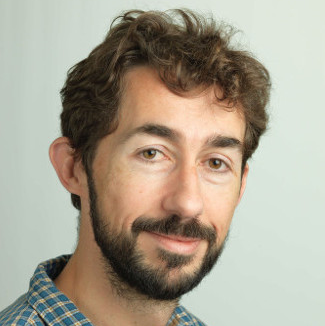 Bertrand Le Saux合作论文数ESA1
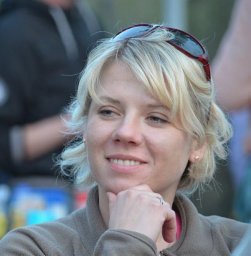 Aleksandra Gruca合作论文数Silesian University of Technology1
 David P. Kreil合作论文数1
 P. Rípodas合作论文数1
 Xavier Calbet合作论文数Agencia Estatal de Meteorología1




