This study presents an optimisation-based approach to reduce fuel consumption and emissions from shipping navigation. The main objective is to improve energy efficiency and simultaneously turn a case-study vessel compliant with Carbon Intensity Indicator (CII) proposed by IMO. This optimisation module has been devised as part of a new robust integrated real-time digital solution that will involve a significant number of both technical and operational measures in practice aiming to optimise operational efficiency (duringnavigation and port calls). Namely, the tool will be capable of situational awareness and decision support to reduce fuel consumption and Green House Gas (GHG) emissions from shipping and must be combined with intrinsic vessel systems to improve vessel hydrodynamic performance, resulting also in improved vessel safety and widening of the operational weather window
This works aims at evaluating the ability of assessing drifting of a drowning body at sea using Computational Fluid Dynamics (CFD). This paper is focused on the evaluation of the numerical accuracy of the CFD simulations performed with the Simerics-MP flow solver, i.e., solution verification. The main goal of the paper is to illustrate the challenges found when using a commercial CFD package. The study of the drift of a drowning body at sea involves the simulation of incompressible, two-phase (air and water) flows around a bluff body and so the simplest mathematical model to tackle it is the Reynolds-averaged Navier-Stokes equations using ensemble average to define the mean flow and to average mass and momentum balances. This leads to unsteady flow problems that require integration in space and time. Therefore, numerical errors include contributions from the round-off, iterative, discretization (time and space) and statistical errors. Two simple situations to address the difficulties of estimating numerical uncertainties in the simulation of the drift of a drowning body at sea have been selected: (i) current induced drag forces, no wind and no waves; (ii) wind induced drag forces, no current and no waves. Grid/time refinement studies are performed for the two selected conditions to determine numerical uncertainties of the three selected quantities of interest: the resistance/drag force and the trim (pitch) and sinkage (heave) of the drowning body. It is clear that “default settings” cannot be used for such exercise and that there are small details that may have a significant influence on the estimated uncertainties. Nonetheless, the results show that it is not easy to obtain negligible numerical uncertainties in this type of simulations and so the planned comparison of simulations and experiments to determine the modelling error of CFD will be affected by a significant validation uncertainty.
A thorough understanding of the interaction of waves with ships is a vital factor in the safe and economical technology design. Considerable advances have been made recently in the modelling of wave hydrodynamics and wave-structure interaction. Wave diffraction analysis using 2D Strip Theory (ST) or 3D Boundary Element Methods (BEM) based on potential flow theory is now standard with linear and second-order theory in the frequency domain. In case an assessment of a new ship roll stabilisation system of the gyroscopic type is seen as desirable, no ready to use numerical tool to predict the performance of the wave-structure interaction is available. Therefore, for smaller vessels with a certain advance speed, such a patrol boats or pleasure crafts further developments must be applied to a BEM method to take into account speed corrections plus a standard ST tool in order to include the roll stabilisation effect that could be attained using a dedicated gyroscopic roll stabilisation system installed aboard. In this framework, the proposed work consists of exploring the application of an adapted BEM method with speed corrections, plus a standard ST to study the wave-structure interactions of an unstabilised ship and a ship fitted with a Gyroscopic Roll Stabilisation (GRS) system by considering the case study of a small patrol boat in a seaway. The main objective of this study is to assess the performance of this GRS concept and calculate the operability index of this class of vessels (percentage of time the vessel complies with user pre-defined limiting criteria) for a certain design point using long term statistics, so that complex non-linear responses in waves will be neglected at this stage.
The development of wave energy converters is centred on the combination of two factors: cost-effectiveness of energy extraction and system survivability on extreme sea conditions. Despite advances in numerical modelling, wave tank model testing still presents the most reliable option to evaluate these two factors. This paper presents an experimental study on the hydrodynamic responses of the UGEN, a wave energy converter consisting of an asymmetric floater with an internal U-shaped tank partially filled with water. The device absorbs energy through the oscillating-water-column (OWC) motion inside the U-shaped tank, induced by the wave action on the floater. The experimental testing of a bottom-moored 1:24th-scale model was performed at the COAST Laboratory, University of Plymouth, UK, considering regular and irregular wave conditions. The wave tank test measurements report six-degree-of-freedom rigid-body motions, mean drift forces, OWC motion, structural stresses and mooring loads. Results present the characterization of the energy absorption at the internal OWC induced by the floater’s sway, heave and roll. The occurrence of low-cycle auto-parametric resonance under certain wave conditions was detected and induced large roll motions, which affected power extraction and increased mooring line loads, particularly for large wave amplitudes.
The paper presents an optimization design procedure for Wave Energy Converters (WECs) of the Oscillating Water Column (OWC) type, where steel plating thickness and geometry of the girders of the hull wave-floater are selected in order to attain the most cost effective power generation solution off the Irish west coast (design-point). For optimization purposes, two basic configurations always floating and submersible under extreme weather conditions have been proposed to solve this typical multi-dimensional, single objective (minimization of the Levelized Cost Of Electricity (LCOE)) problem in order to take into account not only the efficiency of the WEC, but also the most relevant operational and manufacturing aspects of these floating electro-mechanic devices.
The paper presents an optimization design procedure for wave energy converters (WECs) of the oscillating water column (OWC) type, where main dimensions and geometry of the wave-floater and OWC main characteristics for a given Power-Take-Off (PTO) are selected to attain the most cost effective power generation solution off the Portuguese west coast (design-point). For optimization purposes, two algorithms that do not require the function gradient (Genetic Algorithm and COBYLA) have been proposed to solve this typical multi-dimensional, single objective (maximization of the produced electrical energy or maximization of the annual profit) problem in order to take into account not only the efficiency of the WEC, but also the most relevant operational and manufacturing aspects of these floating electro-mechanic devices. The annual averaged power output scatter diagrams at the design-point based on computer simulations are presented for the Wells turbine equipping the optimized wave-floater. A direct comparison between the total mean power of the optimized UGEN and that same power extracted by the baseline configuration considering all the sea states in one year at the design point is also presented in this paper in order to demonstrate the advantages of this design tool.
This paper presents the hydrodynamic coefficients obtained from forced oscillation tests of a C11 type container vessel and their comparison to strip theory. Heave and pitch added mass and damping values are investigated through scaled model testing. Three inclination angles are considered: upright, 5°, and 10°. Forced oscillation tests carried out on this heeled vessel with asymmetric cross-sections aim to understand how they deviate from their upright position counterparts and if strip theory is able to capture this change. The experimental setup considers two speeds, allowing the evaluation of speed effects. In addition to the speeds and inclination angles, the forced oscillation survey includes three amplitudes of motion in each heave and pitch modes to assess nonlinearities in six periods of oscillation.
A set of scaled model experiments have been conducted at HSVA towing tank to study the occurrence of parametric rolling on a containership in regular and irregular waves. Herein the performed model tests are described and the experimental results are presented. Forced rolling tests were also performed with the ship model in order to investigate its roll damping characteristics. By means of these tests the roll damping coefficients were determined for different maximum roll amplitudes and advance speeds. The experimental data of this containership is compared with results from a non-linear time domain model, where the prediction of maximum roll amplitude under parametric rolling conditions associated with different viscous roll damping models is thoroughly discussed.
This paper deals with the validation of a theoretical model that is employed to foresee the susceptibility of a vessel to the occurrence of parametric rolling. The results of a series of experiments carried out on a C11 type container vessel are compared with the six degrees of freedom numerical code. Severity of the motion is discussed utilizing time series. Regular and irregular head waves are presented and the presence and the effect of coupling are examined. In addition to head waves, irregular waves are numerically and experimentally evaluated also in slightly oblique waves. Numerical results are presented in polar plots for regular and irregular waves for all headings and speeds of the vessel.
A review is presented of the work of Ikeda on component-based method for the roll damping prediction of ships leading to parametric rolling. The method has been updated to improve its accuracy and to extend its applicability to large containerships. Therefore, it is of utmost importance that a good estimate of the roll damping is made for such ships in order to investigate this resonant phenomenon. Extensive roll decrement tests are conducted in order to investigate the influence of roll damping estimation method on parametric rolling prediction. A hybrid time-domain 6 DOF numerical simulation method is applied for the prediction of parametric roll resonance in regular waves. The obtained numerical results are compared with corresponding available experimental measurements and commented. Numerical schemes tuned with the experiments clearly demonstrated that the implementation of this roll damping treatment significantly improves the accuracy of seakeeping model results.
A time-domain non-linear strip theory model of ship′s motions in six degrees-of-freedom is described and is validated by comparing numerical predictions with experimental results of parametric rolling of a containership. The calculation of the time variations of the restoring force is made using a pressure integration technique over the instantaneous submerged hull. Hydrodynamic effects are based on a potential flow strip theory using Frank′s Close fit method. A semi-empirical formulation is adopted for the surge motion. Different models for roll damping have been introduced so far in the governing equations but in the present case roll damping is determined directly from experimental data that includes roll decay tests with different forward speed, which allows the assessment of the effect of ship speed on roll damping. Comparisons between numerical and experimental results demonstrate the usefulness and accuracy of the method proposed.
The dynamic behaviour of a fishing vessel in waves is studied in order to reveal its parametric rolling characteristics. This paper presents experimental and numerical results in longitudinal regular waves. The experimental results are compared against the results of a time-domain non-linear strip theory model of ship motions in six degrees-of-freedom. These results contribute to the validation of the parametric rolling prediction method, so that it can be used as an assessment tool to evaluate both the susceptibility and severity of occurrence of parametric rolling at the early design stage of these types of vessels.
In this study a U-type tank, consisting of two lateral reservoirs connected by means of an horizontal channel, is considered as a passive anti-rolling device for ships.Forced oscillation tests have been conducted at CEHIPAR for the U-type tank on a moving platform for different frequencies and also for different amplitudes of the pure roll forced motions. The most important aspect was to obtain a large set of roll restoring moments, for this passive configuration, which gives a discrete distribution of the roll restoring moments along the entire range of wave frequencies of interest. Moreover, from free decay tests an estimate of the U-tank internal damping was obtained.A detailed account of model tests is presented and the method of analyzing the experimental results discussed. Herein the experimental data of the U-type tank is compared with results from a linear frequency domain model, where the level of nonlinear effects with the amplitude of the forced motions is thoroughly addressed.
Parametric roll resonance is known as one of dangerous modes of ship motions in waves. This resonance occurs as a result of roll restoring energy variations in astern or head seas. Post-Panamax container ships seem to be particularly susceptible to parametric rolling because the vessels tend to feature wide beam and large bow flares in order to carry more containers on deck while at the same time minimizing the resistance and improve propeller performance with the streamlined underwater hull. This paper focuses on the parametric resonance observed in following seas. A 6 degree-of-freedom model has been used to explain the parametric roll resonance of the ship taking into account coupling between roll and vertical motions. Parametric rolling resonance in following waves was also investigated experimentally. Several experiments using a scale model of a post-Panamax containership were carried out in regular following waves at the CEHIPAR basin in Spain. In these experiments the wavelength, the wave height, the model speed and the encounter angle were widely varied to clarify overall property of parametric rolling resonance in following waves. As a result, conditions in which the parametric rolling resonance is likely to occur were determined. Also outlined in the paper are recommendations for additional research needed to better understand the influence of vessel design and operational considerations on the propensity of post-Panamax containerships towards parametric rolling.
The paper presents a linear hydrodynamic model for the UGEN wave energy converter, an analysis of the dynamics of the system and the predicted ability to extract energy from the waves. The UGEN (floating device with a U tank for GENeration of electricity from waves) consists of an asymmetric floater with a large internal U tank filled with water, where the energy is extracted from the relative motion between the water inside the tank and the rolling of the floater. The floater rolling mode of motion is the main stimulator of the motion of the water in the tank, however the sway and heave motions are also coupled therefore the system has motion.
A series of experiments were carried out to assess the instantaneous hydrodynamic coefficients and the parametric rolling characteristics of a C11 class container vessel model. The experiments consisted of captive model tests at various heel angles, forced oscillation tests, free roll decay tests and parametric rolling tests. The results obtained from the forced oscillation tests in calm water on symmetric (upright) and asymmetric (heeled) cross-sections are discussed in here.The main objective of the forced oscillation tests was to obtain the heave, roll and pitch added masses and damping coefficients for two different speeds and also three different amplitudes of forced motions. The most important aspect was to assess the influence of taking instantaneous cross-section into account on calculation of these hydrodynamic coefficients. In addition, these tests allowed the identification of the level of non-linear effects with the amplitude of the forced motions for both symmetric and asymmetric hull forms. The experimental data obtained is compared with the results from two strip theory codes for symmetric and asymmetric cross-sections.
Parametric rolling of different types of ships has been considered a serious problem, to the extent that its consequences warrant development of design procedures or decision support tools to prevent its occurrence. This paper first focuses on explaining parametric rolling with the emphasis on the physics that governs such phenomenon of dynamic instability in waves. In second place, the various approaches adopted by the authors over the last years to predict this particular problem, including hydrodynamic models of increasing sophistication with 1, 3, 5 and 6 Degrees of Freedom (DoF) are reviewed. Finally, scaled model experiments are referred in the case of with two containerships and one fishing vessel which proved to be particularly prone to parametric rolling in longitudinal waves, and presents some comparisons are presented for those ships with a time-domain, non-linear strip theory model of ship's motions in 6 DoF.
The intact stability of three Portuguese and four Peruvian fishing vessels operating in the Atlantic and Pacific Oceans under the action of fishing gear pull, beam waves and wind are studied. The reduction of dynamic transverse stability of these fishing vessels have been studied, as a result of roll back angle, wind moment (based on 2008 IS Code, part B) and fishing gear pull moments and their combination, including their combined effects. The calculation results presented in this paper show that: (a) fishing gear heeling moments, in many occasions, are more critical than the heeling moments produced by rough weather scenarios and, effectively, a combination of them may lead to total stability failure even when a normal fishing trip is considered; (b) some fishing vessels have over dimensioned fishing gears and machinery onboard, that have negative influence onto fishing vessel's transverse stability. Finally, comments are made about the limitations of “2008 IS Code, part B” with respect to prevention of stability failure due to combined effect of fishing gear pull, beam waves and wind.
 Carlos Guedes Soares (卡洛斯·格德斯·苏亚雷斯)合作论文数Centre for Marine Technology and Ocean Engineering, Instituto Superior Técnico, University of Lisbon22
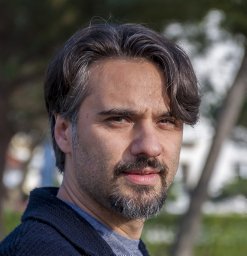 Emre Uzunoglu合作论文数Inst Super Tecn, Univ Lisbon6
 Jasna Prpic-Orsic合作论文数Faculty of Engineering, University of Rijeka6
 Anton Turk合作论文数Faculty of Engineering, University of Rijeka6
 J.L. Mantari合作论文数Ctr Dev Adv Mat & Nanotechnol, Univ Nacl Ingn3
 A. Marón合作论文数3
 Antonio Falcao合作论文数2
 Jose Manuel Gordo合作论文数Instituto Superior Técnico, Universidade Técnica de Lisboa2
 Ricardo Pascoal合作论文数Instituto Superior Técnico, Technical University of Lisbon2
 Rui P. F. Gomes合作论文数2
 Barbara Lopes合作论文数1B Rodrigues合作论文数1Guillermo Vásquez合作论文数1L. Perez Rojas合作论文数1
 A.A.D. Carrelhas合作论文数1
 Jose Varela合作论文数Instituto Superior Técnico, Universidade de Lisboa1
 Nuno Fonseca合作论文数Instituto Superior Técnico, Technical University of Lisbon1Clara Nancy Gutierrez合作论文数Facultad de Ciencias de la Salud, Universidad de Carabobo1
 Joao C. C. Henriques合作论文数Instituto Superior Técnico, Technical University of Lisbon1Luís Eça合作论文数1
 L.M.C. Gato合作论文数1




