INTRODUCTIONMultiple Endocrine Neoplasia (MEN) 2A is an autosomal dominant syndrome characterized by medullary thyroid carcinoma (MTC), pheochromocytoma (PCC) and parathyroid tumors.[1-4] Caused by germ-line mutation in the RET proto-oncogene located on chromosome 10, MEN-2A is a subtype of the MEN-2 syndrome and is the more commonly encountered clinical variant (accounting for 75% cases) as opposed to MEN-2B.[5,6] Almost 90% afflicted individuals manifest with MTC while PCC and parathyroid tumors are noted in upto 40-50% and 20-30% cases respectively. As the disease may present with polyglandular involvement, screening of other endocrine organs is imperative once any single organ involvement is detected. Current literature on diagnosis and management of MEN-2A syndrome in pregnancy is scant and largely comprises case series or case reports. Most patients were incidentally detected to have hypertension during routine antenatal screening and found to have an underlying pheochromocytoma. The limitations imposed by pregnancy both in terms of restricted imaging options due to radiation exposure to the fetus and restricted period of surgical intervention in the second trimester makes the management of this situation challenging in most cases. We share our experience of a young woman with MEN 2A syndrome who became pregnant immediately post adrenalectomy for pheochromocytoma and had to undergo surgery for medullary thyroid carcinoma in second trimester during a nationwide lockdown due to the ongoing COVID pandemic. The case highlights the various challenges we faced in patient management, surgical intervention, post-operative care and follow up amidst travel restrictions during the lockdown along with how these challenges were overcome through multidisciplinary teamwork, teleconsultation services and shared decision making with the patient which led us to a successful outcome in a difficult clinical scenario, in such challenging times.
Sir, Read with interest the article by Deep Dutta et al.[1] where they described the efficacy of lispro insulin in diabetes. With the increasing use of insulin analogues, a new dimension has been added to the diagnosis of factitious hypoglycaemia. We recently managed a case of factitious hypoglycaemia due to intake of lispro insulin, which was missed by routine insulin assay and was detected by insulin assay with cross-reactivity with lispro. A man known to have type 2 diabetes, on treatment with insulin and antidiabetic drugs, presented with a history of 3–4 episodes of hypoglycaemia over the preceding 1 month. All antidiabetic drugs and insulin were withheld; however, symptoms of hypoglycaemia persisted. He was admitted for evaluation. Renal and liver functions were normal. He underwent a supervised fast for inducing hypoglycaemia. Twelve hours after the last calorie intake, the patient had diaphoresis, sweating and tremors. Plasma glucose was 33 mg/dl, with ketones < 0.3 mmol/L, serum insulin 9.12 μU/ml and C-peptide 1.2 ng/ml, suggesting an endogenous hyperinsulinism. Urine sulfonylurea screen was negative. Considering endogenous hyperinsulinism we proceeded with localisation studies, contrast-enhanced computed tomography (CECT) abdomen revealed doubtful 2.2*1.9 cm lesion in the tail of the pancreas, which corroborated with endoscopic ultrasound and contrast-enhanced magnetic resonance imaging (CE-MRI). Gallium DOTANOC did not show any somatostatin receptor (SSTR)-expressing lesion. Exendin scan revealed uptake in the pancreatic tail. Considering these findings, he underwent distal pancreatectomy. In the immediate postoperative period, the patient had hyperglycaemia and required insulin for glycaemic control. He was discharged on insulin and antidiabetic drugs. Surprisingly, the histopathology examination of the surgical specimen revealed a normal pancreas without any evidence of insulinoma. Two months post-surgery, he presented with a recurrence of hypoglycaemia, which persisted even after all drugs and insulin were stopped. He was readmitted for evaluation. The critical sample during hypoglycaemia revealed plasma glucose of 30 mg/dl, with insulin 0.4 μU/ml, C-peptide 0.35 ng/ml and serum ketones 0.2 mmol/l, growth hormone of 23.5 ng/ml and cortisol of 25.6 μg/dl. Insulin levels were measured using the Roche Elecsys assay. Repeat analysis of the critical sample by Abbott analyser revealed serum insulin of 32.4 μU/ml and C-peptide of 0.4 ng/ml, suggestive of exogenous insulin intake. Further questioning revealed the current intake of lispro insulin. In retrospect, the urine sulphonyl urea screen report was rechecked. It was negative for glimepiride, glipizide, glyburide, nateglinide, repaglinide, acetohexamide, chlorpropamide and tolazamide. There was no mention of gliclazide. On reviewing literature, we found that cross-reactivity of drugs with radioimmunoassay for sulphonylureas varies from 100% to nil. So, small quantities of sulphonylureas with low cross-reactivity with assay can be missed.[2,3] Psychiatry consultation was arranged. He was started on cognitive behavioural therapy and escitalopram. His hypoglycaemia resolved. The patient's hypoglycaemic profile was different in both instances. The first instance, where both insulin and C-peptide were elevated, can probably be due to sulphonylurea intake which was missed in the urine sulphonylurea screen.[3] Factitious hypoglycaemia due to exogenous insulin is suggested by increased insulin and suppressed C-peptide during hypoglycaemia. The inclusion of certain moieties at specified locations distinguishes insulin analogues from human insulin. This makes it challenging to identify these alterations in the assays due to their low cross-reactivity with insulin immunoassays.[4] Roche Elecsys assay does not exhibit any cross-reactivity with any insulin analogues, but they are picked up with Abbott analyser. Understanding the differences in cross-reactivities between different analysers and insulin analogues is crucial when interpreting insulin assays and evaluating hypoglycaemia.[4] Financial support and sponsorship Nil. Conflicts of interest There are no conflicts of interest.
Introduction:Endogenous hyperinsulinaemic hypoglycaemia (EHH) is characterized by inappropriate insulin secretion from pancreatic beta cells despite low blood glucose concentrations. We aimed to evaluate the secular changes in presentation and management of EHH due to insulinoma/non-insulinoma pancreatogenous hypoglycaemia syndrome (NIPHS) at our centre. Methods:This was a single-centre ambispective study (2014-2022). The clinical, biochemical, hormonal and radiological parameters (n = 63) collected as part of this study were compared with our earlier studies (1992-2005, n = 31; and 2006-2013, n = 35) and with other centres across the world. Results:A total of 63 patients (39 males) with a preoperative diagnosis of EHH (insulinoma, n = 58; and NIPHS, n = 5) and a mean age of 40.7 years were studied. The mean lag time from the onset of symptoms to diagnosis decreased from 4.6 years during the first study period to 1.9 years during this study period. However, the majority presented with fasting hypoglycaemia of 98.4%, and both fasting and postprandial hypoglycaemia of 32%. Exclusive postprandial hypoglycaemia was present in 1.7% of insulinoma. A histopathological diagnosis of insulinoma was made in 52 patients and nesidioblastosis in two patients. Intraoperative ultrasonography (IOUS) and intraoperative palpation (IOP) yielded 100% sensitivity, while endoscopic ultrasonography (EUS) and 68Ga-DOTA-Exendin-4 positron emission tomography/computed tomography (PET/CT) yielded sensitivity of 86% and 85%, respectively, for localizing insulinoma. Resolution of hypoglycaemia was noted in 53 of 57 (93%) patients who underwent surgery with a preoperative diagnosis of insulinoma. Conclusion:We observed a trend towards earlier diagnosis of EHH, increased patient numbers and availability of nuclear imaging techniques for preoperative localization in the last decade compared to earlier.
The H1N1 influenza infection usually coincides with the typical scrub typhus season in North India. This leads to diagnostic difficulties due to their similar and non-specific symptoms. We describe three patients with confirmed co-infection of pandemic (H1N1) influenza and scrub typhus who had presented with acute respiratory distress syndrome. A systematic review of database yielded one case of scrub typhus and H1N1 influenza co-infection reported from South Korea. Co-infection of influenza with tropical infections may not be uncommon in endemic countries and hence a high index of suspicion on the part of physicians coupled with appropriate investigations are needed. The true burden of co-infections needs to be evaluated during outbreaks of influenza in a systematic manner.
Background and aims: The coronavirus disease 2019 (COVID-19) pandemic has immensely strained healthcare systems worldwide. Diabetes has emerged as a major comorbidity in a large proportion of patients infected with COVID-19 and is associated with poor health outcomes. We aim to provide a practical guidance on screening of hyperglycemia in persons without known diabetes in low resource settings. Methods: We reviewed the available guidelines on this subject and proposed an algorithm based on simple measures of blood glucose (BG) which can be implemented by healthcare workers with lesser expertise in low resource settings. Results: We propose that every hospitalized patient with COVID-19 infection undergo a paired capillary BG assessment (pre-meal and 2-h post-meal). Patients with pre-meal BG < 7.8 mmol/L (140 mg/dL) and post-meal BG < 10.0 mmol/L (180 mg/dL) may not merit further monitoring. On the other hand, those with one or more value above these thresholds should undergo capillary BG monitoring (pre-meals and 2 hours after dinner) for the next 24 hours. When two or more (similar to 50%) such values are significantly elevated [pre-meal similar to 8.3 mmol/L (150 mg/dL) and post-meal similar to 11.1 mmol/L (200 mg/dL)], pharmacotherapy should be immediately initiated. On the other hand, in patients with modest elevation of one or more values [pre-meal 7.8-8.3 mmol/L (140-150 mg/dL) and post-meal 10.0-11.1 mmol/L (180-200 mg/dL)], dietary modifications should be initiated and pharmacotherapy considered only if BG control remains suboptimal. Conclusion: We highlight strategies for screening of hyperglycemia in persons without known diabetes treated for COVID-19 infection in low resource settings. This guidance may well be applied to other settings in the near future. (c) 2020 Diabetes India. Published by Elsevier Ltd. All rights reserved.
Not required for Clinical Vignette.
BACKGROUND:Food related advertisements on television may have a major influence on the dietary habits and obesity among young adolescents.OBJECTIVE:To evaluate the frequency and typology of food advertisements on most popular television channels, watched by school-going young adolescents in Delhi.METHODOLOGY:Biphasic study to (a) identify the three television channels most frequently watched by administering a questionnaire to 400 school going young adolescents; and (b) view each of these channels for 2 hours per day for 6 days each, and observe the content of advertisements related to foods, beverages, and food outlets.RESULTS:Four hundred and three food related advertisements were viewed over 36 hour on Discovery, MTV and Disney Channels. Among 235 food related advertisements 163 (69.3%) pertained to candies, chocolates and confectionary and 35 (14.8%) to salty snacks. Sugar sweetened soft drinks contributed 90 of 106 (85%) of beverage advertisements. Of 62 advertisements related to food outlets, 59 were of fast food joints.CONCLUSION:Majority of food advertising content on television most commonly watched by young adolescents is related to unhealthy foods and beverages, igh in energy and low in micronutrient content.
Around 100,000 medical conferences are organized all over the world and hence, they form an integral part of a medical professional’s life. Oral presentations, especially award sessions, are judged by a panel of faculty judges who score individual presentations on various aspects including content, delivery and submission. Our objective was to compare the scores given by student-judges and faculty-judges for scientific presentations using the standardized score sheet. An objective, structured score-sheet was designed using existing literature. Five presentations, all made using PowerPoint, were judged using the structured score-sheet by seven student-judges and two-faculty judges. The mean score of all the score-sheets ( n = 45) was 38.5 + 5.4 (out of a maximum score of 50). There was no statistical difference between mean scores assigned by students or faculty ( p = 0.2). Thus, an objective, structured score sheet like ours, when used to judge scientific presentations, gave uniform results even when judges hailed from different levels of the medical hierarchy.
Purpose: This study aimed to assess medical students’ presence on Facebook and the extent of their visible activity, with particular reference to online professionalism. Methods: This was a cross-sectional study including all medical students enrolled in the University College of Medical Sciences, University of Delhi, India during the period of the study, which was conducted from 2011 to 2012. After approval by the Institutional Ethical Committee, the full names of all students were obtained from our institution. After creating a fictitious profile, Facebook was searched for students’ profiles, and those found were examined for visible content and unprofessional behaviour. Results: Of 611 students, 477 (78.1%) had detectable Facebook profiles. Out of 477 profiles, date of birth, address, email, phone number, religion, and political views were rarely shared; sexual orientation and relationship status were displayed on approximately one third of the profiles; and an identifiable profile picture (80.3%), field of study (51.6%), and institution (86.2%) were commonly shared . The visible content included friend lists (88.7%), photo albums (36.1%), and associations with diverse groups and pages (97.1%). Five profiles (1.05%) displayed unprofessional content, including one profile photograph depicting alcohol consumption, one association with groups relating to excessive alcohol consumption, two profiles containing sexually explicit language, and one association with a sexist page. Conclusion: Most of our students use Facebook’s privacy settings to hide some content from others. Unprofessional content was rarely visible from a stranger’s profile. However, even when hidden from strangers, unprofessional behaviour is still unprofessional behaviour. As Facebook is an integral part of life, it is important for medical educators and students to understand the implications and importance of e-professionalism. Professionalism curricula should address e-professionalism.
Internationally, there is an increasing awareness of the need to include humanities in the medical curriculum. The Medical Humanities Group at the University College of Medical Sciences, Delhi, organised a series of events to explore this area. This paper describes our experience with Augusto Boal's "Theatre of the Oppressed" (TO). Twenty-six participants attended a 2-day workshop culminating in a "forum theatre", in which the spectators are transformed from passive observers to active participants or spect-actors. The participants' responses to our workshop indicate that TO provides a multitude of experiences and addresses a wide range of learning domains. TO challenges the senses and offers a promising and enjoyable option for learning medical humanities.
The effectiveness of arts-based interventions in medical education is well documented1 but the development of medical humanities in Southeast Asia is a relatively recent phenomenon.2 3 The University College of Medical Sciences, Delhi, was the first Indian medical school to introduce medical humanities to its staff and students. A Medical Humanities Group was founded in 2009 and membership was open to all.4 Initial activities were directed towards sharing literature, with a bias towards Indian culture, including poetry in Hindi. In the inaugural year, student-led lunchtime meetings were attended by faculty. In the second year, there was a series of lectures by eminent guest speakers, in the form of a colloquium, called ‘Confluence’. The idea was to provide a forum to discuss art and medicine as a whole.5 As a result of these discussions, the group decided they wanted to work on the street theatre-based project described in this case study. Involvement in drama offers medical students a powerful medium for self-expression, helps to improve their understanding of the experience of the illness and facilitates empathic feelings.6 7 Participation in the performing arts may also promote self-confidence,8 an …
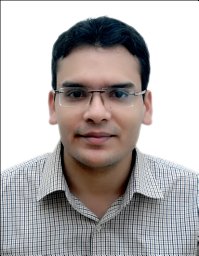 Alpesh Goyal合作论文数All India Institute of Medical Sciences3
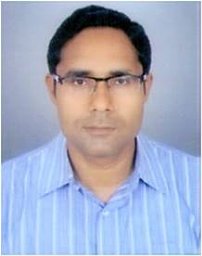 Satendra Singh合作论文数Department of Chemistry and Biochemistry, University of Oklahoma3
 Nikhil Tandon合作论文数2Viveka P Jyotsna合作论文数2
 Upreet Dhaliwal合作论文数University College of Medical Sciences, GTB Hospital2A K Pannu合作论文数1Kanhaiya Agrawal合作论文数1Swati Kalra合作论文数1Laxman Jhuria合作论文数1V Suri合作论文数1
 Piyush Gupta合作论文数1S Kumari合作论文数1Vidushi Kulshrestha合作论文数All India Institute of Medical Sciences1
 Abhinav Agrawal合作论文数1Ritin Mohindra合作论文数Department of Medicine, Postgraduate Institute of Medical Education and Research, Chandigarh, India.1Anubhuti Rana合作论文数All India Institute of Medical Sciences1
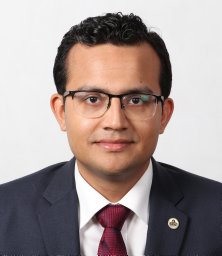 Rimesh Pal合作论文数Department of Endocrinology, Postgraduate Institute of Medical Education and Research1Biswal Manisha合作论文数1
 Sanjay Bhadada合作论文数Department of Endocrinology, Post Graduate Institute of Medical Education and Research1
 Shipra Agarwal合作论文数1
 Kaushik Jaya Shankar合作论文数Department of Pediatrics, University College of Medical Sciences and Guru Teg Bahadur Hospital1
 Valliappan Muthu合作论文数Department of Internal Medicine, Post Graduate Institute of Medical Education and Research1
 Yashdeep Gupta合作论文数Dept Endocrinol, All India Inst Med Sci1Arun Sharma合作论文数1
 Thawani Rajat合作论文数University College of Medical Sciences1Damle Nishikant A合作论文数1
 Nayan Agarwal合作论文数1
 Anil Bhansali合作论文数Department of Endocrinology, Post Graduate Institute of Medical Education and Research1
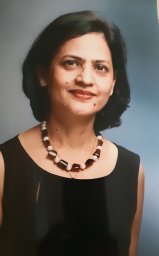 Vatsla Dadhwal合作论文数Department of Obstetrics and Gynaecology, All India Institute of Medical Sciences1
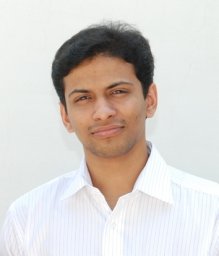 Devasenathipathy Kandasamy合作论文数Department of Radiodiagnosis, All India Institute of Medical Sciences1
 Ashish Bhalla合作论文数Poll1
 Arunanshu Behera合作论文数Postgraduate Institute of Medical Education and Research, PGIMER)1
 Mini P. Singh合作论文数Department of Virology, Postgraduate Institute of Medical Education and Research, Chandigarh, 160012 India1
 Kapil Goyal合作论文数Department of Virology, Postgraduate Institute of Medical Education and Research, Chandigarh, 160012 India1
 Navjeevan Singh合作论文数Department of Pathology, University College of Medical Sciences1
 Sujoy Pal合作论文数1




