Plant development arises from the coordinated execution of gene regulatory programs across diverse cell types. While classical genetic and genomic approaches have revealed many of the genes required for plant growth and patterning, these methods often average signals across heterogeneous tissues, thereby obscuring how regulatory programs operate within individual cells. Resolving gene expression at cellular resolution is therefore essential for understanding how developmental decisions are made, integrated, and propagated during organ growth. The Arabidopsis root, with its simple anatomy and invariant cell lineages, provides an ideal system for addressing these questions. Recent advances in single-cell and single-nucleus transcriptomics have enabled the construction of comprehensive cellular atlases that capture gene expression dynamics across cell identities and developmental trajectories. In this Expert Views article, we highlight recent conceptual and technical developments that illustrate how single-cell atlases have transformed studies of root development. We emphasize how these atlases both serve as community resources to inform the interpretation of new datasets, including those generated from mutants and in response to perturbation, as well as provide a platform for meta-analysis to initiate new studies. Using auxin signaling as a meta-analysis case study, we demonstrate how legacy transcriptomic data can be reinterpreted within a cell lineage-resolved framework. Finally, we highlight how spatial transcriptomics and rigorous data-sharing practices will extend cellular atlases across tissues and species, thereby enabling increasingly precise strategies for understanding and engineering plant growth and resilience.
Brassinosteroid hormones are positive regulators of plant organ growth, yet their function in proliferating tissues remains unclear. Here, through integrating single-cell RNA sequencing with long-term live-cell imaging of the Arabidopsis root, we reveal that brassinosteroid activity fluctuates throughout the cell cycle, decreasing during mitotic divisions and increasing during the G1 phase. The post-mitotic recovery of brassinosteroid activity is driven by the intrinsic polarity of the mother cell, resulting in one daughter cell with enhanced brassinosteroid signaling, while the other supports brassinosteroid biosynthesis. The coexistence of these distinct daughter cell states during the G1 phase circumvents a negative feedback loop to facilitate brassinosteroid production while signaling increases. Our findings uncover polarity-guided, uneven mitotic divisions in the meristem, which control brassinosteroid hormone activity to ensure optimal root growth.
The field of developmental biology has declined in prominence in recent decades, with off-shoots from the field becoming more fashionable and highly funded. This has created inequity in discovery and opportunity, partly due to the perception that the field is antiquated or not cutting edge. A 'think tank'of scientists from multiple developmental biology-related disciplines came together to define specific challenges in the field that may have inhibited innovation, and to provide tangible solutions to some of the issues facing developmental biology. The community suggestions include a call to the community to help 'rebrand' the field, alongside proposals for additional funding apparatuses, frameworks for interdisciplinary innovative collaborations, pedagogical access, improved science communication, increased diversity and inclusion, and equity of resources to provide maximal impact to the community.
An archetype of collaboration, community development and vision, who made fundamental contributions to biology through his studies on the often-unseen part of the plant, the root.
Single-cell and single-nucleus RNA-sequencing technologies capture the expression of plant genes at an unprecedented resolution. Therefore, these technologies are gaining traction in plant molecular and developmental biology for elucidating the transcriptional changes across cell types in a specific tissue or organ, upon treatments, in response to biotic and abiotic stresses, or between genotypes. Despite the rapidly accelerating use of these technologies, collective and standardized experimental and analytical procedures to support the acquisition of high-quality data sets are still missing. In this commentary, we discuss common challenges associated with the use of single-cell transcriptomics in plants and propose general guidelines to improve reproducibility, quality, comparability, and interpretation and to make the data readily available to the community in this fast-developing field of research.
Single-cell genomics technologies are ushering in a new research era. In this review, we summarize the benefits and current challenges of using these technologies to probe the transcriptional regulation of plant development. In addition to profiling cells at a single snapshot in time, researchers have recently produced time-resolved datasets to map cell responses to stimuli. Live-imaging and spatial transcriptomic techniques are rapidly being adopted to link a cell's transcriptional profile with its spatial location within a tissue. Combining these technologies is a powerful spatiotemporal approach to investigate cell plasticity and developmental responses that contribute to plant resilience. Although there are hurdles to overcome, we conclude by discussing how single-cell genomics is poised to address developmental questions in the coming years.
Brassinosteroids are plant steroid hormones that regulate diverse processes, such as cell division and cell elongation, through gene regulatory networks that vary in space and time. By using time series single-cell RNA sequencing to profile brassinosteroid-responsive gene expression specific to different cell types and developmental stages of the Arabidopsis root, we identified the elongating cortex as a site where brassinosteroids trigger a shift from proliferation to elongation associated with increased expression of cell wall–related genes. Our analysis revealed HOMEOBOX FROM ARABIDOPSIS THALIANA 7 ( HAT7 ) and GT-2-LIKE 1 ( GTL1 ) as brassinosteroid-responsive transcription factors that regulate cortex cell elongation. These results establish the cortex as a site of brassinosteroid-mediated growth and unveil a brassinosteroid signaling network regulating the transition from proliferation to elongation, which illuminates aspects of spatiotemporal hormone responses.
In all multicellular organisms, transcriptional networks orchestrate organ development. The Arabidopsis root, with its simple structure and indeterminate growth, is an ideal model for investigating the spatiotemporal transcriptional signatures underlying developmental trajectories. To map gene expression dynamics across root cell types and developmental time, we built a comprehensive, organ-scale atlas at single-cell resolution. In addition to estimating developmental progressions in pseudotime, we employed the mathematical concept of optimal transport to infer developmental trajectories and identify their underlying regulators. To demonstrate the utility of the atlas to interpret new datasets, we profiled mutants for two key transcriptional regulators at single-cell resolution, shortroot and scarecrow. We report transcriptomic and in vivo evidence for tissue trans-differentiation underlying a mixed cell identity phenotype in scarecrow. Our results support the atlas as a rich community resource for unraveling the transcriptional programs that specify and maintain cell identity to regulate spatiotemporal organ development.
We describe a protocol to perform fast and non-arbitrary quality control of sin-gle-cell RNA sequencing (scRNA-seq) raw data using scKB and COPILOT. scKB is a wrapper script of kallisto and bustools for accelerated alignment and tran-script count matrix generation, which runs significantly faster than the popular tool Cell Ranger. COPILOT then offers non-arbitrary background noise removal by comparing distributions of low-quality and high-quality cells. Together, this protocol streamlines the processing workflow and provides an easy entry for new scRNA-seq users.For complete details on the use and execution of this protocol, please refer to Shahan et al. (2022).
A fundamental question in developmental biology is how the progeny of stem cells become differentiated tissues. The Arabidopsis root is a tractable model to address this question due to its simple organization and defined cell lineages. In particular, the zone of dividing cells at the root tip-the root apical meristem-presents an opportunity to map the gene regulatory networks underlying stem cell niche maintenance, tissue patterning, and cell identity acquisition. To identify molecular regulators of these processes, studies over the last 20 years employed global profiling of gene expression patterns. However, these technologies are prone to information loss due to averaging gene expression signatures over multiple cell types and/or developmental stages. Recently developed high-throughput methods to profile gene expression at single-cell resolution have been successfully applied to plants. Here, we review insights from the first published single-cell mRNA sequencing and chromatin accessibility datasets generated from Arabidopsis roots. These studies successfully reconstruct developmental trajectories, phenotype cell identity mutants at unprecedented resolution, and reveal cell type-specific responses to environmental stimuli. The experimental insight gained from Arabidopsis paves the way to profile roots from additional species.
Tissues are composed of specialized cell types. As a cell matures, it acquires the characteristics associated with a specific identity, or fate. This process is called cell differentiation and is crucial for proper organ development. However, after a differentiation program is initiated, the
In all multicellular organisms, tissue patterning and organogenesis are governed by asymmetric cell divisions (ACDs) and the cellular exchange of positional cues. Plants, unlike animals, undergo post-embryonic organogenesis due to the maintenance of stem cells in specialized niches. One such niche,
SummaryCell fate acquisition is a fundamental developmental process in all multicellular organisms. Yet, much is unknown regarding how a cell traverses the pathway from stem cell to terminal differentiation. Advances in single cell genomics1hold promise for unraveling developmental mechanisms2–3in tissues4, organs5–6, and organisms7–8. However, lineage tracing can be challenging for some tissues9and integration of high-quality datasets is often necessary to detect rare cell populations and developmental states10,11. Here, we harmonized single cell mRNA sequencing data from over 110,000 cells to construct a comprehensive atlas for a stereotypically developing organ with indeterminate growth, theArabidopsisroot. To test the utility of the atlas to interpret new datasets, we profiled mutants for two key transcriptional regulators at single cell resolution,shortrootandscarecrow. Although both transcription factors are required for early specification of cell identity12, our results suggest the existence of an alternative pathway acting in mature cells to specify endodermal identity, for whichSHORTROOTis required. Uncovering the architecture of this pathway will provide insight into specification and stabilization of the endodermis, a tissue analogous to the mammalian epithelium. Thus, the atlas is a pivotal advance for unraveling the transcriptional programs that specify and maintain cell identity to regulate organ development in space and time.
Legumes, a subset of flowering plants, form root nodules in symbiosis with nitrogen-fixing bacteria. The regulatory network controlling nodule formation has remained mysterious. In a recent issue of Science, Soyano et al. (2019) demonstrate that co-option of an existing lateral root developmental program is used in Lotus for nodule organogenesis.
For the past 10 years, a popular method to study global gene expression changes has been RNA sequencing of bulk tissues. However, an inherent limitation of this approach is the confounding of multiple cell types or multiple developmental stages. By contrast, new technologies enable transcriptional
Fragaria vesca (F. vesca), the wild strawberry, is a diploid model for the commercial, octoploid strawberry as well as other members of the economically relevant Rosaceae family. Unlike the fruits of tomato and Arabidopsis, the fleshy fruit of strawberry is unique in that it is derived from the floral receptacle and has an external seed configuration. Thus, identification and subsequent characterization of receptacle-expressed genes may shed light on novel developmental processes or provide insight into how developmental regulation differs between receptacle-derived and ovary-derived fruits. Further, since fruit and flower tissues are the last organs to form on a plant, the development of receptacle fruit-specific promoters may provide useful molecular tools for research and application. In this work, we mined previously generated RNA-Seq datasets and identified 589 genes preferentially expressed in the strawberry receptacle versus all other profiled tissues. Promoters of a select subset of the 589 genes were isolated and their activities tested using a GUS transcriptional reporter. These promoters may now be used by the F. vesca research community for a variety of purposes, including driving expression of tissue-specific reporters, RNAi constructs, or specific genes to manipulate fruit development. Further, identified genes with receptacle-specific expression patterns, including MADS-Box and KNOX family transcription factors, are potential key regulators of fleshy fruit development and attractive candidates for functional characterization.
The diploid strawberry, Fragaria vesca, is a developing model system for the economically important Rosaceae family. Strawberry fleshy fruit develops from the floral receptacle and its ripening is nonclimacteric. The external seed configuration of strawberry fruit facilitates the study of seed-to-fruit cross tissue communication, particularly phytohormone biosynthesis and transport. To investigate strawberry fruit development, we previously generated spatial and temporal transcriptome data profiling F. vesca flower and fruit development pre- and postfertilization. In this study, we combined 46 of our existing RNA-seq libraries to generate coexpression networks using the Weighted Gene Co-Expression Network Analysis package in R. We then applied a post-hoc consensus clustering approach and used bootstrapping to demonstrate consensus clustering's ability to produce robust and reproducible clusters. Further, we experimentally tested hypotheses based on the networks, including increased iron transport from the receptacle to the seed postfertilization and characterized a F. vesca floral mutant and its candidate gene. To increase their utility, the networks are presented in a web interface (www.fv.rosaceaefruits.org) for easy exploration and identification of coexpressed genes. Together, the work reported here illustrates ways to generate robust networks optimized for the mining of large transcriptome data sets, thereby providing a useful resource for hypothesis generation and experimental design in strawberry and related Rosaceae fruit crops.
Background Fragaria vesca is a low-growing, small-fruited diploid strawberry species commonly called woodland strawberry. It is native to temperate regions of Eurasia and North America and while it produces edible fruits, it is most highly useful as an experimental perennial plant system that can serve as a model for the agriculturally important Rosaceae family. A draft of the F. vesca genome sequence was published in 2011 [Nat Genet 43:223,2011]. The first generation annotation (version 1.1) were developed using GeneMark-ES+[Nuc Acids Res 33:6494,2005]which is a self-training gene prediction tool that relies primarily on the combination of ab initio predictions with mapping high confidence ESTs in addition to mapping gene deserts from transposable elements. Based on over 25 different tissue transcriptomes, we have revised the F. vesca genome annotation, thereby providing several improvements over version 1.1. Results The new annotation, which was achieved using Maker, describes many more predicted protein coding genes compared to the GeneMark generated annotation that is currently hosted at the Genome Database for Rosaceae ( http://www.rosaceae.org/ ). Our new annotation also results in an increase in the overall total coding length, and the number of coding regions found. The total number of gene predictions that do not overlap with the previous annotations is 2286, most of which were found to be homologous to other plant genes. We have experimentally verified one of the new gene model predictions to validate our results. Conclusions Using the RNA-Seq transcriptome sequences from 25 diverse tissue types, the re-annotation pipeline improved existing annotations by increasing the annotation accuracy based on extensive transcriptome data. It uncovered new genes, added exons to current genes, and extended or merged exons. This complete genome re-annotation will significantly benefit functional genomic studies of the strawberry and other members of the Rosaceae .
 Nolan Trevor合作论文数Department of Genetics, Development and Cell Biology, Iowa State University6
 Philip N. Benfey合作论文数School of Medicine, Duke University6
 Che-Wei Hsu合作论文数4
 Uwe Ohler合作论文数Department of Biostatistics & Bioinformatics, School of Medicine, Duke University;Department of Biology, Max Delbruck Center for Molecular Medicine Berlin-Buch;Department of Computer Science, Humboldt University Berlin4
 Zhongchi Liu合作论文数College of Agriculture and Natural Resources, University of Maryland4
 Isaiah Taylor合作论文数Duke Univ, Biol Dept, Durham, NC 27708 USA3Cole Benjamin J合作论文数Molecular and Computational Biology Section, University of Southern California3
 Anna Hendrika Cornelia Vlot合作论文数Max Delbruck Ctr Mol Med, Berlin Inst Med Syst Biol2Eugenia (Jenny) Russinova合作论文数2
 Laura Greenstreet合作论文数Department of Mathematics, University of British Columbia, 121-1984 Mathematics Road, Vancouver, BC V6T 1Z2, Canada.2Anton Afanassiev合作论文数Department of Mathematics, University of British Columbia, 121-1984 Mathematics Road, Vancouver, BC V6T 1Z2, Canada.2
 Omar Darwish合作论文数Department of Mathematics and Computer Science, Texas Women’s University2
 Geoffrey Schiebinger合作论文数Institute of Applied Mathematics, Faculty of Science, The University of British Columbia2
 Pablo Szekely合作论文数2Vukašinović Nemanja合作论文数Institute of Experimental Botany, Academy of Sciences of the Czech Republic;Faculty of Science, Charles University in Prague;Institute of Experimental Botany, Charles University in Prague2
 Nadim Alkharouf合作论文数Jess and Mildred Fisher College of Science and Mathematics, Towson University2Isabelle Vanhoutte合作论文数2
 Siobhan M. Brady合作论文数Brady Lab, Department of Plant Biology, College of Biological Sciences, University of California, Davis;Genome Center, College of Biological Sciences, University of California, Davis2
 Stephen Zhang合作论文数Department of Mathematics, Faculty of Arts & Science, University of Toronto1Carolin Grones合作论文数1Haley Wight合作论文数1Jonah Cool合作论文数1Aiden Brosnan合作论文数1John Sittmann合作论文数1Fabio Gomez-Cano合作论文数1
 Joyce G. Onyenedum合作论文数1Yuji Ke合作论文数1
 Manuel Neumann合作论文数1Katelyn H. McKown合作论文数1
 Alexandra Jazz Dickinson合作论文数Department of Cell and Developmental Biology, School of Biological Sciences, University of California, San Diego1Megan L Martik合作论文数Division of Biology and Biological Engineering, California Institute of Technology, Pasadena, CA 91125, USA1
 Yves C Chabu合作论文数Institute of Neuroscience, Howard Hughes Medical Institute, University of Oregon, Eugene, OR 97403, USA1Matthieu Heitz合作论文数France/Univ Lyon, Univ Lyon1
 Kevin L Cox Jr合作论文数Donald Danforth Plant Sci Ctr1
 Jingyuan Zhang合作论文数1
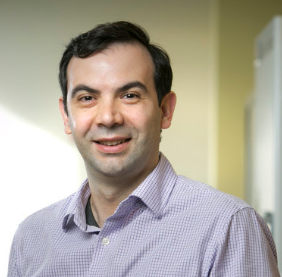 Stefano Di Talia合作论文数Department of Cell Biology, Duke University School of Medicine1
 Kenneth Birnbaum合作论文数Department of Biology, College of Arts & Science, New York University1
 Loydie A. Jerome Majewska合作论文数Department of Anatomy and Cell Biology, Faculty of Medicine and Health Sciences, McGill University1
 Carole Labonne合作论文数Department of Molecular Biosciences, Weinberg College of Arts & Sciences, Northwestern University1
 Madhav Mani合作论文数Department of Engineering Sciences and Applied Mathematics, Northwestern University1
 Leslie Babonis合作论文数Department of Ecology & Evolutionary Biology, College of Arts and Sciences, Cornell University1
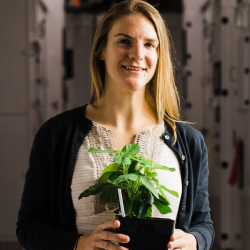 Margaret Frank合作论文数Plant Biology Section, College of Agriculture and Life Sciences, Cornell University1
 Wanpeng Wang (王万鹏)合作论文数School of Advanced Manufacturing, Fuzhou University;Third Institute of Oceanography, Ministry of Natural Resources1
 Dongdong Li (李东栋)合作论文数School of Breeding and Multiplication, Hainan University1
 De Rybel Bert合作论文数VIB, Dept Plant Syst Biol, B-9052 Ghent, Belgium1
 Iswar Hariharan合作论文数Department of Molecular and Cell Biology, University of California, Berkeley1
 Gillmor C Stewart合作论文数Department of Biological Sciences, University of Pennsylvania1
 Neelima R. Sinha合作论文数Department of Plant Biology, College of Biological Sciences, University of California, Davis1
 Richard Harland合作论文数Harland Lab, Department of Molecular and Cell Biology, College of Letters & Science, University of California1




