Although it is well known that plants have the capacity to remove indoor air pollutants, there has been little research to investigate how this ability is regulated by the environment and evolutionary processes. In this study, we tested the capacity of 58 common indoor plants to remove three specific air pollutants. We also measured the traits, phylogenetic signals, and cultivated environments of these plants to analyze their relationship with the air pollutant removal capacity using Spearman’s correlation, Blomberg’s K test, and phylogenetic generalized least-squares. While we found trait variation had a significant correlation with removal capacity, we did not, however, detect a phylogenetic signal with removal capacity. Trait variation and environmental factors both contributed to the removal capacity in phylogenetic generalized least-squares, but again, without phylogeny. Our results show that plant trait variation, especially total leaf area, could play an important role in plant’s capacity to remove pollutants from indoor air. Moreover, environmental changes, not the phylogeny, could result in trait modification, improving the tolerance and purification capacities of these plants. The findings outlined here will help to explain how plants living with air pollution can adapt as well as the application of plants for the purpose of indoor air purification.
The flower bud and flower organogenesis stage of three sweet osmanthus cultivars was studied, using the anthrone determination of soluble sugars and Coomassie Brilliant Blue G-250 determination of the total soluble protein. The results showed that some biochemical indicators of the three cultivars had some rules at different stages of differentiation. Leaves of soluble protein, soluble sugar and free amino acids in leaves of three cultivars showed basically the same trend, but soluble sugars and free amino acids of different species were greatly different.
Taking the West Lake Scenic Area in Hangzhou as the example, this paper investigated and assessed the structure and landscape of several kinds of outstanding urban landscape plant communities, to explore the relationship between the structure and landscape of landscape plant community. The findings indicated that the structure of the riparian plant community and the multilayer plant mass were better than that of the open forest and grassland community and the dense forest community, however, the values of landscape assessment of the riparian plant community, the multilayer plant mass and the open forest and grassland community were generally high. The landscape value had some tendencies along with the structure change: 1) The landscape values of multilayer communities, including trees, shrubs and grass, were generally high; 2) The more average diameter breast height of the plant was, the older the plant was, and/or the more plentiful the crown was, the higher the landscape value of the community was; 3) The plant communities with obvious aspection change had generally high landscape values; 4) If the proportion of the upper (above 5m), middle (0.5m–5m) and bottom story (below 0.5m) in a community was approximately 1∶2–3∶3–4, namely, the shape of the community was pyramidical, its landscape value was high; 5) The communities with complex structure and/or distributing agglomeratively had high landscape values; 6) The communities with plenty of healthy and beautiful plant individual had high landscape values; 7) The reasonable density is advantageous in enhancing the landscape value of a community; 8) The communities comprising 5–10 tree species, and/or with dense ground covers, and/or with moderate canopy density and coverage had high landscape values.
<正>全国优秀城乡规划设计评选是由中国城市规划协会举办的,以贯彻科学实施《城乡规划法》,推动规划行业技术进步,提高规划设计水平,充分发挥城乡规划工作者积极性和创造性为目的的盛事。2010年12月20日~22日,中国城市规划协会第三届二次会员代表大会暨2009年度全国优秀城乡规划设计奖颁奖
 huang x huang合作论文数6
 McQueen James M合作论文数Donders Inst Brain Cognit Behav, Radboud Univ Nijmegen6Thomas Diehl合作论文数6
 Mian Chin合作论文数National Aeronautics and Space Administration6Ying Hui Tang合作论文数5Marina Tsidulko合作论文数5D.-C. Kim合作论文数4steve lord合作论文数3alberto rodrigues da silva合作论文数3
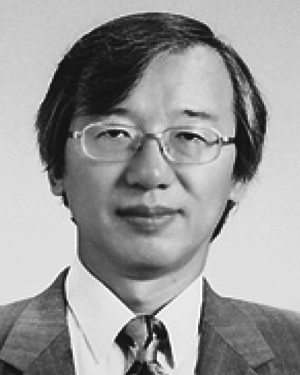 Pil Joong Lee合作论文数Department of Electrical Engineering, Pohang University of Science and Technology;Department of Creative IT Excellence Engineering, Pohang University of Science and Technology3s moorthi合作论文数2
 William R. Stockwell (William Stockwell)合作论文数Department of Physics, College of Science, University of Texas at El Paso2
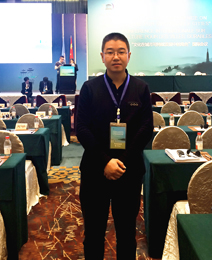 Bo Chen (陈波)合作论文数School Of Engineering And Architecture, Zhejiang Sci-Tech University2
 Ivanka Stajner合作论文数Global Modeling and Assimilation Office2Geoffrey Dimego合作论文数2Zhu C合作论文数1yinan lai合作论文数1ye zheng合作论文数1yunde hou合作论文数1Shaoqing Hu合作论文数1胡光合作论文数School of Foreign Studies, Nanjing University of Science and Technology1B. C. Shen合作论文数1Z. C. Xuan合作论文数1
 Patricia M. Davidson合作论文数School of Nursing, University of Western Sydney1Shouren Li (李寿仁)合作论文数1A Dasilva合作论文数1Paula Davidson合作论文数1
 Shobha Kondragunta合作论文数Center for Satellite Applications and Research, NOAA1Hann-Ming Henry Juang合作论文数1Mark Iredell合作论文数1




