Exposure to androgens during prenatal development shapes both physiological and behavioral developmental trajectories. Notably, in rhesus macaques, prenatal androgen exposure has been shown to increase rough-and-tumble play, a prominent behavioral feature in males during the juvenile period in primates. While macaques are an Old World, polygamous species with marked sexually dimorphic behavior, New World callitrichine primates (marmosets and tamarins) live in cooperative breeding groups and are considered to be socially monogamous and exhibit minimal sexual dimorphism in social play, which suggests that androgen may affect this species in different ways compared to macaques. In addition, we previously described considerable variation in maternal androgen production during gestation in marmosets. Here we tested the association between this variation and variation in offspring rough-and-tumble play patterns in both males and females. We measured testosterone and androstenedione levels in urine samples collected from pregnant marmoset mothers and then observed their offspring's play behavior as juveniles (5–10 months of age). In contrast to findings in rhesus macaques, hierarchical regression analyses showed that higher gestational testosterone levels, primarily in the second semester, were associated with decreased rough-and-tumble play in juveniles, and this relationship appears to be driven more so by males than females. We found no reliable associations between gestational androstenedione and juvenile play behavior. Our findings provide evidence to suggest that normative variation in levels of maternal androgen during gestation may influence developmental behavioral trajectories in marmosets in a way that contradicts previous findings in Old World primates.
BACKGROUND:Clinical use of fluoxetine and similar medications is often associated with appetite suppression and weight loss that may warrant drug discontinuation. It is unclear, however, if fluoxetine-induced consummatory suppression may be influenced by factors such as dietary status and if appetite suppressant effects of fluoxetine may be pharmacologically attenuated.MATERIAL/METHODS:Fluoxetine (0.5-10 mg/kg, i.p.) was administered to free-fed and 24 hr food-deprived adult male rats either 30 min or 4 hr prior to presentation of a sucrose solution (10% v/v). Further, amantadine (5-10 mg/kg, i.p.) and fluoxetine (5 mg/kg) were both administered either 30 min or 4 hr prior to sucrose solution presentation and intake of the solution was assessed after 2 hours of exposure.RESULTS:Fluoxetine (2-10 mg/kg) administration significantly reduced sucrose solution intake in both free-fed and food-deprived rats. However, a brief treatment-test interval (30 min) resulted in a greater suppression of intake and food-deprived rats were more resistant to the suppressant effects of fluoxetine than were sated rats. Finally, the suppressant effect of fluoxetine were reversed by acute administration of amantadine (8 mg/kg) prior to sucrose solution presentation, a dose producing no inherent stimulation of consumption.CONCLUSIONS:Acute fluoxetine administration produces a reduction in palatable substance intake that is decreased in potency with a longer treatment-test interval, an effect likely not related to pharmacokinetic considerations. Further, fluoxetine-induced consummatory suppression is reduced by prior food-deprivation. Evidence that the dopamine agonist amantadine reversed fluoxetine-induced consummatory suppression suggests a role for dopaminergic antagonism in the appetite suppressant effects of fluoxetine.
Male offspring of rats exposed to restraint stress and/or alcohol during late pregnancy show aberrant patterns of sexual behavior masculinization and defeminization that vary as a function of treatment. The impact of these treatments on the postparturitional testosterone (T) surge that contributes to sexual behavior differentiation was investigated. Plasma T was measured using radioimmunoassay in individual males sampled on day 21 of gestation within 10 min of cesarean delivery or 1, 2, or 4 h thereafter. Neonatal T in the group exposed only to stress did not differ from that in the control group. T was lower than control levels at birth in both alcohol groups. The magnitude of the T surge that occurred during the first hour of birth in the control group was diminished by 50% in both alcohol groups, whose T pattern was very similar. There was no common alteration in postparturitional T associated with the increased lordotic behavior potential that males in all three treatment groups typically share, nor were there idiosyncratic endocrine abnormalities linked to the very different male copulatory pattern each exhibits. Exposure to an abnormal T milieu during fetal as well as neonatal ontogeny may underlie the etiology of the different sexual behavior patterns exhibited by males exposed to stress and/or alcohol. Possible unique effects each treatment exerts on perinatal plasma T and it's aromatization to estradiol in hypothalamic targets are discussed.
The male offspring of rats exposed to restraint stress, alcohol, or both during late pregnancy show normally masculinized genitalia; however, sexual differentiation of behavior is dissociated from the external morphology. In contrast to controls, males exposed prenatally to stress, alcohol, or a combination of these factors exhibited the female lordotic pattern. Thus, all 3 prenatal treatments led to incomplete behavioral defeminization. Behavioral masculinization was not altered by fetal alcohol exposure alone, but a significant number of males that experienced prenatal stress alone failed to copulate. A more severe disruption of behavioral masculinization occurred when stress and alcohol were combined. Very few males exposed to the combination treatment mated with females. This study attempted to relate the effects of these treatments on sexual behavior to the postparturitional surge in plasma testosterone (T) that is known to influence the process of sexual differentiation. Prenatally stressed males, like control males showed a large, brief surge in plasma T that peaked 1 hr after delivery. Altered defeminization and masculinization were seen in prenatally stressed males, despite a normal postparturitional T surge. Fetal alcohol exposure, with or without concomitant stress, depressed T to the same extent right after birth and led to a similarly blunted T surge 1 hr later. Thus, equal disruption of the neonatal T pattern occurred in alcohol-alone males, who showed normal male copulatory behavior, and in alcohol-plus-stress males, whose behavior was severely attenuated. The results suggest that consideration of abnormal exposure to T during prenatal ontogeny may be required to understand the atypical sexual behaviors associated with these treatments.
sexual behavior masculinization and defeminization that vary as a function of treatment. The impact of these treatments on the postparturitional testosterone (T) surge that contributes to sexual behavior differentiation was investigated. Plasma T was measured using radioimmunoassay in individual males sampled on day 21 of gestation within 10 min of cesarean delivery or 1, 2, or 4 h thereafter. Neonatal T in the group exposed only to stress did not differ from that in the control group. T was lower than control levels at birth in both alcohol groups. The magnitude of the T surge that occurred during the first hour of birth in the control group was diminished by 50% in both alcohol groups, whose T pattern was very similar. There was no common alteration in postparturitional T associated with the increased lordotic behavior potential that males in all three treatment groups typically share, nor were there idiosyncratic endocrine abnormalities linked to the very different male copulatory pattern each exhibits. Exposure to an abnormal T milieu during fetal as well as neonatal ontogeny may underlie the etiology of the different sexual behavior patterns exhibited by males exposed to stress and/or alcohol. Possible unique effects each treatment exerts on perinatal plasma T and it’s aromatization to estradiol in hypothalamic targets are discussed. © 2002 Elsevier
Male rats were treated with fluoxetine (FLX) or vehicle daily for 14 days and copulatory behavior tested on day 15. Rats were either mated to three ejaculations or to sexual exhaustion. Both standard measures and the mount bout analysis were used to evaluate the effects of the chronic FLX on male rat copulatory behavior. Only 56.25% of the animals treated with FLX achieved three ejaculations. FLX inhibited the consumatory aspect of male sexual behavior, especially the ability to achieve three ejaculations, but there was no effect on the propensity of the male to pursue the female. These differences were observed for the first three ejaculations. Analysis of the last three ejaculations in those animals that mated to exhaustion did not reveal an effect of FLX. The behavioral pattern of FLX-treated animals during the first three ejaculations resembled that observed during the last three ejaculatory series in the vehicle-treated animals that mated to exhaustion. The results are discussed in terms of the serotonergic effects on male rat sexual behavior.
This study examined the relationship between repressive/defensive coping and identification thresholds for pleasant and unpleasant words. Word identification thresholds were determined by presenting masked words at increasing durations until correct report. Identification thresholds were greater for unpleasant than for pleasant words. When the difference between identification thresholds for unpleasant and pleasant words was standardized, high-defensive participants showed this effect to a greater degree than low-defensive participants. One possible interpretation of the findings is that avoidance of unpleasant stimuli takes place, and that repressive/defensive participants are more prone to it. Alternatively, the findings may reflect a general perceptual bias for pleasant stimuli that is greater for high defensive participants. Such a perceptual bias for pleasant stimuli may facilitate avoidance of unpleasant ones.
Antidepressant medications are taken daily or more frequently based on both tradition and pharmacokinetics of the drugs. However, weekly administration may be a feasible option for drugs with a long elimination half-life and flat dose-response curve. In addition to providing effective control of symptoms, it is possible that weekly administration could also benefit patients by reducing costs and minimising drug interactions and adverse effects. The selective serotonin (5-hydroxytryptamine; 5-HT) reuptake inhibitor fluoxetine appears to be a candidate for once weekly administration.
A DSM-III-R based instrument for the assessment of posttraumatic stress disorder (PTSD), the Clinician-Administered PTSD Scale (CAPS-1), was modified to accommodate cultural differences and translated into the Afghan languages Pushto and Farsi (Dari) and administered to 30 Afghan refugees living in the United States. The modified CAPS-1 was found to be practical and reliable. Inter-item correlations were calculated on the frequency and intensity scores for the 17 cardinal symptoms and the eight associated features items of the modified CAPS-1. The four reexperiencing items demonstrated significant independence from the avoidance and arousal symptom clusters. However, the avoidance and arousal symptom clusters were not found to be independent cardinal components of PTSD in our participants. The CAPS-1 criteria for diagnosis of PTSD were met by 50% of the subjects evaluated.
A n s s e a u , M . 1 F u k u s h im a
This paper describes the development and validation of a plasma and urinary gonadotropin immunoassay for golden lion tamarins (Leontopithecus rosalia), an endangered New World callitrichid primate. The assay is derived from a macaque chorionic gonadotropin assay and was validated for both plasma and urine samples in L. rosalia. Levels of immunoreactive LH/CG in lion tamarin urine were highly correlated (r = + 0.98) with gonadotropin bioactivity. Immunoreactive LH/CG levels were examined in two contexts: in the urine of adult females and in the plasma of adult males after administration of estrogen. Peaks of gonadotropin excretion were detected in samples collected from nonpregnant adult females. The peaks occurred immediately prior to cyclic elevations in urinary estrogen excretion. Plasma LH/CG concentration in males measured 24 and 48 hours after a single 50 μg injection of estradiol benzoate were significantly lower than levels at these time points measured after control treatment. Together, the results of this study point to the utility of the gonadotropin assay for monitoring reproductive function in both female and male lion tamarins.
This paper describes the development and validation of a plasma and urinary gonadotropin immunoassay for golden lion tamarins (Leontopithecus rosalia), an endangered New World callitrichid primate. The assay is derived from a macaque chorionic gonadotropin assay and was validated for both plasma and urine samples in L. rosalia. Levels of immunoreactive LHiCG in lion tamarin urine were highly correlated (r = + 0.98) with gonadotropin bioactivity. Immunoreactive LHiCG levels were examined in two contexts: in the urine of adult females and in the plasma of adult males after administration of estrogen. Peaks of gonadotropin excretion were detected in samples collected from nonpregnant adult females. The peaks occurred immediately prior to cyclic elevations in urinary estrogen excretion. Plasma LHiCG concentration in males measured 24 and 48 hours after a single 50 pg injection of estradiol benzoate were significantly lower than levels at these time points measured after control treatment. Together, the results of this study point to the utility of the gonadotropin assay for monitoring reproductive function in both female and male lion tamarins.
Although physician observation is usually the most sensitive method for diagnosing and monitoring a patient''s medical condition human observation cannot be conducted continuously and consistently. It can be helpful therefore to employ specialized automated techniques for the continuous reliable and noninvasive monitoring of those parameters useful for the enhancement of physicians'' diagnostic capabilities. Signal processing systems are among the most powerful of those techniques currently available for noninvasively examining the internal structure of living biological systems. Nonetheless the capability of these systems can be substantially enhanced if supplemented with automated classification and interpretation precedures. An intelligent EEG signal sensing and interpretation system using typical signal processing techniques supplemented with heuristics and identification techniques has been designed. The system is comprised of five major components namely: the fact gathering system the knowledge/rule base the knowledge organization/learning phase the inference engine and the expert/user interface. The fact gathering system collects raw waveforms preprocesses these for noise elimination and extracts the pertinent information from the waveforms. The knowledge/rule base is an information and knowledge bank wherein the appropriate knowledge parameters useful for the decision making process are stored. The knowledge organization/learning phase structures the knowledge In the order determined by the association among pattern classes and trains the Inference engine. The structure of the inference engine is based on a hierarchical pattern classifier which categorizes the unknown signals using a layered decision making strategy
 Ingeborg L Ward合作论文数Department of Psychology, Villanova University4Denning John H合作论文数4Stephen R. Paige合作论文数4Jeffrey A. French合作论文数3
 John P. Kline合作论文数Florida State University3O.Byron Ward合作论文数3J. A. French合作论文数2Scott E. Balogh合作论文数2B. S. Gupta合作论文数2Peter L. Carlen合作论文数2Matthias J. Müller合作论文数2
 Shaun Timothy O'Keeffe合作论文数Department of Medicine, University of Galway;Department of Geriatric Medicine, Galway University Hospitals;Health Service Executive2William E. Bridson合作论文数2William A. Degraw合作论文数2Denis Fitzpatrick合作论文数2James R. Lehman合作论文数2
 Ching Yee Suen合作论文数Centre for Pattern Recognition and Machine Intelligence, Concordia University1M. Kretz合作论文数1A. Bock合作论文数1N.E. Noldy合作论文数1S Noy合作论文数1WE BRIDSON合作论文数1I. Zundane合作论文数1D. R. Hay合作论文数1Kj Siddiqui合作论文数1O B Ward合作论文数1Jeffrey A French合作论文数1Sara Allin合作论文数1Francine R Kaufman合作论文数1Hendrik Lehnert合作论文数1kenneth w nikels合作论文数1mary weltin合作论文数1Hans-Jürgen Möller合作论文数1N. Politzer合作论文数1Ga Peyman合作论文数1
 Adam S. Smith合作论文数University of Kansas1
 Esperanza González-Bono合作论文数IDOCAL Dept Psychobiol, Univ Valencia1
 Geffner Mitchell E合作论文数1
 William J Burke合作论文数1Devlin John W合作论文数1
 Eliot A. Brenowitz合作论文数Department of Psychology, University of Washington;Department of Biology, College of Arts & Sciences, University of Washington1
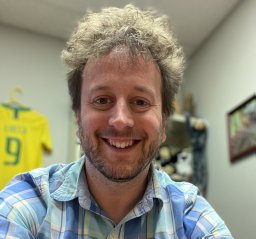 Mustoe Aaryn C合作论文数Department of Psychology, University of Nebraska at Omaha1
 Ray Blanchard合作论文数Temerty Faculty of Medicine, Department of Psychiatry, University of Toronto1
 Eric Bittman合作论文数Department of Biology and Program in Neuroscience and Behavior, University of Massachusetts1Leuschen M Patricia合作论文数1
 Michael Jay Baum合作论文数Department of Biology, Boston University1
 Nigel Bennett合作论文数Department of Zoology and Entomology, Faculty of Natural and Agricultural Sciences, University of Pretoria1
 Irving Zucker合作论文数Department of Psychology, University of California, Berkeley1
 Kim Wallen合作论文数1




