Ecological risk assessment is developed from single-species toxicity test to multi-species toxicity test, then to ecological risk models. Accordingly, chronic toxicity data is obtained from different assessment methods containing a simple extrapolation model based on single-species toxicity test, microcosm or mesocosm based on multi-species test, and ecological risk models based on population or ecosystem. This paper discusses the development and characteristics of ecological risk assessment methods and existing problems at different stages. It points out that the main development treads of the ecological risk assessment is from the individual to the community. At the same time, risk characteristic method, data selection and statistical method selection in ecological risk assessment are introduced. The perspectives of ecological risk assessment are given.
The organophosphorous pesticides (OPPs) contaminations have been reported to occur in some Chinese waters. To describe the contamination status and the spatial distribution of OPPs in the surface water throughout China, samples were collected from over 600 sites located in the surface water of seven major river basins and three main internal rivers drainage areas during 2003 and 2004. The surface water samples were analyzed for the representative OPPs including dichlorvos, demeton, dimethoate, methyl parathion, malathion and parathion. In general, the most frequently detected compound was dichlorvos and demeton, being detected in 89.1% of samples (mean = 17.8 ng/L; range < 1.4-1,552.0 ng/L) for dichlorvos, and 78.2% of samples (mean = 35.4 ng/L; range < 1.5-2,560.0 ng/L) for demeton. While the detection frequencies of the dimethoate, methyl parathion, malathion, and parathion were all less than 50% in all the surface water samples. Measured concentrations for the six compounds were low and rarely exceed the environment quality standard for surface water of China. The six OPPs compounds were more frequently detected at much higher concentrations in the rivers of north China compared with those of south China. The results of this investigation indicate that OPPs contamination in the Yellow River, Huaihe River, Liaohe River, and Haihe River basins of north China should be of particular concern. When compared with other regions of the world, it appears that the Chinese surface water is some moderately polluted by dimethoate, methyl parathion, malathion, parathion and contaminated by dichlorvos and demeton in certain degree.
This study was conducted to estimate the total daily dietary intakes (TDIs) of three PHAHs subfamilies for residents living around the large e-waste disassembly sites in the Zhejiang province of China. A total of 191 food samples (including seven food groups and drinking water) were obtained from the disassembly sites and the control site in April, 2007. The levels of three PHAHs were measured by GC-MS. The estimated TDIs of PBBs (385.5 ng day(-1)), PBDEs (195.9 ng day(-1)), and PCBs (12,372.9 ng day(-1)) in the disassembly sites were approximately 2-3 times higher than those in the control site, which suggested that these PHAHs from e-waste might have entered into the food chain. Rice appeared to be the food group showing the highest contribution to the individual dietary intakes of these PHAHs. The estimated TDIs were also compared with those results reported recently in the literature and their respective reference doses by WHO (or Health Canada). By and large, although the estimated TDIs for the PHAHs under study were lower than their respective reference doses, they were obviously higher than those observed in other places listed in the literature, thus suggesting that residents living around the disassembly sites have been exposed to higher levels of PHAHs than those places, and might thus be at greater health risk. (C) 2008 Elsevier B.V. All rights reserved.
Bioaccumulations of sediment-associated HCHs and DDTs in Meiliang Bay, Taihu Lake,were assessed using a benthic organism Asiatic clam(Corbicula fluminea) collected from a clean water.The results showed that the total concentrations of HCHs and DDTs pesticides in sediment samples were 1.5 to 1.8 ng/g dry weight and 1.1 to 1.7 ng/g dry weight,respectively.After 24 to 168 h exposure to different sediments,concentrations of HCHs and DDTs in Asiatic clam's muscle increased significantly with exposure time and were(9.4±2.2)ng/g dry weight and(20.7±7.6)ng/g dry weight,respectively at 168 h.The biota-sediment accumulation factors(BSAFs) were calculated.BSAFs of HCHs and DDTs were 1.5±0.1 and 4.4±0.7,respectively.Significant correlation was observed between biota-sediment accumulation factors and octanol and water partitioning coefficients(Kow) for both groups of chemicals.
An accidental discharge of nitrobenzene happened in November 2005 in the Songhua River, China. The AQUATOX model was modified and adapted to simulate the time-dependent nitrobenzene distribution in this multimedia aquatic system and its potential ecological impacts. Nitrobenzene concentrations in flowing water, sediment, and biota were predicted. Based on the initial concentrations of nitrobenzene observed in the field during the accidental discharge, that is, 0.167-1.47 mg/L at different river segments, the predicted water concentrations of nitrobenzene would be lower than 0.02 and 0.002 mg/L after twenty days and one month, respectively. Both model prediction and field observation were in good agreement. The predicted nitrobenzene concentrations in sediments and aquatic organisms would be lower than 0.025 and 0.002 mg/kg, respectively, after two months. Among the environmental factors affecting nitrobenzene concentrations in water, inflow water dilution, water temperature, and initial concentration were the most important, by sensitivity analysis. Comparing the perturbed simulation and control simulation, the biomass changes for diatoms and mussel were significantly affected, whereas, no influence on other organisms could be predicted. Therefore the results indicated that nitrobenzene pollution in the Songhua River should have a limited impact on the benthos community.
Water consumption habit surveys were seldom performed in recent years. All around the world few databases are available for water consumption. The aim of present study is to carry out a study to assess water consumption habits of the population of Shanghai and Beijing, China. From 2002 to 2004, four studies on water consumption habits were carried out in Shanghai and Beijing, amounts of water consumed according to age were found in the summer survey of Shanghai and in the winter survey of Beijing. Association between the total amount of water consumed and gender was found, and the difference was more significant in the summer and winter surveys of Shanghai. The effect of occupation, season and region was also evaluated in this study. Consumption of drinking water via liquid was assessed as well as the type of water consumed (tap water, boiled tap water or barreled water). Our results showed that boiled tap water and barreled water were main components of water consumption. Few people (0.6% in summer and 1.2% in winter in Shanghai vs. 10.7% in summer and 5.7% in winter in Beijing) directly drink tap water. In China, milk and soybean milk have become an important component of water consumption. There is non-significant difference in water consumption according to age and gender.
In present work, concentrations of nonylphenols(NPs)and bisphenol-A(BPA)in the sediments of Wenyuhe river were analyzed quantitatively by GC/MS. The results showed that NPs and BPA could be detected in all samples and their concentrations ranged from 125—8157.9 ng·g-1 and 0.6—59.6 ng·g-1, respectively. There were significant correlation relationships between NPs and BPA concentrations and concentrations of total organic carbon(TOC), total phosphorus(TP)and total nitrogen(TN)in sediments. Considering also the characteristics of the sampling locations and pollution sources, it indicated both NPs and BPA should come from effluents points of wastewater discharges along the river and the contaminated tributaries.
Nitrobenzene was reported to occur at relatively high concentrations in some Chinese surface water and to cause an environmental pollution event in 2005. To map the distribution of nitrobenzene in the Chinese surface water throughout China, surface water samples were collected from over 600 sites in the 7 major watersheds and three drainage areas. The samples were analyzed for concentration of nitrobenzene. Overall, nitrobenzene was more frequently detected at higher concentrations in the rivers of North China, including Songhua River, Liaohe River, Haihe River, Yellow River, Huaihe River, and Northwest drainage area rivers, compared with those in the rivers of South China, including Yangtze River, Pearl River, Southeast drainage area rivers and Southwest drainage rivers. The detection rate of nitrobenzene was 83.2% for all the samples, with a mean value of 18.1 ng/L and a range of < 0.3-8450.0 ng/L. The highest mean concentration of nitrobenzene was observed in the Yellow River, followed by Huaihe River. The results of this investigation indicated that nitrobenzene should be of particular concern in China and its ecological and health risk should be assessed.
To develop benthic macroinvertebrate-based multimetrics for the bioassessment of the water quality of Taihu Lake, benthic macroinvertebrate assemblages were sampled at 60 sites in 8 subareas of Taihu Lake. A total of 24 species of benthic macroinvertebrates were obtained: 14 species of Mollusca, 5 species of Arthropoda and 5 species of Annelida. A comprehensive evaluation of the metrics was carried out. The results showed that 7 metrics (i.e., total number of taxa, the number of Mollusca & Crustacea taxa, % Mollusca & Crustacea, % Gastropoda, Goodnight-Whitley index, Hilsenhoff biotic index and % Collector-gatherers) were sensitive. A score of 5, 3 or 1 was assigned to every metric for standardization of the metrics, and a multimetric on a scale ranging from 7 to 35 for bioassessment was developed. Four-level discriminatory biocriteria for water quality were eventually proposed by quartation: 7–14, very poor; 15–21, poor; 22–28, fair; 29–35, good. The re-scored results from the 60 sites showed that the water quality of southeastern Taihu Lake was relatively good, whereas that of northwestern Taihu Lake was relatively poor. Basically, the discriminatory biocriteria are suitable for the assessment of the water quality of Taihu Lake.
A total of 23 surface soil organic extracts from three villages in an electronic waste(e-waste)recycling center(one town)in southern China were assayed using the ethoxyresorfin O-deethylase(EROD)bioassay to assess the levels and spatial distribution of Ah-receptor agonists.The highest levels of Ah-agonists were observed in the village for plastic recovery,followed by the villages for circuit board recovery and equipment dismantling.In comparison with previous data in literature,concentrations of Ah-receptor agonists in soils in the typical e-waste recycling center were higher than contaminated soils in Tianjin,where traditional industry is dominant.The great variance in spatial distribution of dioxin-like chemicals might be related to the industrial division of the local e-waste recycling business.Primitive e-waste recycling activities result in the accumulation of Ah-receptor agonists in soils,and the EROD bioassay could be a useful alternative method for screening and evaluation of risks on a regional scale.
Bioaccumulation of sediment-associated polycyclic aromatic hydrocarbons(PAHs)in Meiliang Bay,Taihu Lake,was assessed using a benthic organism,the Asiatic clam(Corbicula fluminea)collected from clean water.The total concentrations of PAHs in the sediment samples were 991.4 to 1210.9 ng·g-1 dry weight.After 7-day exposures to different sediments,concentrations of total PAHs in Asiatic clam muscle ranged from 233.5 to 342.6 ng·g-1(dry weight).Most of the PAHs in the Asiatic clams were 2-,3-and 4-ring PAHs and the proportion to total PAHs in the organisms were 23.5%±4.9%,26.2%±4.4% and 46.6%±8.5%,respectively.The four most abundant PAHs accumulated by Corbicula fluminea were pyrene,naphthalene,phenanthrene,and fluoranthene,representing 29.4% 8.2%,23.5%±4.9%,14.6%±6.1% and 12.5%±3.6% of the total PAHs in the organisms,respectively.The biota-sediment accumulation factors(BSAFs)calculated for Corbicula fluminea to PAHs ranged from 0.09 to 0.44,and the BSAF values for pyrene,naphthalene,phenanthrene,and fluoranthene were 0.09±0.04,0.24±0.04,0.44±0.23 and 0.19±0.09,respectively.The BSAF values were higher for low molecular weight PAHs than for high molecular weight PAHs.
This study was conducted to explore the exposure potential of Chinese residents to PBBs, PBDEs, and PCBs in e-waste disassembly sites in Zhejiang province. The contents of 23 PBB congeners, 12 PBDE congeners, and 27 PCB congeners in hair and in their potential sources, including soil and e-waste, were measured via GC-MS. The levels of PHAHs in the three subfamilies (i.e., the PBBs, PBDEs, and PCBs) were all considerably higher (P<0.05) in hair samples collected from the disassembly sites than from the control site. The highest levels of PBBs (57.77 ng g(-1) dw), PBDEs (29.64 ng g(-1) dw), and PCBs (181.99 ng g(-1) dw) in hair were all found in those from the disassembly site Xinqiu, which are respectively 2, 2, and 10 times more than those observed in hair from the control site Yandang. Among the three subfamilies of PHAHs, PCBs were the most predominant pollutants detected. PBBs, which have very limited information available in China, can be detected at a comparable level with PBDEs in these samples in the study. Therefore, these observations suggested that more attention should be given over the potential for environmental or occupational exposure to PHAHs present in e-waste. By and large, the PHAH levels measured in the hair samples were consistent with those detected in the soil. Hair analysis could thus be a valid screening tool for assessing human PHAHs exposure in and around e-waste disassembly sites. (C) 2008 Elsevier B.V. All rights reserved.
Safety of water resources threatened by persistent organic pollutants is of great concern in all countries. A case study was carried out in Meiliang Bay, Taihu Lake. The quotient method served as screen level estimation of risk and it appeared that seven kinds of PAHs could pose potential adverse effects. Probabilistic method involved comparing distributions of exposure concentrations and species sensitivity to PAHs. Results showed that phenanthrene posed a negligible risk when 95% species were not affected at 95% confidential level. Fluoranthene and pyrene posed higher risk where the probability of the quotients exceeded unit would be near 20%. The cancer risk of seven kinds of PAHs presented by US EPA with genotoxicity was below 10-5 in Meiliang Bay.
China urgently needs to develop methodologies for environmental risk assessment (ERA) and to identify risk stressors and their environmental exposure and adverse effects on a regional scale. Key issues in scientific research must be discussed to provide a scientific basis for risk management. The development of ERA and various scientific problems are reviewed and discussed, and suggestions for further research work, especially on problems in regional risk assessment, are proposed.
Contamination caused by primitive E-waste processing activities is one of environmental concerns in China. A total of 23 surface soil organic extracts from an E-waste processing area in Southern China were analyzed to screen and assess direct and indirect genotoxicity levels using SOS/umu test. When exposed to a given amount of extract(corresponding to 100mg·well-1), only several samples showed positive response for direct genotoxicity, but a majority of soil samples showed indirect gentoxicities. Compared with control soils, there was accumulation of indirect mutagens in soils which might be the consequences of primitive E-waste processing activities.
以苊和(卄屈)两种多环芳烃(PAHs)为研究对象,在实验室模拟条件下,研究了水中不同含量的腐殖酸(HA)(0~15 mg·L-1,以溶解性有机碳浓度表征)对PAHs在三油酸甘油酯-醋酸纤维素复合膜(TECAM)中和日本青鳉鱼体内富集的影响,比较了两种采样介质中PAHs表观富集速率常数随HA浓度变化的趋势,并利用模型拟合计算了两种方法得到的苊和(卄屈)的腐殖酸-水平衡分配常数(KDOC)值.结果表明,水中存在的HA对TECAM和青鳉富集两种PAHs有显著影响,随着HA浓度的增大,PAHs在TECAM膜中和青鳉体内的富集浓度显著降低,其表观富集速率常数也随HA浓度的增大而减小.用TECAM萃取和青鳉富集实验得到的两种PAHs的lg KDOC分别为4.63和4.52(苊),以及5.83和5.76((卄屈));两种方法所得的lg KDOC值相互之间有很好的可比性,并与文献报道值相吻合.研究结果证明,TECAM能够选择性地富集水相中自由溶解形态的PAHs,且富集行为与鱼体类似,因此可作为一种生物模拟采样器来研究水环境中存在的溶解性有机碳对PAHs生物有效性的影响.
The concentration of polycyclic aromatic hydrocarbons(PAHs) and organochlorine pesticides(OCPs) in the tissues of Asiatic clam(Corbicula fluminea) bought in the Minjiang River using GC/MS and GC-μECD.The accumulation characters of organic contamination in the tissues of Corbicula fluminea) were analyzed.The results showed that the total polycyclic aromatic hydrocarbons(PAHs) detected in the gill,muscle and gut tissues of Corbicula fluminea were 1322.03,397.24 and 951.04 ng/g dry weight respectively,and Corbicula fluminea easily accumulated low-molecular weight PAHs,especially 3-benzene-ring PAHs,the rate of 3-benzene-ring PAHs to all detected PAHs of the gill,muscle and gut tissues were 62.23%,47.04% and 36.96% respectively.The bioaccumulation of organochlorine pesticides(OCPs) by Corbicula fluminea was showed that DDTs and HCHs were main organochlorine pesticides.The total OCPs detected in the gill,muscle and gut tissues of Corbicula fluminea were similar,19.73,25.46 and 23.06 ng/g dry weight respectively.The relationship of OCPs between muscle and gut tissues and whole body was positive correlation(R2=0.98 and R2 = 0.98 respectively).The relationship of OCPs between gill tissues and whole body was bad(R2 = 0.19).
A novel method is described using triolein-embedded cellulose acetate membrane (TECAM) for accurate determination of the freely dissolved fraction of organochlorine pesticides (OCPs) in waters rich in dissolved organic matter (DOM). The performance of the method was tested with an air-bridge system for extracting OCPs from aqueous solutions with and without humic acid. In addition, the partition coefficients between humic acid and water (K docs) for 20 OCPs were determined by TECAM with negligible depletion extraction. Results show that TECAM predominantly extracts the freely dissolved compounds and its extraction efficiency decreases significantly with an increase in concentration of humic acid in water. The proposed methodology is suitable for facile laboratory K doc measurement for moderate to high hydrophobic compounds (log K ow > 4). The linear relationship between log K ow and log K doc obtained in this study agrees well with the results reported earlier. The kinetic uptake rate constants (k us) and TECAM–water partition coefficients (K TECAMs) for the 20 OCPs were obtained using the controlled laboratory continuous-flow and static exposure system, respectively. These calibration parameters were used in the field experiment to estimate the freely dissolved concentrations of OCPs in the water of Taihu Lake in China. Our results show that TECAM can be used successfully to determine the freely dissolved OCPs in aquatic environments containing DOM, and the method is particularly suited for long-term water sampling.
以苊和(艹屈)两种多环芳烃(PAHs)为研究对象,在实验室模拟条件下,研究了水中不同含量的腐殖酸(HA)(0~15mg·L1,以溶解性有机碳浓度表征)对PAHs在三油酸甘油酯-醋酸纤维素复合膜(TECAM)中和日本青鳉鱼体内富集的影响,比较了两种采样介质中PAHs表观富集速率常数随HA浓度变化的趋势,并利用模型拟合计算了两种方法得到的苊和的腐殖酸-水平衡分配常数(KDOC)值.结果表明,水中存在的HA对TECAM和青鳉富集两种PAHs有显著影响,随着HA浓度的增大,PAHs在TECAM膜中和青鳉体内的富集浓度显著降低,其表观富集速率常数也随HA浓度的增大而减小.用TECAM萃取和青鳉富集实验得到的两种PAHs的lgKDOC分别为4.63和4.52(苊),以及5.83和5.76(艹屈);两种方法所得的lgKDOC值相互之间有很好的可比性,并与文献报道值相吻合.研究结果证明,TECAM能够选择性地富集水相中自由溶解形态的PAHs,且富集行为与鱼体类似,因此可作为一种生物模拟采样器来研究水环境中存在的溶解性有机碳对PAHs生物有效性的影响.
Semipermeable membrane device (SPMD) was recently accepted to estimate the time-integrated concentrations of bioavailable hydrophobic organic compounds (HOCs) in a similar manner as lipophilic bioconcentration. However few field researches were carried out to verify the similarities of SPMD and fish in concentrating HOCs from water. In present work, SPMD and caged crucian carps (Carassius auratus) were deployed side-by-side at five sites in Meiliang Bay, Taihu Lake for 32 days and concentrations of polycyclic aromatic hydrocarbons (PAHs) in SPMD and fish were analyzed. The results showed that the composition of PAHs and relative concentration of individual PAH in SPMD and fish were quite similar. There was significant correlation between bioconcentration factors (lg BCF) and device concentration factors (lg DCF) for concentrations of PAHs (p < 0.0001). However in a quantitative analysis, lipid-normalized concentrations of PAHs in SPMD and fish were similar, and the ratios of the concentrations of PAHs in fish and SPMD were ranged from 0.47 to 4.12. In summary, SPMD could be the surrogate to estimate PAHs levels in fish in fresh water lake.
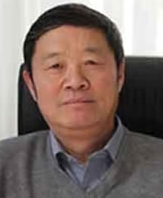 Zijian Wang (王子健)合作论文数Research Center for Eco-Environmental Sciences, Chinese Academy of Sciences29
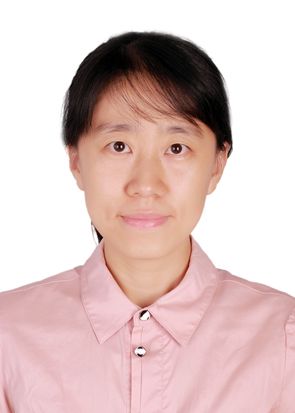 Min Qiao (乔敏)合作论文数Research Center for Eco-Environmental Sciences, Chinese Academy of Sciences;University of Chinese Academy of Sciences9
 Mei Ma (马梅)合作论文数Research Center for Eco-Environmental Sciences, Chinese Academy of Sciences8
 JinMiao Cha (查金苗)合作论文数6An Peng (彭安)合作论文数6Yiping Xu (许宜平)合作论文数Research Center for Eco-Environmental Sciences, Chinese Academy of Sciences;University of Chinese Academy of Sciences5Tianyun Li (李天云)合作论文数4Chunxia Wang合作论文数4Fan Sun (孙凡)合作论文数3
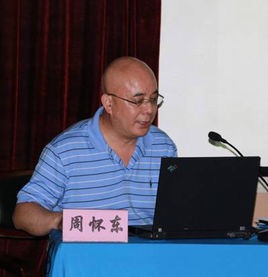 Huaidong Zhou (周怀东)合作论文数中国水利水电科学研究院水环境所所长和中国水环境研究所3
 Bingli Lei合作论文数3Jian-Ping Luo合作论文数3
 Runhui Ke (柯润辉)合作论文数China National Research Institute of Food & Fermentation Industries Co.,Ltd3
 Decheng Li (李德成)合作论文数University of Chinese Academy of Sciences;Institute of Soil Science, Chinese Academy of Sciences2Lei YANG (杨蕾)合作论文数2Tie-shan Zhang (张铁山)合作论文数2
 Xiaoru Liu (刘小如)合作论文数College of Food Science and Technology, Nanchang University2Shan Chen (陈珊)合作论文数2Linghua Liu (刘玲花)合作论文数2
 Jijun Gao (高继军)合作论文数China Institute of Water Resources and Hydropower Research2Gaofeng Zhao (赵高峰)合作论文数China Institute of Water Resources and Hydropower Research2Kaifeng Rao (饶凯锋)合作论文数2Liwei Sun合作论文数2
 Jinmiao Zha (查金苗)合作论文数Research Center for Eco-Environmental Sciences, Chinese Academy of Sciences;University of Chinese Academy of Sciences2Wangzhao Zhu合作论文数2Hai Wang合作论文数1Xiao-hui WANG (王晓辉)合作论文数1DongHong Wang (王东红)合作论文数1
 Yongguan Zhu (朱永官)合作论文数Research Center for Eco-Environmental Sciences, Chinese Academy of Sciences1
 Donghong Wang (汪东红)合作论文数School of Materials Science and Engineering, Shanghai Jiao Tong University1
 Qinghui Huang (黄清辉)合作论文数College of Environmental Science and Engineering, Tongji Univeristy1Jin Lu (陆瑾)合作论文数China Institute of Water Resources And Hydropower Research1
 Yuehui Kang (康跃惠)合作论文数Research Center for Eco-Environmental Sciences, Chinese Academy of Sciences1
 Yi Wang (王毅)合作论文数Institute of Process Engineering, Chinese Academy of Sciences;University of Chinese Academy of Sciences1Taowu Ma合作论文数1
 Gustavo Lagos合作论文数Facultad de Ingeniería, Pontificia Universidad Católica de Chile1Michael H. Dong合作论文数1
 Shahamat U. Khan合作论文数Department of Chemistry & Biochemistry, George Mason University1




